From Pavlov's Bell to Your Classroom
Ever notice how a short song gets a room moving into cleanup mode before you've said a word? Or how one student smiles when you announce partner work while another immediately tenses up? Those reactions usually don't appear out of nowhere. Students build links between cues, experiences, and outcomes all day long.
That's associative learning. Britannica describes it as a learning process in which a new response becomes associated with a particular stimulus, often in the form of classical or operant conditioning, and that basic idea has shaped later work in education, behavior therapy, and animal training through observable changes in behavior rather than anecdote alone (Britannica's overview of associative learning). In classrooms, that means routines, tone, timing, feedback, and context matter more than many teachers first realize.
The useful question isn't just “What is associative learning?” It's “Which associations am I building on purpose, and which ones am I creating by accident?” A bell can mean transition. A worksheet can mean success. A quiz can mean useful feedback. Or those same things can come to signal stress, confusion, and shutdown.
These examples of associative learning go past the usual textbook list. For each one, I'm focusing on what's happening psychologically, what tends to work in real classrooms, and where teachers often get tripped up.
1. Classical Conditioning in the Classroom
Most teachers have used classical conditioning whether they call it that or not. A neutral cue becomes meaningful because students repeatedly experience it right before the same classroom event. Pavlov's early work made this famous: a neutral tone paired with food eventually triggered salivation because the cue became predictive. John Gabrieli explains the same principle clearly in the tone-food model, where the cue gains predictive value through repeated contingency, not simple co-occurrence (Gabrieli's explanation of classical conditioning).
In school, the equivalent is simpler and far less dramatic. A chime means “eyes up.” A visual timer means “quiet work starts now.” A call-and-response phrase means “stop and listen.”
What it looks like in practice
In an elementary room, a cleanup song can become one of the strongest examples of associative learning. At first, the song is just background audio. After repeated pairings with tidy-up routines, movement, and teacher praise, the song itself starts the behavior.
That works best when the cue is:
- Distinctive: Choose a sound, gesture, or visual that isn't already overloaded with other meanings.
- Consistent: Use it for one response, not five.
- Immediate: Pair the cue with the expected behavior right away.
- Rehearsed: Students need repeated successful pairings.
A lot of teachers weaken the effect by changing cues too often. Monday it's a bell. Tuesday it's clapping. Wednesday it's a countdown. Students don't build a strong association because the antecedent keeps moving.
Practical rule: If you want a cue to carry meaning, protect it. Don't reuse it for unrelated directions.
What works and what doesn't
Classical conditioning is strongest with routines and emotional tone. It's useful for transitions, attention signals, and calm-down sequences. It's much less useful for teaching a complex idea by itself. A quiet chime can get students ready to read, but it won't teach inference.
For implementation, write the cue directly into your planning instead of relying on memory. If you use this classroom expectations and agreements worksheet from Kuraplan, you can tie the cue to a named expectation and make the routine visible for students. That's especially helpful when multiple adults share the same class.
2. Operant Conditioning and Behavioral Reinforcement Systems
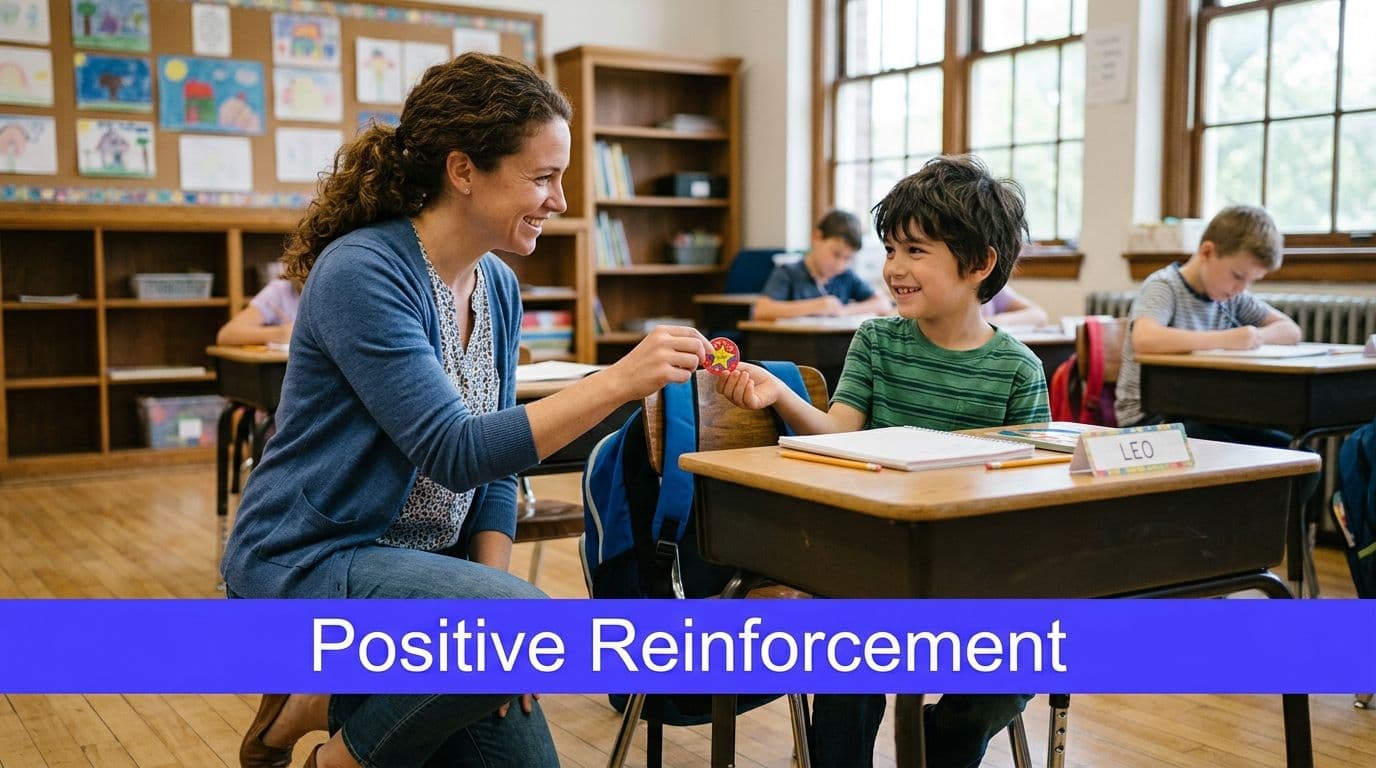
Operant conditioning is the version most teachers recognize immediately. A behavior is shaped by what happens after it. Students participate, organize materials, revise writing, or stay on task, and the consequence changes whether that behavior is likely to happen again.
This can be as simple as immediate verbal feedback. “You supported your answer with evidence from the text” is far stronger than “Good job,” because it tells students exactly what earned reinforcement.
Strong classroom examples
Token systems, participation trackers, sticker charts, free-choice minutes, and earned privileges all sit in this category. In many K to 12 settings, they work best when the reinforced behavior is observable and narrow. “Bring your notebook, start the warm-up, and underline key terms” is teachable. “Be responsible” is too vague to reinforce effectively.
I've seen teachers get much better results when they pair reinforcement with the instructional model they're already using. If your room uses the gradual release of responsibility, reinforcement can shift with the lesson. Early on, you reinforce trying the modeled strategy. Later, you reinforce independent use.
The trade-offs teachers need to watch
Operant systems can create momentum fast, especially with younger students or with routines that need tightening. But they can also become noisy and transactional if every act needs a prize. Students start asking, “What do we get?” before they ask, “What are we learning?”
Use reinforcement as a bridge, not a permanent crutch.
- Name the behavior: “You revised your topic sentence after feedback” beats generic praise.
- Fade visible rewards: Move from tangible rewards toward feedback, choice, and competence.
- Avoid rewarding everything: Over-reinforcement can flatten intrinsic motivation.
- Check fairness: If only your already-compliant students ever earn recognition, the system teaches helplessness to everyone else.
Kuraplan can help here if you plan behavior criteria into rubrics, supports, or lesson notes instead of improvising consequences in the moment. That kind of consistency matters more than a fancy reward menu.
3. Pavlovian Fear and Anxiety Conditioning and Its Educational Reversal
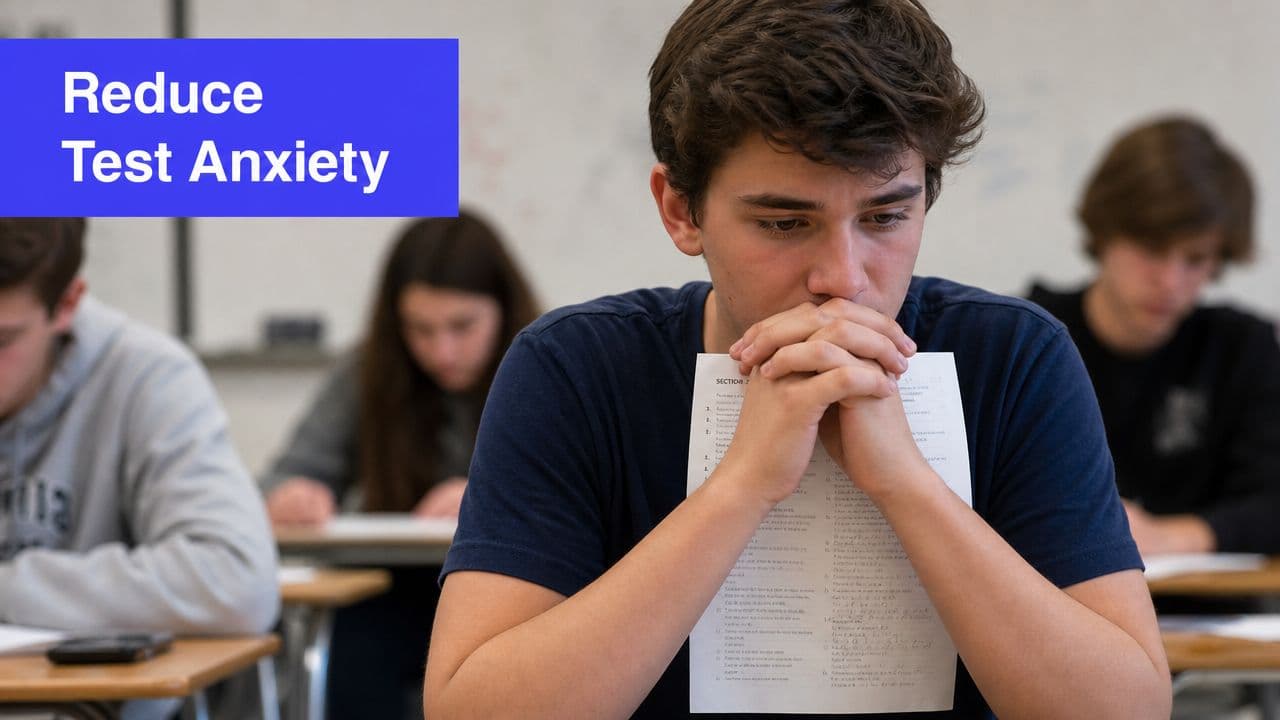
Not all examples of associative learning are positive. Some of the strongest classroom associations are fear-based. A student gets corrected sharply during math. Another freezes during a timed quiz. Another is asked to read aloud before feeling ready and gets laughed at. Soon the subject, format, or classroom routine itself starts triggering anxiety.
Newer theory doesn't treat associative learning as simple pairings alone. Major review work models it as a prediction-error process, where learning depends on the gap between what was expected and what happened. Large mismatches produce larger updates, while small mismatches produce little change (prediction-error review on associative learning). In classrooms, that helps explain why one humiliating surprise can build a powerful negative expectation very quickly.
Common school versions
Math anxiety is a classic example. The worksheet isn't threatening on its own. It becomes threatening after repeated pairing with embarrassment, confusion, or failure.
The same thing happens with:
- Reading anxiety: Especially when struggling readers are put on the spot.
- Test anxiety: When assessment always feels punitive.
- Presentation anxiety: After one or two very public failures.
- Writing anxiety: When feedback feels like judgment instead of revision support.
A hard task doesn't create fear by itself. Unpredictable exposure, public shame, and no route to success do.
Reversing the association
The fix isn't “make it easy.” The fix is controlled success, predictable support, and gradual exposure. If a student fears oral presentation, don't jump from avoidance to whole-class speech. Start with rehearsal to a partner, then a small group, then a brief share-out.
Low-stakes assessment helps because it changes what the task predicts. A quiz can come to mean “useful information about what to practice next” instead of “proof that I'm failing.” Kuraplan is useful here when you need differentiated assessments and visible accommodations built into the plan before the lesson starts. That reduces the chance that pressure gets added by accident.
4. Taste Aversion Learning
Taste aversion sounds like it belongs in a psychology lab, but teachers see versions of it all the time. One ugly first experience can poison a whole category. A student has one humiliating poetry share, one chaotic group project, or one frightening science demo, and suddenly the entire subject starts to feel unsafe or unpleasant.
That's why first exposures matter so much. If the opening experience with algebra, lab work, or peer critique is confusing and high stakes, students may not separate the task from the bad feeling. They often generalize.
Why this one catches teachers off guard
Taste aversion is useful as a metaphor because the reaction can be fast and stubborn. Students don't always say, “I had a bad experience, so now I avoid this.” They just start dragging their feet, forgetting materials, disengaging, or acting out right when that activity appears.
I've seen this with group work more than almost anything else. One lopsided project where a student does all the work or gets blamed publicly can create a long-lasting aversion to collaboration, even if later group tasks are better designed.
Prevention beats repair
If you're introducing something difficult, don't make the first round high stakes. Build an early success experience and keep the environment stable.
- Start with support: Model the task, provide scaffolds, and narrow the demand.
- Remove unrelated discomforts: Hunger, noise, heat, and time pressure can attach themselves to the learning experience.
- Watch for overgeneralization: “I hate science” often means “I hated that one science experience.”
- Reintroduce gently: If an aversion has formed, use short, positive, highly supported returns to the task.
Kuraplan can help structure those first attempts with scaffolded lesson steps, modified worksheets, and differentiated entry points. That's not about making content easier. It's about making the first association productive instead of toxic.
5. Contextual and State-Dependent Learning
Some learning sticks to the room where it happened. Students know the vocabulary in your classroom, then stumble in the testing hall. They can solve a problem during guided practice, then freeze when the setting changes.
That's one of the more overlooked examples of associative learning. Students don't just associate content with answers. They also associate it with place, emotional state, timing, sensory cues, and classroom format.
What this looks like for teachers
A calm small-group setting can become part of the memory trace. So can the anchor chart on the wall, the exact worksheet layout, or your verbal prompt. When those supports disappear, retrieval gets harder.
Research on human learning has shown that repeated pairings change how quickly predictable stimuli are processed. In one experiment, people responded faster to second items in paired sequences than to first items, and the authors argued that statistical learning changed representation, sensitivity, and perceptual bias for reliably paired items (study on paired sequences and statistical learning). In plain classroom terms, students get good at what they repeatedly encounter together.
How to make learning travel
If you only teach a skill in one format, don't be surprised when it stays stuck there. Retrieval needs variation.
Try this:
- Change the setting: Practice in class, in stations, outdoors, or digitally when possible.
- Change the format: Notes, discussion, mini-whiteboards, oral recall, and written retrieval all matter.
- Change the emotional load: Rehearse under calm conditions before students meet higher-pressure conditions.
- Practice transfer: Ask students to use the idea in a different subject or scenario.
A practical way to widen context is to vary the materials you use. This Cornell notes worksheet on cultural influences from Kuraplan is one example of how format can shift while preserving the thinking routine. That helps students associate the strategy with a broader set of contexts instead of one exact worksheet style.
6. Semantic Priming and Meaning-Based Associations
Not all associations are bells, rewards, and routines. Some are meaning-based. Teach “fraction,” and you activate ideas that can support “ratio,” “probability,” and “percentage.” Teach “revolution” in history well, and students are better prepared to make sense of “scientific revolution” as more than a random vocabulary phrase.
While many simplified examples of associative learning stop at Pavlov's dogs and school bells, more recent scholarship argues for a broader predictive process that also supports navigation, imitation, social cue tracking, and decision-making, and notes that human associative learning is often inferred through prediction-error signals in brain imaging and decision tasks (broader view of associative learning in modern scholarship). For teachers, that means concept networks matter.
Classroom uses that actually help understanding
Semantic priming is strongest when you deliberately activate prior knowledge before introducing new material. A quick brainstorm, concept sort, image prompt, or word web can make the new lesson feel connected instead of isolated.
Good examples include:
- History: Activating “cause and effect” before studying a revolution
- Science: Linking “energy transfer” across food chains, respiration, and ecosystems
- Math: Connecting fractions to percentages before formal procedures
- ELA: Using synonym networks and morphology to deepen vocabulary
When students can't connect a new idea to anything they already know, they often memorize terms without understanding.
What works better than random review
Generic warm-ups aren't enough. The activation has to be meaningfully connected to the new learning. If you're teaching persuasive writing, asking students to define nouns won't prime the right network. Asking them to compare two advertisements probably will.
Kuraplan is helpful here because visual diagrams, vocabulary supports, and linked examples can be planned into the lesson rather than improvised on the board. That's especially useful when you're trying to surface useful associations without accidentally strengthening misconceptions.
7. Implicit Bias and Stereotype Threat Conditioning
Some associations in school come from the wider culture, not from the lesson itself. Students absorb repeated pairings between social groups and expectations. Teachers do too. Over time, those links can shape participation, confidence, discipline patterns, and academic identity.
Here, associative learning becomes a classroom equity issue, not just a management concept.
Where it shows up
A student may walk into math already carrying a social message about who is “supposed” to be good at it. An English learner may associate speaking in class with accent judgment. A student with an IEP may start to connect support with deficiency instead of access.
Teachers can also build unwanted associations through ordinary habits:
- Call patterns: Certain students get the hard questions, others get easier ones
- Feedback tone: Some students hear correction, others hear coaching
- Representation: Some groups appear in examples as thinkers and leaders, others barely appear
- Grouping decisions: The same students repeatedly get positioned as the ones who need rescue
Practical safeguards
You can't remove every stereotype students have encountered, but you can stop reinforcing them in your room.
Use inclusive materials and examples. Build wait time into questioning so fast confidence doesn't masquerade as understanding. Check whether your examples, texts, visuals, and praise patterns send the same messages to everyone.
Kuraplan can support this in practical ways. You can use it to build differentiated supports without watering down rigor, generate visuals that include diverse representation, and plan accommodations into the lesson rather than adding them at the last second. The important point isn't the tool itself. It's the consistency.
A psychologically safe classroom doesn't happen because a poster says everyone belongs. It happens when students repeatedly experience challenge, support, and dignity together.
8. Metacognitive Awareness and Learning-to-Learn Associations
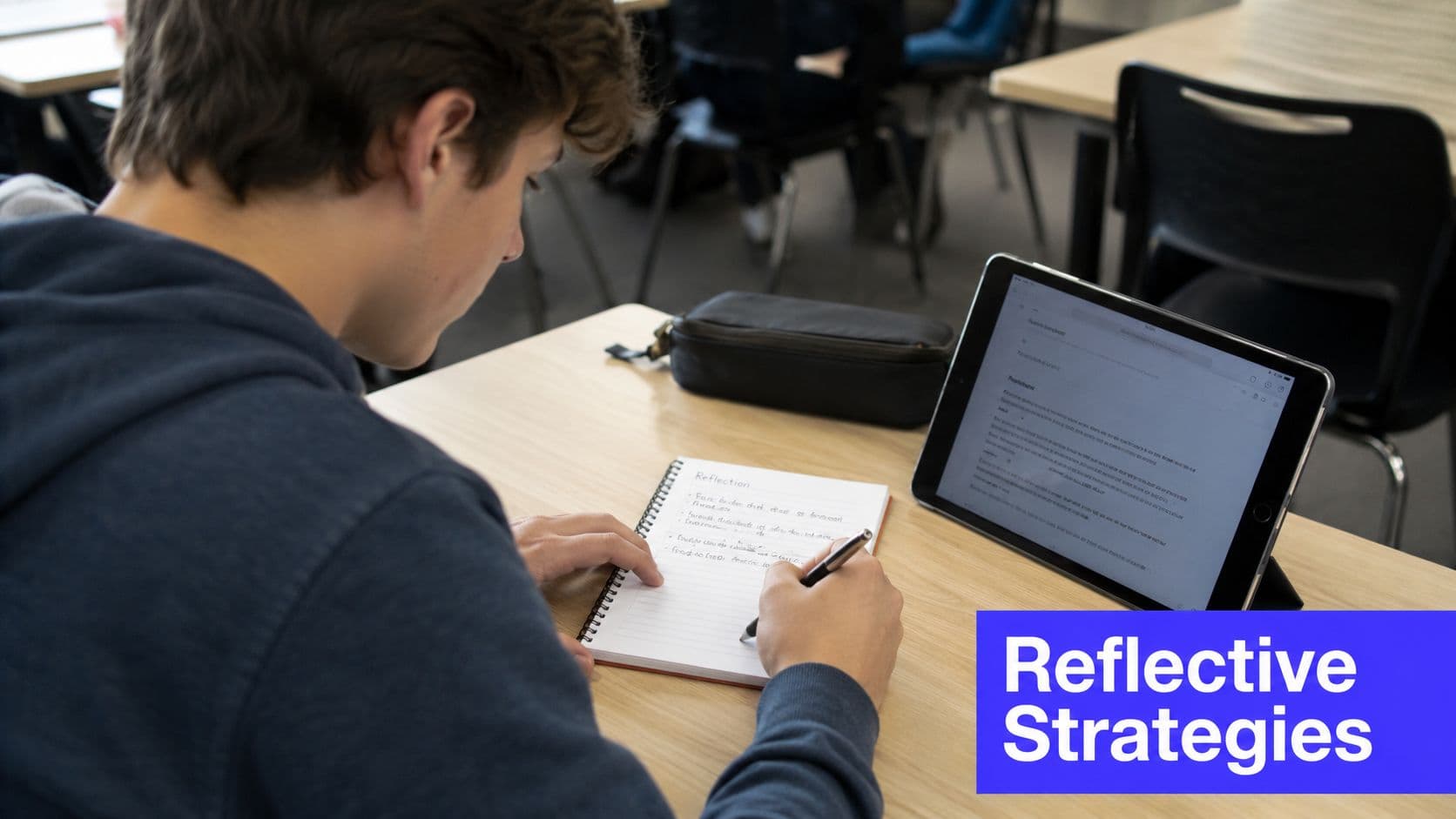
This is the form of associative learning I wish more teachers talked about. Students don't just build links between stimuli and reactions. They also build links between strategies and success. Over time, they learn things like, “When I annotate first, I understand better,” or “When I explain my answer aloud, I catch weak reasoning.”
That's metacognitive association, and it's one of the most useful long-term outcomes school can produce.
Why it matters beyond memorization
Independent education sources often point to chunking and the keyword method as examples of associative learning used to improve recall, but they also imply these are support tools rather than evidence of deep conceptual understanding. A more nuanced takeaway is that associative learning often helps initial encoding and retrieval, while concept formation needs additional instructional design (Study.com discussion of associative learning strategies). That's exactly why metacognition matters. It helps students choose the right support for the task.
A student who knows flashcards help with vocabulary but not with explaining historical causation is becoming a more intelligent learner.
What to build into daily instruction
Think-alouds are the fastest route in. When you solve a problem and narrate your decisions, students begin associating strategy use with successful outcomes instead of treating success as magic.
Useful routines include:
- Reflection prompts: “What strategy helped you most today?”
- Error analysis: “Where did your thinking go off track?”
- Strategy banks: Students record tools that help them in different subjects
- Exit tickets: Ask about process, not only answers
“I learn best when I explain it to someone else” is a far more powerful student insight than “I studied hard.”
Kuraplan fits naturally here because reflection questions, differentiated supports, and strategy-focused worksheets can be built into the lesson from the start. That makes metacognition a routine, not an occasional add-on.
8-Example Comparison of Associative Learning
| Title | Implementation complexity 🔄 | Resource requirements ⚡ | Expected outcomes ⭐ | Results / Impact 📊 | Ideal use cases 💡 |
|---|---|---|---|---|---|
| Classical Conditioning in the Classroom | Low, simple cue pairing and routines | Low, songs, bells, visual cues | Predictable automatic engagement ⭐ | Faster transitions; modest on-task gains 📊 | K–5 transitions, routines, ADHD cueing |
| Operant Conditioning and Behavioral Reinforcement Systems | Medium, establish targets and schedules 🔄 | Moderate–High, tracking systems, time, materials ⚡ | Strong behavior change when consistent ⭐⭐ | Measurable increases in participation/achievement 📊 | All grades; behavior plans, special ed, token economies 💡 |
| Pavlovian Fear/Anxiety Conditioning and Its Educational Reversal | Medium–High, careful, gradual desensitization needed 🔄 | Moderate, low-stakes alternatives, supports, referrals ⚡ | Reduced anxiety with sustained intervention ⭐ | Anxiety strongly affects performance; recovery is slow 📊 | Test anxiety, public speaking, trauma-informed classrooms 💡 |
| Taste Aversion Learning (Garcia Effect) | Low–Moderate, prevention straightforward; reversal difficult 🔄 | Low–Moderate, scaffolded first experiences, reintroduction ⚡ | Single-event aversions; prevention most effective ⭐ | One trial can produce long-lasting avoidance; hard to reverse 📊 | First encounters with new subjects/activities; safety-sensitive demos 💡 |
| Contextual and State-Dependent Learning | Medium, plan varied contexts and retrieval practice 🔄 | Moderate, varied settings, multimedia, practice formats ⚡ | Better transfer when encoding/retrieval contexts matched ⭐ | Improved recall in matched contexts; reduces context-dependency with practice 📊 | Field trips, experiential learning, study strategy instruction 💡 |
| Semantic Priming and Meaning-Based Associations | Medium, explicit mapping and activation strategies 🔄 | Moderate, concept maps, vocabulary, prior-knowledge activation ⚡ | Faster processing and deeper conceptual understanding ⭐⭐ | Stronger transfer and schema development across topics 📊 | Concept-heavy units, vocabulary building, cross-curricular links 💡 |
| Implicit Bias and Stereotype Threat Conditioning | High, ongoing systemic and instructional change required 🔄 | High, professional development, inclusive materials, monitoring ⚡ | Reduced stereotype effects with sustained interventions ⭐ | Long-term equity gains; short-term effort required; measurable participation changes 📊 | Diverse classrooms, high-stakes assessment design, equity initiatives 💡 |
| Metacognitive Awareness and Learning-to-Learn Associations | Medium, explicit modeling and reflection routines 🔄 | Moderate, reflection prompts, teacher time, strategy resources ⚡ | Increased self-regulation and intrinsic motivation ⭐⭐ | Improved independent learning, persistence, and transfer over time 📊 | Upper elementary–secondary study skills, formative assessment routines 💡 |
Making Associations Work for Your Students
Associative learning isn't just a theory unit from a psychology course. It's running underneath your classroom all day. Students are constantly linking cues with actions, tasks with emotions, and strategies with outcomes. The question is whether those links are helping them learn or getting in the way, often without notice.
That's why the best use of these examples of associative learning is strategic, not decorative. A transition sound should predict a clear routine. Feedback should predict useful next steps. Assessment should predict information, not humiliation. Group work should predict structure and accountability, not chaos. If you don't build those meanings intentionally, students will still form associations. They just may not be the ones you want.
A helpful principle from modern theory is that learning changes when expectations change. If students expect confusion and instead experience support, that mismatch can begin to repair a subject they've come to dread. If they expect a passive lesson and instead experience a clear, successful routine for retrieval or discussion, new patterns start to stick. In practical terms, consistency matters, but so does the quality of what students consistently experience.
Teachers also need to be realistic about trade-offs. Associative learning is strong for routines, emotional tone, retrieval support, and early habit formation. It is weaker as a stand-alone path to deep understanding. Mnemonics, cues, and reinforcement can get students in the door. They can stabilize attention and recall. But students still need explanation, modeling, discussion, and practice to build conceptual understanding and transfer.
So start small. Pick one area where your classroom could benefit from better associations. Maybe it's a calmer transition cue. Maybe it's redesigning quizzes so they feel like feedback. Maybe it's helping students name the study strategies that work for them. Track what happens. You don't need a giant system to begin. You need one repeatable cue, one protected routine, or one better-designed reflection prompt.
If you want help making this more systematic, a planning tool can reduce the mental load. Kuraplan is one relevant option for building lesson steps, differentiated materials, visual supports, and assessment routines into your daily planning so the associations you want are repeated often enough to stick. And if you're thinking about how repetition supports memory over time, Mandarin Mosaic explains spaced repetition in a way that connects well with classroom retrieval practice.
If you want to turn these principles into actual lesson plans, routines, worksheets, and differentiated assessments, take a look at Kuraplan. It can help you plan the cues, supports, and reflection structures that make positive associations more consistent across the week.