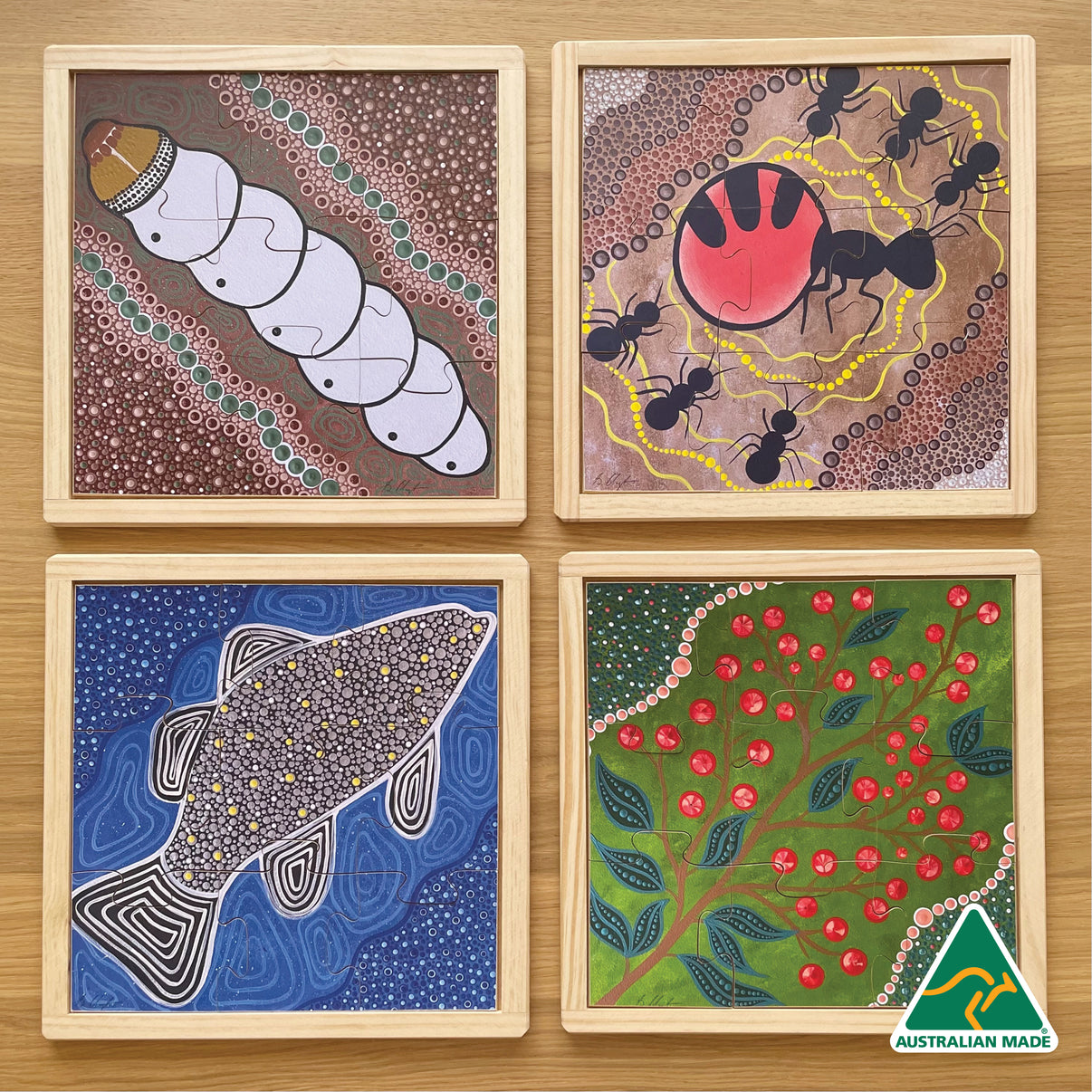
Aboriginal Art: Stories in Symbols
Discovering the World's Oldest Art Tradition Year 4 Art Exploration

What is Aboriginal Art?
The world's oldest art tradition - over 65,000 years old Created by Aboriginal and Torres Strait Islander peoples Uses symbols and patterns to tell important stories Connects people to their culture, land, and ancestors
Think About This...
How do you tell stories in your family? What symbols or pictures help you remember important things?
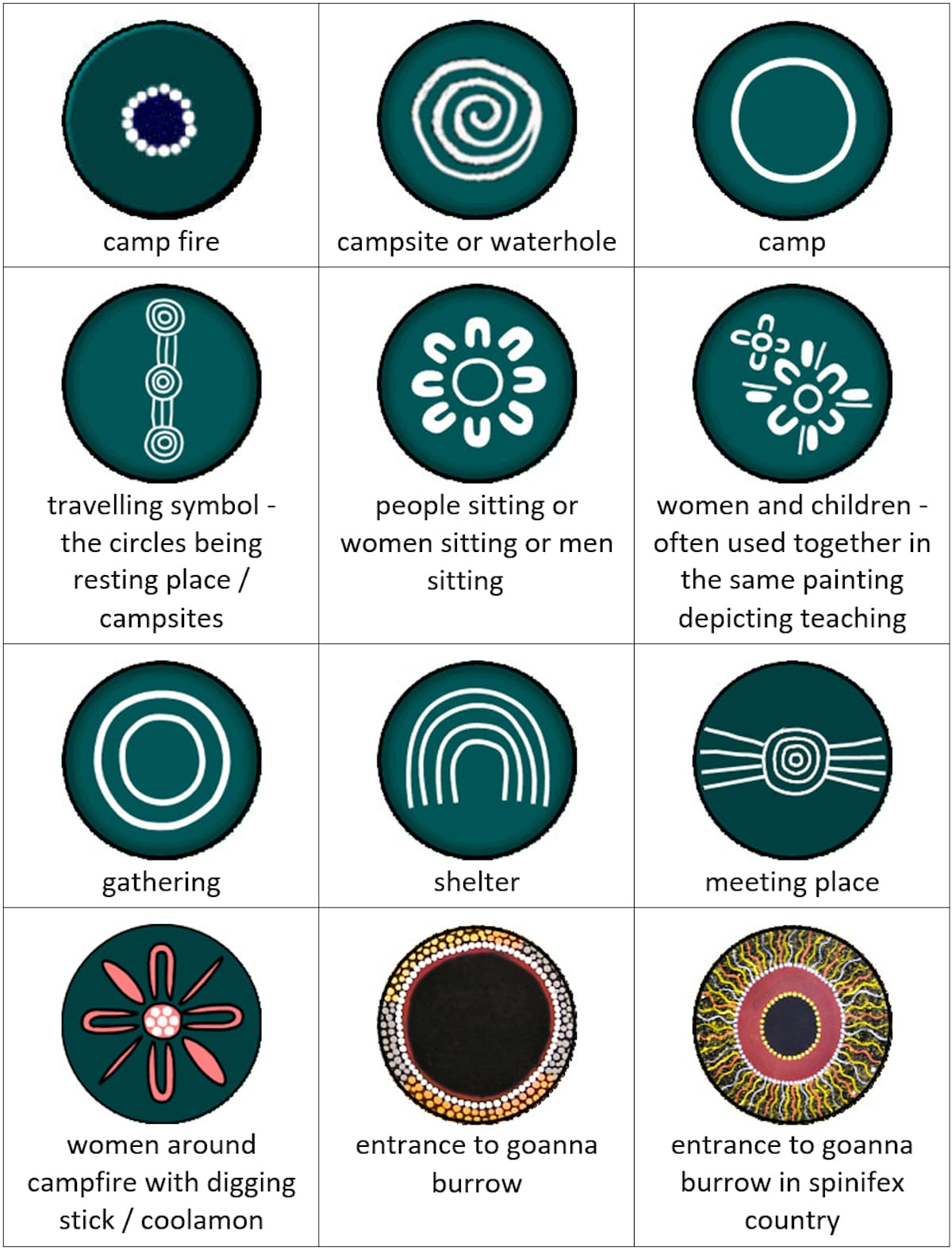
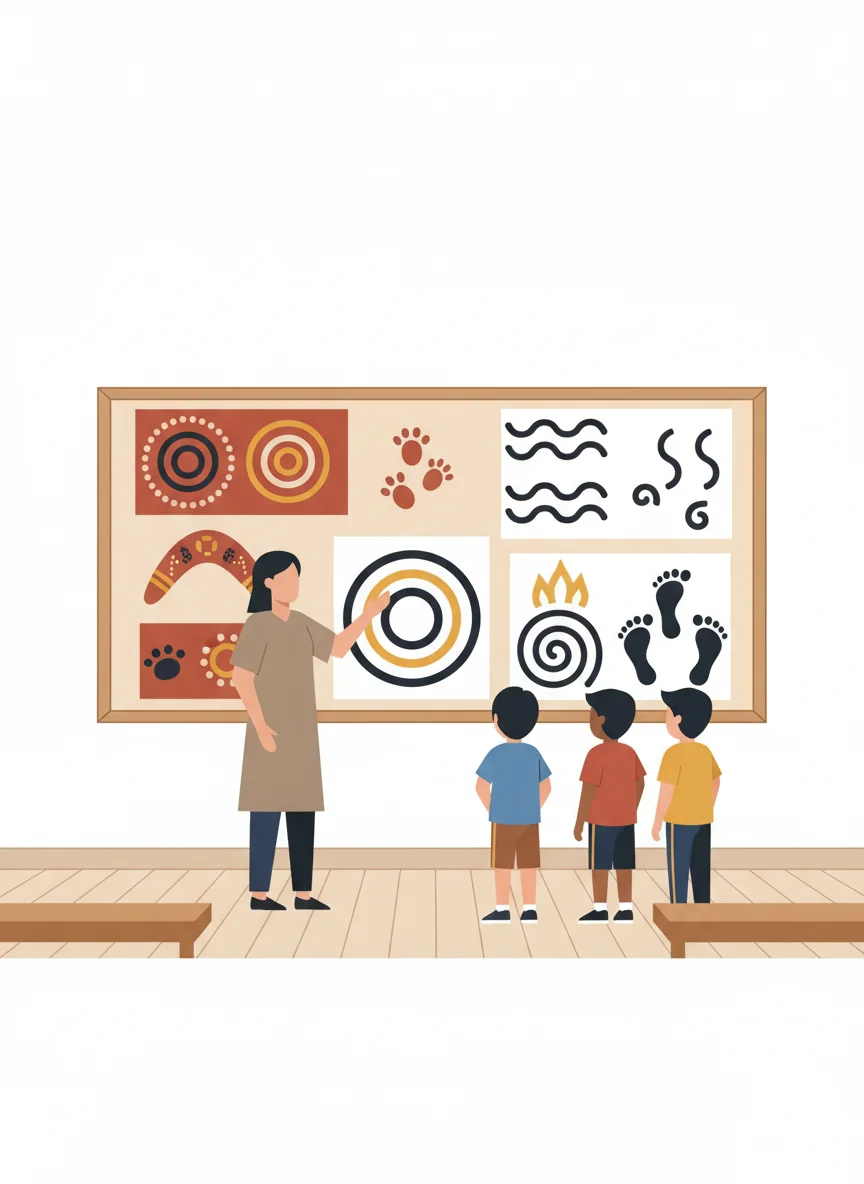
Common Aboriginal Symbols
Concentric circles - waterholes, campsites, or sacred places Wavy lines - water, rivers, or rain Straight lines - people, spears, or digging sticks Dots - stars, seeds, or ceremonial body paint U-shapes - people sitting or animal tracks
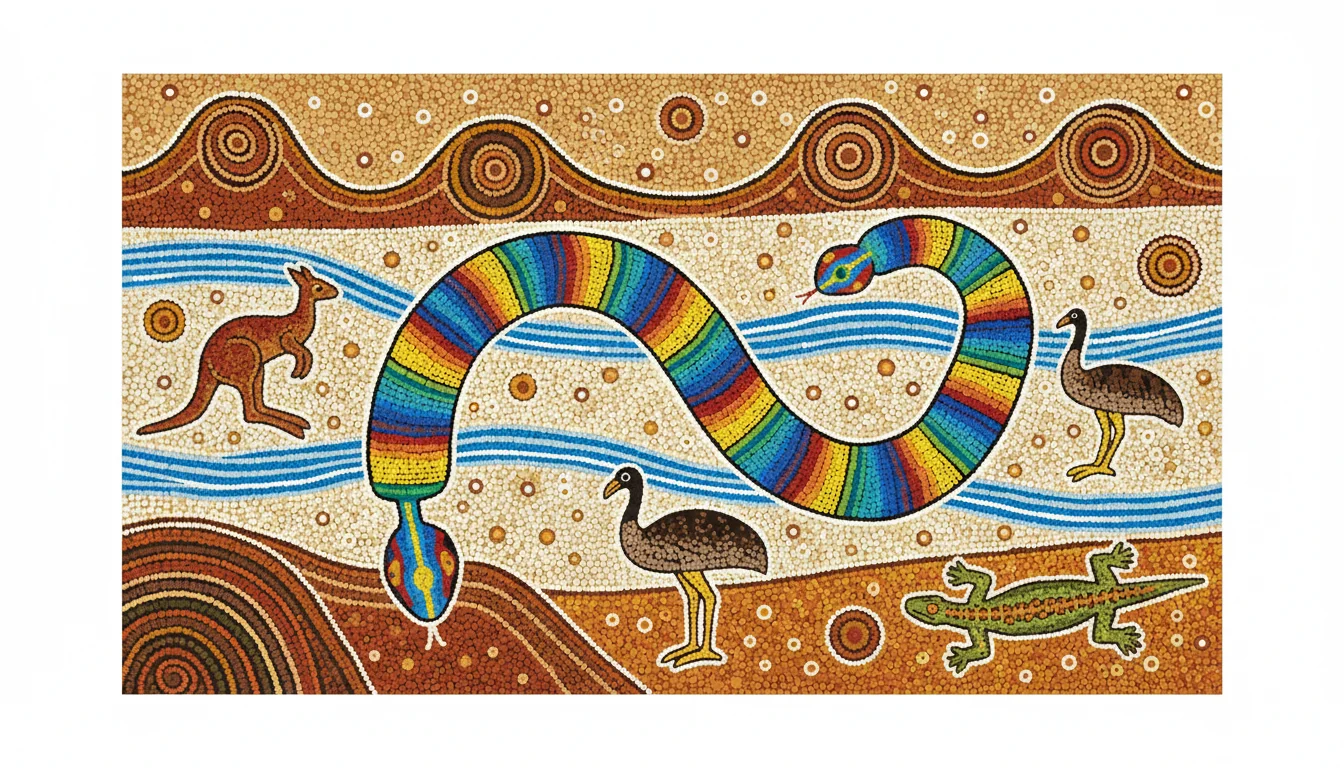
The Dreamtime Stories
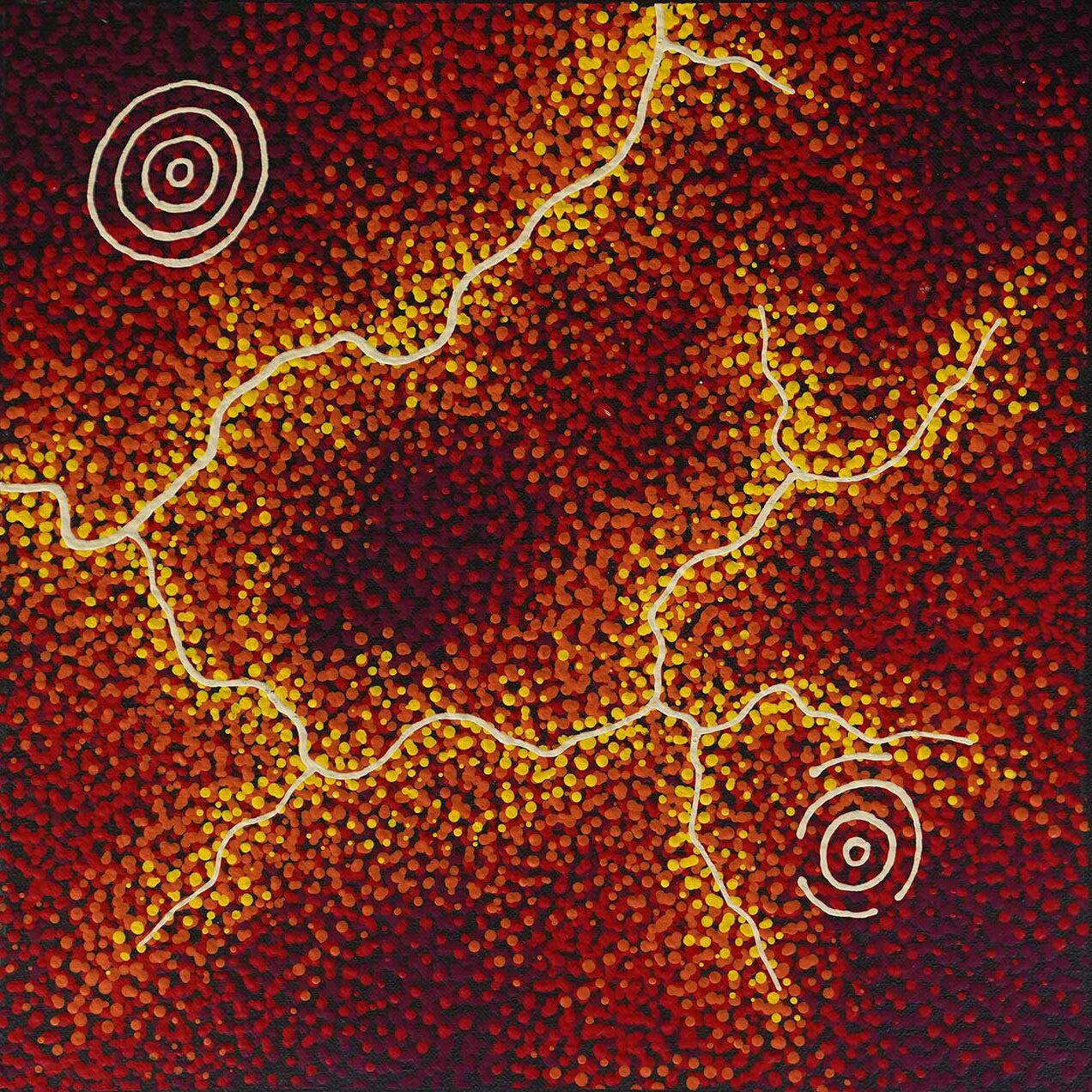
Traditional vs Modern Aboriginal Art
{"left":"Painted on bark, rocks, and sand\nUsed natural pigments from ochre and clay\nTold stories for ceremonies and teaching","right":"Painted on canvas and paper\nUses acrylic paints and modern brushes\nShared in galleries and schools worldwide"}
Famous Aboriginal Artists
Albert Namatjira - first Aboriginal artist to paint landscapes Emily Kame Kngwarreye - famous for her colorful dot paintings Clifford Possum Tjapaltjarri - created detailed Dreamtime maps These artists shared their culture with the world
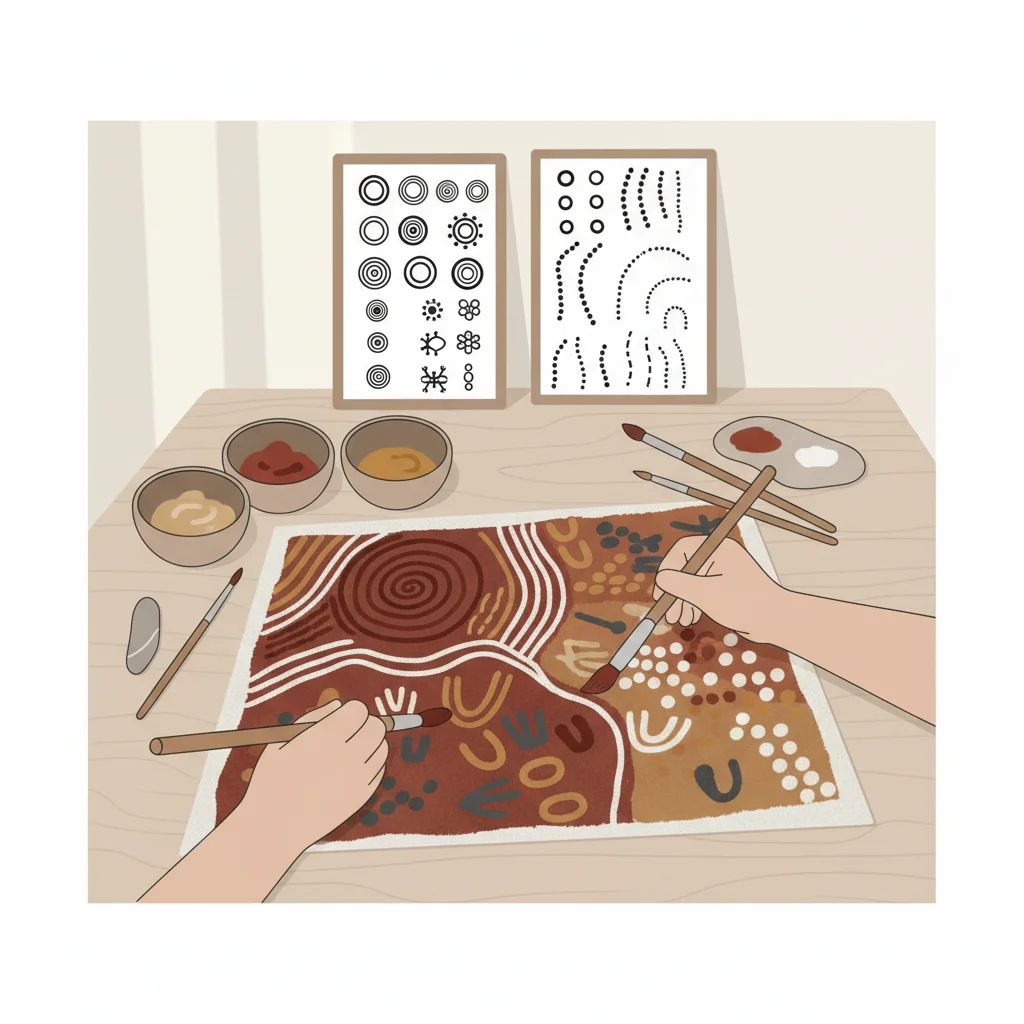
Create Your Own Symbol Story
Choose 3-4 Aboriginal symbols Think of a simple story about your local area Draw your symbols to tell your story Share your artwork with a partner

Respecting Aboriginal Culture
'Art is not just about making pretty pictures - it carries our stories, our law, and our connection to country.' - Aboriginal Elder
What We've Learned Today
Aboriginal art is the world's oldest art tradition Symbols tell important stories about culture and country Traditional and modern Aboriginal artists keep culture alive We can appreciate and respect Aboriginal art and culture Art is a powerful way to share stories and preserve history