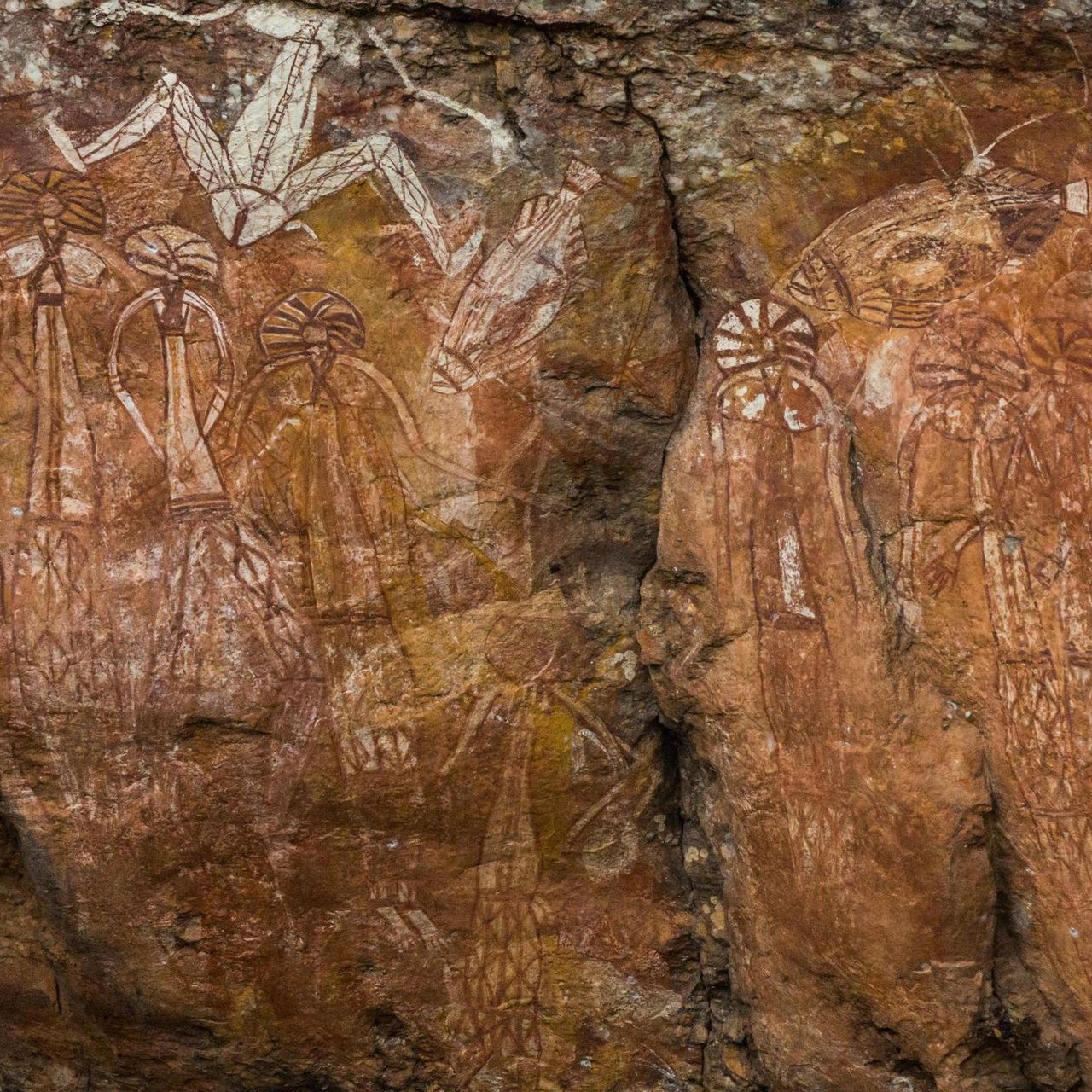
Australia's Oldest Cultures: Continuity and Change
Understanding First Nations Australians Year 7 History 60,000+ Years of Living Culture
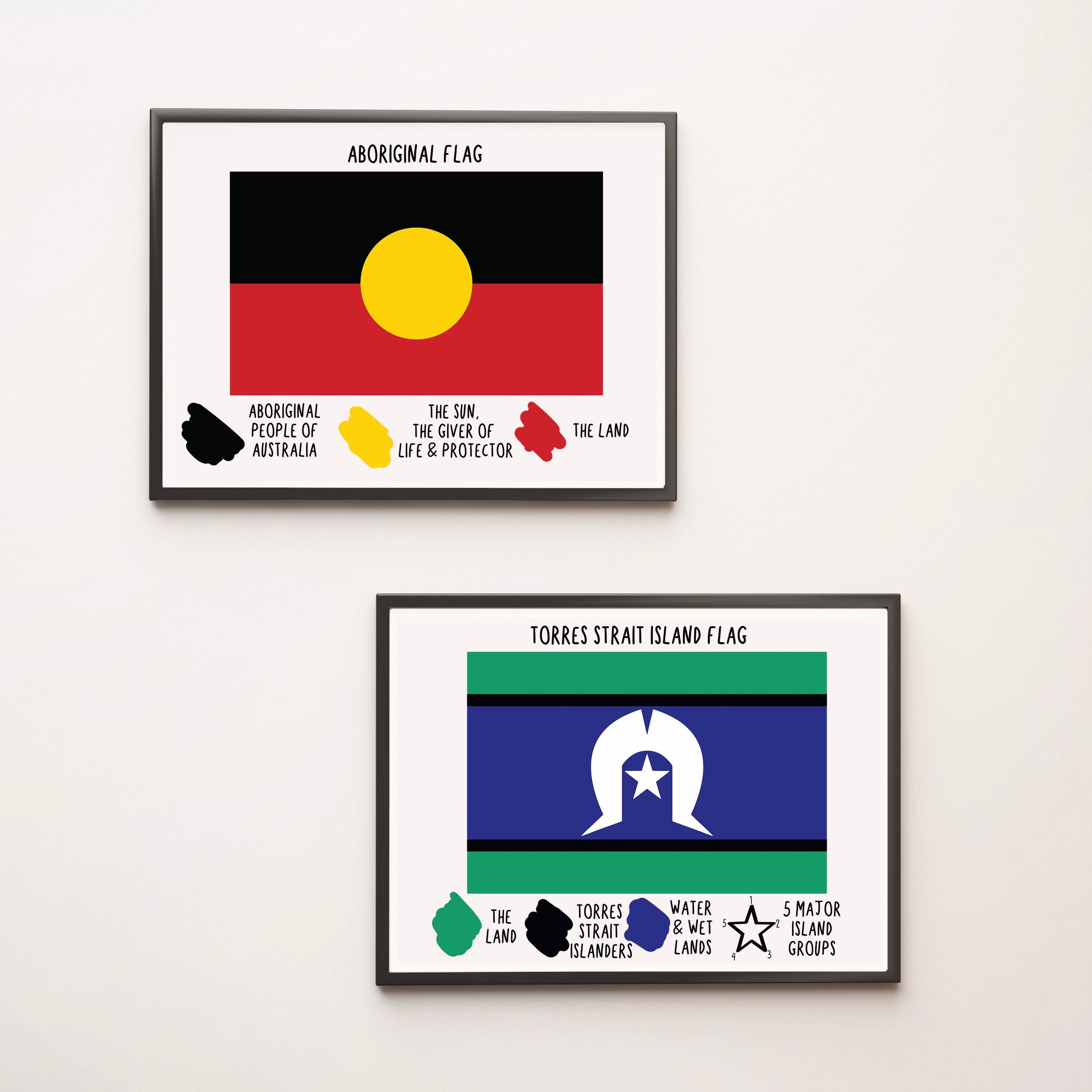
Who are Aboriginal and Torres Strait Islander peoples?
Think about what you already know Consider the term 'First Nations' What does 'oldest continuing cultures' mean?
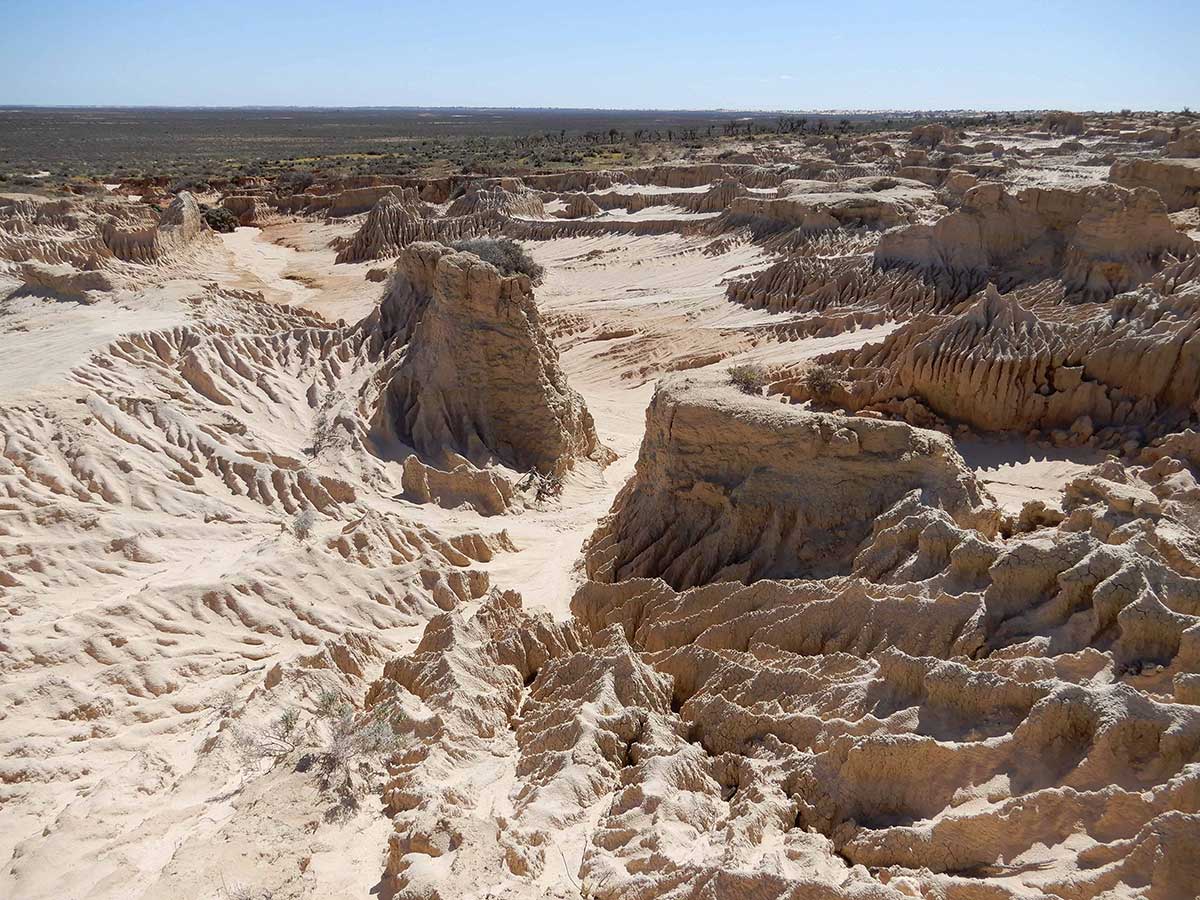
Deep Time: 65,000+ Years of Occupation

Stories That Connect: Dreamtime and Creation
Oral traditions passed down for thousands of years Creation stories explain the landscape and laws Stories connect people to Country and each other Examples: Rainbow Serpent, Seven Sisters
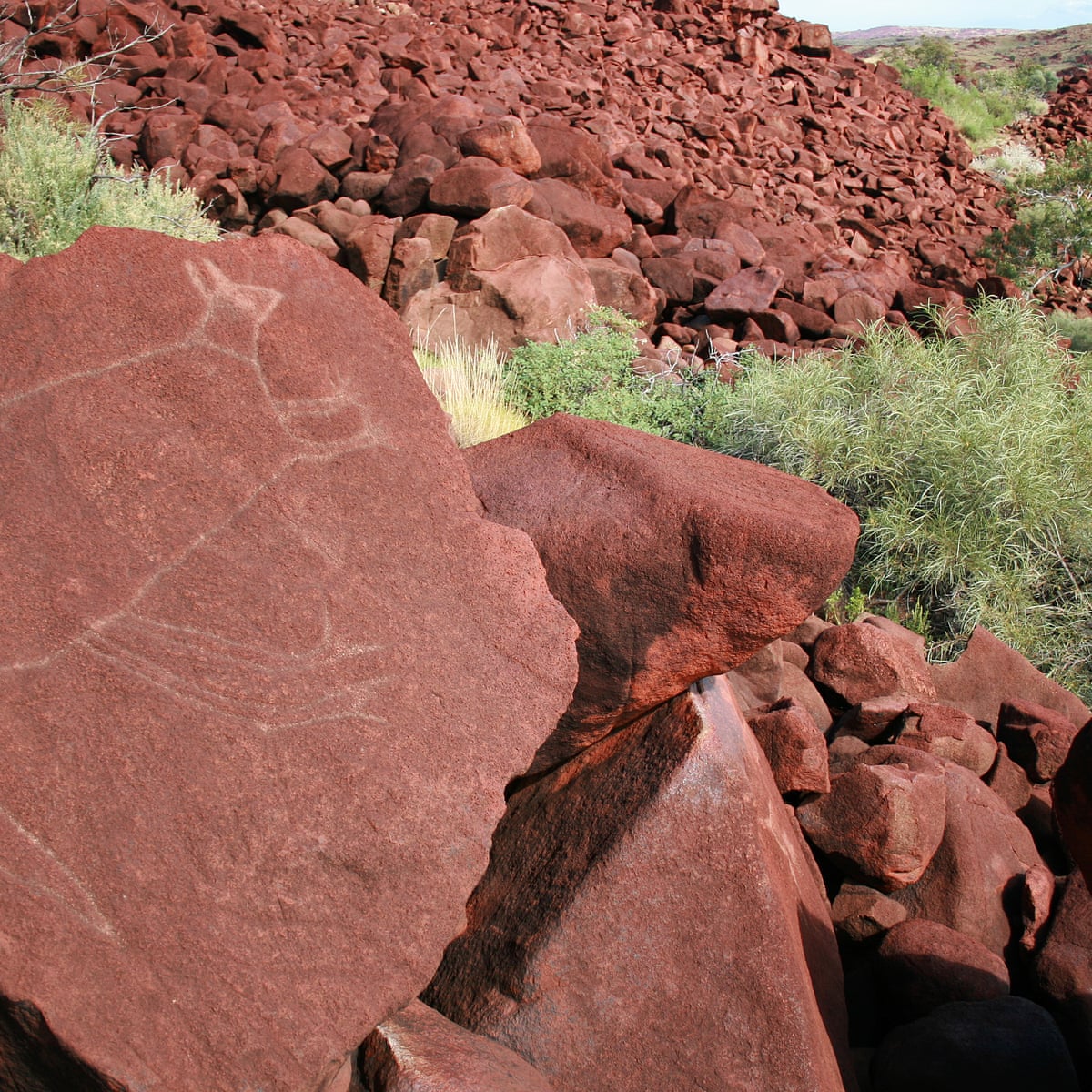
Continuity and Change in Cultural Practices
{"left":"Rock art sites over 40,000 years old\nTraditional ceremonies still practiced today\nAncient fire management techniques\nKinship systems organizing society","right":"Modern adaptations of traditional practices\nNew technologies for cultural preservation\nContemporary Indigenous art movements\nDigital storytelling and language revival"}

Connection to Country: More Than Just Land
Country includes land, water, air, and sky Spiritual and practical relationships Totemic connections link people to animals and places Responsibility for caring for Country Traditional ecological knowledge
Timeline Activity: Continuity and Change
Work in pairs to create your own timeline Include examples of cultural continuity Add examples of cultural change and adaptation Use the terms: continuity, change, evidence Be prepared to share one example with the class
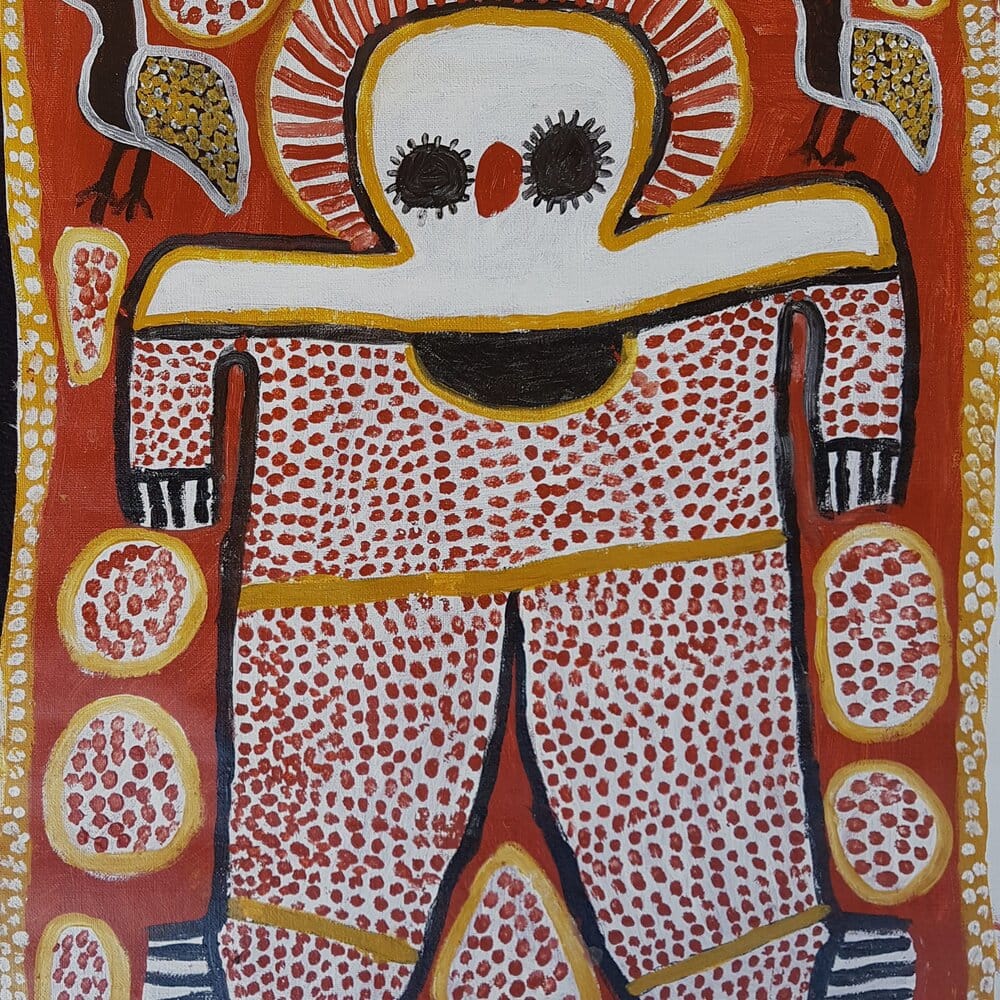
"We are still here"
Aboriginal and Torres Strait Islander cultures are the world's oldest continuing cultures They demonstrate both continuity and change over deep time Connection to Country remains central to cultural identity These are living, evolving cultures - not museum pieces