Buzzing Through Biomimicry: Nature's Designs
Year 3 Science and Technology Term 2 Unit Exploring how nature inspires human designs
Lesson 1: What is Biomimicry?
Discovering nature's amazing designs Learning from plants and animals Introduction to design thinking
Learning Intention - Lesson 1
We Are Learning To (WALT): Understand what biomimicry means Identify examples of nature inspiring human designs Begin thinking like designers
Success Criteria - Lesson 1
I can explain what biomimicry means in my own words I can give at least 2 examples of nature inspiring human designs I can identify problems that nature has solved I can start my design journal

Introduction Activity: Nature's Solutions
Look at these pictures of animals and plants What special features do you notice? How might these features help them survive? Think-Pair-Share with your partner
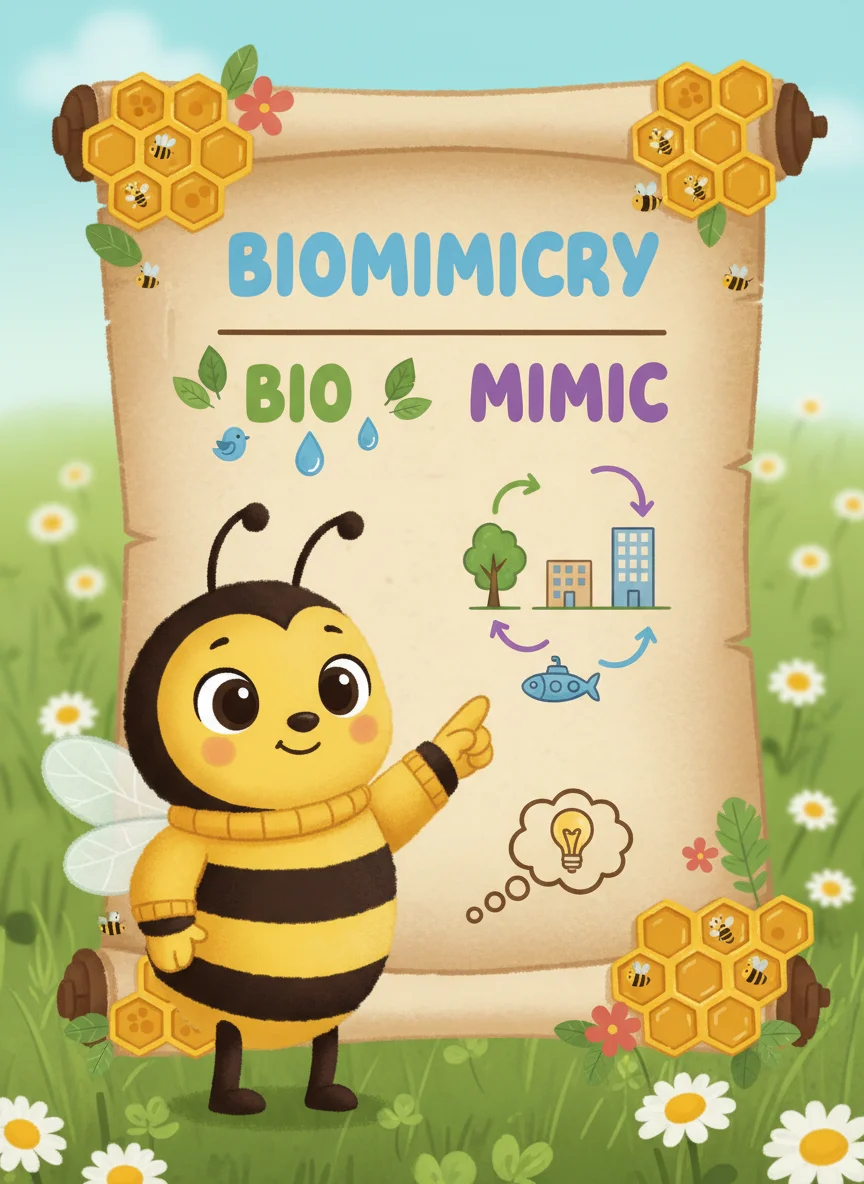
What is Biomimicry?
Bio = life or living things Mimic = to copy or imitate Biomimicry = copying nature's designs Scientists study how animals and plants solve problems Then they create new inventions inspired by nature
Nature's Problems vs Human Problems
{"left":"How do birds fly without engines?\nHow do we travel through the air?\nHow do geckos stick to walls?\nHow do we climb tall buildings?","right":"How do sharks swim so fast?\nHow do we move quickly through water?\nHow do bees make strong homes?\nHow do we build strong structures?"}

Guided Practice: Biomimicry Examples
Velcro inspired by burr seeds Airplane wings inspired by bird flight Swimsuits inspired by shark skin Building designs inspired by termite mounds Work with your table group to match each invention to its natural inspiration
Think and Discuss
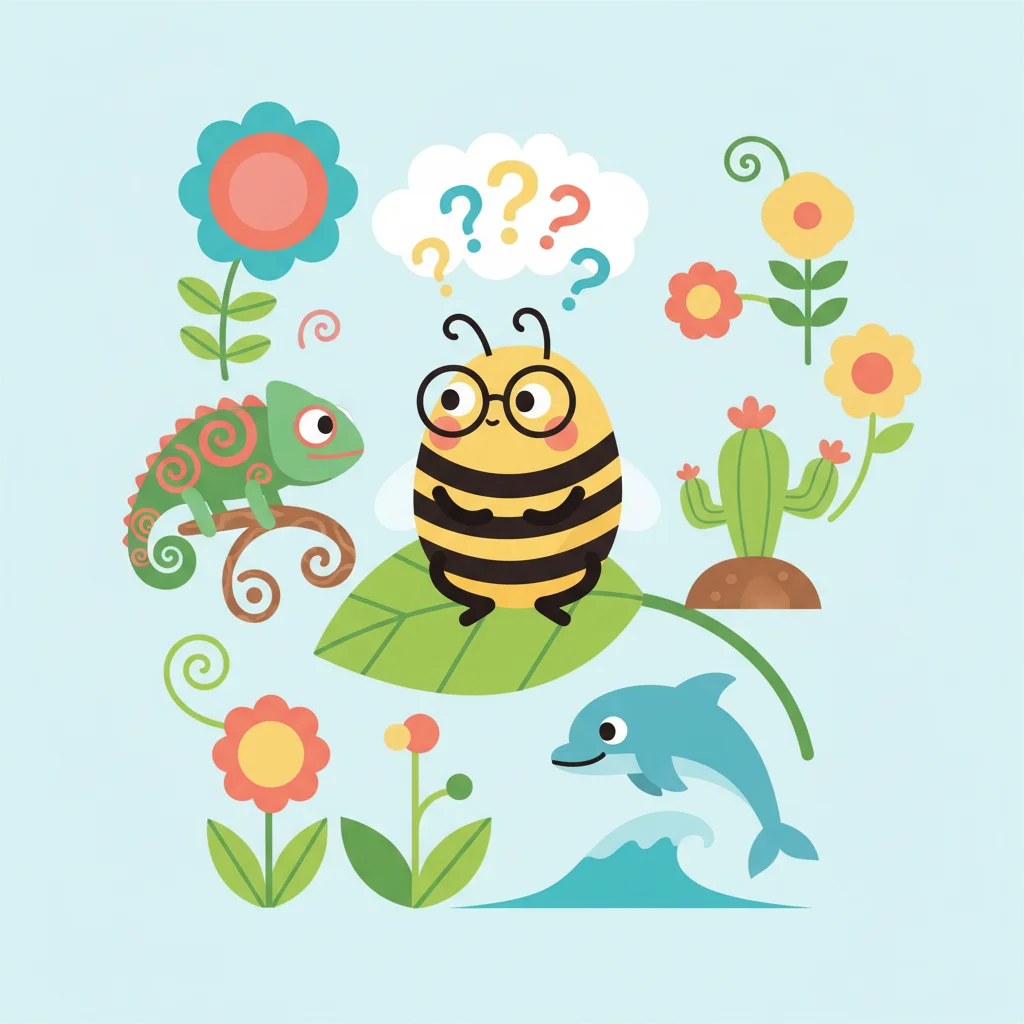
What other animals or plants have special abilities? What human problems could they help us solve? Share your ideas with the class
Independent Activity: Design Journal Setup
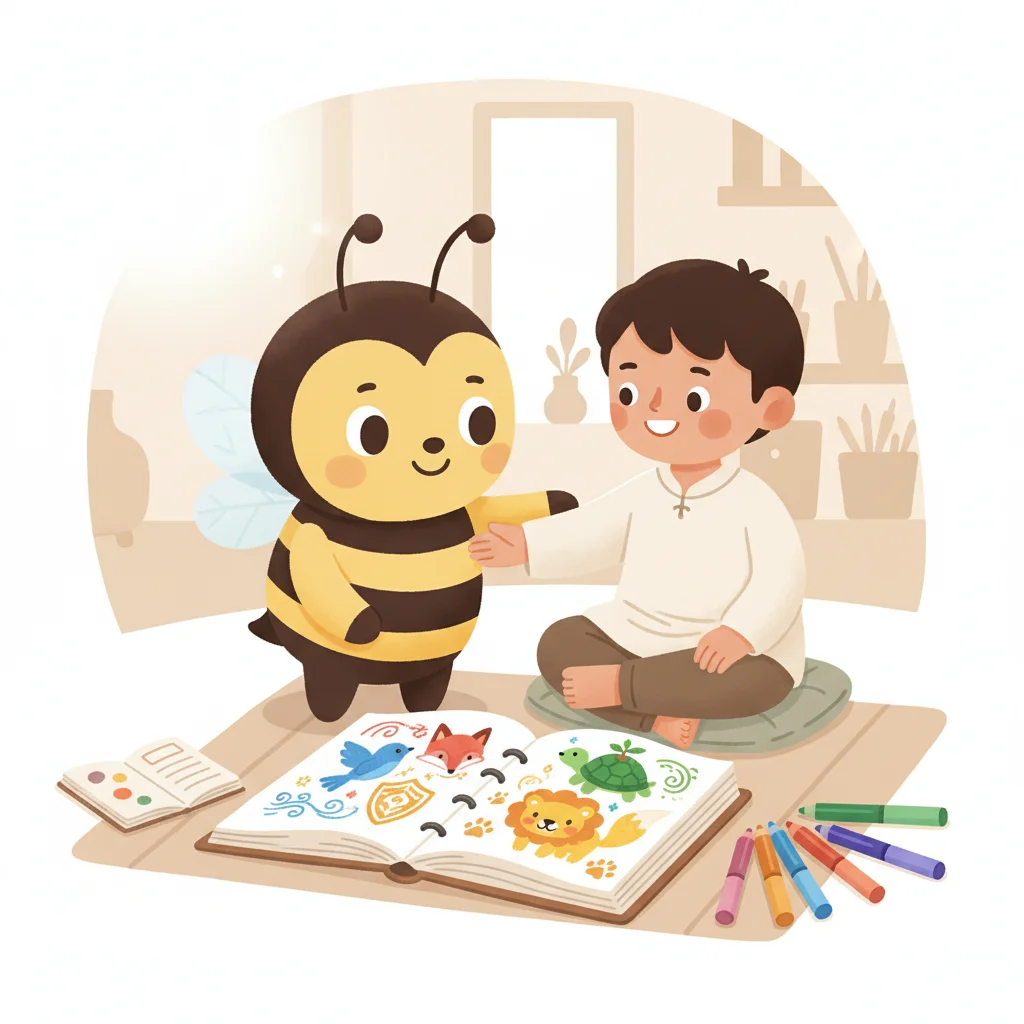
Create your personal design journal Draw or write about your favorite animal What special ability does it have? How might humans copy this ability? Differentiation: Year 2 students can draw and label, Year 3 students write explanations
Lesson 2: Amazing Animal Adaptations
Exploring how animals solve problems Understanding adaptation and survival Connecting animal features to human needs
Learning Intention - Lesson 2
We Are Learning To (WALT): Identify amazing animal adaptations Understand how animals solve survival problems Connect animal features to potential human inventions
22 more slides available after you open the deck.
Download all 34 slides