
Cell Specialisation: Plants and Animals Explored
Year 11 Science Understanding how cells adapt for specific functions Exploring xylem, phloem, neurons, and muscle cells

Learning Objectives
Define cell specialisation and its importance Identify specialised plant cells: xylem and phloem Identify specialised animal cells: neurons and muscle cells Create labelled diagrams of specialised cells Discuss how specialisation supports organism survival

What makes cells different from one another?
Think about your own body All cells come from the same original cell Yet we have skin cells, brain cells, muscle cells... How is this possible?
What is Cell Specialisation?
Process where cells develop specific structures Each structure adapts the cell for a particular function Allows multicellular organisms to be more efficient Different cells work together like a team Essential for survival in complex organisms

Plant Transport System Overview
Xylem transports water and minerals from roots to leaves. Water moves upward through cohesion-tension theory where evaporation from leaves creates tension pulling water up continuously. Phloem transports sugars produced during photosynthesis. The pressure-flow hypothesis explains how dissolved sugars move from source to sink regions throughout the plant.

Specialised Plant Cells: Xylem vs Phloem
{"left":"XYLEM: Transports water and minerals\nHollow, tube-like structure\nThick, lignified cell walls\nCells are dead when functional\nUnidirectional flow (roots to leaves)","right":"PHLOEM: Transports sugars and nutrients\nLiving cells with sieve plates\nThin cell walls\nCompanion cells provide support\nBidirectional flow throughout plant"}

Draw and Label: Plant Cells
{"left":"Sketch xylem and phloem cells in your notebook\nLabel key structures\nAdd arrows showing direction of transport","right":"Write one sentence explaining each cell's function\nWork in pairs to compare diagrams"}
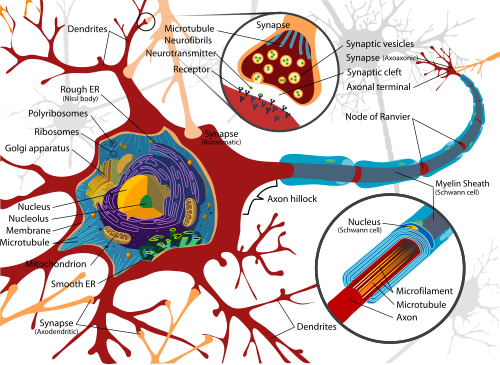
Specialised Animal Cells: Neurons
Transmit electrical signals throughout the body Long projections called axons and dendrites Cell body contains nucleus Myelin sheath speeds up signal transmission Enable communication and coordination

Specialised Animal Cells: Muscle Cells
Contract to produce movement Contain protein filaments (actin and myosin) Elongated shape allows for contraction Rich in mitochondria for energy Work together in groups to move body parts

Group Discussion: Why Specialise?
Form groups of 4-5 students Discuss: How does cell specialisation help organisms survive? List 3 advantages of having specialised cells Choose one example to share with the class Think about what would happen without specialisation

Key Concept
"Cell specialisation allows multicellular organisms to perform complex functions efficiently by having different cells adapted for specific roles, much like different workers in a factory each having specialised jobs."
Lesson Summary and Assessment
Cell specialisation: cellular differentiation pathways regulate gene expression to adapt structures for specific functions Plant cells: xylem vessels transport water via apoplastic and symplastic pathways; phloem utilises active loading of sucrose through companion cells Animal cells: neurons transmit signals via action potentials and synaptic neurotransmitter release; muscle cells use actin-myosin cross-bridge cycling for contraction Specialisation increases metabolic efficiency and organism survival Next lesson: comparative analysis of plant vs animal specialisation