
Drama Elements: Time, Character, Story
Year 8 Drama Understanding the Building Blocks of Theatre

What Are Drama Elements?
The building blocks that create dramatic meaning Help actors and audiences understand the story Work together to engage and communicate with viewers Essential tools for creating and analyzing theatre
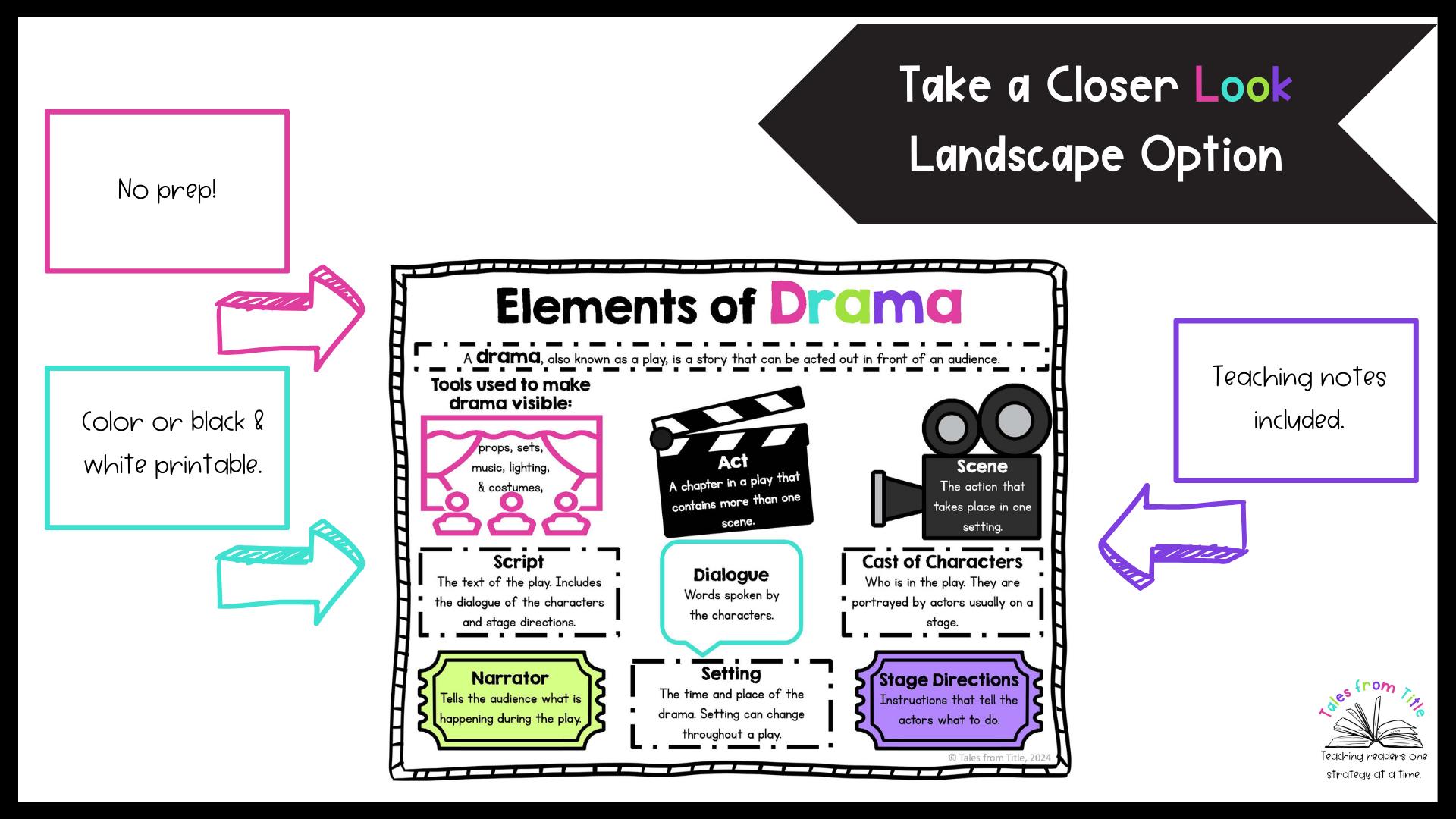
The Five Key Drama Elements
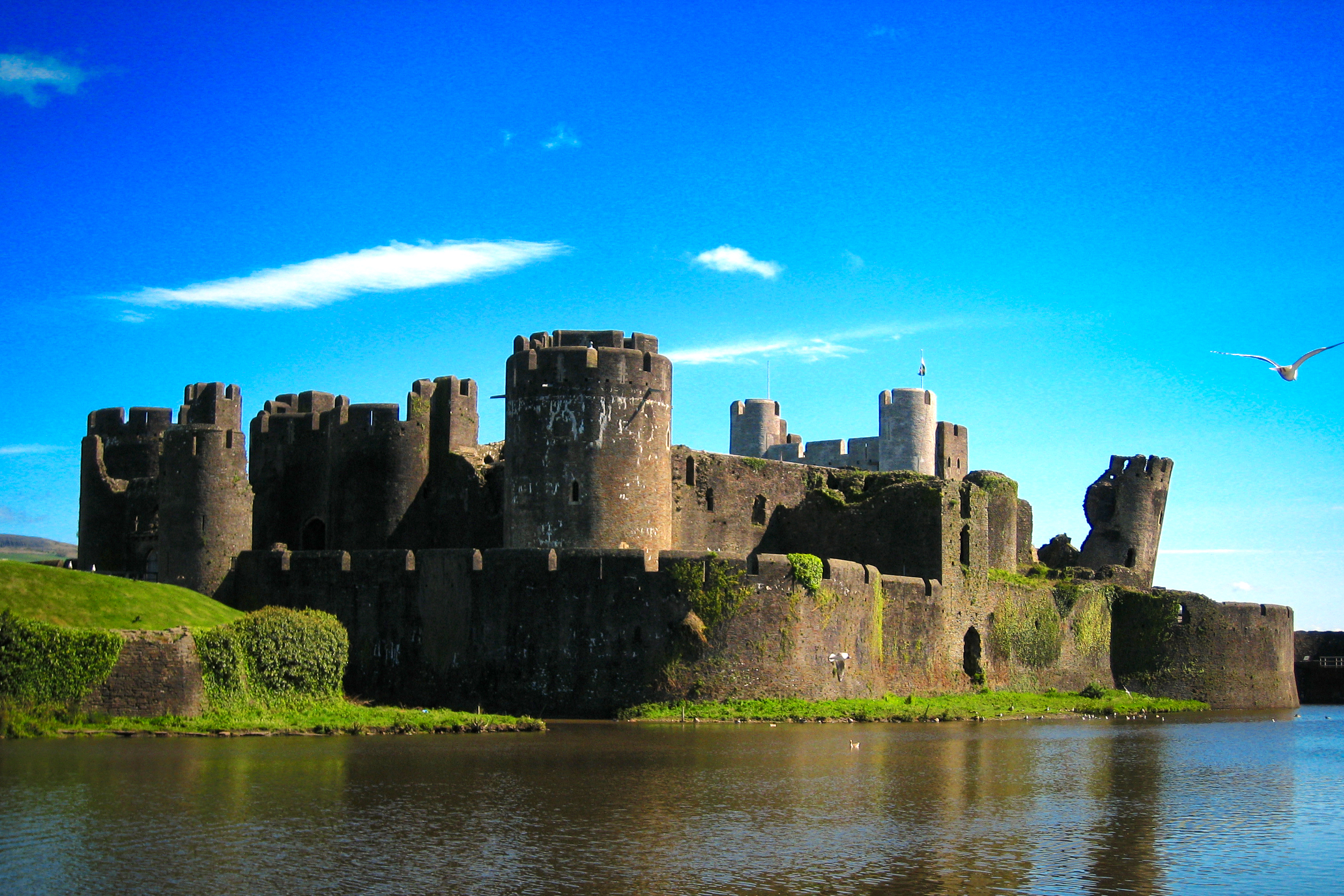
Understanding TIME in Drama
ERA: The historical or cultural time period Examples: Medieval times, 1920s, present day, future TIME OF DAY: When the action occurs Examples: Dawn, afternoon, midnight Both influence mood, setting, and character behavior

Character and Setting Connection
{"left":"WHO are the people in your story?\nWhat are their relationships?\nWhat motivates them?\nHow do they speak and move?","right":"WHERE does the action take place?\nHow does the location affect the mood?\nWhat objects or props are present?\nHow does the setting support the story?"}

Story Elements Template Activity
Work in groups of 4-5 students Choose a scenario or create your own Complete the Story Elements Template Include: Genre, Character, Setting, Time (Era + Time of Day), Story structure Prepare to share your completed template with the class

Reflection Question
How does changing the TIME element affect the entire story? Think about your group's scenario... What would happen if you changed the era? What if you changed the time of day?
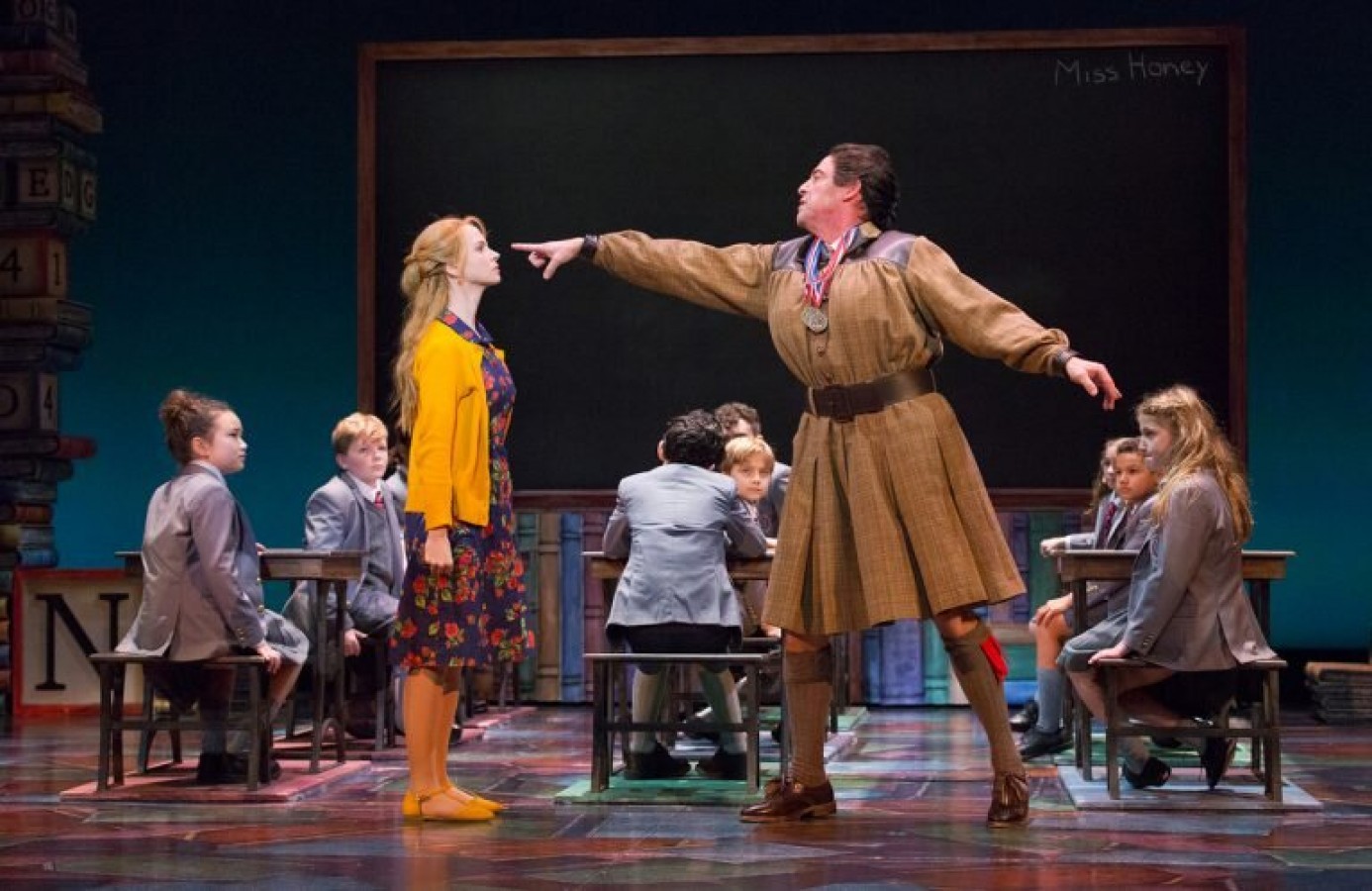
Key Takeaways
Drama elements work together to create meaning TIME (era and time of day) influences all other elements Character, Setting, and Story must support each other Understanding these elements helps us create and analyze drama Practice applying these elements in your future performances