Earth, Moon and Sun: Year 7 Review
Open this deck in Kuraplan
Sign in to view all 10 slides, customise, present or download.
Slide preview
First 10 of 10 slides
Earth, Moon and Sun: Year 7 Review
Seasons, Moon Phases & Eclipses Australian Curriculum Science Daily Review Session
Why Do We Have Seasons?
Earth's axis is tilted at 23.5 degrees Different parts of Earth receive varying amounts of sunlight Seasons are opposite in Northern and Southern hemispheres Australia experiences summer when tilted toward the Sun
Australian Seasons vs Northern Hemisphere
{"left":"December-February: Australian Summer\nMarch-May: Australian Autumn\nJune-August: Australian Winter\nSeptember-November: Australian Spring","right":"December-February: Northern Winter\nMarch-May: Northern Spring\nJune-August: Northern Summer\nSeptember-November: Northern Autumn"}
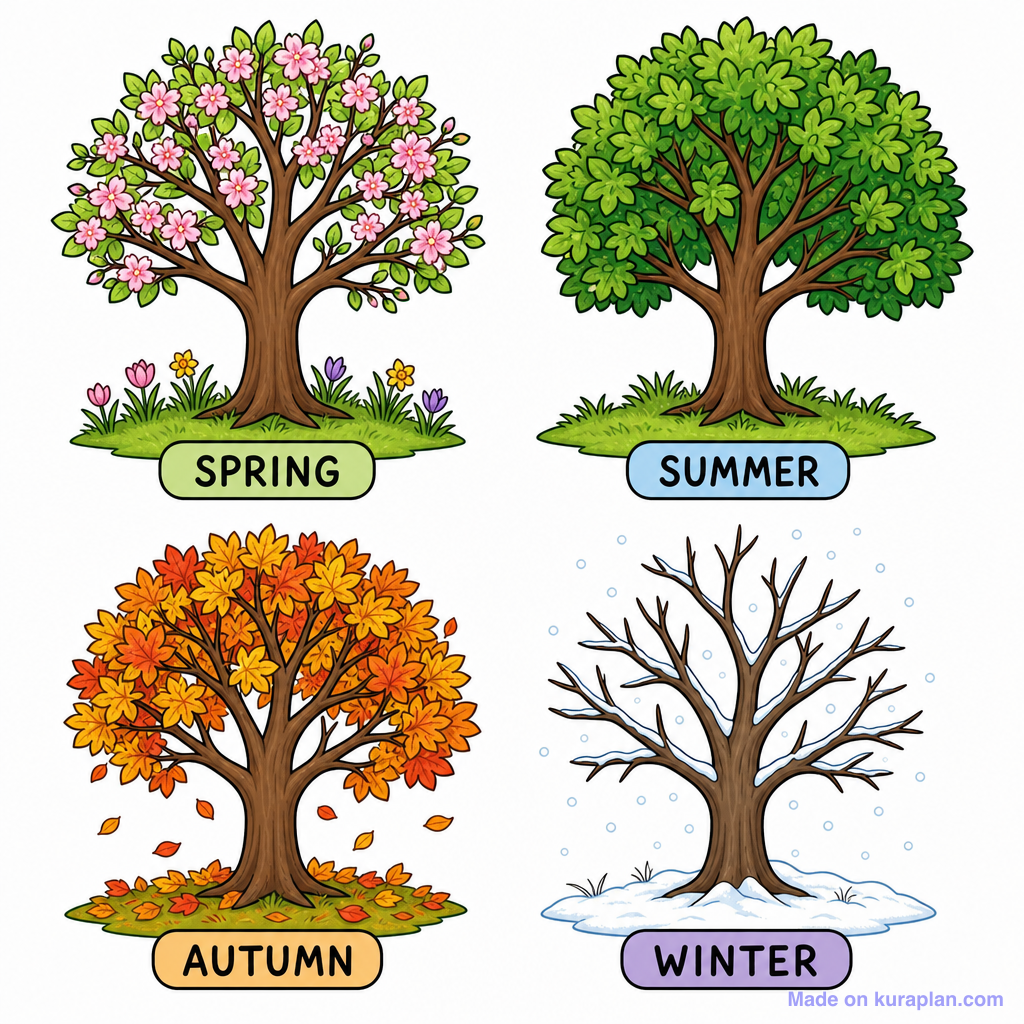
Season Detective Activity
Look at the image provided Identify which season is shown Explain the evidence you can see Discuss what hemisphere this might be in
The Moon's Changing Face
Moon phases occur due to the Moon's orbit around Earth We see different amounts of the Moon's lit surface Complete cycle takes about 29.5 days Eight main phases from New Moon to Full Moon and back
Moon Phase Calendar
Quick Think: Moon Observation
What phase was the Moon last night? How could you find out if you didn't see it? Why might the Moon not be visible some nights?
Solar and Lunar Eclipses
Solar eclipse: Moon blocks sunlight from reaching Earth Lunar eclipse: Earth blocks sunlight from reaching Moon Perfect alignment of Sun, Earth, and Moon required Solar eclipses are more dramatic but lunar eclipses last longer
Eclipse Safety Reminder
Never look directly at the Sun during a solar eclipse without proper eye protection Permanent eye damage can occur in seconds Use eclipse glasses or indirect viewing methods
Review Challenge
Work in pairs to create a quick summary Choose one topic: Seasons, Moon Phases, or Eclipses Draw a simple diagram with labels Prepare to explain it to another pair