Ethical Frameworks in Religious Studies
Year 11 Religious Studies Exploring moral foundations across traditions Understanding ethical decision-making in religious contexts
What Are Ethical Frameworks?
Systems of moral principles that guide behaviour Provide structure for making ethical decisions Help distinguish between right and wrong Offer reasoning for moral choices Foundation for religious teachings and practices
Religious vs Secular Ethics
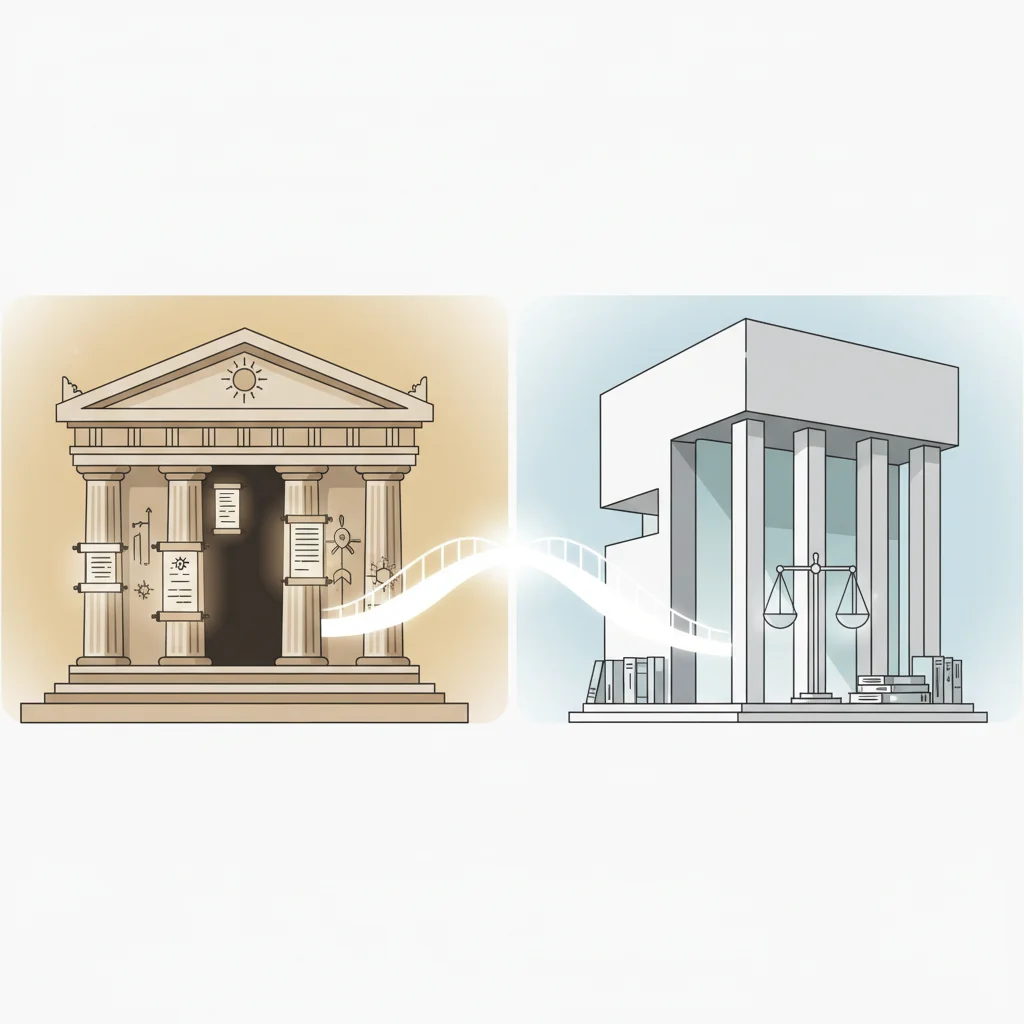
{"left":"Based on divine command or sacred texts\nAuthority comes from religious tradition\nOften includes concepts of sin and redemption\nEmphasis on spiritual consequences","right":"Based on human reason and experience\nAuthority comes from philosophical argument\nFocus on social contracts and consequences\nEmphasis on practical outcomes"}

Divine Command Theory
Actions are right because God commands them Moral obligations come from divine will Found in Judaism, Christianity, and Islam Provides absolute moral standards Challenges: Euthyphro dilemma - is something good because God commands it, or does God command it because it's good?

Ethical Scenario Analysis
Read the scenario: 'A person finds a wallet with $500 cash and no ID' Work in pairs to discuss: What would different religious traditions say? What are the competing ethical principles? How do religious and secular approaches differ? Present your analysis to the class
Natural Law Theory
Moral principles discovered through reason Universal laws accessible to all humans Developed by Thomas Aquinas Combines Aristotelian philosophy with Christian theology Four types of law: eternal, divine, natural, human
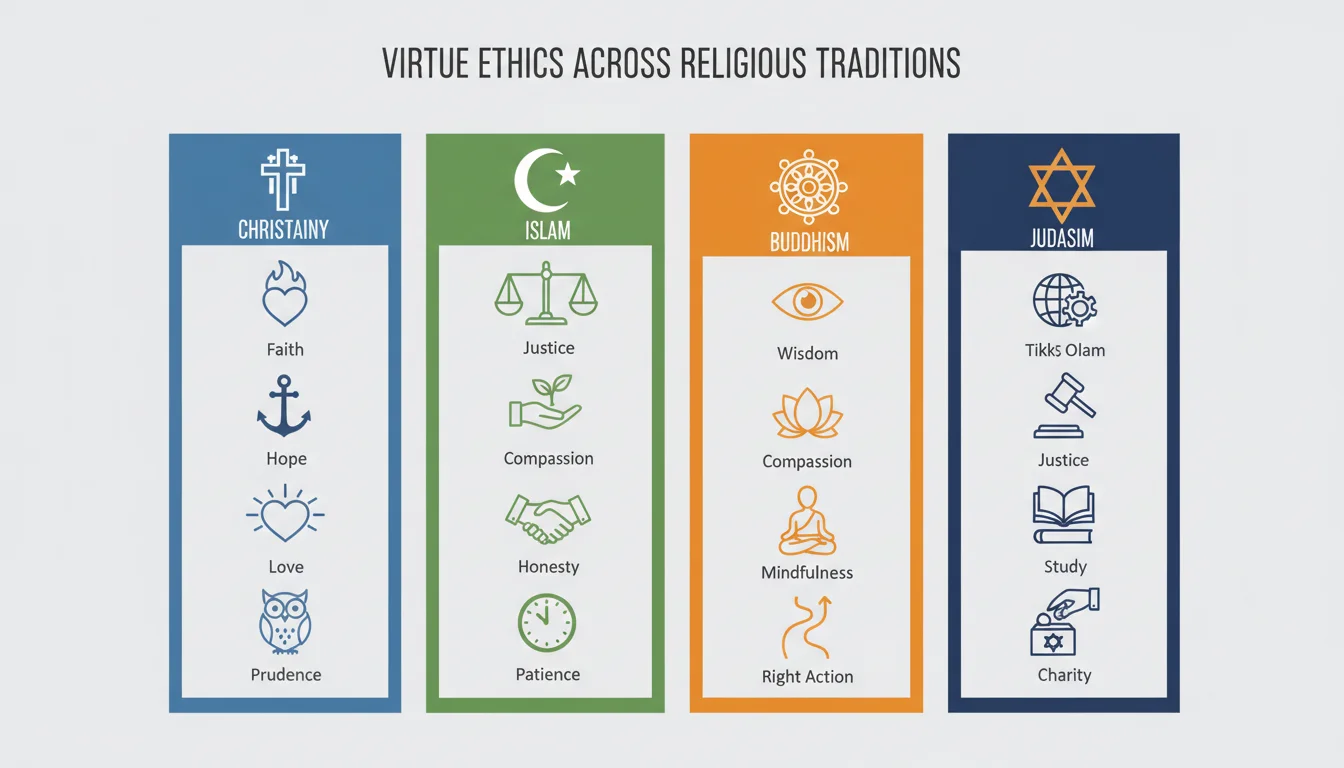
Virtue Ethics Across Religions
Critical Thinking Question
Can there be universal moral truths that apply to all religions and cultures? Consider: Arguments for universal ethics Arguments for cultural relativism Role of human nature vs. social conditioning Examples from your own experience
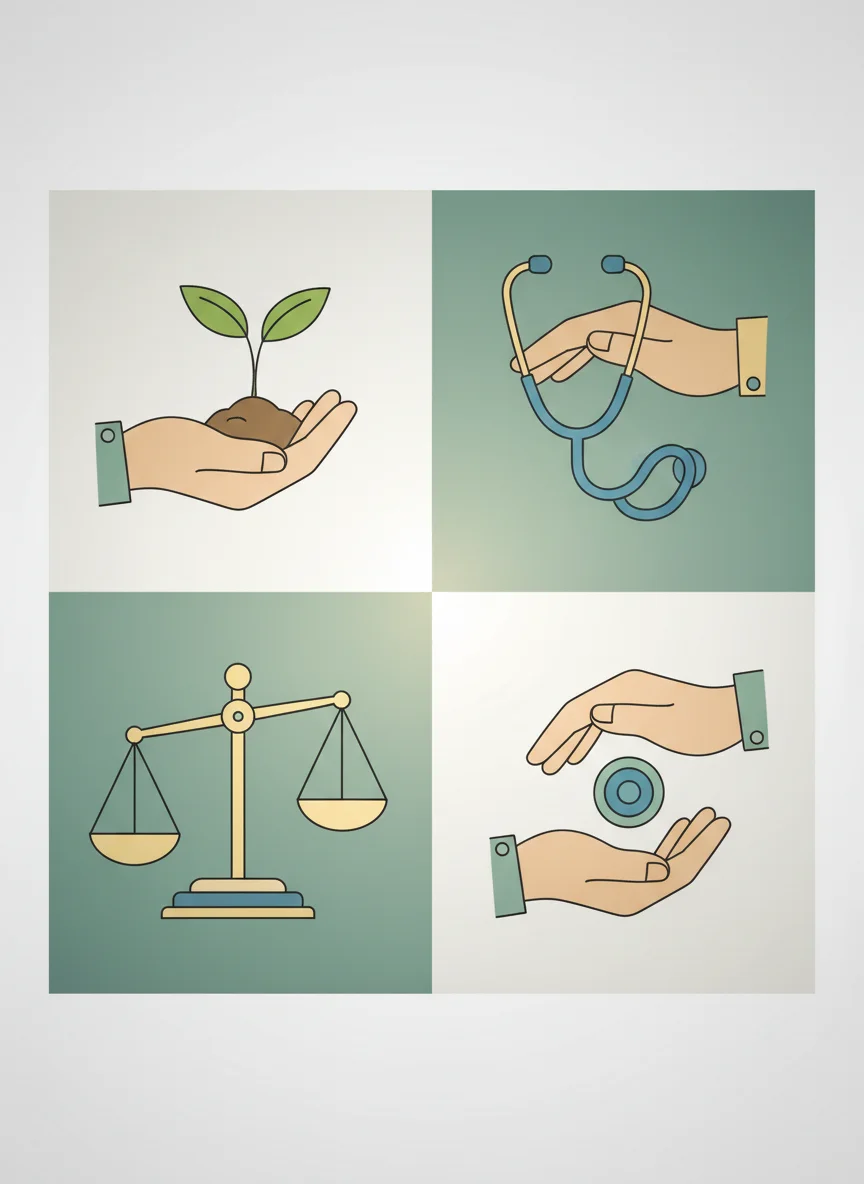
Applied Religious Ethics
Bioethics: end-of-life care, genetic engineering Environmental ethics: stewardship vs. dominion Social justice: wealth inequality, human rights Medical ethics: abortion, contraception, organ donation Business ethics: fair trade, usury, corporate responsibility

Reflection and Summary
'The ultimate measure of a person is not where they stand in moments of comfort and convenience, but where they stand at times of challenge and controversy.' - Martin Luther King Jr. Religious ethical frameworks provide: Guidance for moral decision-making Community standards and values Tools for addressing contemporary challenges Bridges between faith and reason