
Factorising with Algebra Tiles
Year 10 Mathematics Victorian Curriculum 2.0 Making Algebra Visual and Tactile
What is Factorisation?
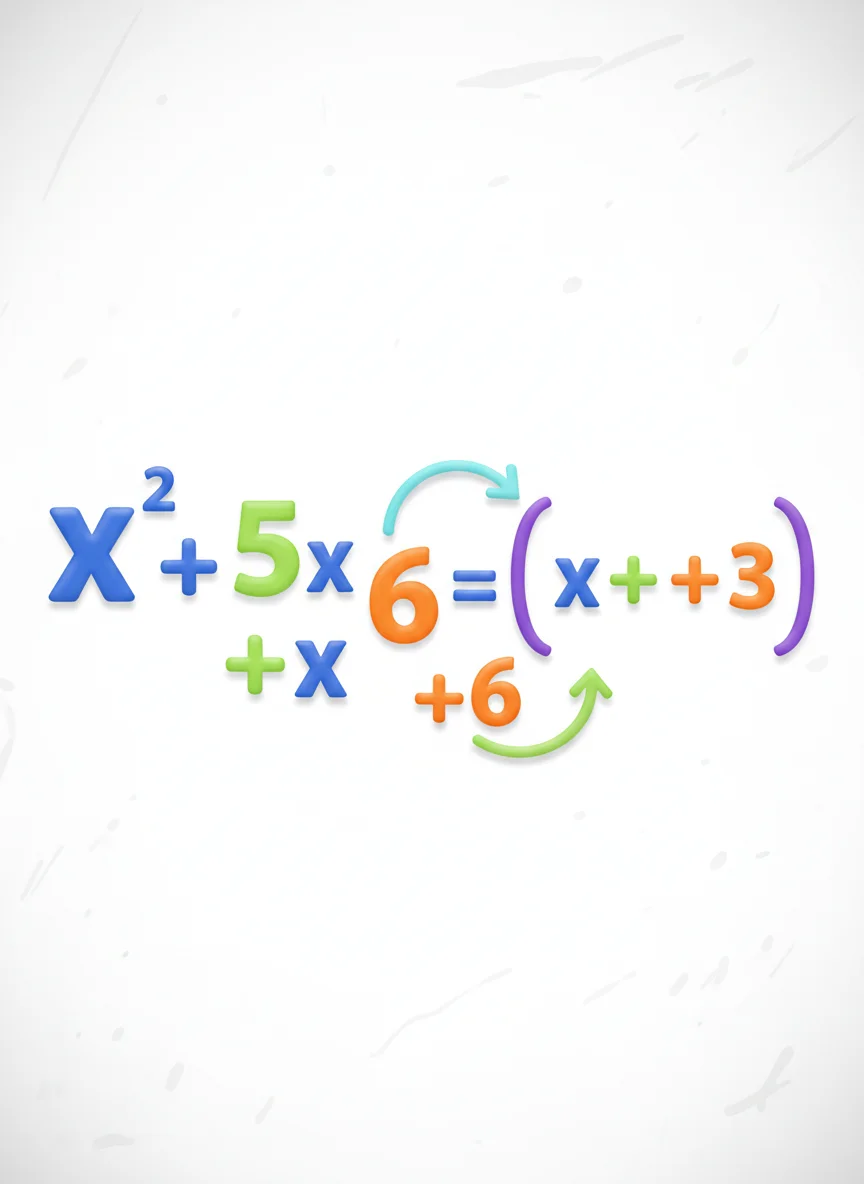
Breaking down expressions into their factors Reverse process of multiplication Finding common factors Example: 6x + 9 = 3(2x + 3)

Introduction to Algebra Tiles
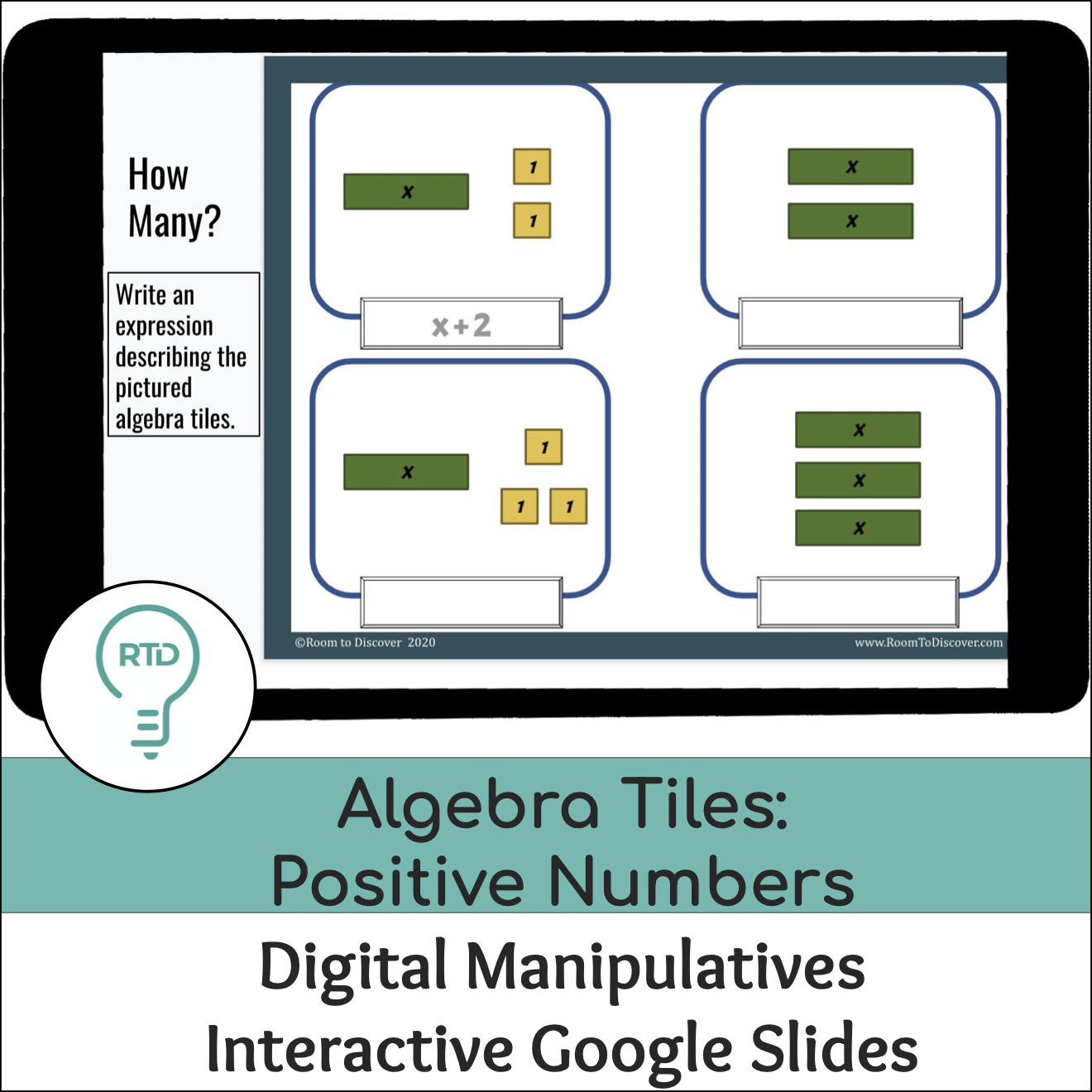
Physical representations of algebraic terms Rectangle tiles represent variables (x) Small square tiles represent units (1) Different colors for positive and negative
Modeling 3x + 6 with Tiles
Use 3 rectangle tiles for 3x Use 6 small square tiles for +6 Arrange tiles to show the expression Look for patterns and groupings

Tile Arrangements vs Algebraic Form
{"left":"Original: 3x + 6\nGrouped: 3 groups of (x + 2)","right":"Factored form: 3(x + 2)\nCommon factor is 3"}
Group Practice Activity
Work in groups of 3-4 students Each group gets algebra tiles and worksheet Practice expressions: 4a + 8, 2x + 2y, 6p + 9q Discuss your factorisation process with your group

Reflection Question
Work in groups of 3-4 students Each group gets algebra tiles and worksheet Practice expressions: 4a + 8, 2x + 2y, 6p + 9q Discuss your factorisation process with your group
Key Takeaways
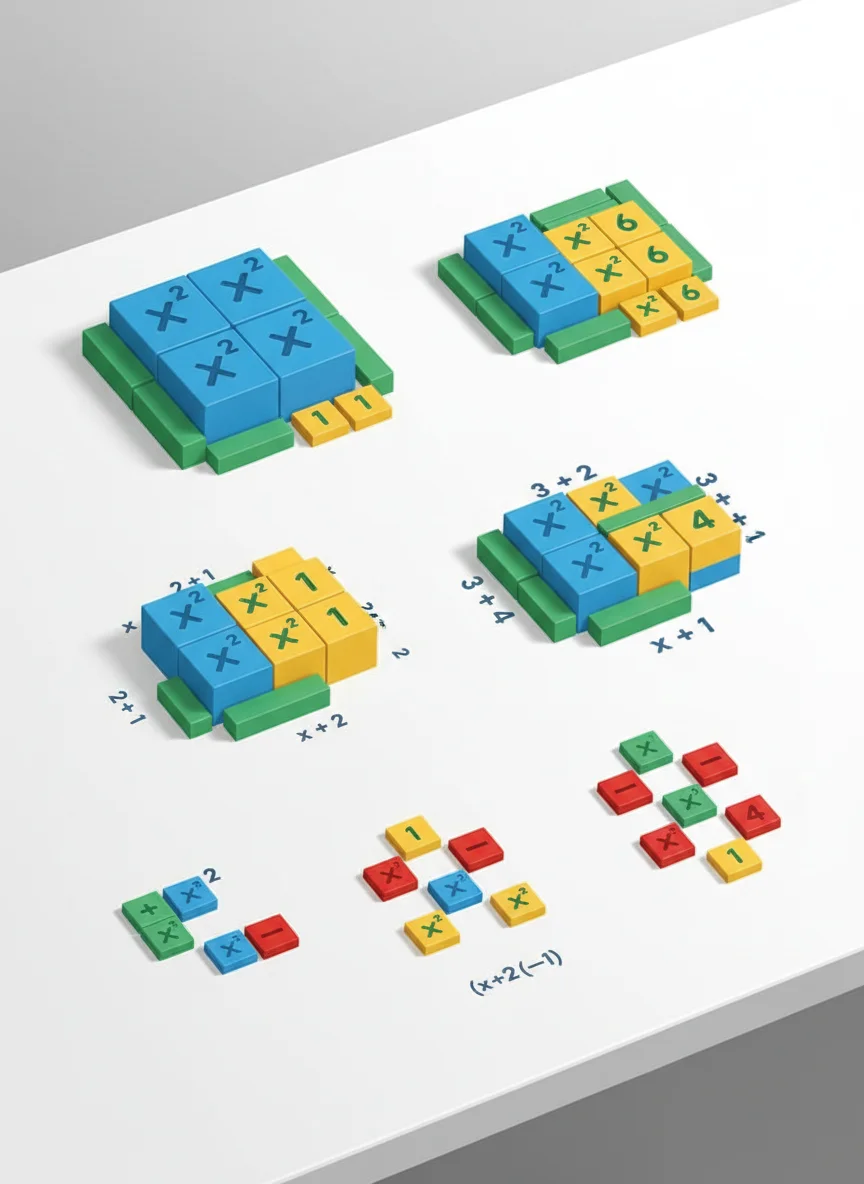
Factorisation finds common factors in expressions Algebra tiles make abstract concepts visual Look for equal groupings in tile arrangements Practice leads to fluency in factorisation Next: Apply these skills to more complex expressions