Fast & Furious: Camera Angles Decoded
Exploring cinematic techniques through action cinema Year 8 Media Studies Understanding visual storytelling
What Are Camera Angles?
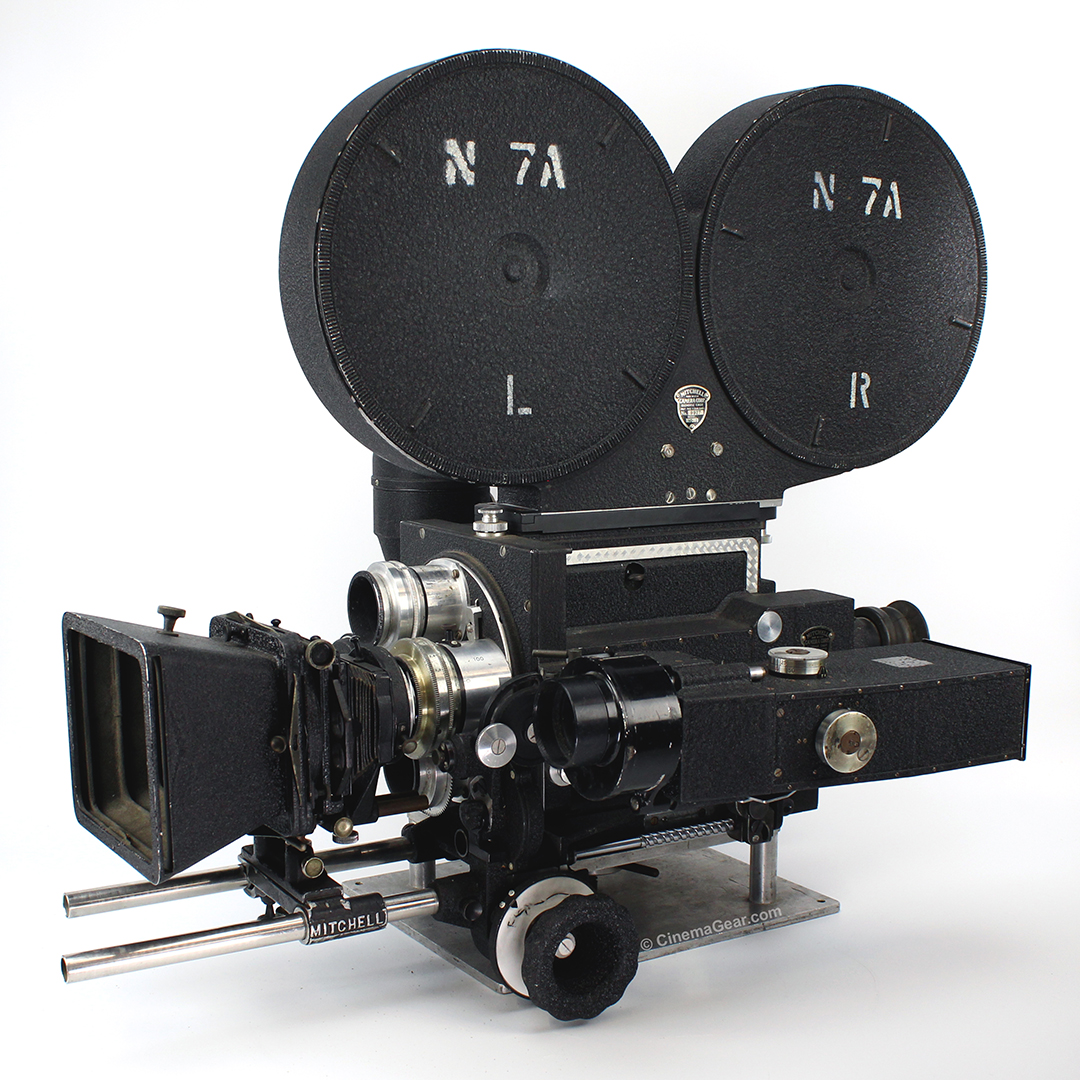
The position from which a camera captures a scene Creates different feelings and meanings Helps tell the story without words Directors choose angles carefully for maximum impact

High Angle Shot
Camera positioned above the subject looking down Makes characters appear small, weak, or vulnerable Creates sense of powerlessness or defeat Often used when characters face overwhelming challenges

Low Angle Shot
Camera positioned below the subject looking up Makes characters appear powerful, dominant, or heroic Creates sense of strength and authority Often used for villains or heroes in triumphant moments
Angle Detective Challenge
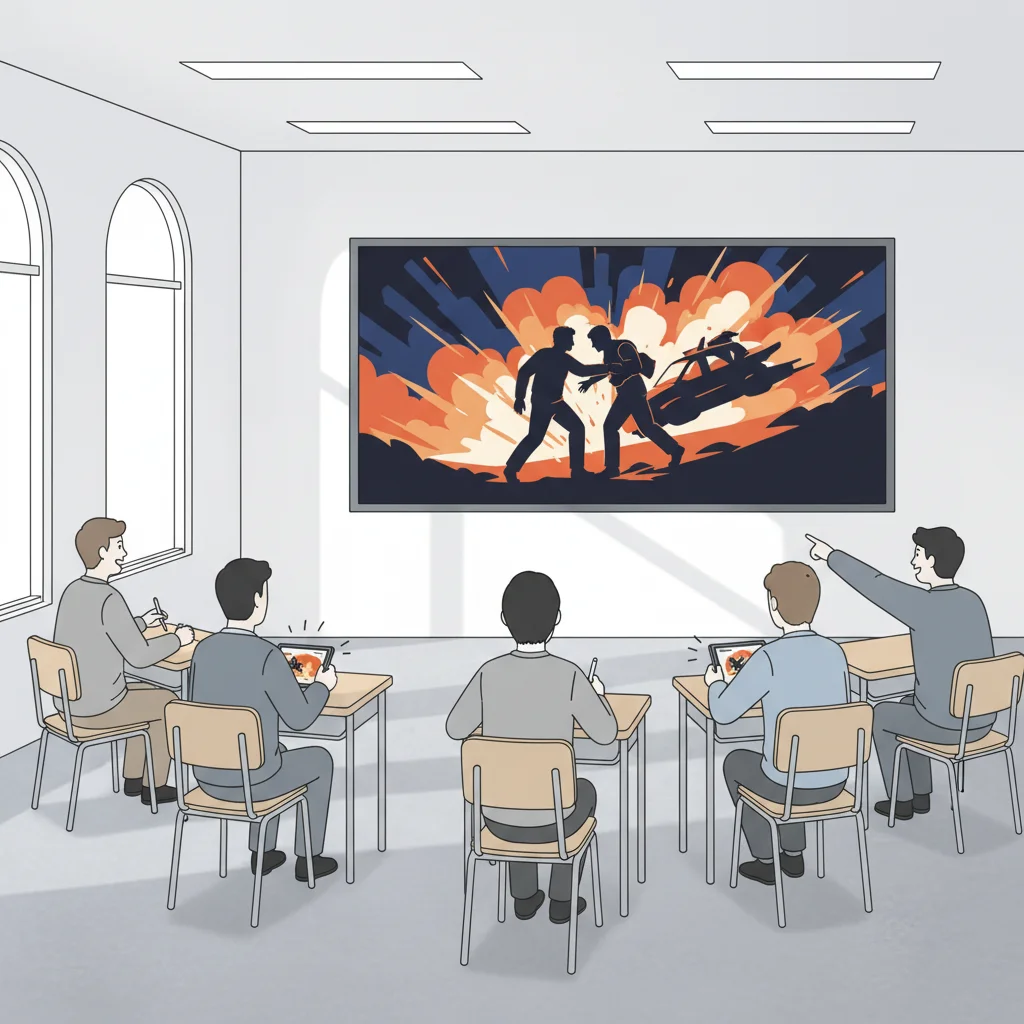
Watch the Fast & Furious clip Identify 3 different camera angles Write down what feeling each angle creates Share your observations with a partner
Eye Level Shot
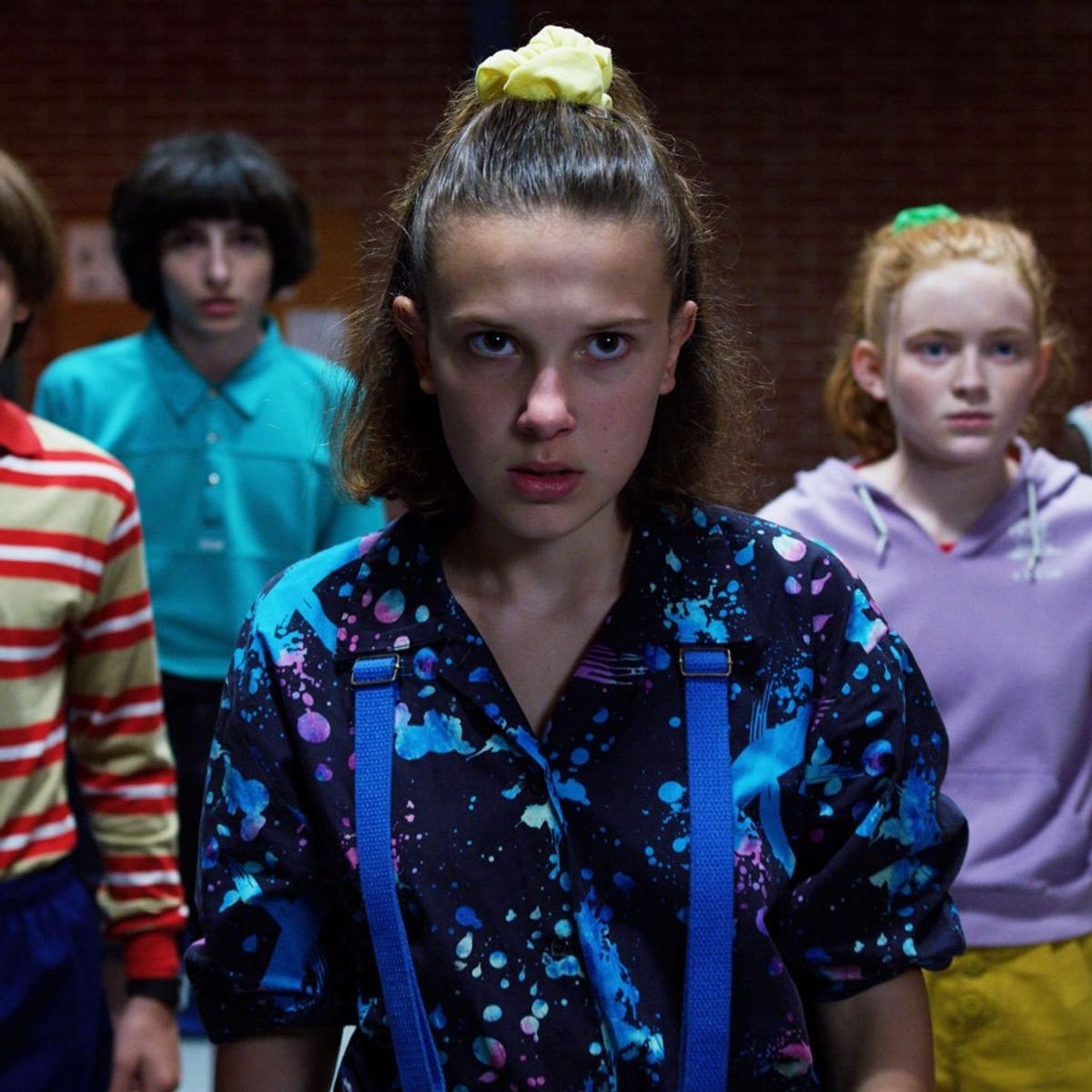
Camera at same height as the subject's eyes Creates natural, comfortable feeling Makes audience feel equal to the character Most common angle in dialogue scenes
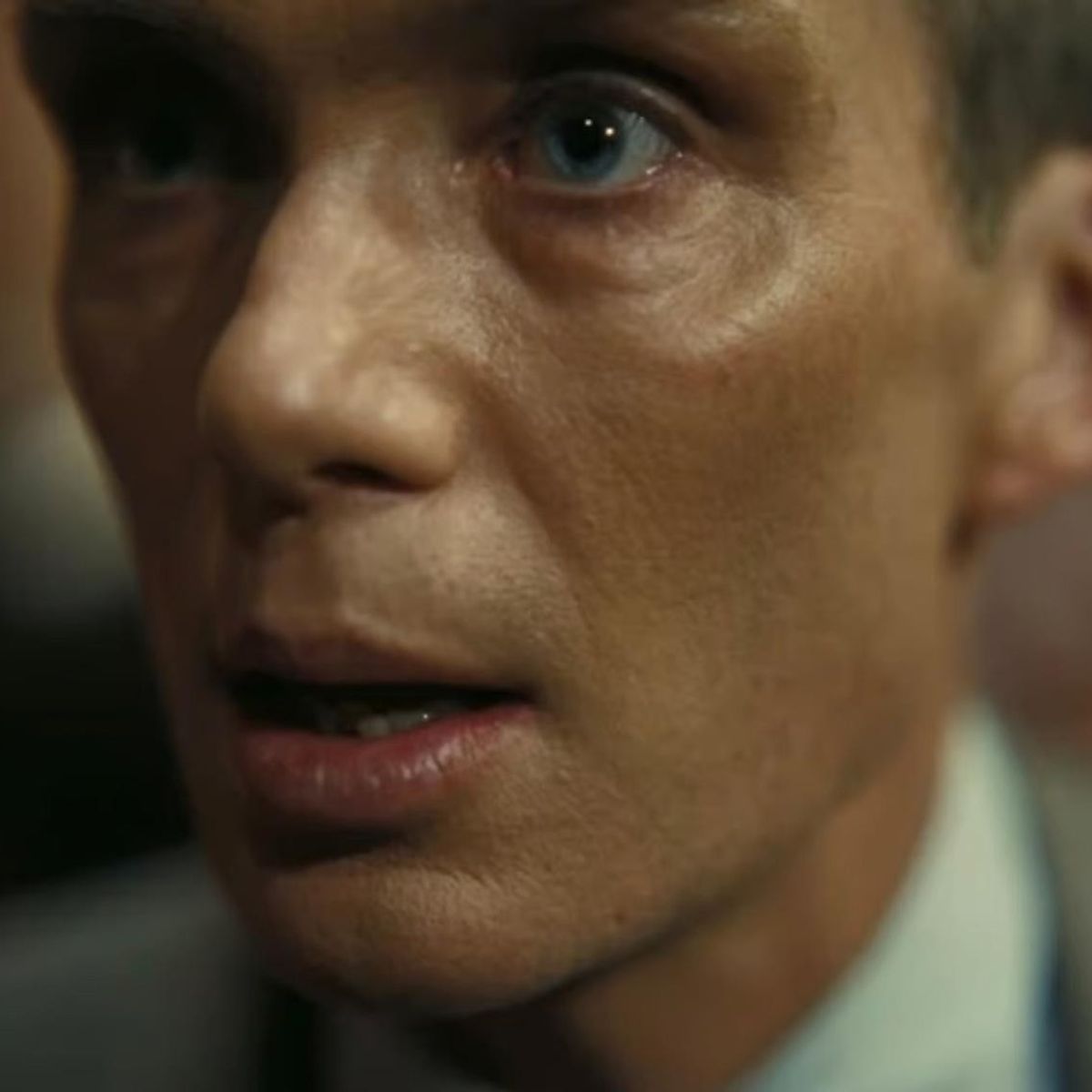
Close-Up vs Wide Shot
{"left":"Shows character emotions and reactions\nCreates intimacy with the audience\nReveals important details\nBuilds emotional connection","right":"Shows the entire scene and setting\nEstablishes location and context\nShows relationships between characters\nCreates sense of scale and environment"}

Think About It
How would a high angle shot of a villain change our feelings about them? What if the hero was always filmed from below? Why might directors mix different angles in one scene?

Camera Movement in Action
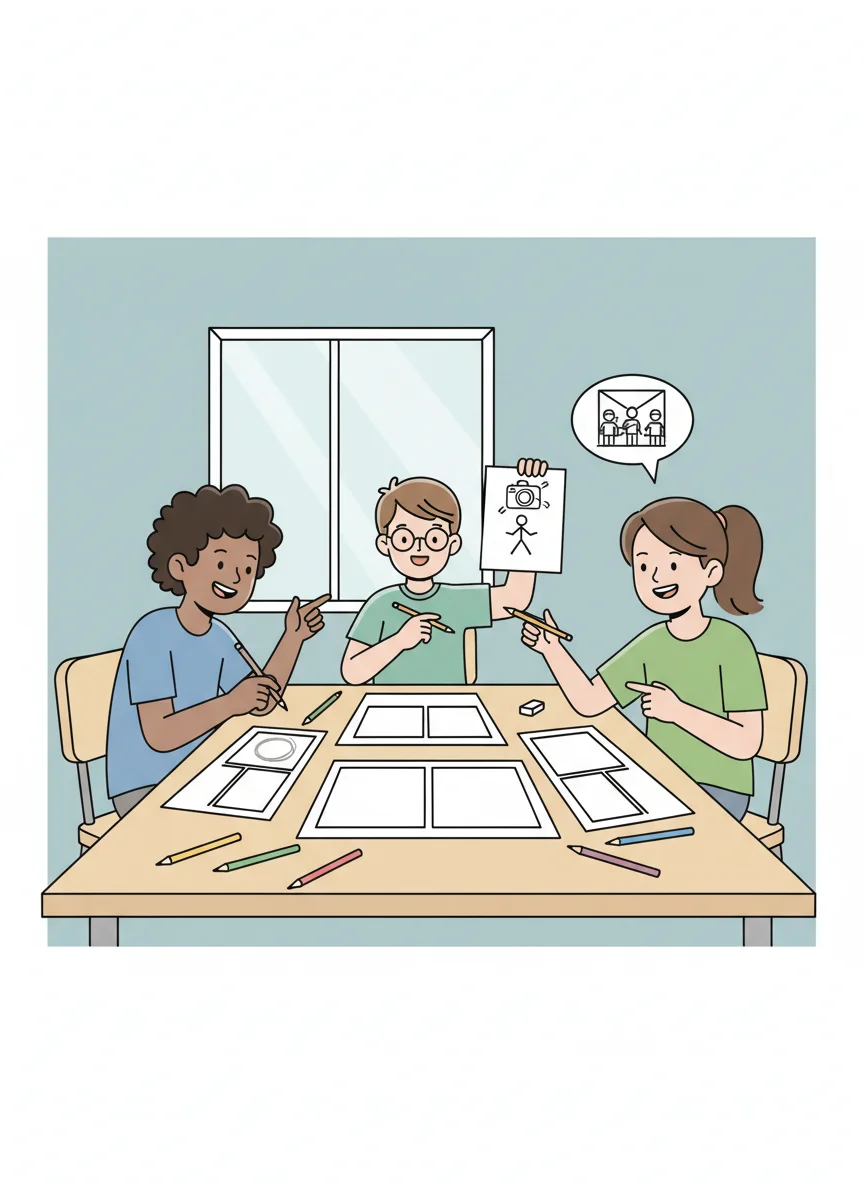
Your Turn: Create a Scene
Choose a simple scenario (meeting a friend, finding something lost) Plan 4 different camera angles for your scene Explain what emotion each angle should create Consider: What story are you telling with your angles?