Fractions and Equivalence Explored
Year 6 Mathematics Understanding fractions and their equivalent forms Australian Victorian Curriculum VC2M6N05
What Are Fractions?
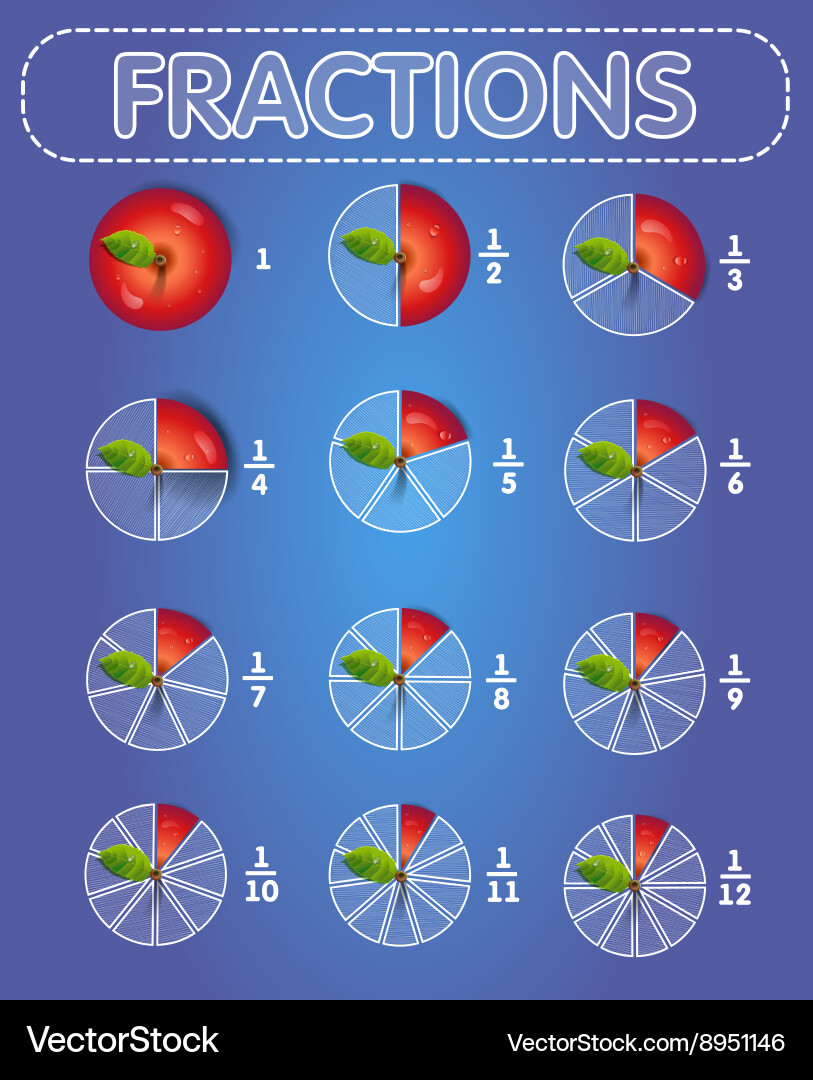
A fraction shows parts of a whole The top number is the numerator (parts we have) The bottom number is the denominator (total parts) Fractions help us describe amounts between whole numbers
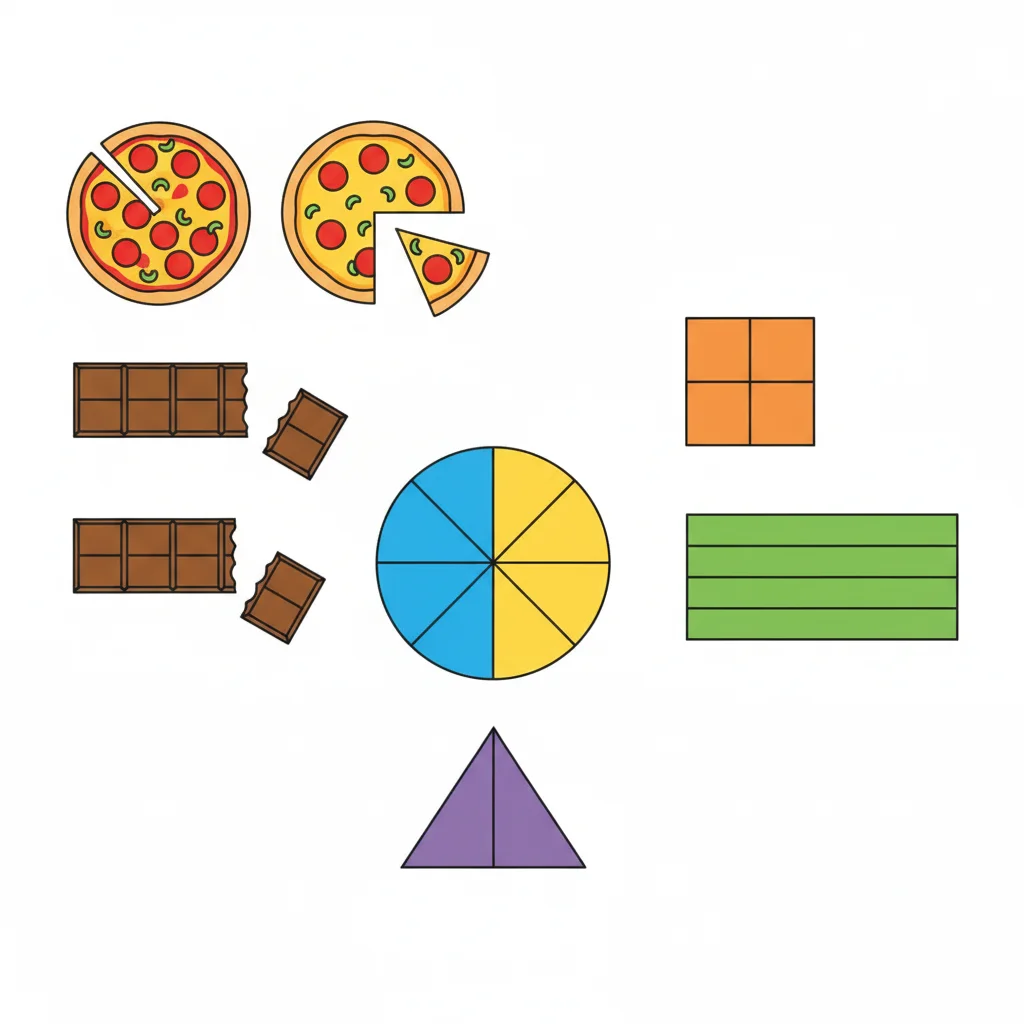
Fraction Hunt Around Us
Look around the classroom Find objects that show fractions Share what you discovered Discuss how fractions appear in daily life

Representing Fractions Visually
Circles divided into equal parts Rectangles split into sections Groups of objects Number lines with equal intervals

Which fraction does this represent?
Look at the visual model Count the shaded parts Count the total parts Write the fraction
What Are Equivalent Fractions?
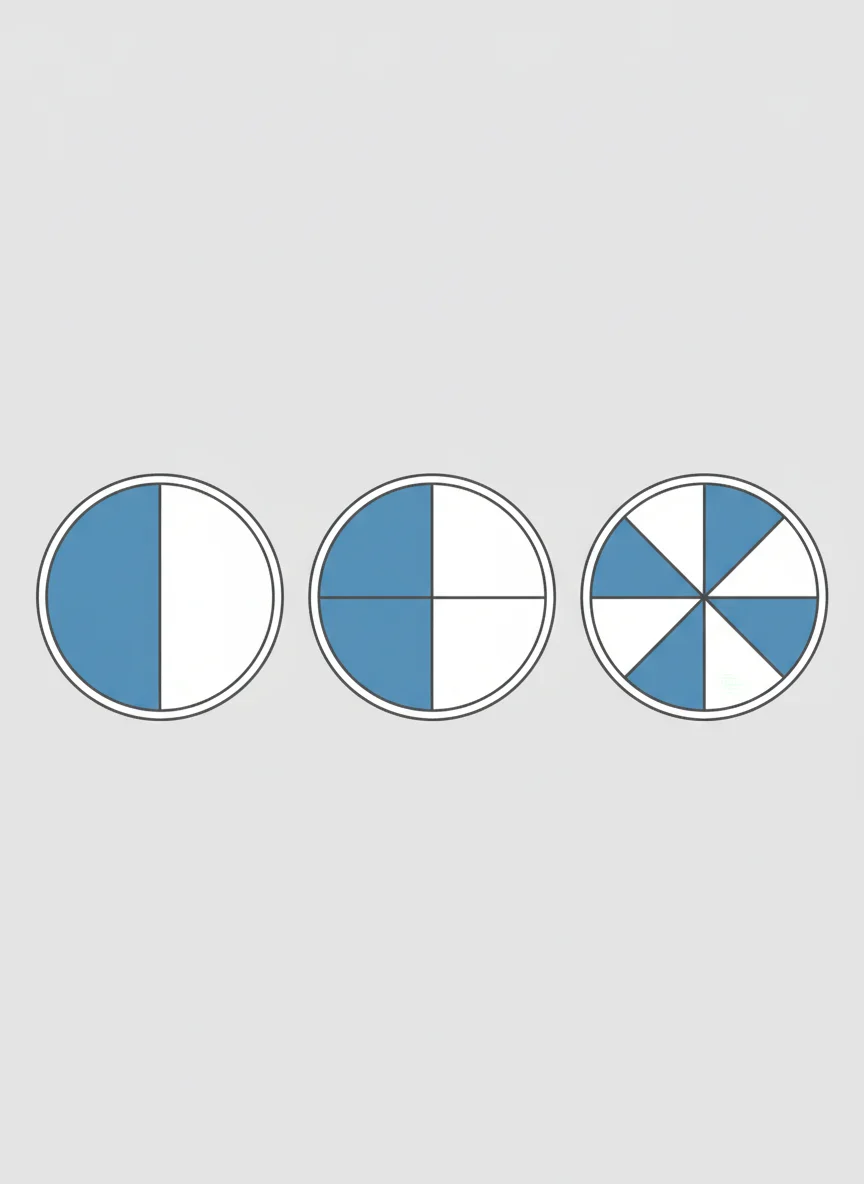
Different fractions that represent the same amount They look different but have equal value Like different ways to say the same thing Examples: 1/2 = 2/4 = 3/6

Equivalent Fractions on a Number Line
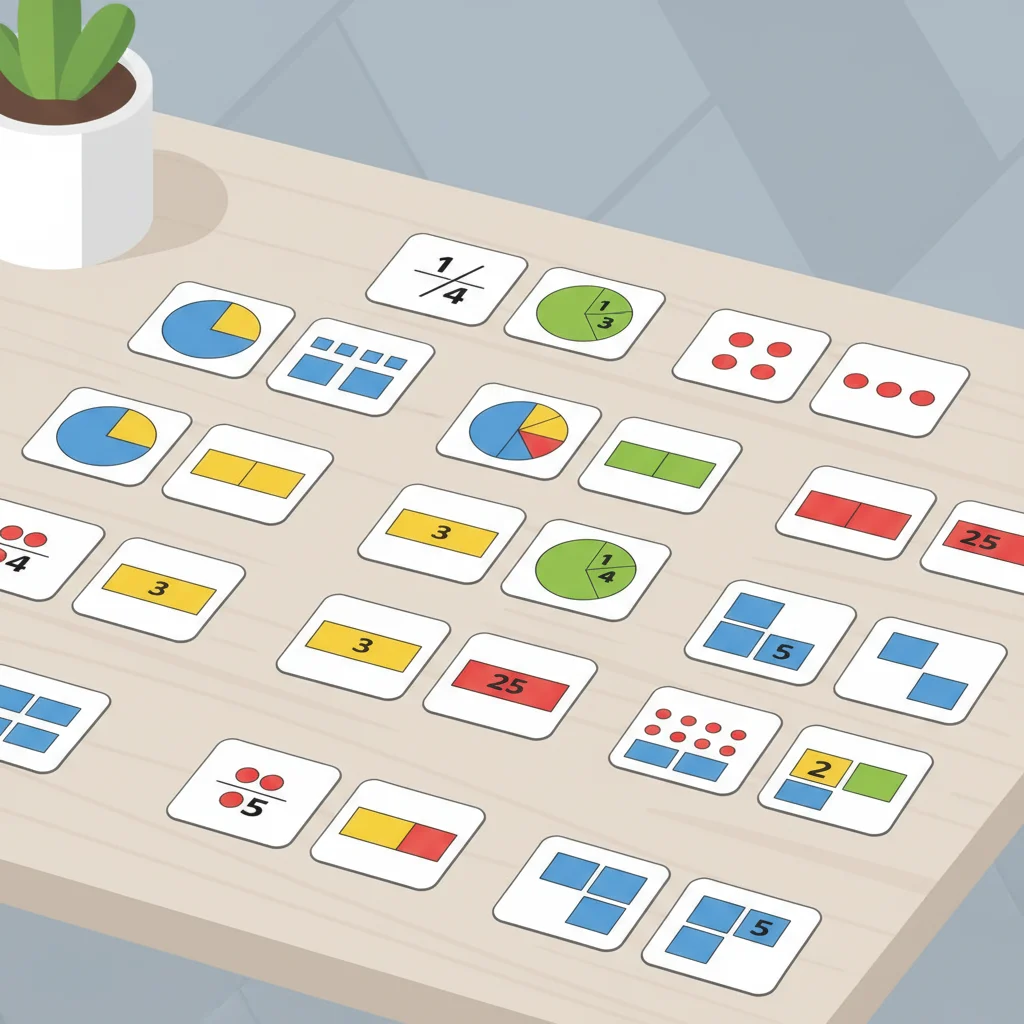
Equivalent Fraction Matching
Match fractions that are equivalent Use visual models to help you Work with a partner Check your answers using drawings

Finding Equivalent Fractions
{"left":"Multiply both numerator and denominator by the same number\nDivide both numerator and denominator by the same number","right":"Use visual models to check your work\nThe value stays the same even though the numbers change"}
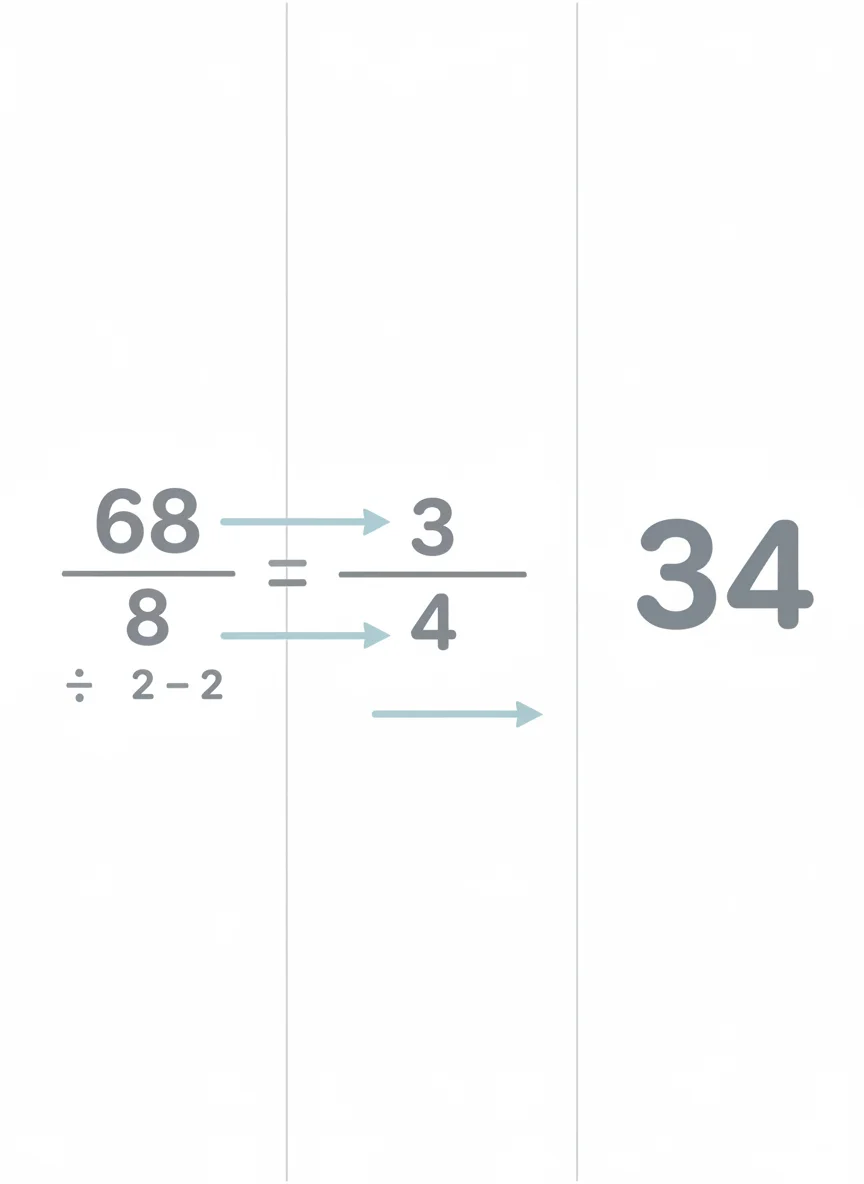
Simplifying Fractions
Finding the simplest form of a fraction Divide both parts by their greatest common factor The simplest form has the smallest possible numbers Example: 6/8 simplifies to 3/4
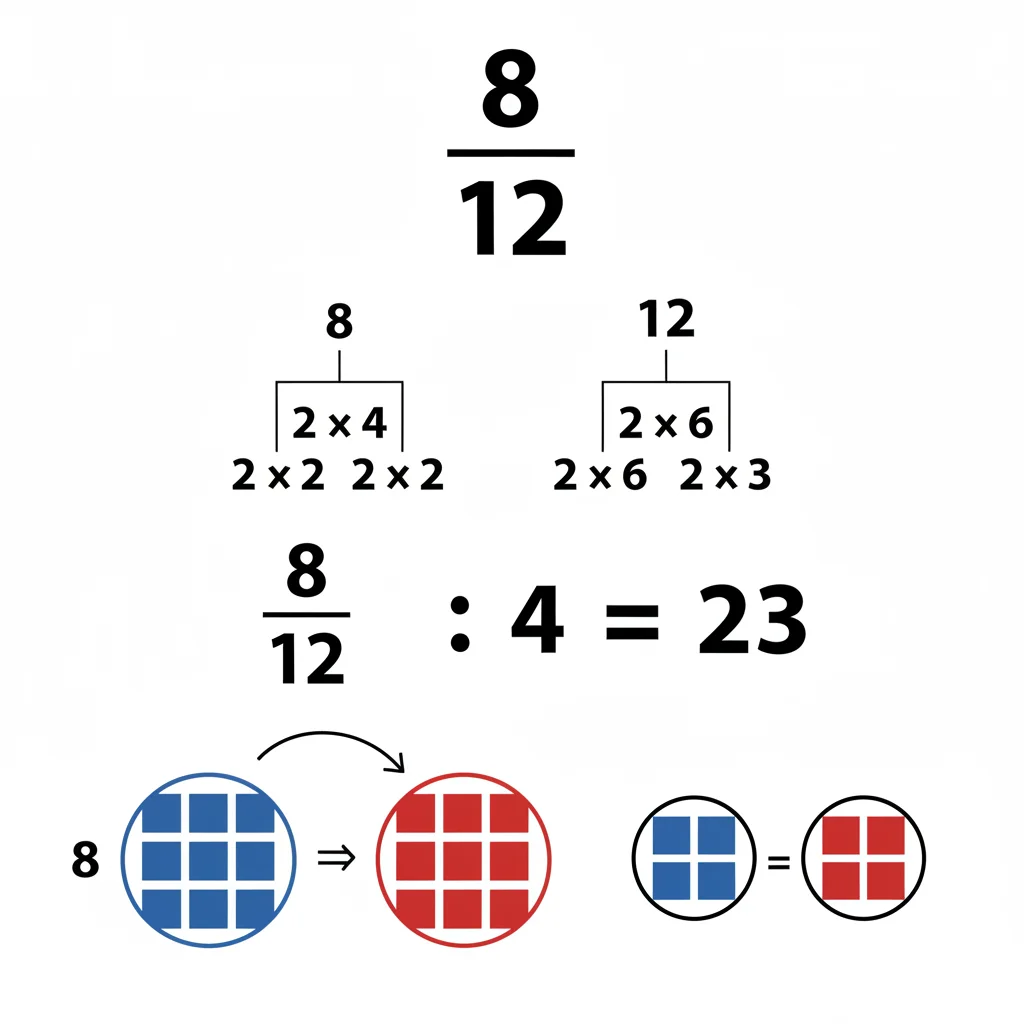
Simplify This Fraction
Look at the fraction 8/12 Find the largest number that divides both 8 and 12 Divide both numbers by this factor What is the simplest form?
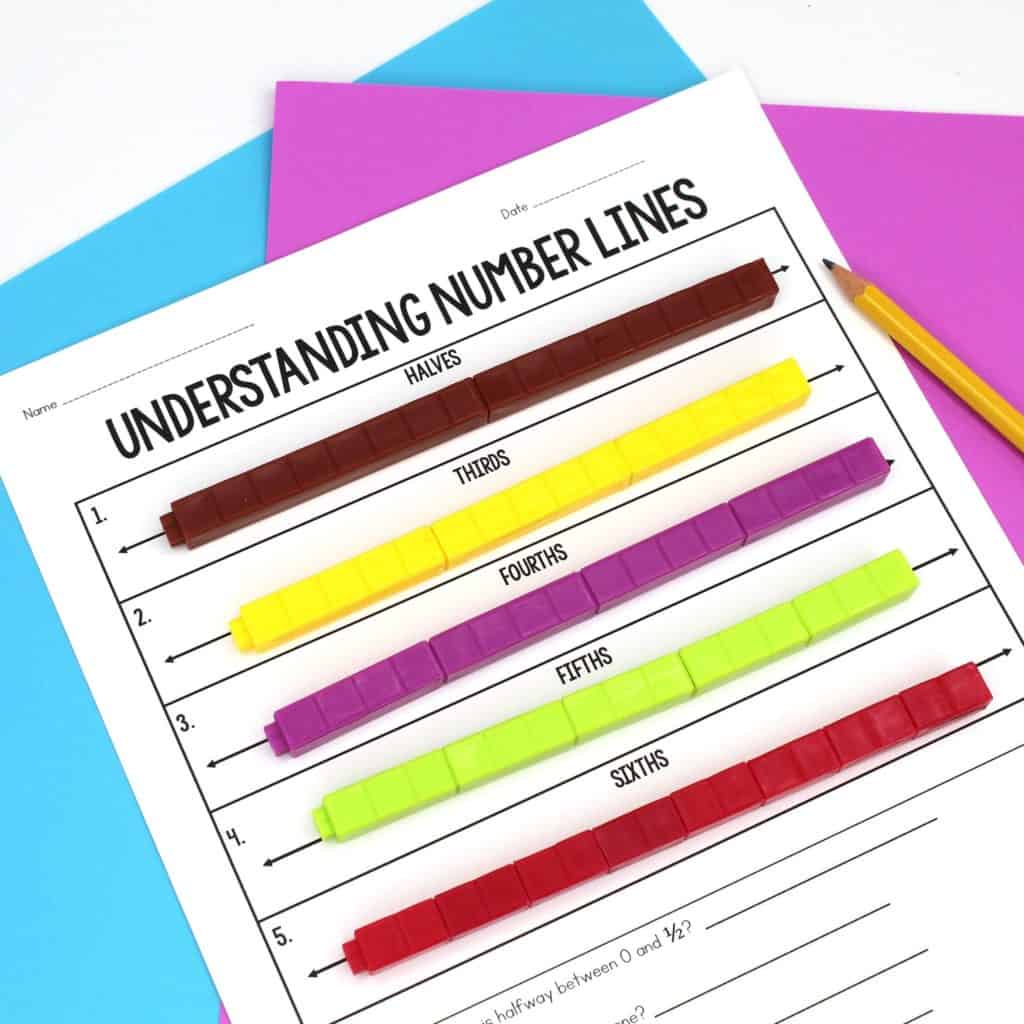
Fraction Number Line Challenge
Place fractions on the number line Find equivalent positions Use different denominators Compare your answers with classmates
4 more slides available after you open the deck.
Download all 16 slides