Home Energy: Taming the Vampires
Year 8 Science Energy Transfer and Conservation Victorian Curriculum
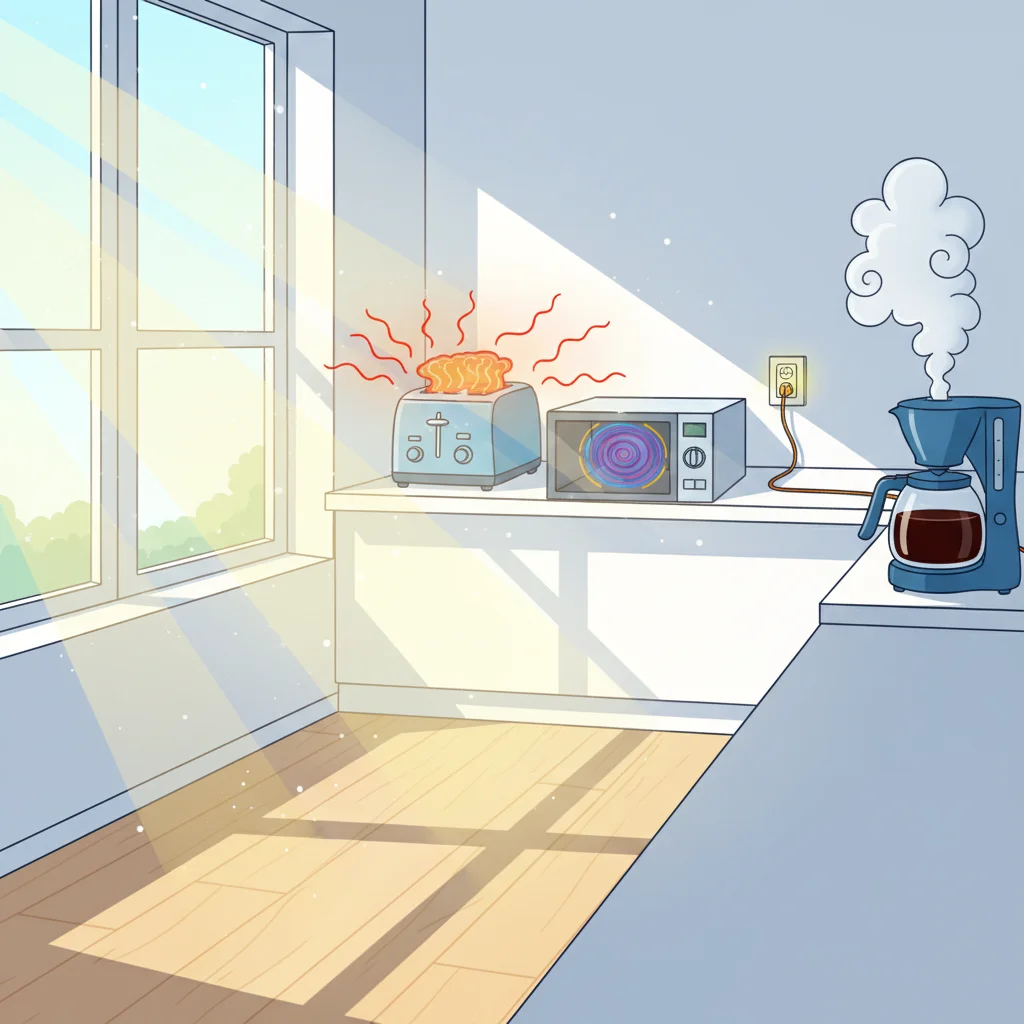
What is Energy?
Think about your morning routine What forms of energy do you encounter? How does energy move through your home?

Forms of Energy in Your Home
Electrical energy - powers all your devices Heat energy - cooking, heating, cooling Light energy - illumination and displays Mechanical energy - fans, motors, moving parts Sound energy - speakers, alarms, notifications
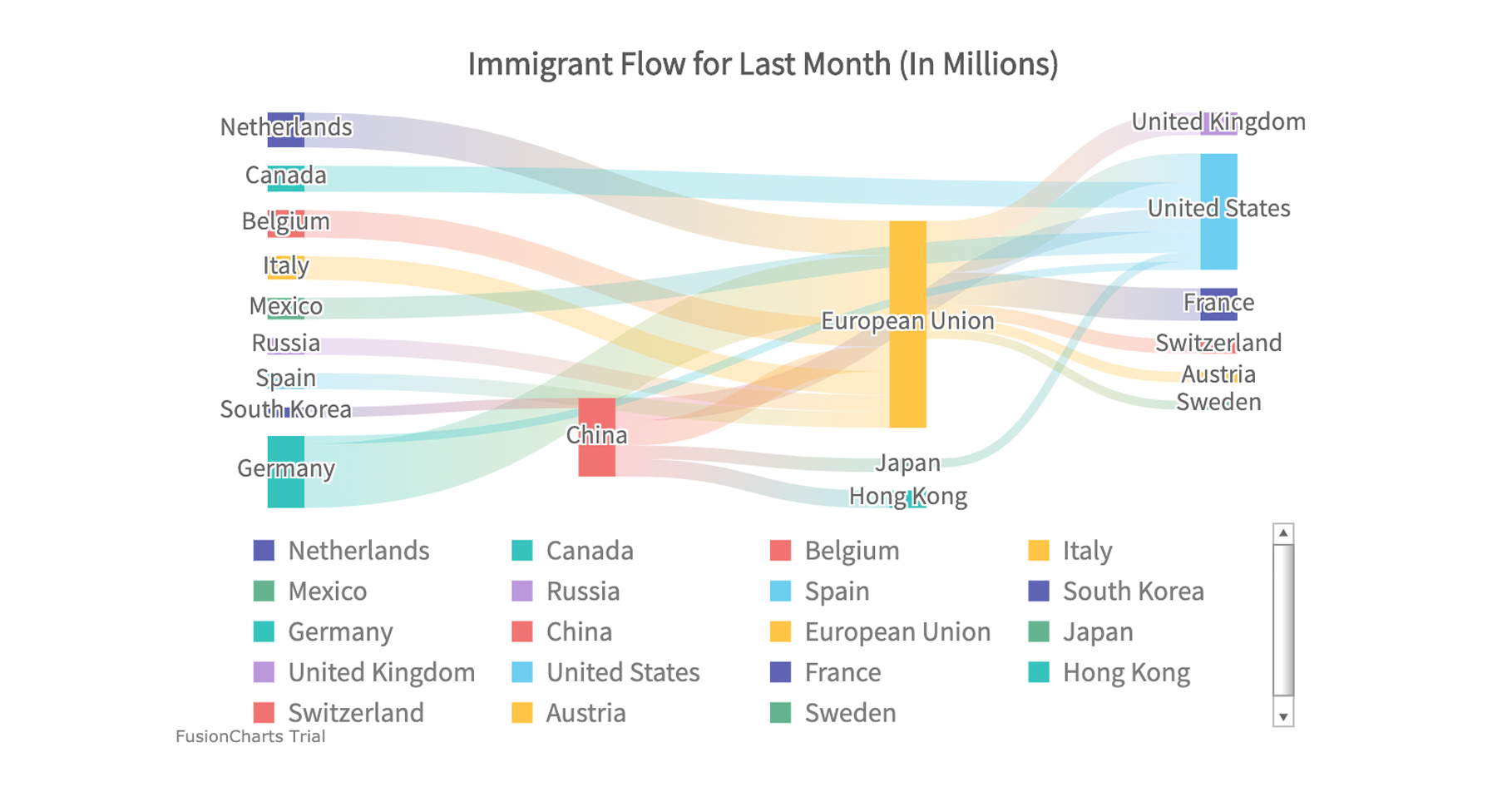
Energy Flow in Homes: Sankey Diagram
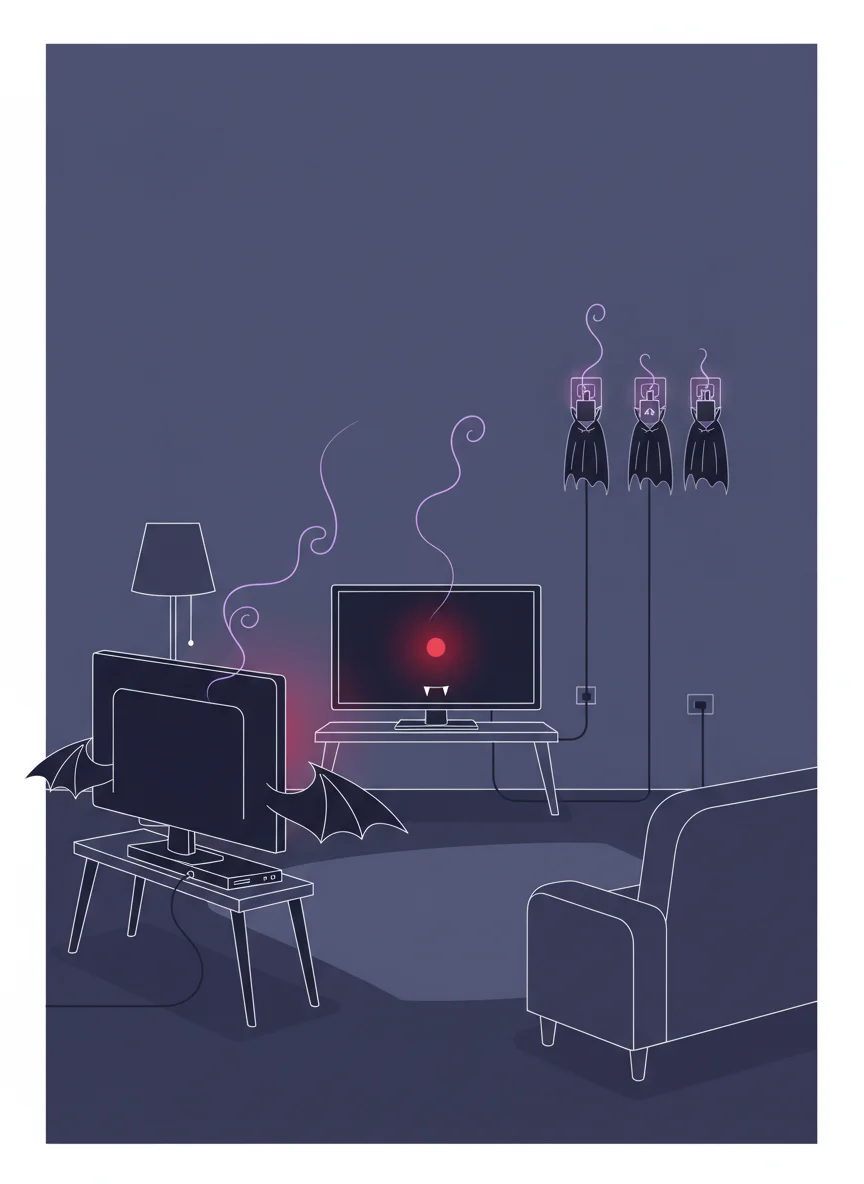
Meet the Energy Vampires
Devices that consume power when 'off' Also called standby power or phantom load Examples: TVs, game consoles, chargers Can account for 5-10% of home energy use Costs Australian households $100+ per year
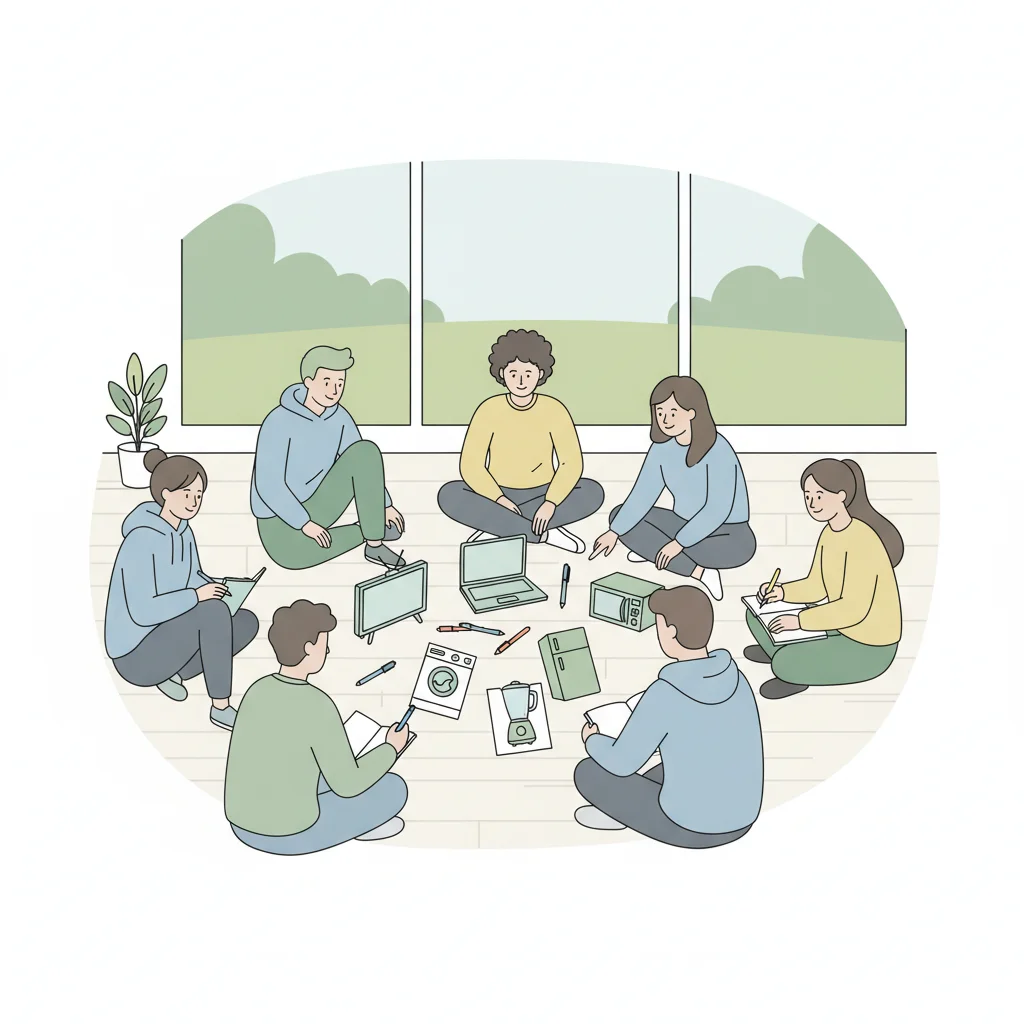
Vampire Hunt Activity
Work in groups of 4-5 students List all electrical devices in your home Identify which ones are 'energy vampires' Estimate how many hours per day they're plugged in Calculate potential energy waste

Energy Transfer Examples
Refrigerator: electrical → cooling (heat removal) Oven: electrical → heat energy for cooking TV: electrical → light + sound + heat (waste) Phone charger: electrical → chemical (battery storage) LED bulb: electrical → light + small amount of heat
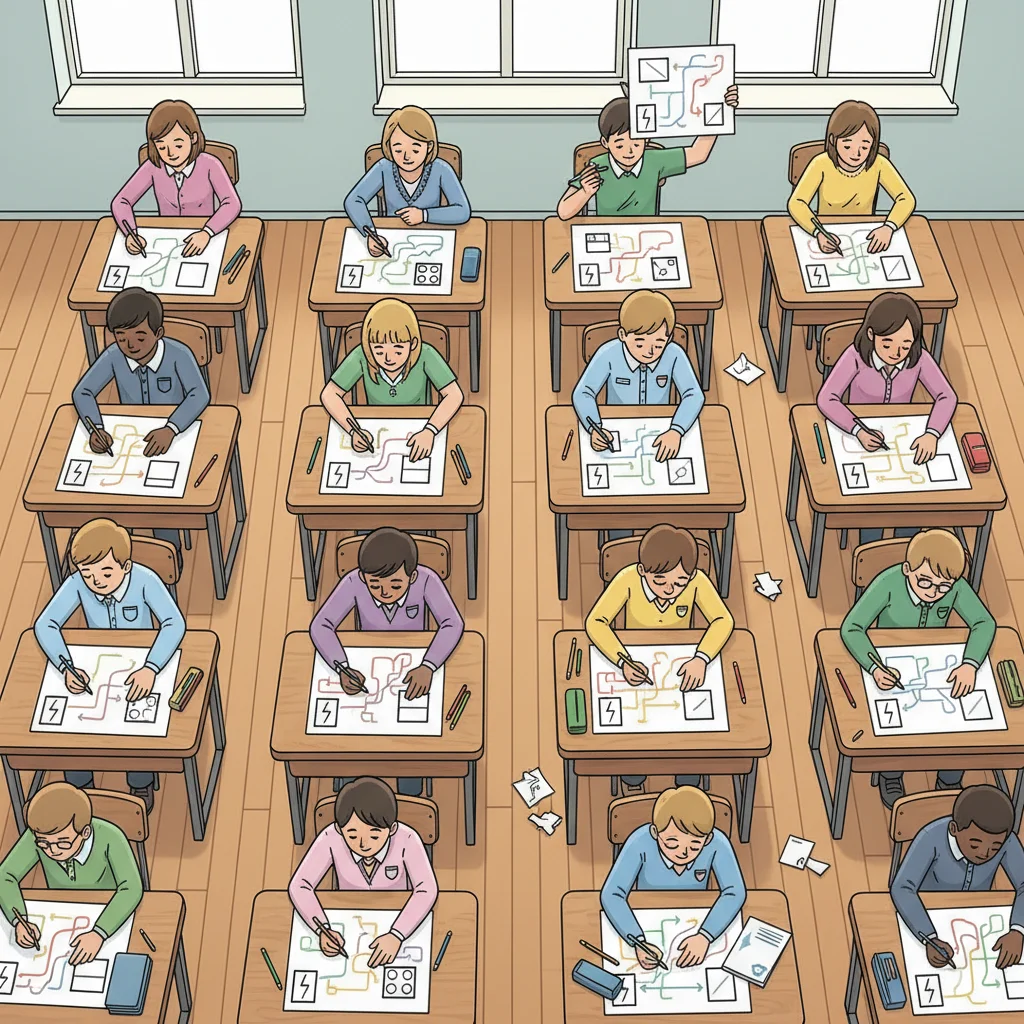
Energy Flow Mapping
Use the house floor plan worksheet Draw energy flow arrows from meter to appliances Show different energy forms with different colors Mark vampire energy locations with special symbols Include energy losses as heat
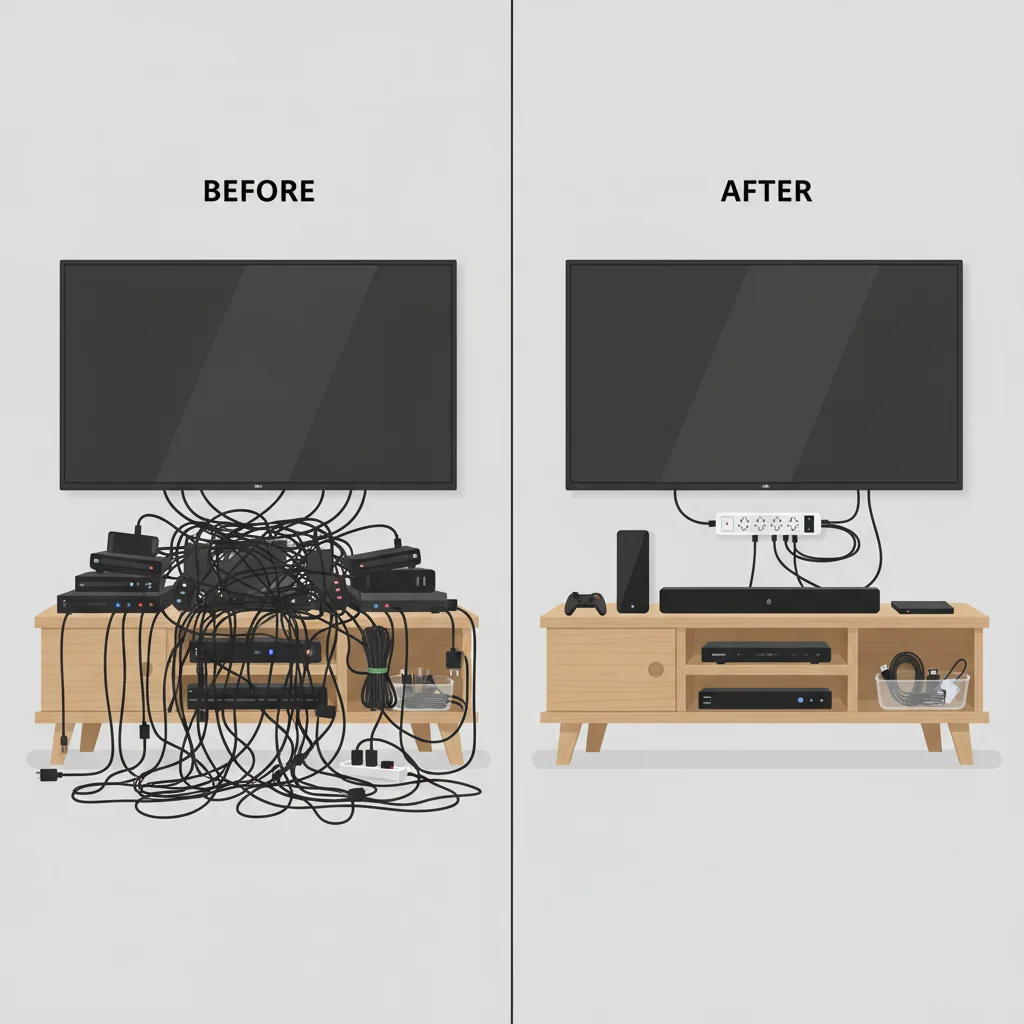
Taming the Vampires: Solutions
{"left":"Unplug devices when not in use\nUse power boards with switches\nChoose ENERGY STAR appliances\nSet devices to full 'off' mode","right":"Use smart power strips\nReplace old appliances\nEducate family members\nMonitor energy bills"}
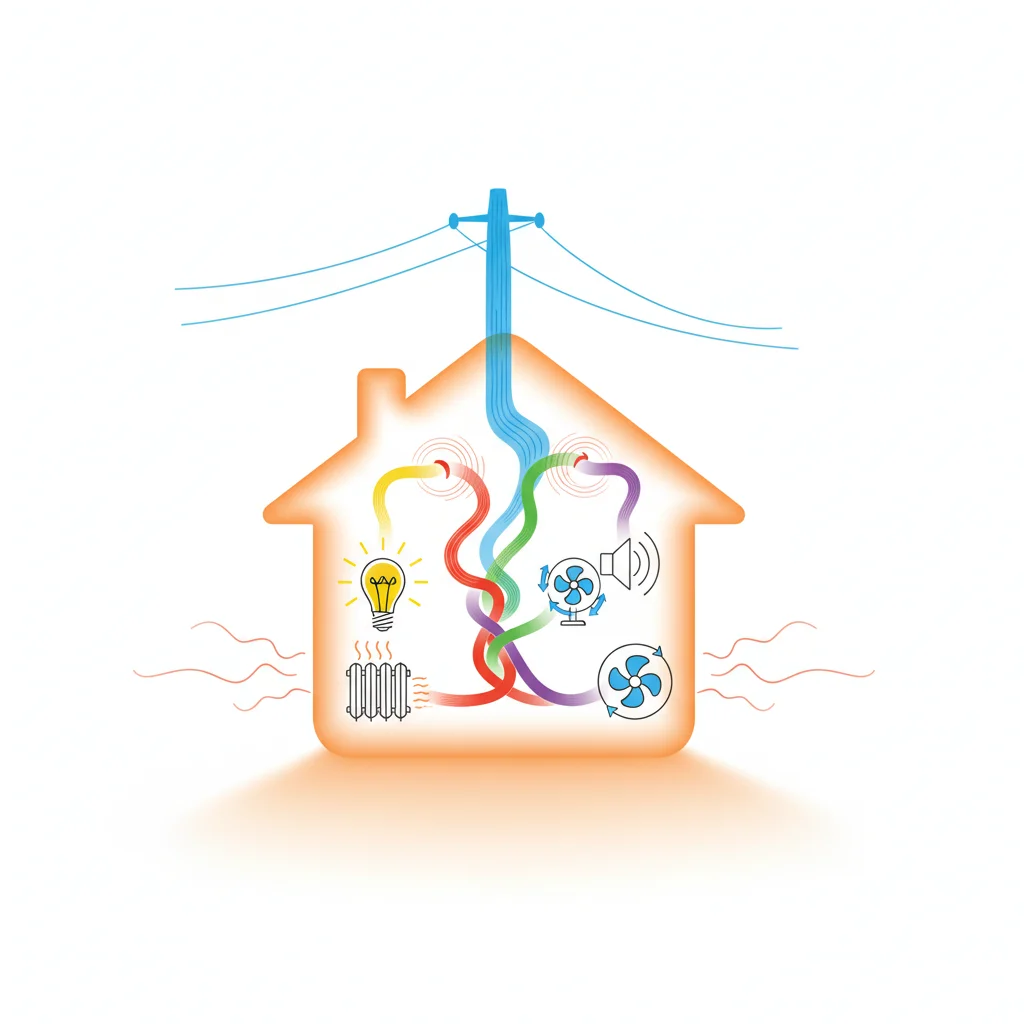
Conservation of Energy in Action
Energy cannot be created or destroyed, only transferred or transformed from one form to another - First Law of Thermodynamics