Major Intervals in Music Theory
Understanding the building blocks of music Year 10 Music Theory Victorian Curriculum
What Are Intervals?
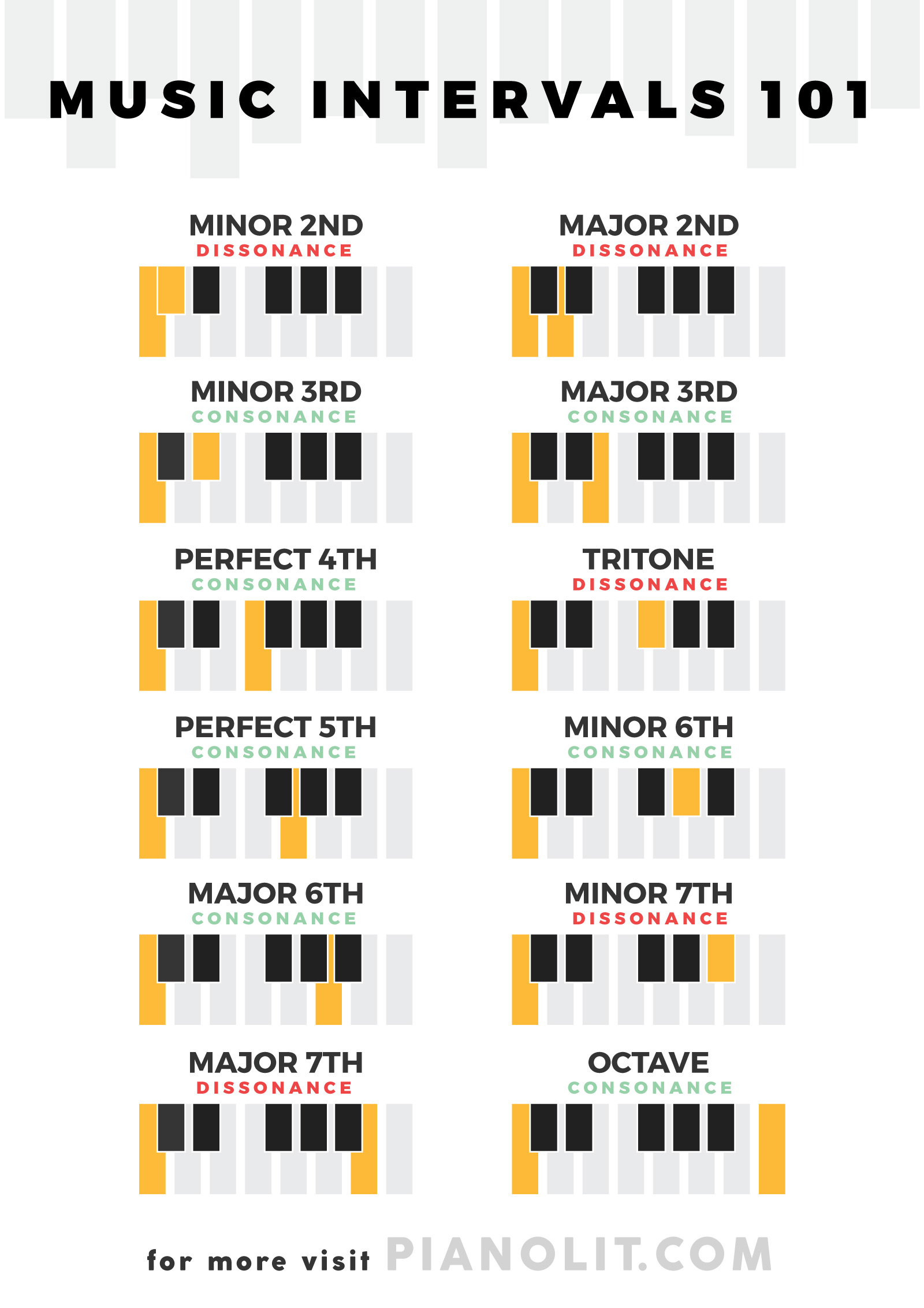
The distance between two musical notes Measured in semitones (half steps) Foundation of melody and harmony Essential for understanding chord construction
Think About This...
Can you hear the difference between 'Happy Birthday' and 'Mary Had a Little Lamb'? What makes one melody sound different from another?
The Chromatic Scale Foundation
12 semitones in an octave Each key on the piano represents one semitone C to C# = 1 semitone C to D = 2 semitones (1 tone)

Major Scale Pattern

Major Intervals Defined
Intervals that occur naturally in the major scale Always measured from the tonic (first note) Create a bright, consonant sound Form the basis of major chords and melodies
The Seven Major Intervals
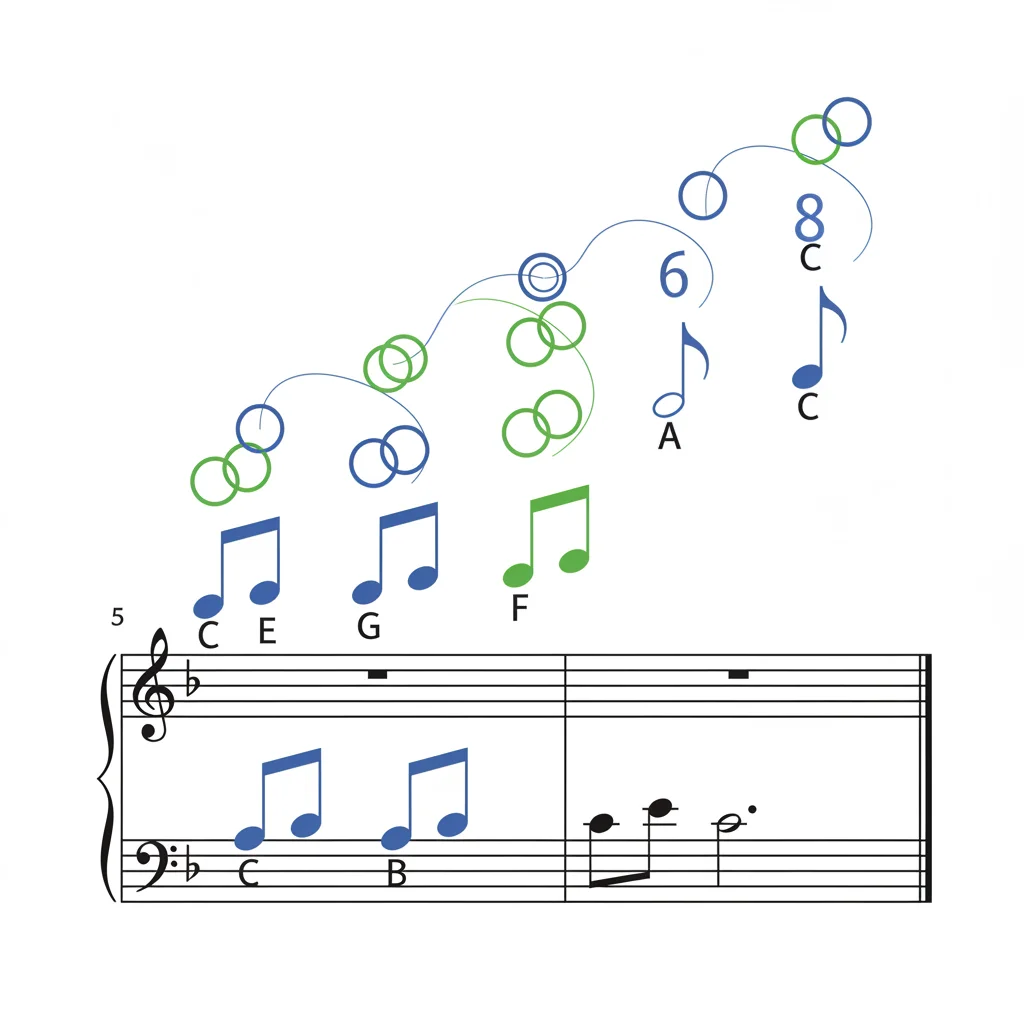
{"left":"Perfect Unison (0 semitones)\nMajor 2nd (2 semitones)\nMajor 3rd (4 semitones)\nPerfect 4th (5 semitones)","right":"Perfect 5th (7 semitones)\nMajor 6th (9 semitones)\nMajor 7th (11 semitones)\nPerfect Octave (12 semitones)"}

Listen and Identify
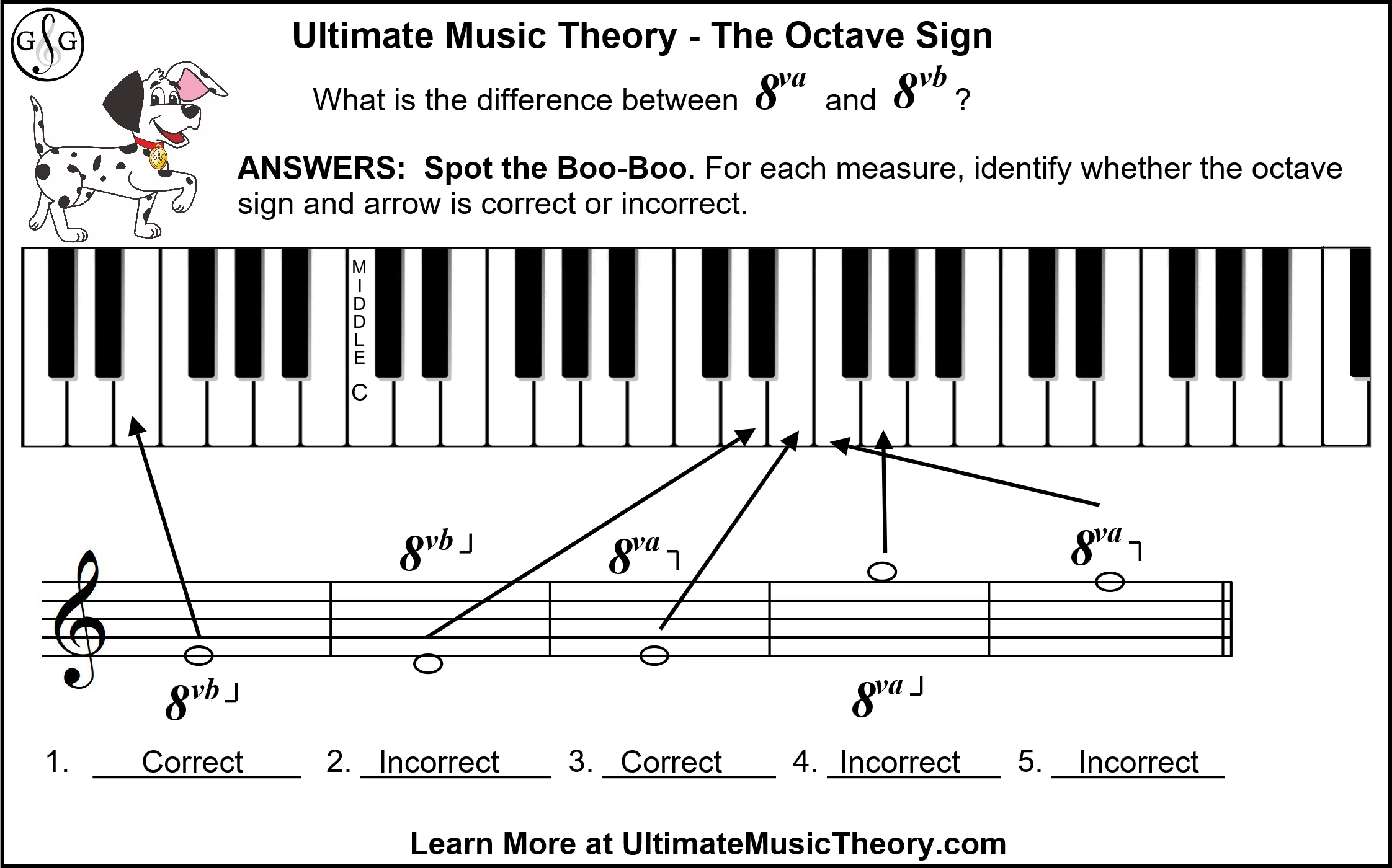
Play each major interval on the piano Listen to the unique sound of each interval Try to sing back what you hear Notice how each interval has its own character

Major 2nd - The Stepping Stone
2 semitones apart (1 whole tone) C to D, F to G, A to B Sounds like the beginning of 'Happy Birthday' Creates gentle movement in melodies
Major 3rd - The Happy Sound
4 semitones apart C to E, F to A, G to B Forms the foundation of major chords Sounds like 'Kumbaya' or 'Oh When the Saints'
Perfect 5th - The Power Interval
7 semitones apart C to G, D to A, E to B Sounds like 'Twinkle Twinkle Little Star' Creates strong, stable harmony

Interval Building Challenge
Start with C on the piano Build each major interval upward from C Say the interval name as you play it Try building intervals from other starting notes
2 more slides available after you open the deck.
Download all 14 slides