Major vs Harmonic Minor Scales
Understanding Scale Formulas and Their Musical Character Year 10 Music Theory 60-minute lesson

Scale Formula Fundamentals
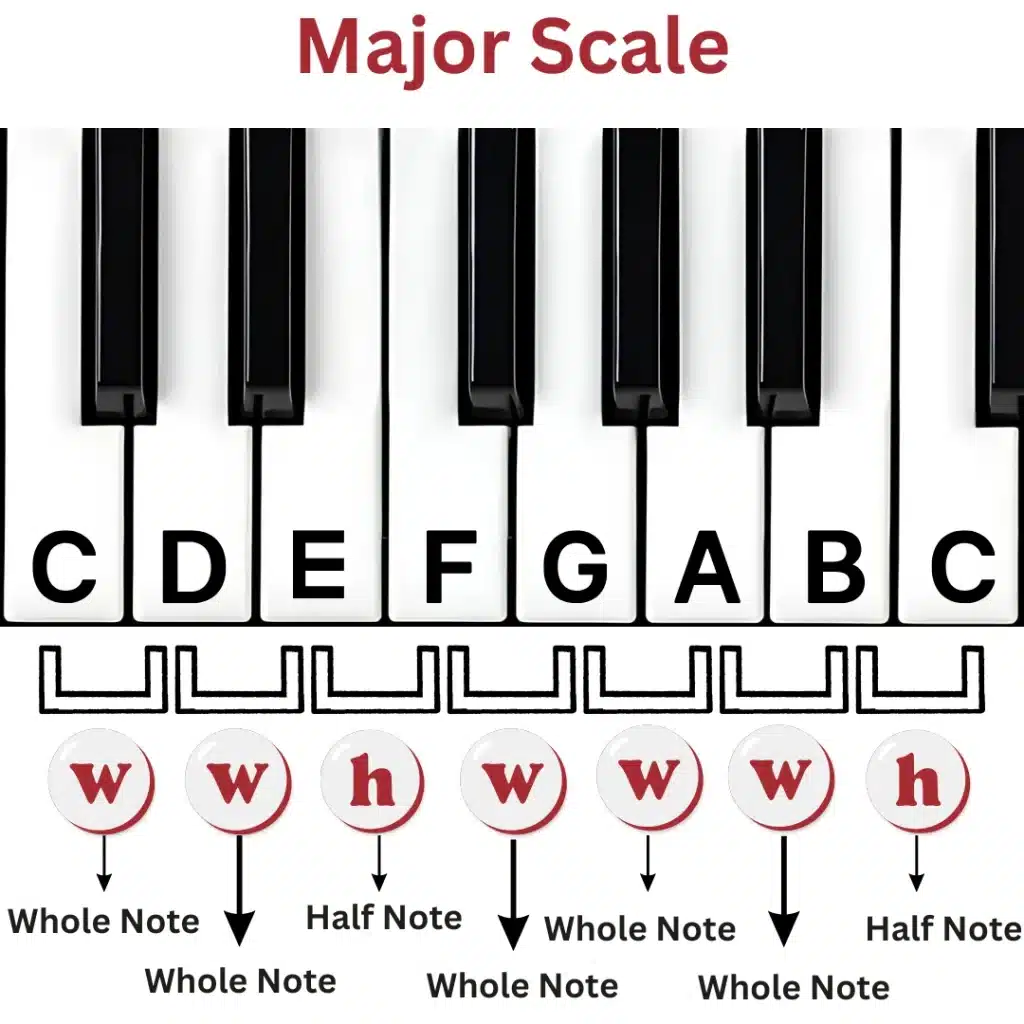
Major Scale: W-W-H-W-W-W-H Harmonic Minor: W-H-W-W-H-Aug2-H W = Whole step (tone) H = Half step (semitone) Aug2 = Augmented 2nd (unique to harmonic minor)

Listening Challenge
Listen to scale examples Identify: Major or Harmonic Minor? Describe the mood and character Note the distinctive 'exotic' sound of harmonic minor
Scale Construction Practice
{"left":"C Major Scale Construction\nApply W-W-H-W-W-W-H formula\nStart on C, follow the pattern\nResult: C-D-E-F-G-A-B-C","right":"A Harmonic Minor Construction\nApply W-H-W-W-H-Aug2-H formula\nStart on A, follow the pattern\nResult: A-B-C-D-E-F-G#-A"}

Scale Comparison Chart

Practical Performance
Play/sing C major scale Play/sing A harmonic minor scale Practice slowly, focus on accuracy Listen for the characteristic sound differences Use your voice or available instruments

Creative Application
How might you use these scales in composition? What genres commonly use harmonic minor? How does the raised 7th degree affect the music's emotional impact?

Lesson Summary & Next Steps
Major scales create bright, stable sounds Harmonic minor adds drama with the raised 7th Both scales follow specific interval formulas Practice constructing scales in different keys Listen for these scales in your favorite music