Mastering Index Laws in Mathematics
Year 10 Mathematics Understanding the power of indices Building mathematical confidence

WALT: We Are Learning To...
Apply the fundamental index laws to simplify expressions Recognize patterns in exponential notation Solve problems involving positive, negative, and fractional indices Connect index laws to real-world applications
Success Criteria - How We'll Know We've Succeeded
I can multiply indices with the same base using a^m × a^n = a^(m+n) I can divide indices with the same base using a^m ÷ a^n = a^(m-n) I can raise a power to a power using (a^m)^n = a^(mn) I can work confidently with negative and fractional indices
What Are Indices? Foundation Knowledge
{"left":"An index (or exponent) tells us how many times to multiply a number by itself\n2³ means 2 × 2 × 2 = 8\nThe base is the number being multiplied","right":"The index is the small number that shows the power\n5² = 5 × 5 = 25\n10⁴ = 10 × 10 × 10 × 10 = 10,000"}
Index Law 1: Multiplying Powers with the Same Base
When multiplying powers with the same base, ADD the indices a^m × a^n = a^(m+n) Example: 2³ × 2⁴ = 2^(3+4) = 2⁷ = 128 Why? 2³ × 2⁴ = (2×2×2) × (2×2×2×2) = 2⁷
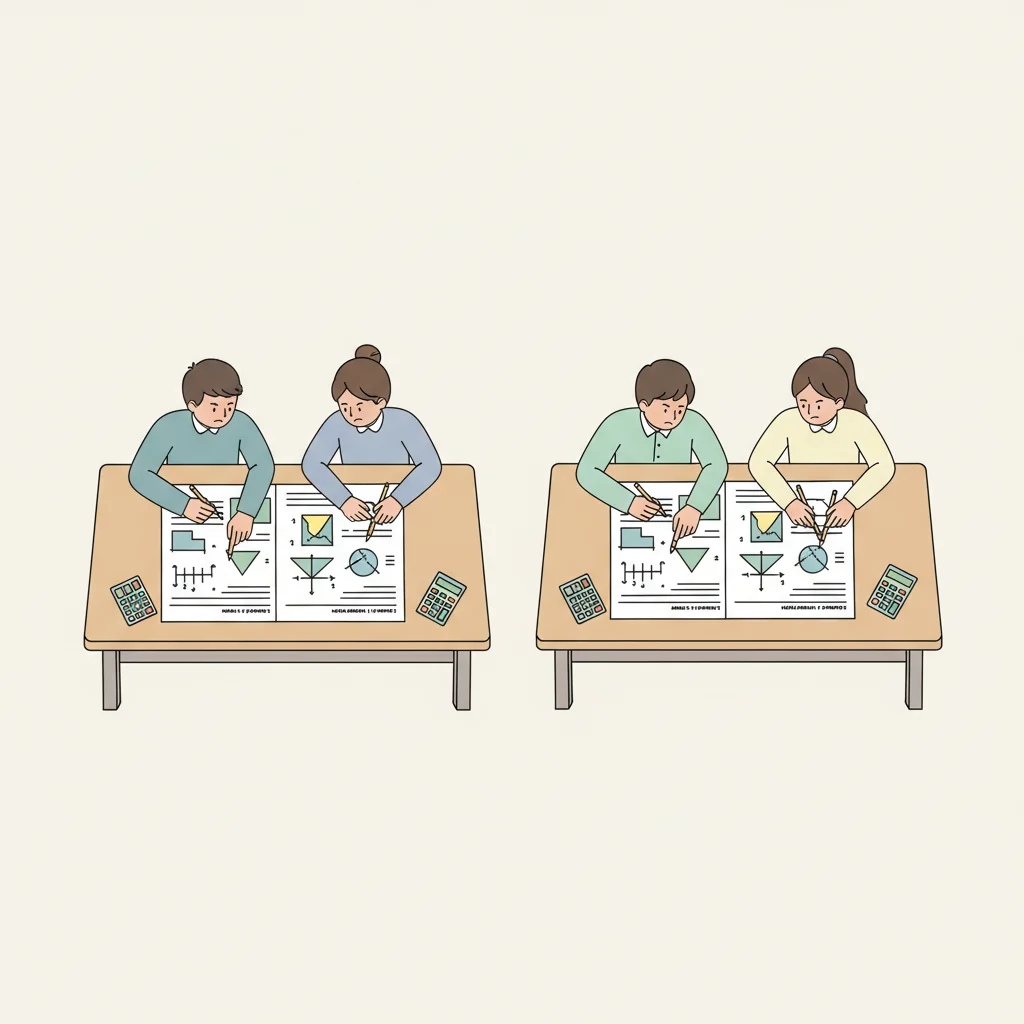
Practice Activity: Multiplication Law
Work in pairs to solve these problems: 3² × 3⁵ = ? x⁴ × x³ = ? 5¹ × 5⁶ = ? Challenge: a² × a³ × a⁴ = ?
Index Law 2: Dividing Powers with the Same Base
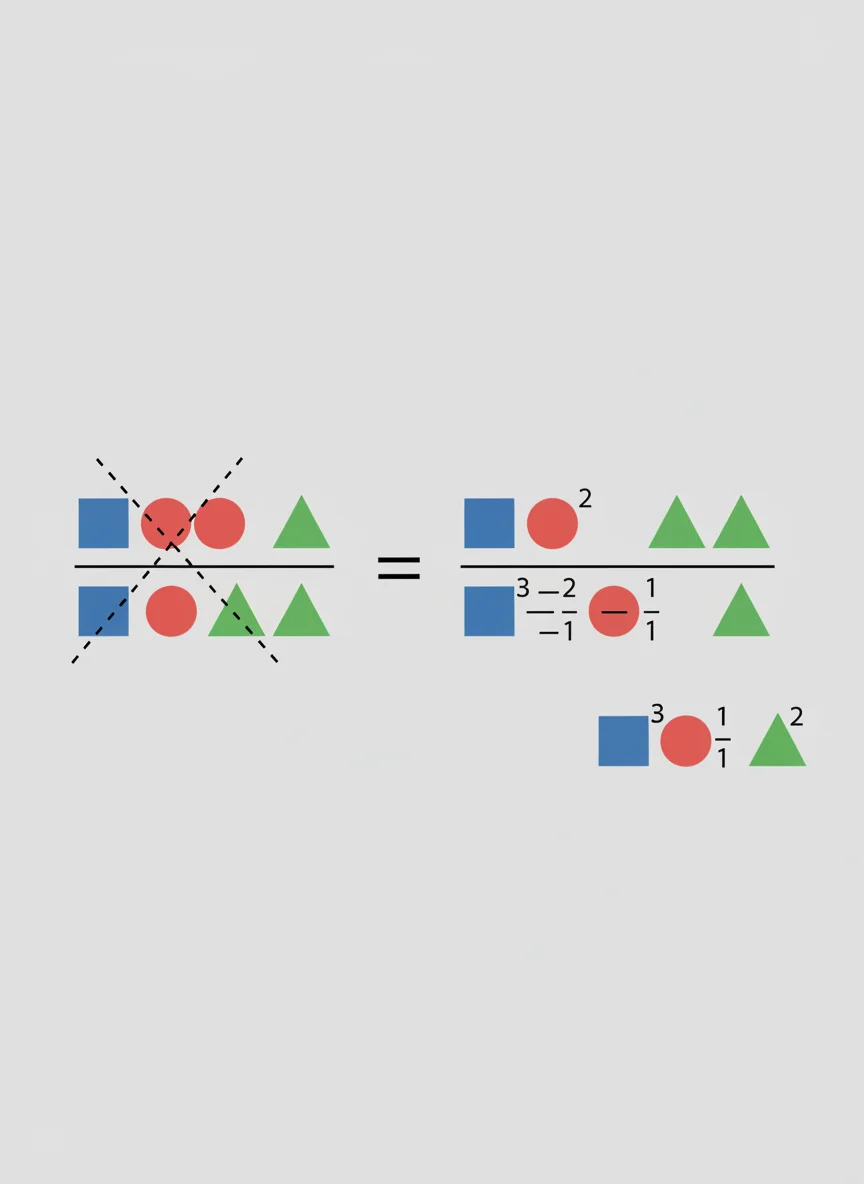
When dividing powers with the same base, SUBTRACT the indices a^m ÷ a^n = a^(m-n) Example: 2⁶ ÷ 2² = 2^(6-2) = 2⁴ = 16 Why? 2⁶/2² = (2×2×2×2×2×2)/(2×2) = 2⁴
Quick Check: Can You Spot the Pattern?
Look at these examples: 5⁸ ÷ 5³ = 5⁵ x⁹ ÷ x⁴ = x⁵ What happens when we divide a⁷ ÷ a⁷?
Index Laws 3 & 4: Power of a Power & Zero Index
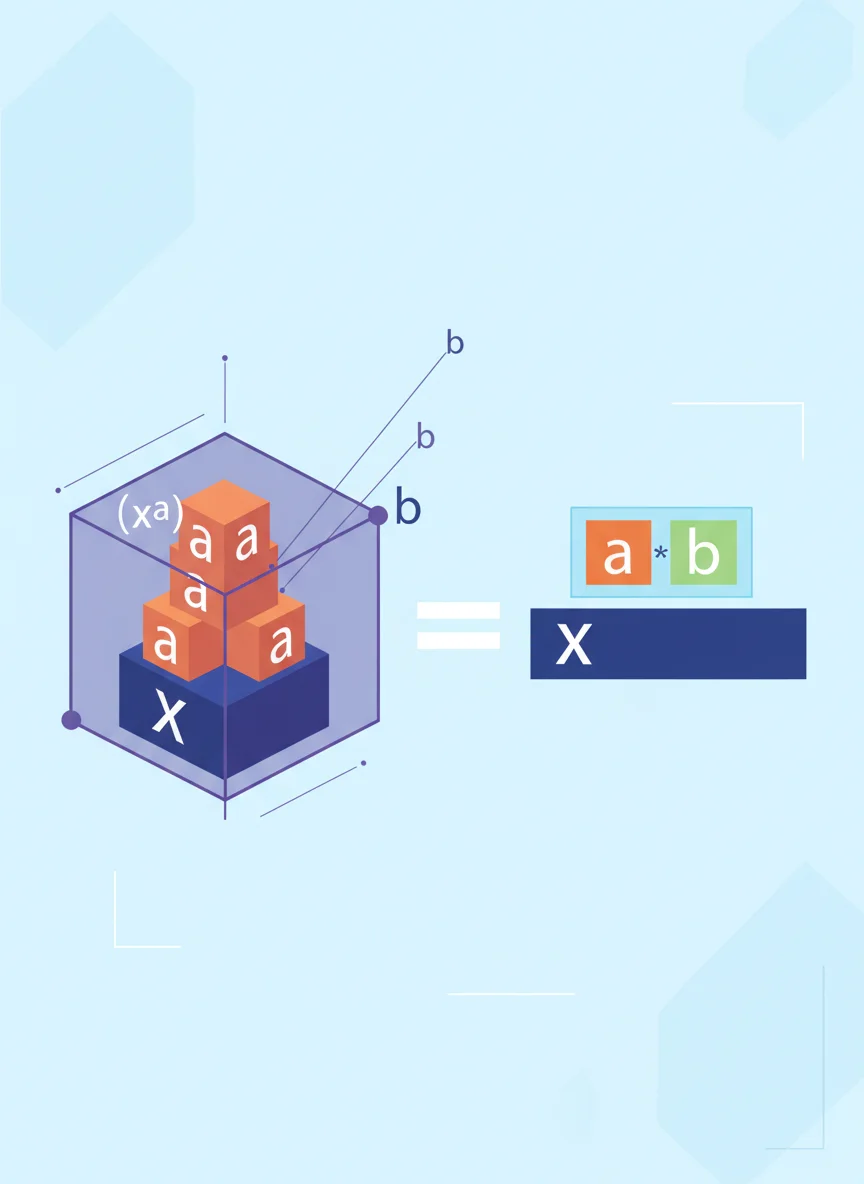
Power of a Power: (a^m)^n = a^(mn) Example: (2³)² = 2^(3×2) = 2⁶ = 64 Zero Index: a⁰ = 1 (where a ≠ 0) Example: 5⁰ = 1, 100⁰ = 1, x⁰ = 1
1 more slide available after you open the deck.
Download all 10 slidesMore Mathematics slide decks
Other ready-to-teach mathematics decks for Australian classrooms.


