
Mastering Left to Right Calculations
Year 6 Mathematics Addition and Subtraction Strategies Building on Previous Learning
What Do You Remember?
Think about our previous lessons How do we calculate from left to right? What makes this method special?
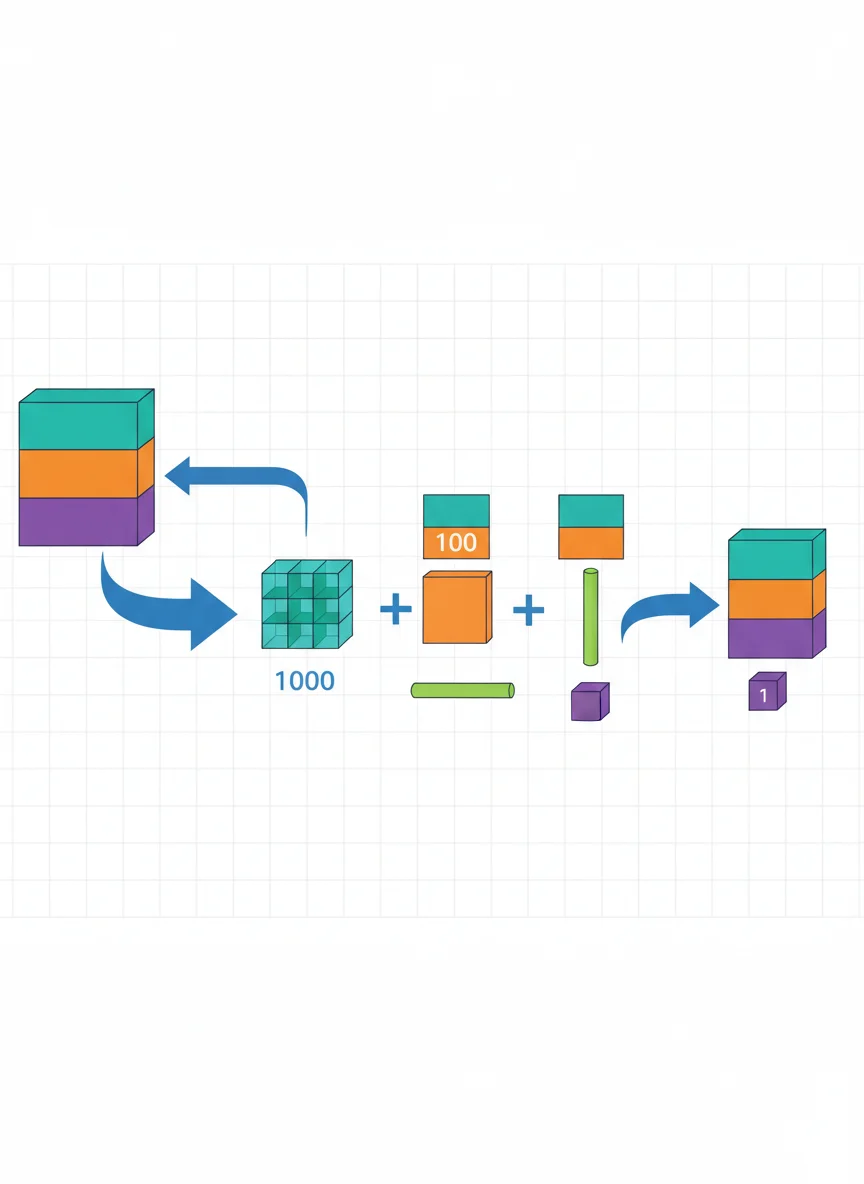
Why Left to Right?
Follows natural reading direction Helps us understand place value Makes mental math easier Builds number sense
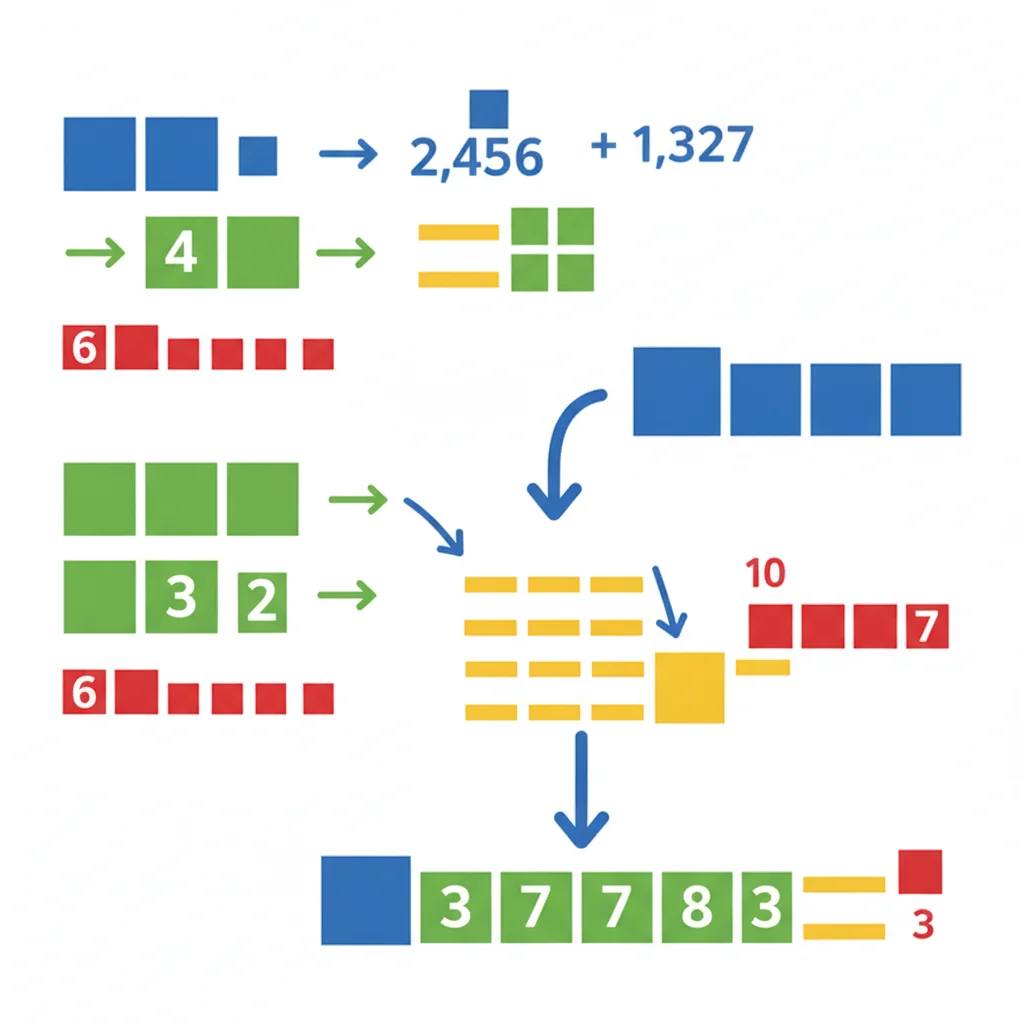
Let's Practice Together
Work through: 2,456 + 1,327 Start with thousands: 2,000 + 1,000 = 3,000 Then hundreds: 400 + 300 = 700 Continue with tens and ones
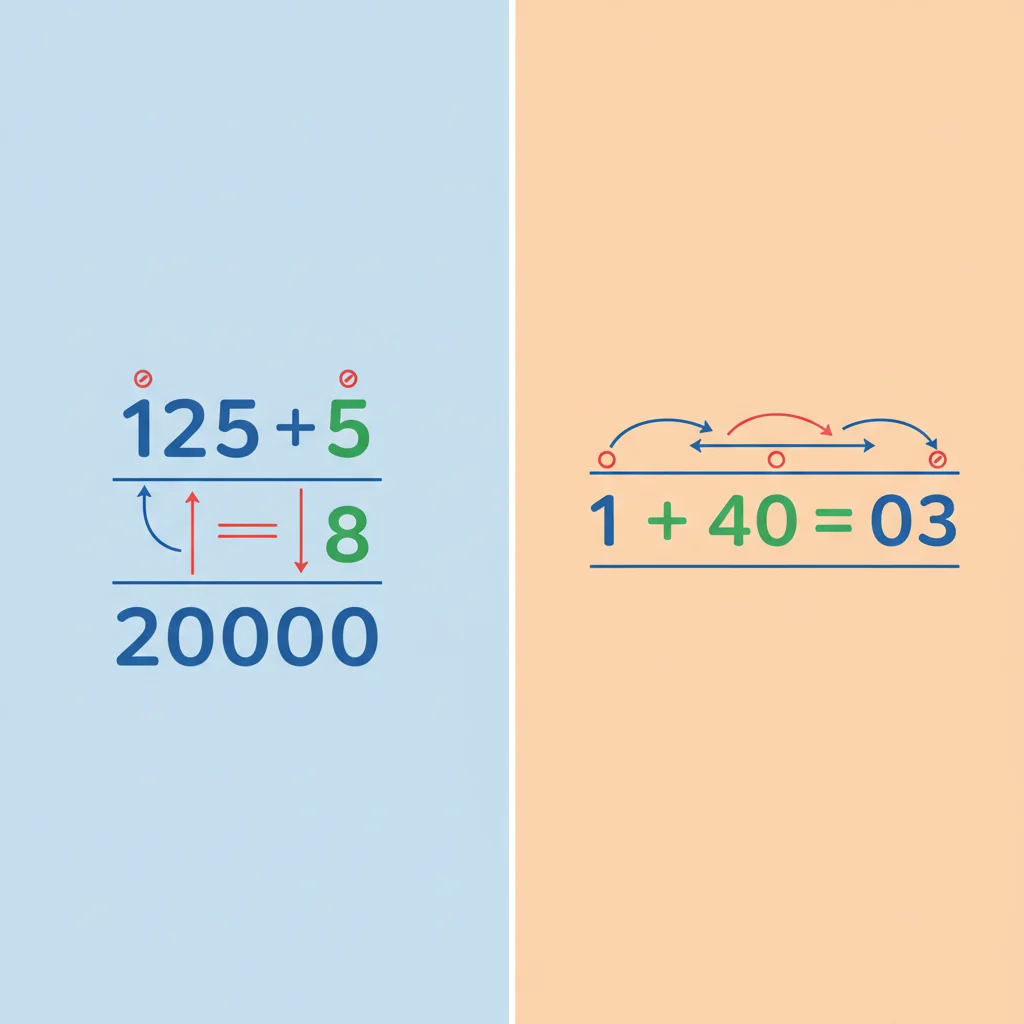
Traditional vs Left-to-Right
{"left":"Traditional: Start with ones place\nWork right to left\nOften requires carrying/regrouping","right":"Left-to-Right: Start with largest place value\nWork left to right\nEasier mental calculation"}
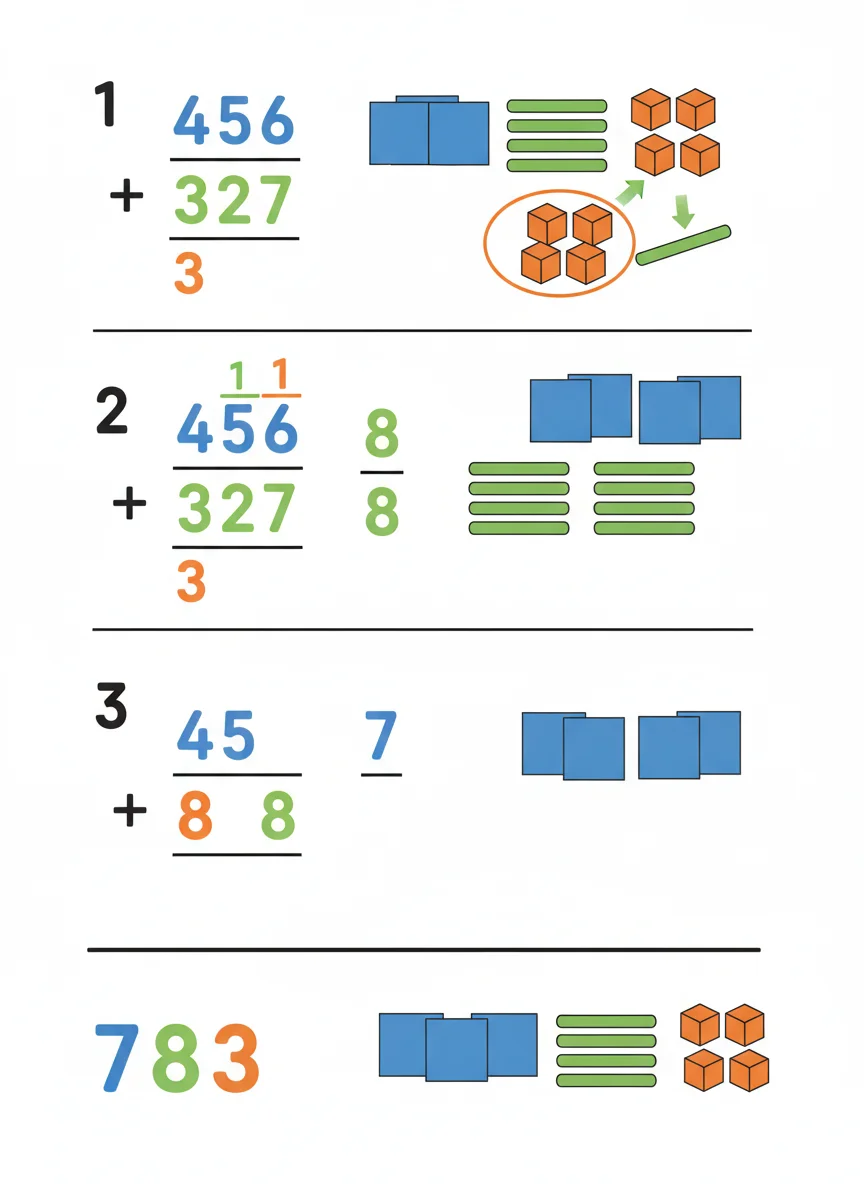
Three-Digit Addition Review
Example: 456 + 327 Hundreds: 400 + 300 = 700 Tens: 50 + 20 = 70 Ones: 6 + 7 = 13 Total: 700 + 70 + 13 = 783
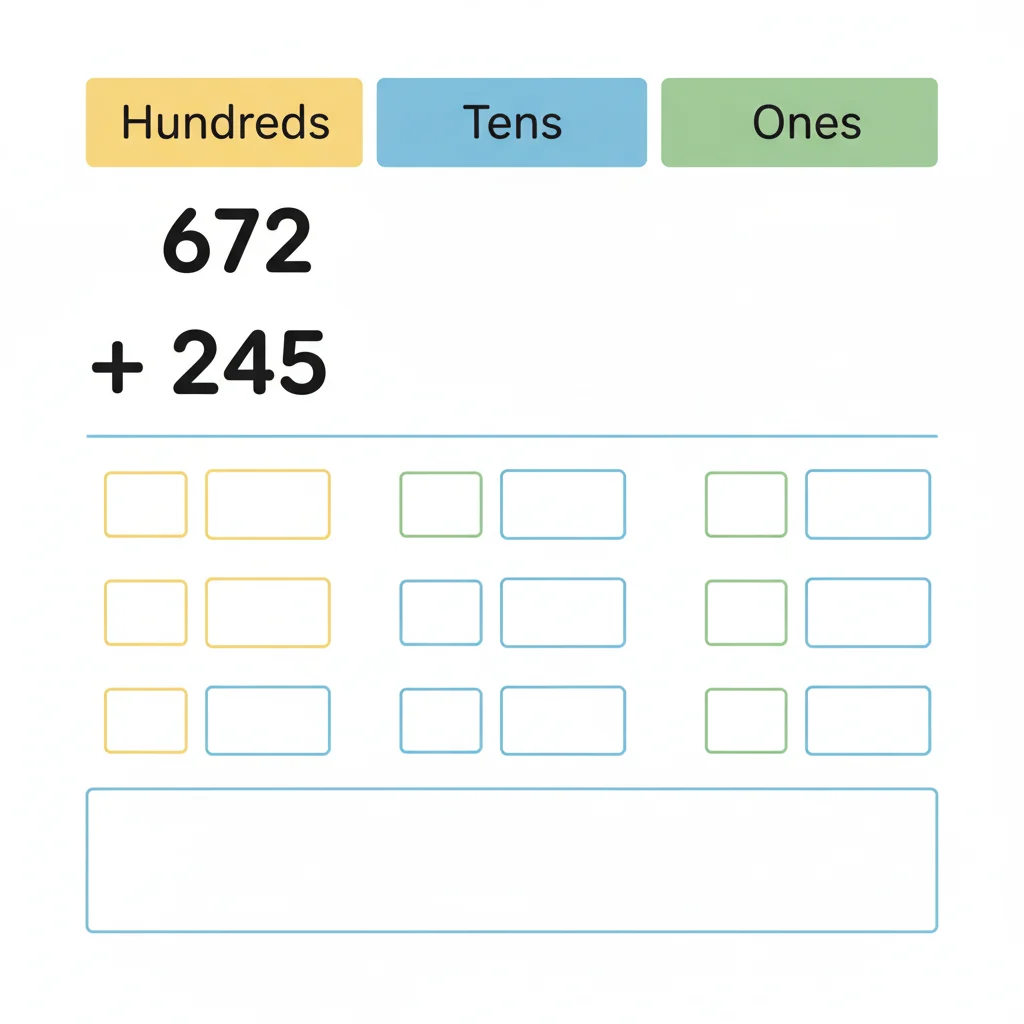
Your Turn: Three-Digit Practice
Calculate: 672 + 245 Remember: Start with hundreds Then tens, then ones Show your working step by step
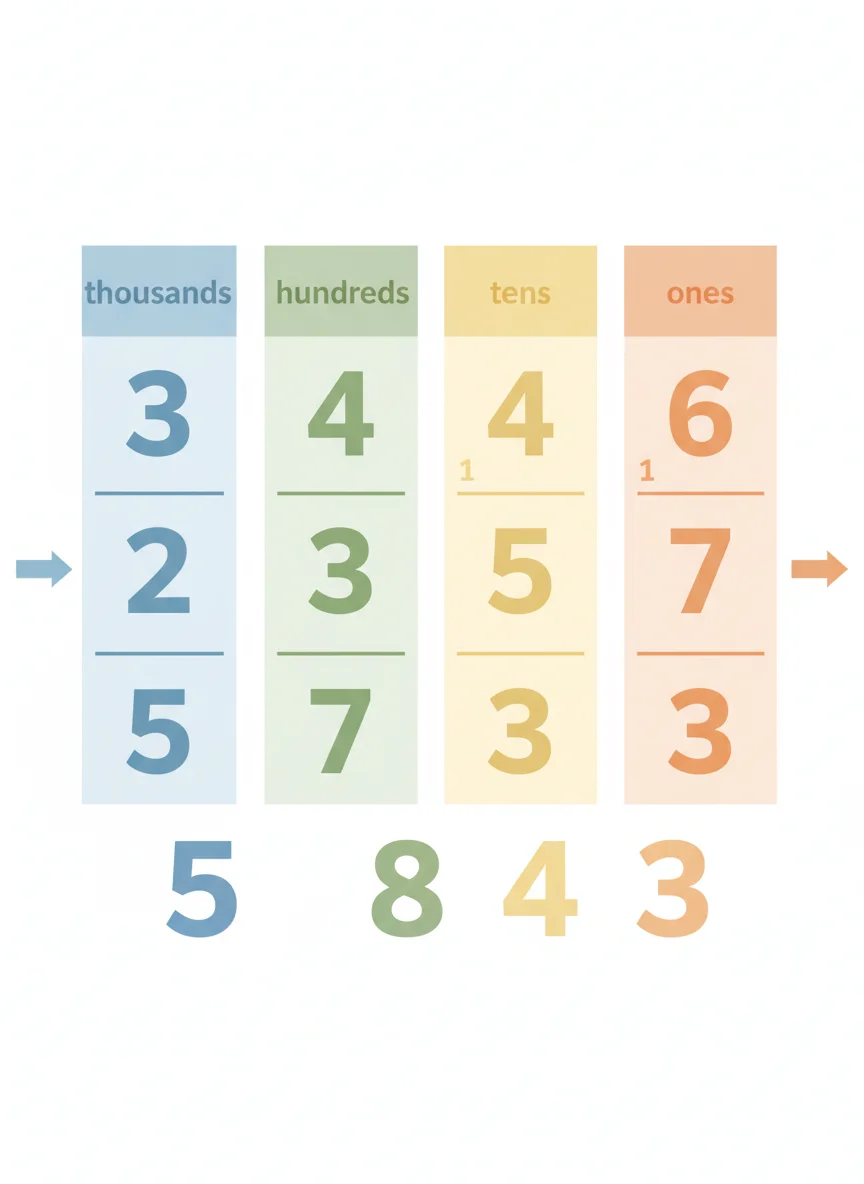
Four-Digit Addition
Example: 3,456 + 2,387 Thousands: 3,000 + 2,000 = 5,000 Hundreds: 400 + 300 = 700 Tens: 50 + 80 = 130 Ones: 6 + 7 = 13 Total: 5,000 + 700 + 130 + 13 = 5,843
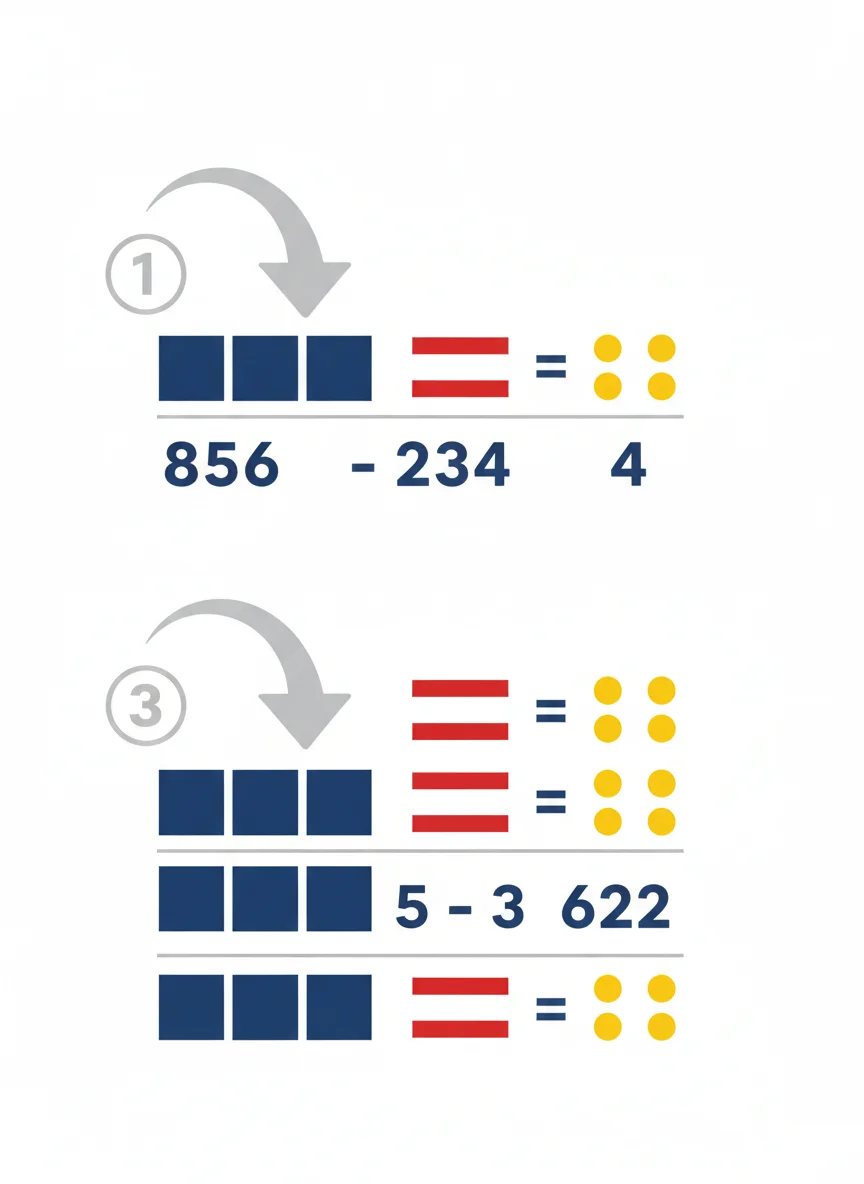
Subtraction Using Left-to-Right
Example: 856 - 234 Hundreds: 800 - 200 = 600 Tens: 50 - 30 = 20 Ones: 6 - 4 = 2 Total: 600 + 20 + 2 = 622
Challenge Problem
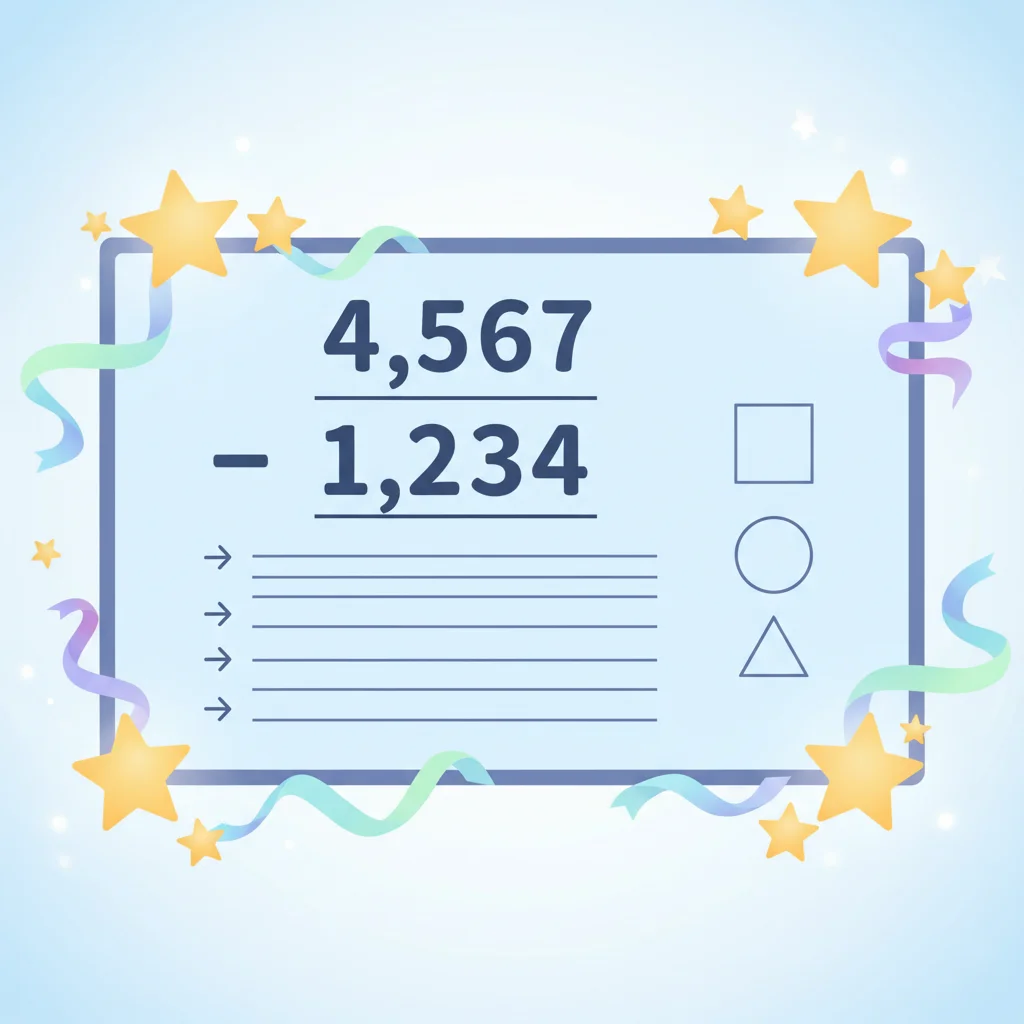
Try this: 4,567 - 1,234 Use the left-to-right method Work systematically through each place value Check your answer

Mathematical Thinking
Mathematics is not about numbers, equations, computations, or algorithms: it is about understanding. - William Paul Thurston
Key Points to Remember
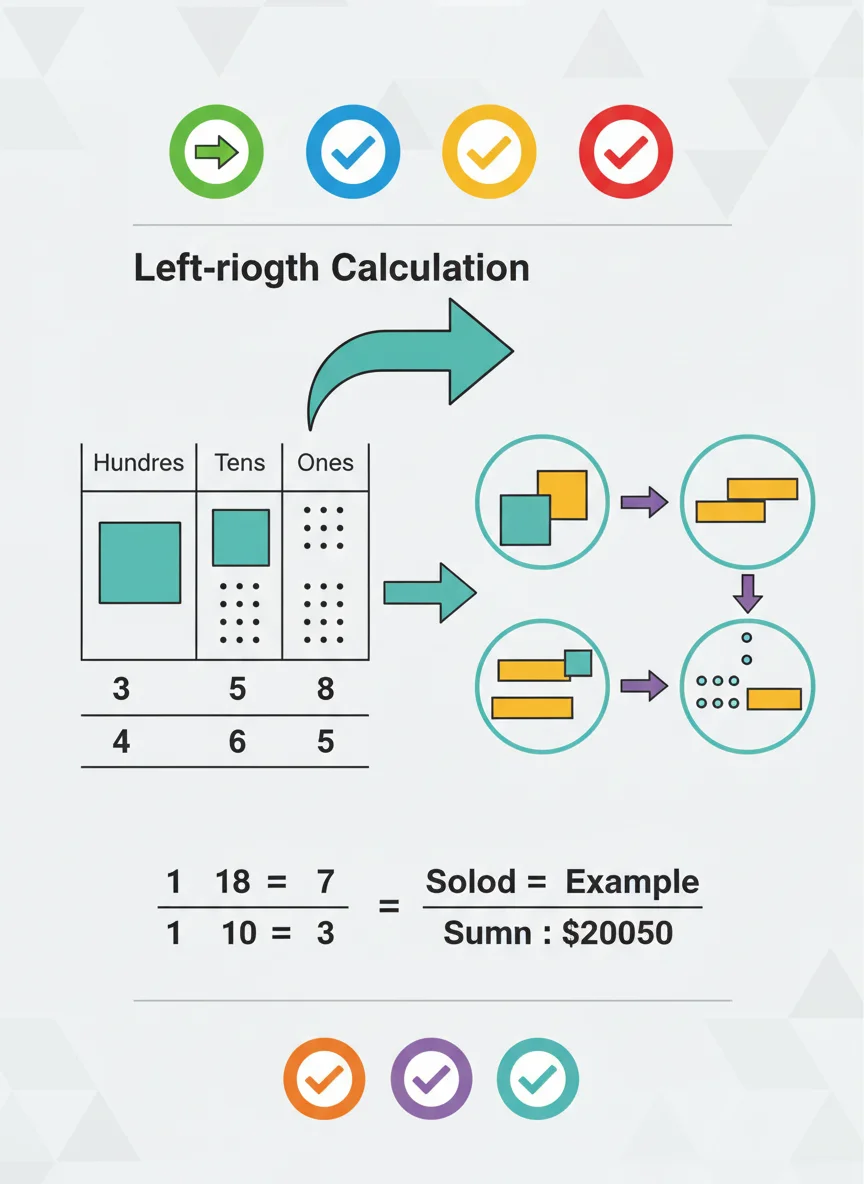
Always start with the largest place value Work systematically from left to right Break numbers into place value parts Add or subtract each place value separately Combine partial answers for the final result Practice makes this method automatic
More Mathematics slide decks
Other ready-to-teach mathematics decks for Australian classrooms.


