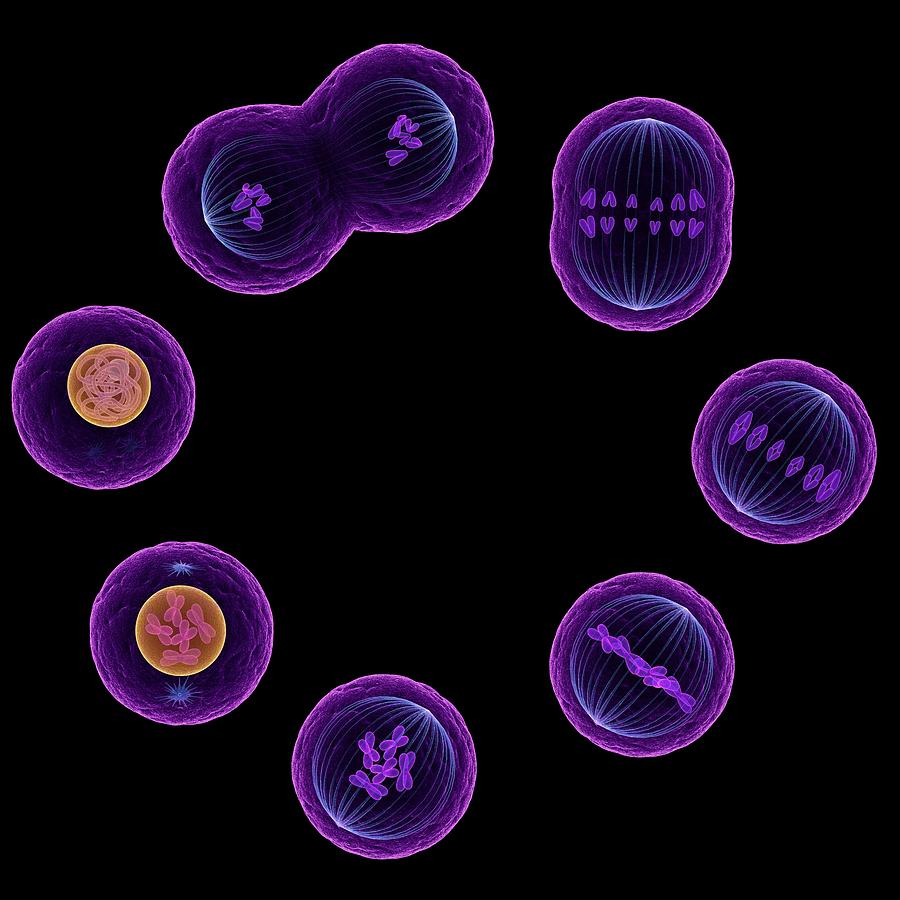
Mitosis: Cell Division Uncovered
Year 12 Science Understanding how cells divide and grow Australian Curriculum aligned

Cell Division Brainstorm
What do you already know about cell division? Why do you think cells need to divide? What questions do you have about mitosis? Share your ideas with the class
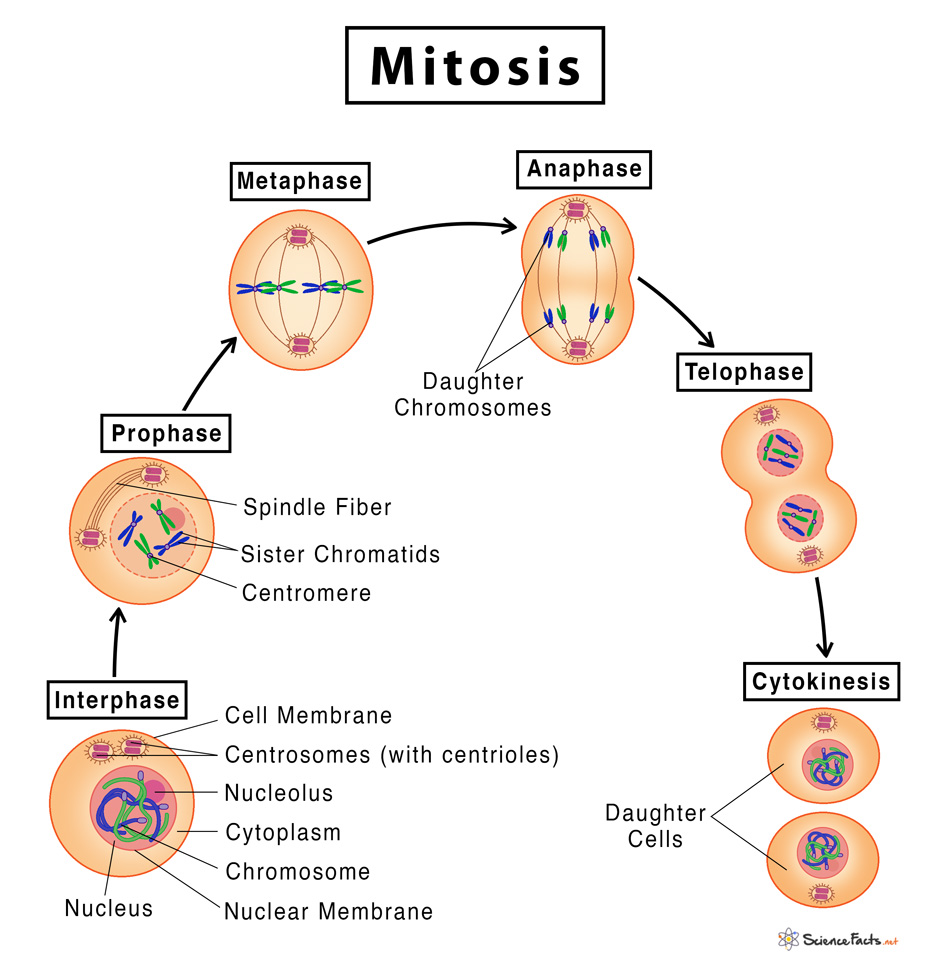
What is Mitosis?
Process of cell division in somatic (body) cells Produces two identical diploid daughter cells Essential for growth, repair, and maintenance Preserves genetic information across generations Occurs in multicellular organisms
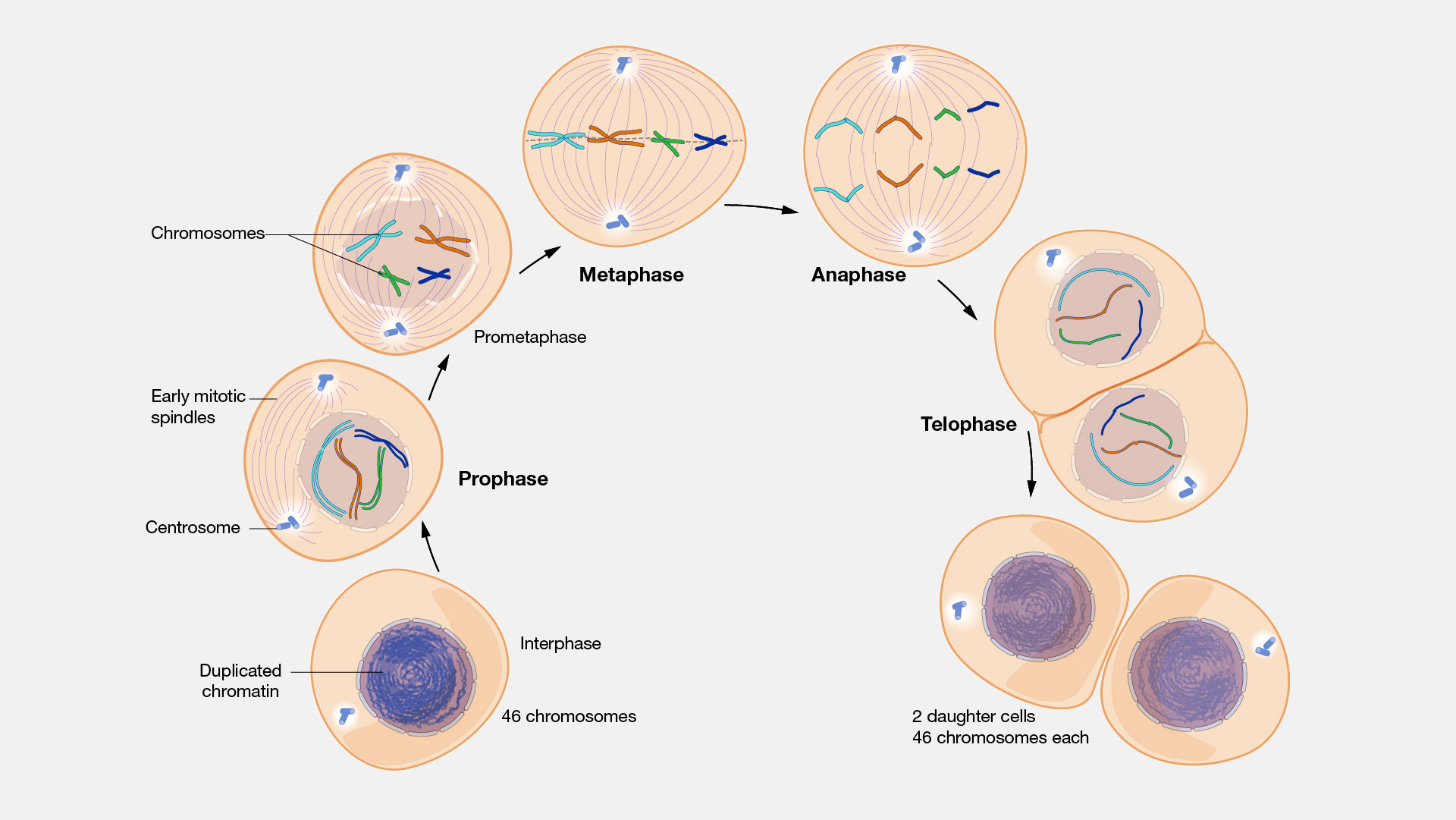
The Stages of Mitosis

Prophase and Metaphase
{"left":"Prophase: Chromatin condenses into visible chromosomes\nNuclear envelope begins to break down\nCentrioles move to opposite poles\nSpindle fibers start to form","right":"Metaphase: Chromosomes align at cell equator\nSpindle fibers attach to centromeres\nCell checkpoint ensures proper attachment\nLongest phase of mitosis"}
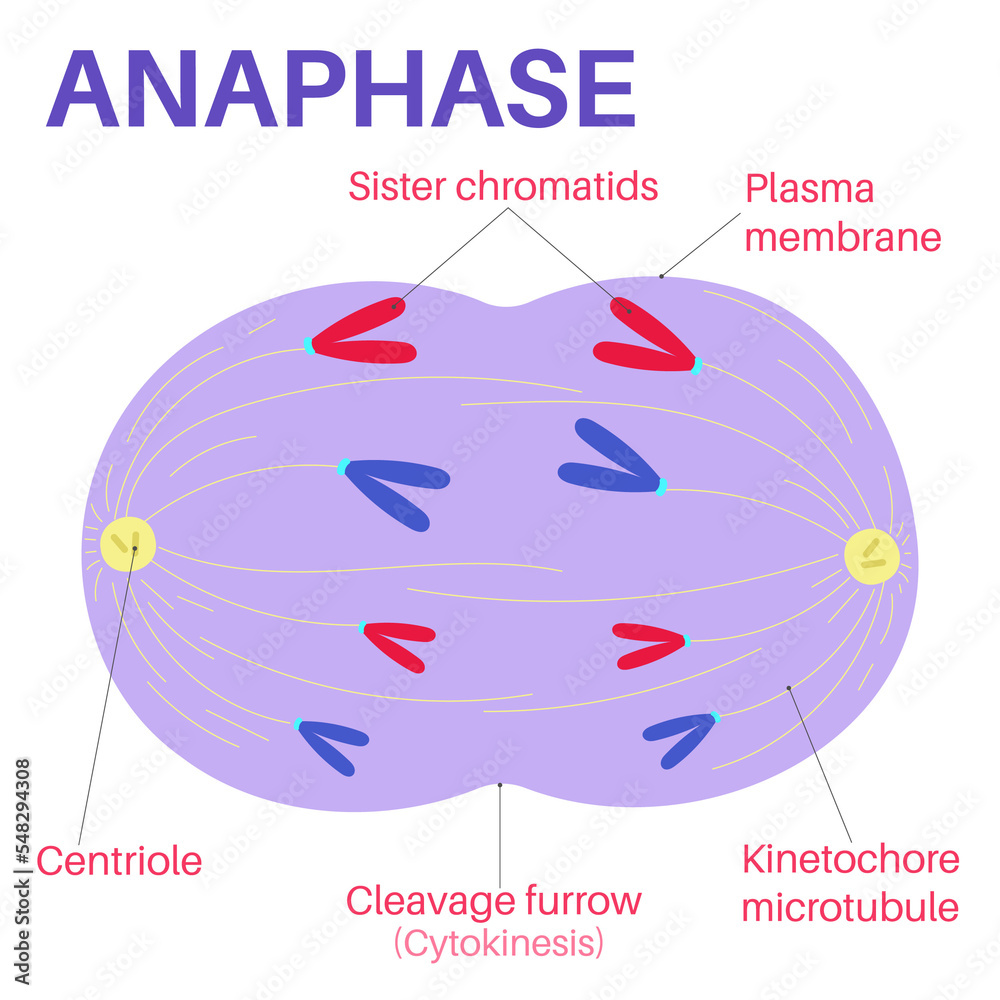
Anaphase and Telophase
{"left":"Anaphase: Sister chromatids separate\nChromatids move to opposite poles\nSpindle fibers shorten and pull\nEnsures equal genetic distribution","right":"Telophase: Nuclear envelopes reform\nChromosomes begin to uncoil\nSpindle apparatus disassembles\nTwo nuclei are now present"}
Critical Thinking Challenge
Why is it crucial that each daughter cell receives exactly the same genetic information? What might happen if chromosomes don't separate properly during mitosis? How does mitosis relate to growth and healing in your own body?
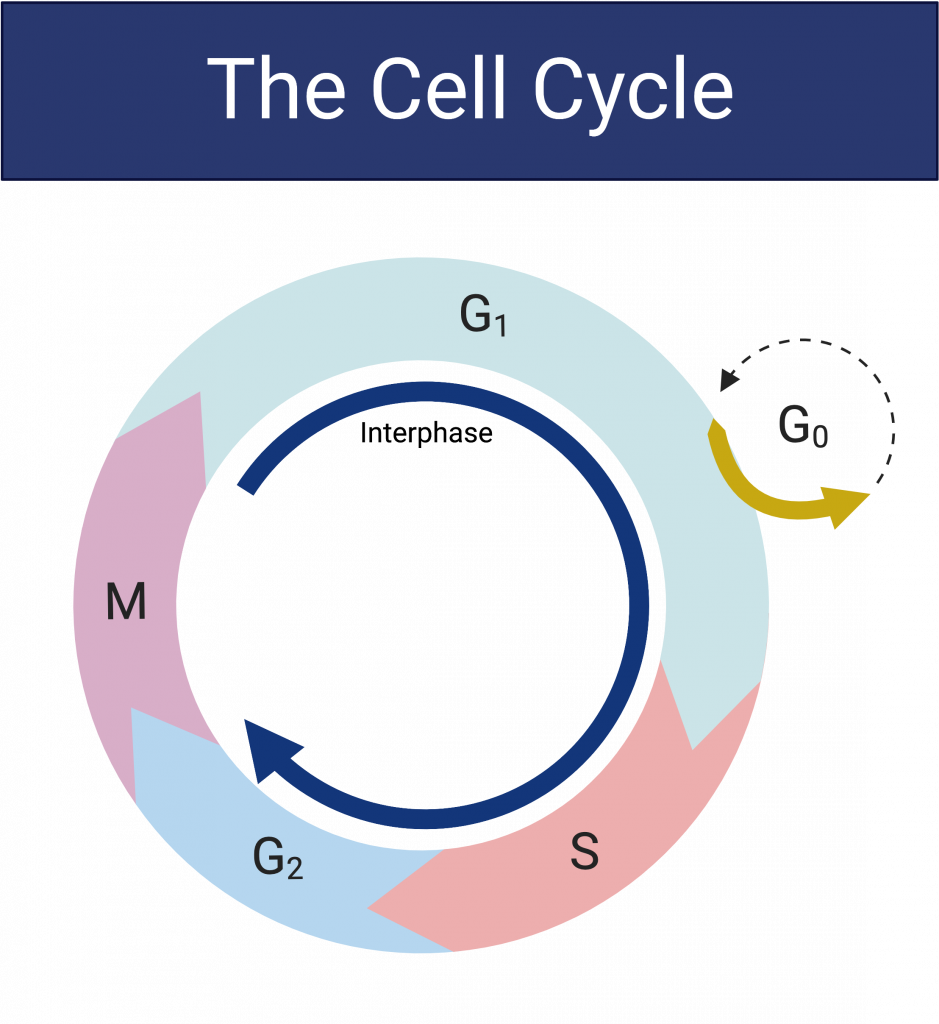
Mitosis in Action: Growth and Repair
Enables growth from embryo to adult Repairs damaged tissues and organs Replaces old and worn-out cells Maintains tissue structure and function Essential for wound healing Occurs millions of times daily in your body