
Plant Biology: Structure, Function & Exchange
Year 11 Biology Understanding how plants live and function Autotrophs, structure, and gas exchange
Learning Objectives
Distinguish between autotrophs and heterotrophs Identify key plant structures and their functions Explain gas exchange processes in plants Understand stomatal function and control Analyze plant adaptations for survival Investigate factors affecting stomatal density
Autotrophs vs Heterotrophs
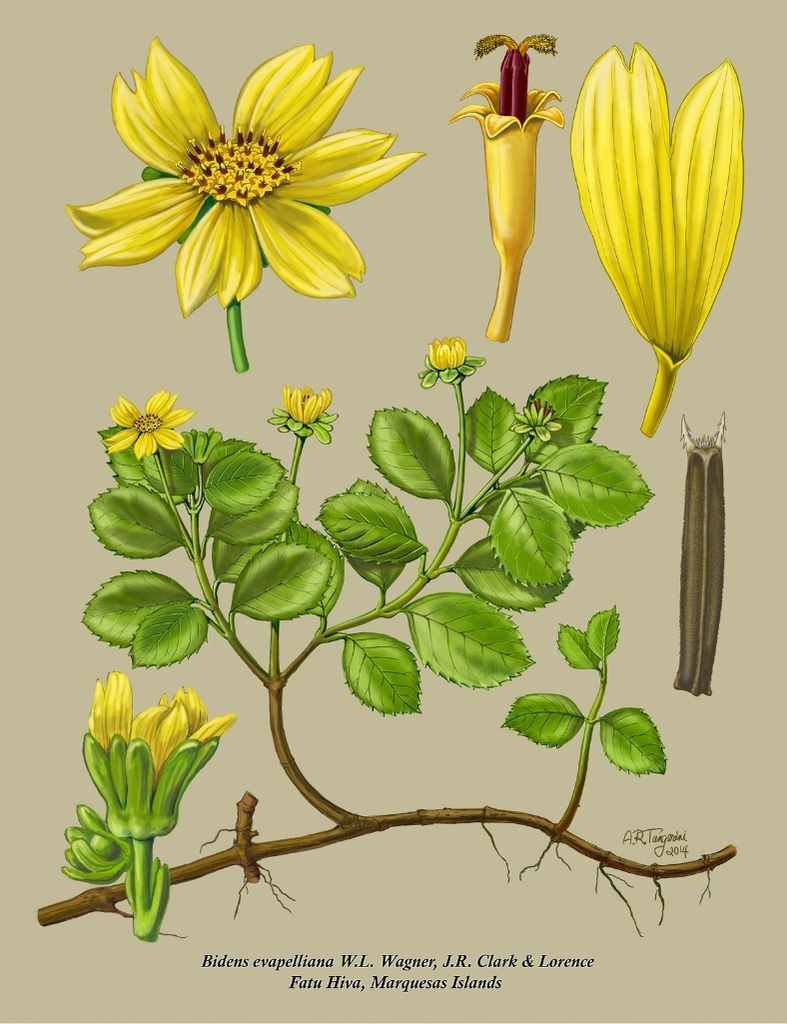
Autotrophs: 'Self-feeders' that make their own food Use photosynthesis to convert light energy into chemical energy Heterotrophs: Must consume other organisms for energy Examples: Animals, fungi, most bacteria Plants are primary producers in ecosystems

Plant Structure Overview
{"left":"Roots: Absorb water and nutrients from soil\nAnchor plant in place\nStore energy reserves\nStems: Support leaves and flowers\nTransport water and nutrients","right":"Some stems store food\nLeaves: Primary site of photosynthesis\nGas exchange through stomata\nAdapted for light capture"}

Photosynthesis Equation

Leaf Structure and Function

Epidermis: Protective outer layer with waxy cuticle Mesophyll: Contains chloroplasts for photosynthesis Palisade layer: Tightly packed cells for maximum light capture Spongy layer: Loose cells for gas exchange Vascular bundles: Transport water and nutrients

Stomata: Nature's Breathing Pores
Microscopic pores on leaf surfaces Surrounded by guard cells that control opening/closing Allow gas exchange: CO2 in, O2 out Also regulate water loss through transpiration Mostly found on underside of leaves
Think About It
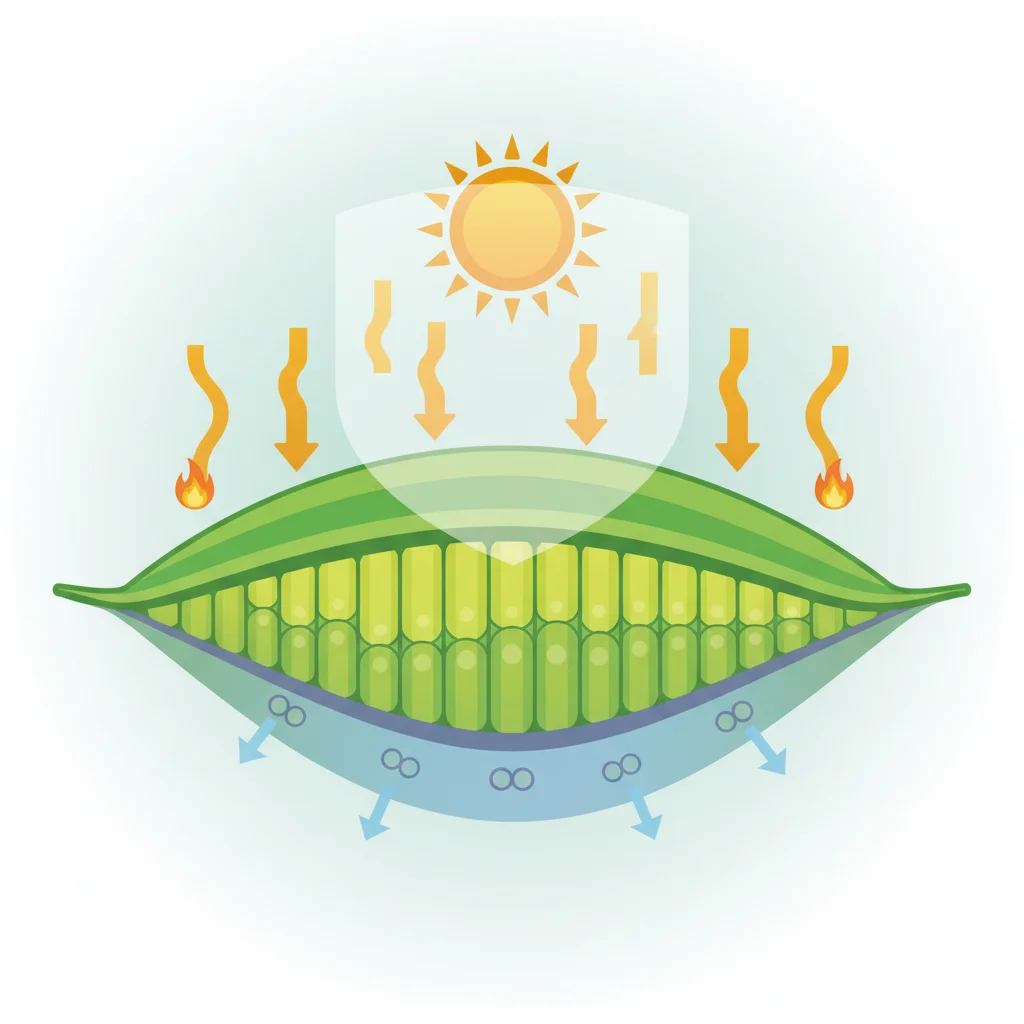
Why do you think most stomata are located on the underside of leaves rather than the top?
How Stomata Work
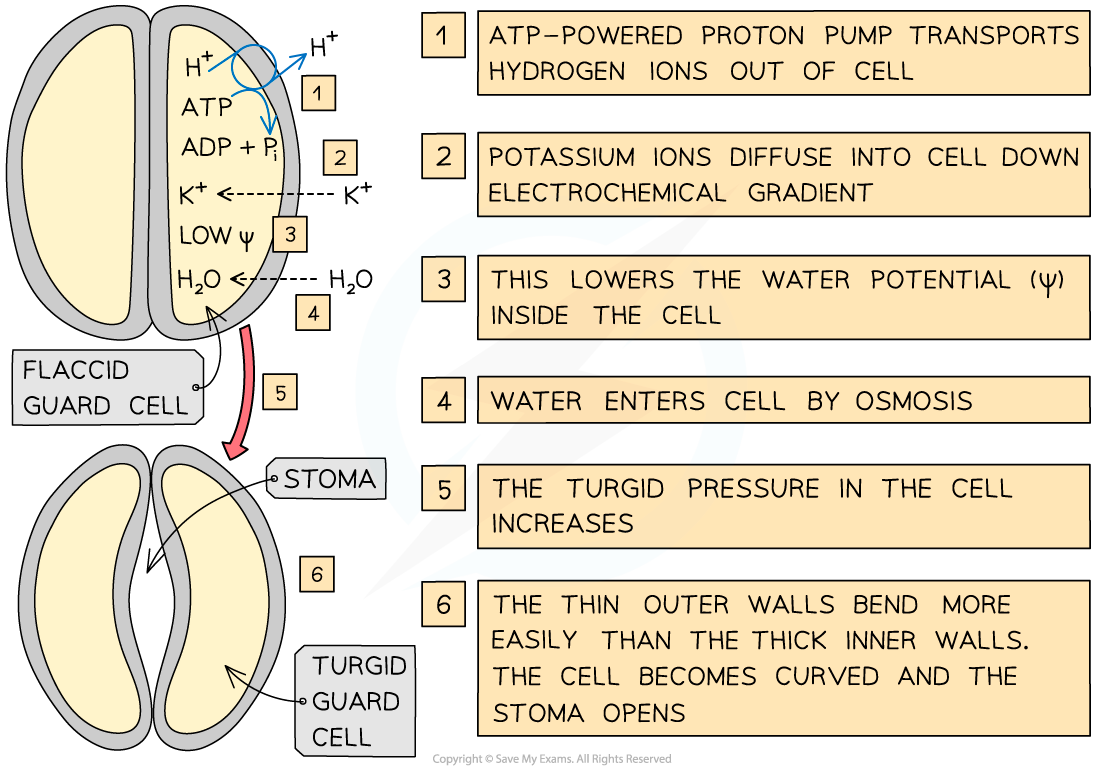
Guard cells swell with water → stomata open Guard cells lose water → stomata close Opening allows CO2 to enter for photosynthesis Closing prevents excessive water loss Controlled by factors like light, CO2 levels, and water availability

Plant Adaptations for Different Environments
{"left":"Desert Plants: Thick waxy cuticles\nSmall or needle-like leaves\nStomata in grooves or pits\nCAM photosynthesis","right":"Aquatic Plants: Thin or no cuticle\nLarge air spaces in stems\nStomata only on upper leaf surface\nFlexible stems for water movement"}
Stomatal Density Investigation
Compare stomatal density in different leaf types Predict which plants have more stomata per unit area Consider: sun vs shade leaves, desert vs rainforest plants Think about environmental factors affecting stomatal density

Gas Exchange in Plants
Occurs primarily through stomata CO2 enters for photosynthesis during the day O2 exits as a byproduct of photosynthesis At night: plants respire like animals (O2 in, CO2 out) Diffusion drives gas movement along concentration gradients
3 more slides available after you open the deck.
Download all 15 slides