Understanding Equivalent Fractions
Year 6 Mathematics Australian Victorian Curriculum Learning to represent fractions and understand equivalence
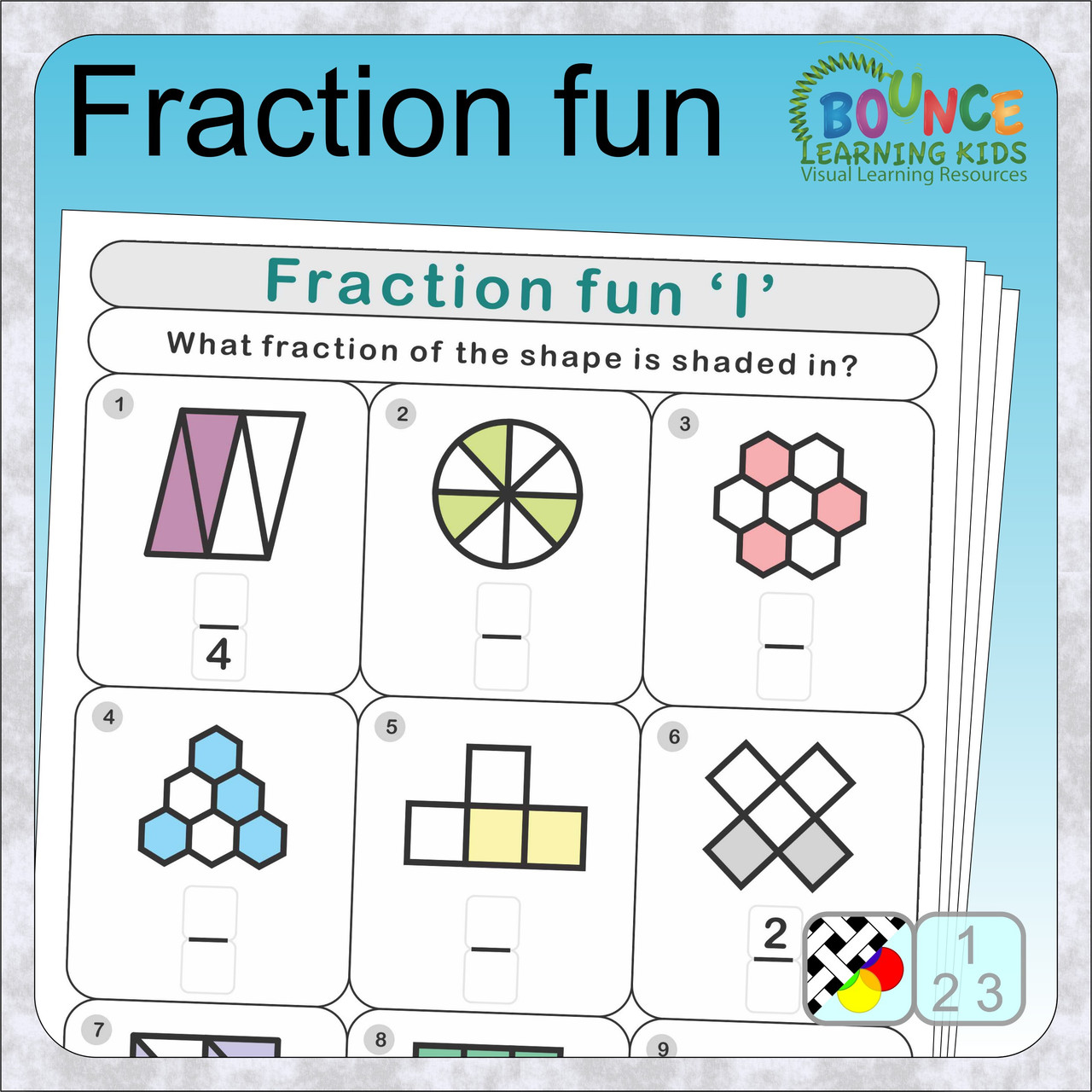
Tuning In: What Do You See?
Look at these two shapes Are they showing the same amount? How do you know? Turn and talk to your partner
What Are Equivalent Fractions?
Fractions that represent the same amount They look different but have equal value Like different ways to say the same thing Example: 1/2 = 2/4 = 4/8

Concrete Exploration: Fraction Tiles
Use fraction tiles to explore equivalence Find different ways to make 1/2 Match tiles that show the same amount Record your discoveries

I Do: Finding Equivalent Fractions
Watch me find fractions equal to 1/3 1/3 = ?/6 (multiply by 2) 1/3 = 2/6 1/3 = ?/9 (multiply by 3) 1/3 = 3/9

You Do: Practice Together
Find fractions equivalent to 2/5 What do we multiply by to get tenths? 2/5 = ?/10 Show your work on your whiteboard
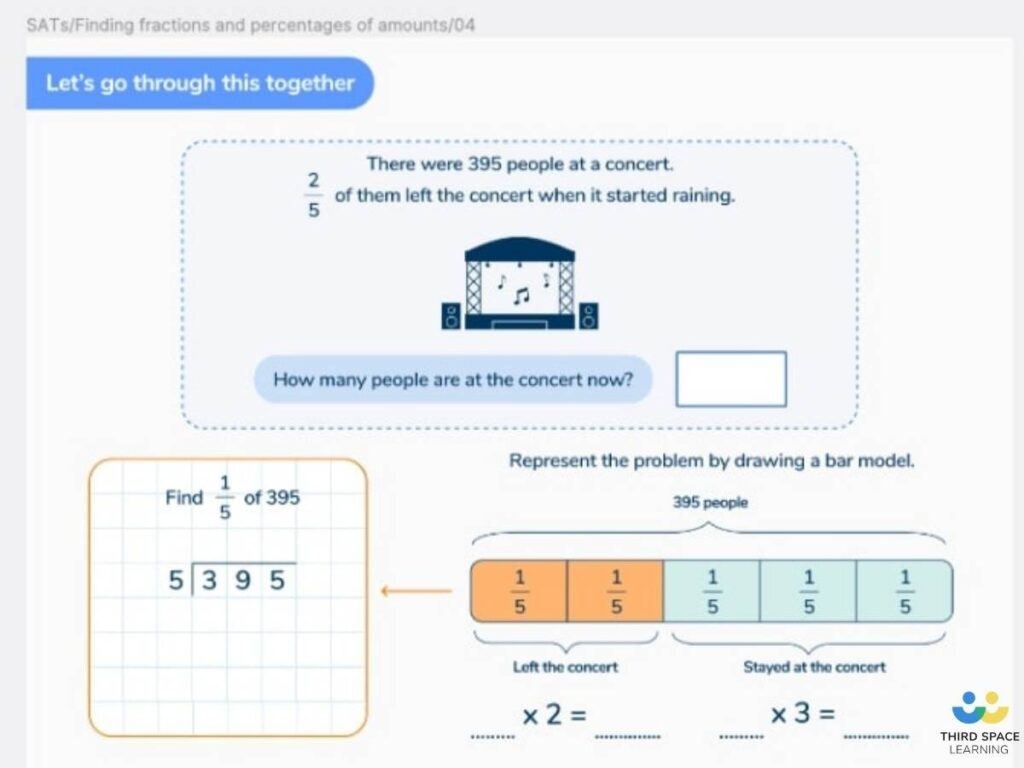
Pictorial Representation: Bar Models
Draw bar models to show equivalent fractions Each bar represents the same whole Divide bars into different equal parts Shade the same amount in each bar
Drawing Practice: Create Your Own
Draw bar models for 1/4 Show at least 3 equivalent fractions Use different divisions in each bar Label each fraction clearly
Abstract Method: The Pattern
{"left":"Multiply numerator and denominator by the same number\n1/2 × 3/3 = 3/6\n2/3 × 4/4 = 8/12","right":"5/6 × 2/2 = 10/12\nThe value stays the same\nWe're multiplying by 1 in disguise!"}
Exit Ticket: Show What You Know
Complete these equivalent fractions: 3/4 = ?/8 1/5 = ?/15 2/3 = 6/? Explain your thinking for one problem
Matching Challenge
Match equivalent fractions 1/2, 2/4, 3/6, 4/8 2/3, 4/6, 6/9, 8/12 3/5, 6/10, 9/15, 12/20 Find the pattern in each group
Reflection: What Did We Learn?
What patterns did you notice about equivalent fractions? How can you tell if two fractions are equivalent? When might equivalent fractions be useful in real life?