
Wheel Safety Rules and Protection
Year 2 Health and Physical Education Learning to stay safe on wheels

WALT: We Are Learning To
Explain actions and messaging for staying safe as a wheel user Use imperative sentences and modal words to explain safe behaviours on wheels

Types of Wheeled Transport
Look at the pictures Point to wheeled transport you have used Thumbs up if you've used it Thumbs down if you haven't
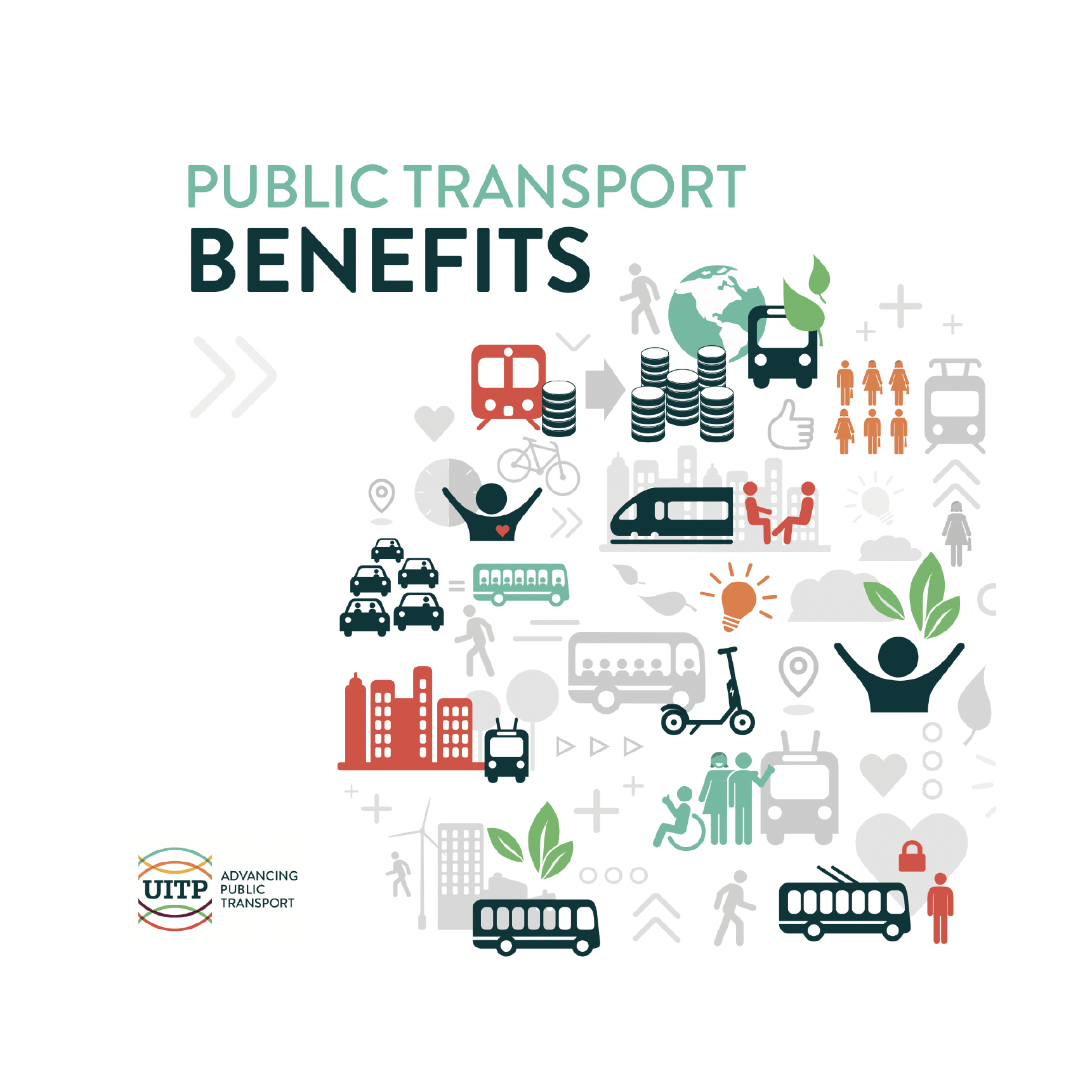
Why Do We Use Wheeled Transport?
Think about your answer Share with a partner We'll discuss as a class

Helmet Safety - The Law!
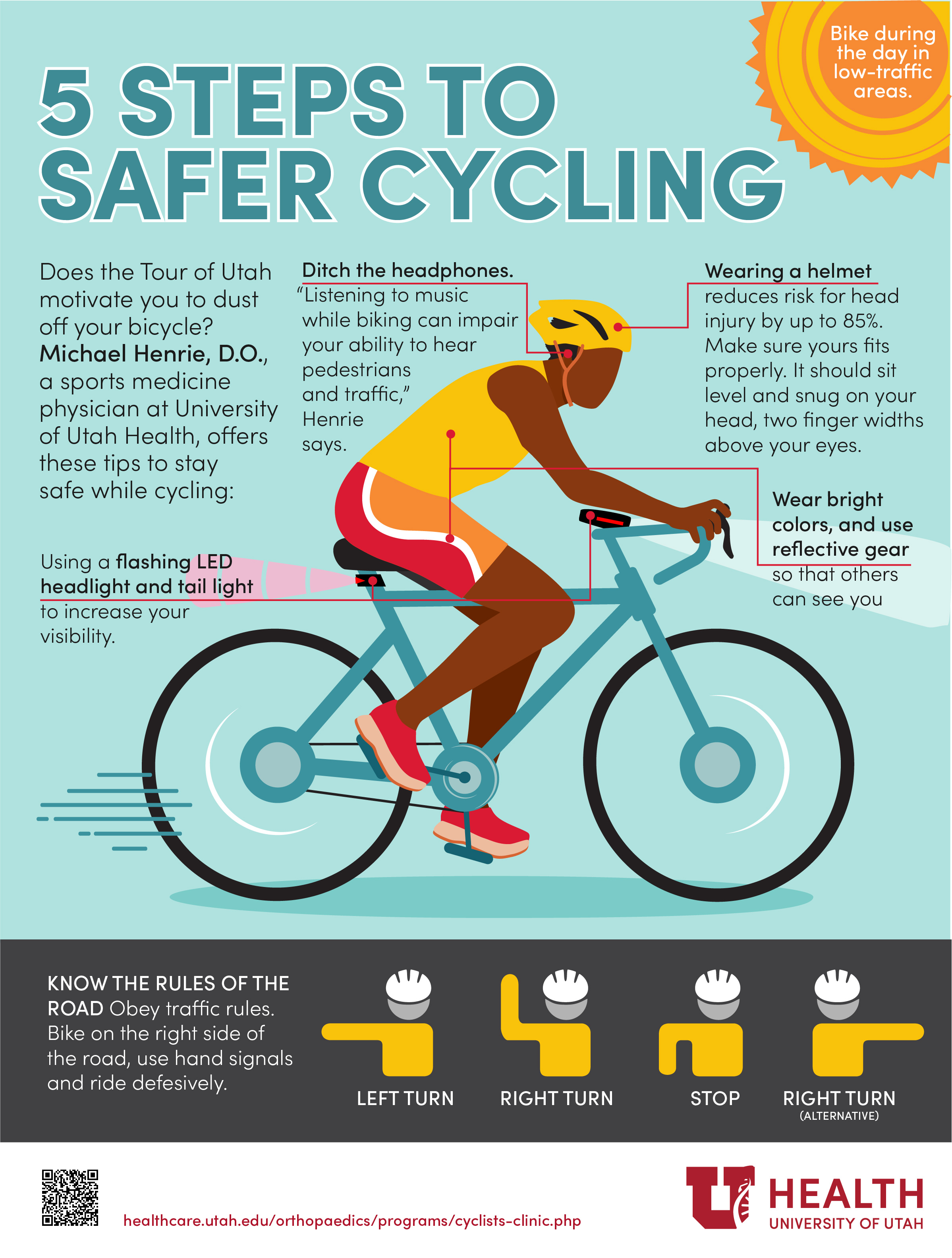
Children MUST wear helmets when riding bikes in public places Helmets must be Australian/NZ approved Must fit securely without wobbling Must be fastened properly
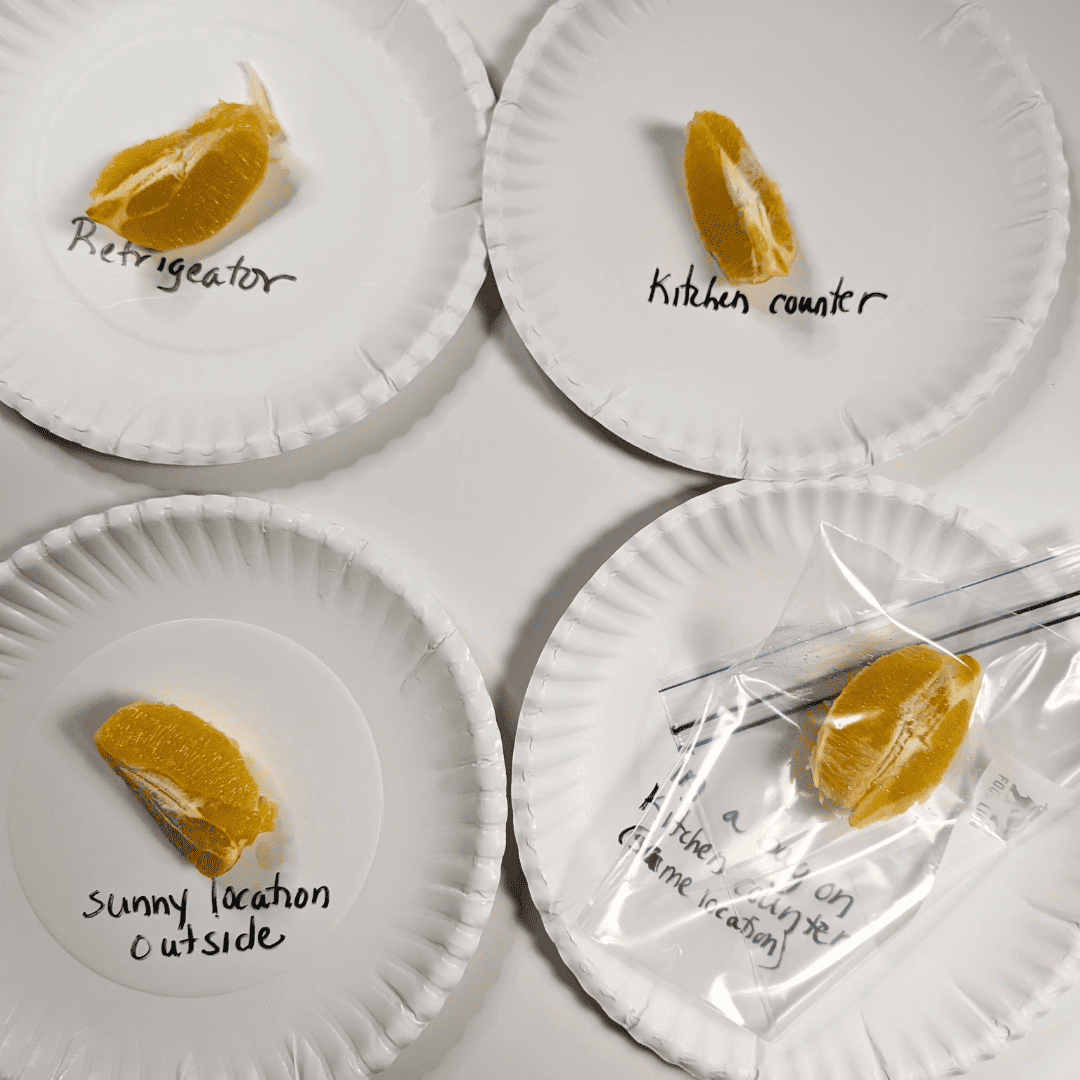
Orange Skin Experiment
Rub one side of orange on rough surface Wrap other side in cloth and rub Compare both sides What does this teach us about protecting our skin?
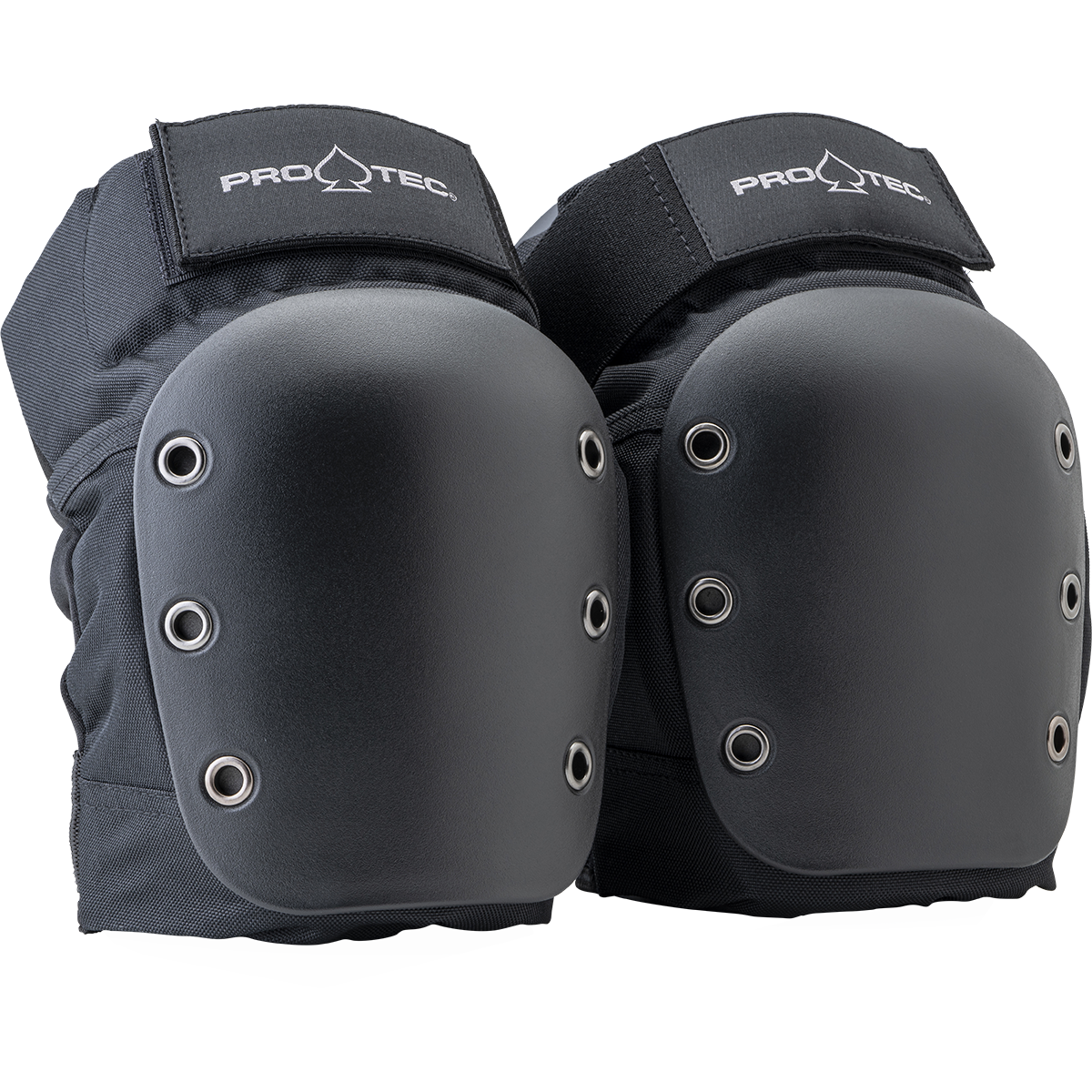
Protective Gear for Wheel Users
{"left":"Helmet (required by law)\nLong sleeves and pants\nClosed shoes","right":"Knee pads\nElbow pads\nBright colored clothing"}
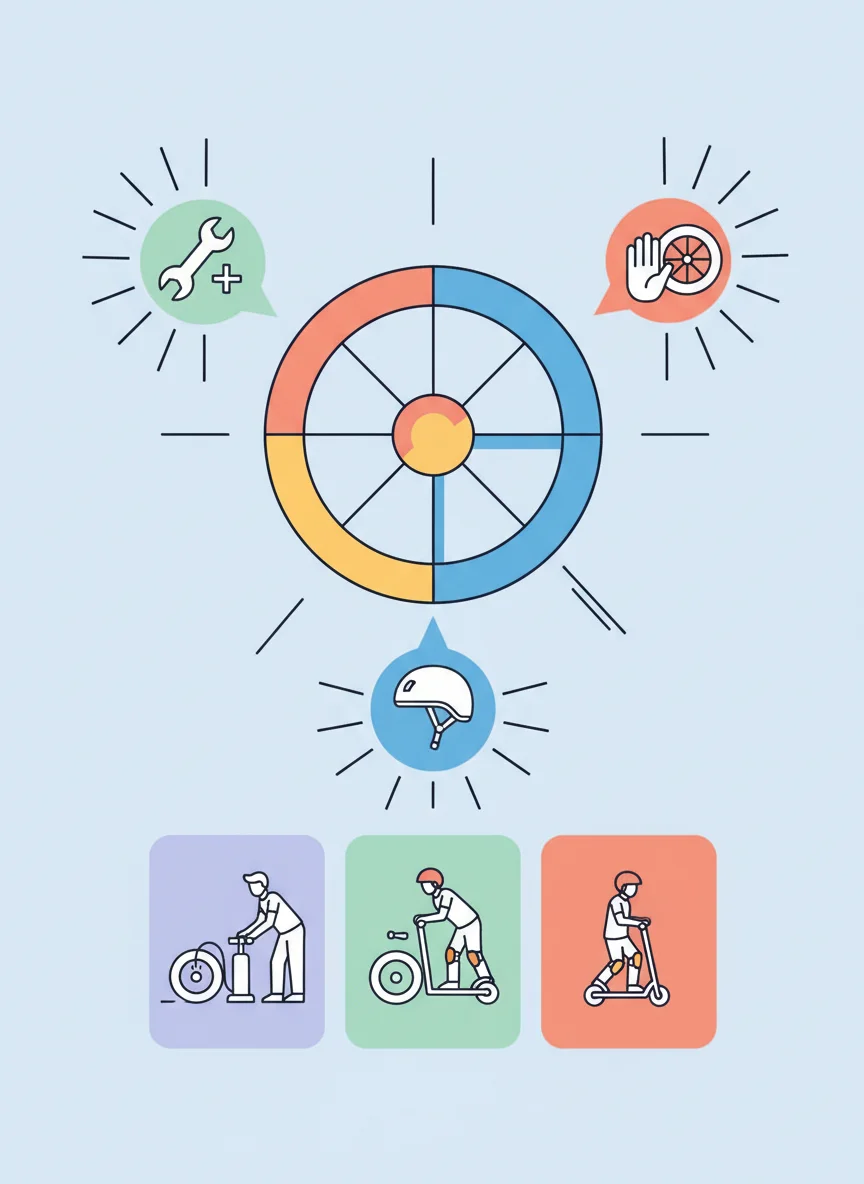
Writing Safety Tips with Imperative Sentences
Imperative sentences give commands or instructions They tell someone what to do Example: 'Always wear a helmet when you ride' Modal words show how sure we are: must, should, always, never
Create Your Safety Tips
Write 5 safety tips using imperative sentences Include modal words like: must, should, always, never Example: 'You should never ride at night' Share your best tip with the class
Safe Places to Ride
Bike paths and shared cycleways Parks and fenced areas Your backyard Away from busy roads and traffic Areas with good visibility