Let's be real, the term 'instructional coaching' gets thrown around a lot. But what does it actually look like in the trenches? As fellow educators, we know the difference between a checklist-driven observation and a genuine partnership that sparks real growth. It’s not about finding flaws; it’s about fanning the flames of great teaching.
This isn't just another list of abstract theories. We're diving into eight powerful, field-tested instructional coaching strategies that you can adapt and use tomorrow. Each one is a different tool for your coaching toolkit, designed to build trust, sharpen skills, and ultimately, create classrooms where every student thrives. These approaches recognize that effective teaching is complex, and the support we provide must be just as nuanced and responsive.
In this guide, we'll break down practical models like Instructional Coaching Cycles, Data-Driven Coaching, and Collaborative Co-Teaching. We will explore what they are, why they work, and how to put them into action without adding more to your already-full plate. To truly make a difference, instructional coaching can be greatly enhanced by dedicated digital tools, such as Masterymind's Nea Coach feature, which provides specific support for educators. Our goal is to equip you with concrete steps and fresh perspectives, moving beyond the buzzwords to strategies that make a tangible impact on teacher practice and student learning. Let's get started.
1. Instructional Coaching Cycles (Plan-Teach-Debrief)
The instructional coaching cycle is a structured, evidence-based partnership between a coach and a teacher. Popularized by researchers like Jim Knight, this cyclical process involves three distinct phases: a pre-observation planning conference, a classroom observation, and a post-observation debrief. This model creates a continuous, confidential feedback loop focused on teacher growth and student achievement, making it one of the most effective instructional coaching strategies available.
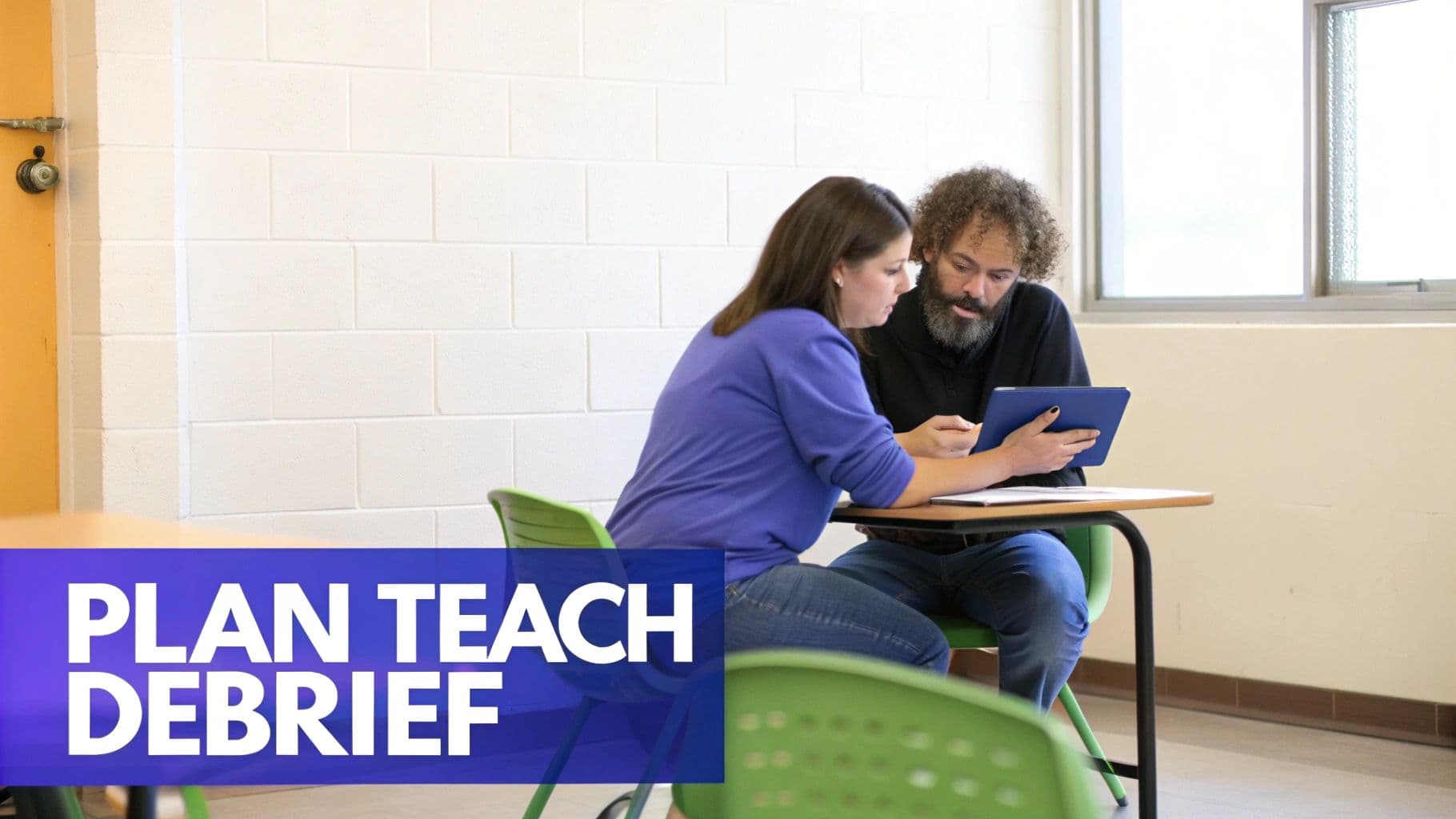
This approach moves beyond simple "drive-by" observations, fostering deep reflection and intentional practice. It's successfully used in various settings, from university teacher preparation programs to large charter school networks implementing district-wide coaching systems. The core goal is to help teachers identify a specific goal, implement a new strategy, and analyze its impact with the coach's support.
How to Implement Instructional Coaching Cycles
- Plan (Pre-Observation): The teacher and coach meet to identify a clear, student-centered goal for an upcoming lesson. They collaboratively plan the lesson, co-creating materials and defining what success looks like. This is where a smart planning tool becomes invaluable, allowing both coach and teacher to build a detailed lesson plan and generate specific assessment rubrics that will guide the observation.
- Teach (Observation): The coach observes the lesson, acting as a neutral data collector. They focus solely on gathering evidence related to the predetermined goal, avoiding judgment. Data might include student engagement tallies, transcripts of student conversations, or notes on teacher questioning techniques.
- Debrief (Post-Observation): Soon after the lesson, the pair meets again to analyze the data. The coach facilitates a reflective conversation, asking powerful questions that guide the teacher toward their own conclusions. They celebrate successes, identify areas for refinement, and set a new goal, beginning the cycle anew.
Why This Strategy Works
Instructional coaching cycles are powerful because they are teacher-driven and non-evaluative. The focus remains on collaborative problem-solving rather than judgment. This builds trust and encourages teachers to take risks with their practice. The structured debrief, guided by specific data, ensures that feedback is objective and actionable. For more ideas on how to frame these conversations, see these helpful teacher observation feedback examples. When coaches and teachers use a platform like Kuraplan to document progress across consecutive lesson plans, they create a tangible record of growth, demonstrating the direct impact of their collaborative work on instruction and student learning.
2. Content-Focused Coaching
Content-focused coaching is a specialized approach that prioritizes subject-matter expertise and pedagogical content knowledge. Unlike a generalist coach who might focus on classroom management, this model zeroes in on the specific demands of teaching a particular discipline, like literacy, math, or science. The core idea is that you can't teach what you don't deeply understand, and this coaching model helps teachers deepen that understanding.
This specialized support is crucial for building teacher confidence and capacity in complex subjects. A literacy coach might work with a primary teacher on implementing a structured phonics sequence, while a math coach helps a middle school teacher design tasks that promote conceptual understanding of fractions. These are highly specific instructional coaching strategies that go beyond generic advice to address the real challenges of content delivery.
How to Implement Content-Focused Coaching
- Identify a Content-Specific Goal: The coach and teacher collaboratively identify a precise goal tied to curriculum standards and student learning data. This could be improving students' ability to cite textual evidence in ELA or developing their skills in scientific inquiry.
- Model and Co-Plan: The coach often models a content-specific strategy or co-plans a lesson with the teacher. Using a tool like Kuraplan, they can access subject-specific lesson templates and standards-aligned objectives to anchor the conversation. The coach might demonstrate how to use a specific manipulative in a math lesson or how to structure a lab activity in science.
- Observe and Analyze Student Work: The focus of observation shifts to how students are interacting with the content. After the lesson, the coach and teacher analyze student work samples, using assessment rubrics to identify patterns of understanding or common misconceptions. This data-driven approach ensures the feedback is directly tied to student learning within the discipline.
Why This Strategy Works
Content-focused coaching is effective because it directly addresses the "what" of teaching, not just the "how." It equips teachers with the specialized knowledge needed to make complex topics accessible and engaging for students. This model respects the unique pedagogical demands of each subject area, providing targeted, relevant support that builds genuine expertise.
By grounding coaching conversations in curriculum standards and evidence-based practices for a specific discipline, this strategy enhances instructional rigor. For more on creating lessons that reflect this rigor, explore these instructional design best practices. When teachers use Kuraplan to modify lessons based on this feedback, they create a repository of high-quality, content-rich instructional materials that can be refined and reused over time.
3. Peer Coaching (Teacher-to-Teacher)
Peer coaching is a collaborative, non-hierarchical model where teachers observe and provide feedback to one another. Pioneered by researchers like Beverly Showers and Bruce Joyce, this approach leverages the expertise already present within a school, creating a sustainable and cost-effective professional development system. It shifts the focus from an external expert to a partnership of equals, making it one of the most empowering instructional coaching strategies for building collective efficacy.
This horizontal model fosters a strong sense of community and shared responsibility for student learning. It is commonly implemented within Professional Learning Communities (PLCs), grade-level teams, and subject departments to refine instructional practices. The core goal is to create a safe, supportive environment where teachers can take risks, share effective techniques, and solve instructional challenges together.
How to Implement Peer Coaching
- Establish a Focus: Partner teachers meet to identify a shared area of focus, such as implementing a new questioning technique or increasing student engagement during group work. Using a tool like Kuraplan, they can co-plan a lesson, selecting specific teaching standards and student learning objectives to guide their observation.
- Observe and Collect Data: One teacher teaches the lesson while their peer partner observes, collecting objective, non-evaluative data related to the agreed-upon focus. The observer acts as a second set of eyes, gathering evidence like student work samples or transcripts of classroom discussions.
- Engage in Reflective Dialogue: The pair meets for a post-observation conversation to analyze the data. The dialogue is reciprocal; both teachers reflect on the lesson's outcomes and brainstorm next steps. They might use Kuraplan's assessment data features to ground their conversation in concrete evidence of student learning.
Why This Strategy Works
Peer coaching is effective because it is built on a foundation of mutual trust and respect. When teachers learn from colleagues they trust, they are more likely to be open to feedback and willing to experiment with new strategies. This approach democratizes professional development, validating the skills and knowledge of practicing teachers.
By using Kuraplan to share lesson plans and resources, peer coaches can create a transparent and collaborative workflow. A teacher can share a differentiated lesson plan as a model, and their partner can offer evidence-based feedback directly within the platform. This creates a powerful cycle of continuous improvement driven by the teachers themselves, leading to a stronger, more cohesive instructional culture across the school.
4. Cognitive Coaching
Cognitive Coaching is a research-based model that prioritizes developing a teacher's internal thought processes over prescribing specific classroom actions. Popularized by Art Costa and Robert Garmston, this approach is grounded in the belief that true instructional improvement comes from enhancing a teacher’s own decision-making and reflection skills. Rather than providing answers, the coach acts as a mediator, using specific questioning techniques to help the teacher explore their own thinking and become more metacognitively aware.
This powerful methodology shifts the focus from "what to do" to "why you do it," making it one of the most sustainable instructional coaching strategies for long-term professional growth. It is used extensively in programs like those at the Stanford School of Education and by districts aiming to cultivate teacher leadership and autonomy. The goal is not to fix a lesson but to build the teacher's capacity to analyze, reflect, and solve problems independently.
How to Implement Cognitive Coaching
- Establish a Trusting Partnership: Cognitive Coaching relies on psychological safety. The coach must create a confidential, non-judgmental space where the teacher feels comfortable exploring their beliefs, perceptions, and instructional reasoning. The coach's role is to be a supportive thinking partner.
- Use the Three-Part Conversation Map: Conversations are structured around a planning, reflecting, or problem-resolving map. The coach guides the dialogue by paraphrasing, clarifying, and asking mediating questions designed to surface the teacher's thinking and encourage deeper analysis of their practice.
- Focus on the Five States of Mind: The coaching conversation aims to enhance the teacher's consciousness, craftsmanship, efficacy, flexibility, and interdependence. Questions are strategically designed to probe these areas, such as "What might be another way to approach this?" (flexibility) or "What tells you that students are succeeding with this strategy?" (efficacy).
Why This Strategy Works
Cognitive Coaching is effective because it honors the teacher as a professional and decision-maker. By focusing on the "how" and "why" behind instructional choices, it fosters deep, lasting changes in practice rather than temporary compliance. This internal shift empowers teachers, boosts their confidence, and develops their ability to self-coach.
Coaches can use a tool like Kuraplan to anchor these reflective conversations in concrete data. For instance, a coach might ask a teacher to analyze Kuraplan’s differentiation recommendations and articulate their reasoning for selecting or modifying them. By reviewing lesson plans and student assessment data within the platform, the coach can pose questions that prompt the teacher to connect their instructional decisions to specific evidence of student learning, making the metacognitive process both tangible and impactful.
5. Differentiated Coaching (Customized Support Models)
Differentiated coaching is a responsive, teacher-centered approach that tailors support to the unique needs, expertise, and goals of each educator. Instead of a one-size-fits-all model, this strategy recognizes that teachers, like students, are at different stages in their professional journey. It customizes the intensity, frequency, and focus of coaching to maximize growth for everyone, from novices to veterans.
This model is grounded in the idea that effective professional development must be personalized. It’s successfully used by school districts to provide intensive, high-touch support for early-career teachers while offering experienced educators more autonomous, collaborative partnerships focused on innovation. The core goal is to match the coaching strategy to the teacher's readiness, ensuring support is always relevant, respectful, and impactful.
How to Implement Differentiated Coaching
- Assess Teacher Needs: Begin by gathering data to understand each teacher's strengths, challenges, and professional goals. This can be done through self-assessments, classroom observations, or analyzing student performance data. A smart planning tool can help here; for example, a coach can review a teacher’s lesson quality metrics and differentiation data in Kuraplan to diagnose specific areas that would benefit from targeted support.
- Define Coaching Pathways: Create a menu of coaching options. This might include intensive co-planning cycles for a new teacher, a peer observation group for a team of veteran teachers exploring a new curriculum, or a light-touch model with monthly check-ins for a highly effective educator experimenting with new technology.
- Co-Create a Coaching Plan: Meet with each teacher to collaboratively set goals and choose the most appropriate coaching pathway. This empowers the teacher and builds ownership over their professional growth. For example, a novice teacher might use Kuraplan’s pre-built lesson templates for structure, while an advanced teacher might be challenged to design a new, highly customized unit from scratch.
Why This Strategy Works
Differentiated coaching is one of the most efficient instructional coaching strategies because it allocates a coach's most valuable resource—their time—where it is needed most. It builds trust by honoring teachers' professionalism and expertise, avoiding the perception that coaching is only for those who are struggling. This personalized approach ensures that every teacher receives meaningful, actionable support that directly aligns with their classroom context and student needs. For coaches working to implement these customized support models, exploring practical and effective differentiated instruction techniques can significantly enhance their impact on teacher practice.
6. Collaborative Coaching (Co-Teaching and Co-Planning)
Collaborative coaching is a partnership-based model where the coach moves from the role of an observer to an active participant in the classroom. Instead of providing feedback after a lesson, the coach and teacher work side-by-side, co-planning instruction, co-delivering lessons, and jointly analyzing student outcomes. This hands-on approach, championed by experts like Marilyn Friend and Lynda Cook in the context of co-teaching, provides powerful, in-the-moment modeling and support.
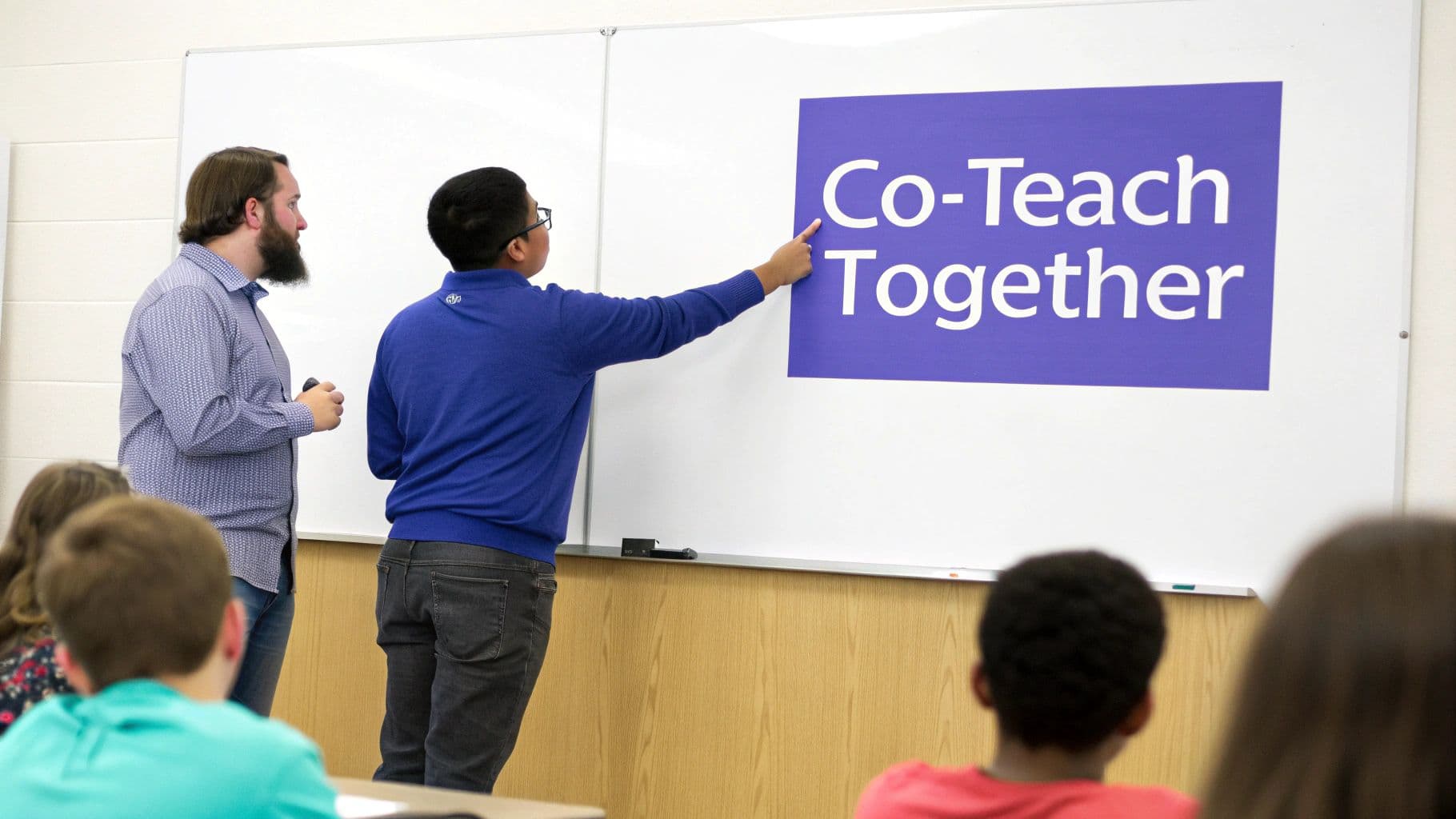
This strategy is particularly effective for implementing complex new practices or supporting teachers who need more direct guidance. It is widely used in special education for building inclusive classrooms, in reading intervention programs, and as a powerful mentoring tool for new teachers. The immediate, shared experience of teaching demystifies new techniques and builds teacher confidence through active participation.
How to Implement Collaborative Coaching
- Co-Plan with a Shared Goal: Before entering the classroom, the coach and teacher must have a unified vision. Use a collaborative platform like Kuraplan to co-create a lesson plan, clearly defining roles, responsibilities, and the specific instructional strategies to be modeled. This ensures both educators are aligned on the lesson's objectives and flow.
- Co-Teach the Lesson: During instruction, the pair implements one of several co-teaching models (e.g., one teach, one assist; station teaching; parallel teaching). The coach actively models the target strategy while the teacher observes or participates, allowing for real-time learning.
- Co-Reflect on Impact: After the lesson, the coach and teacher meet to analyze student work and assessment data. They use this evidence to discuss the effectiveness of the co-taught lesson and determine next steps. This shared analysis fosters a sense of joint ownership over student success.
Why This Strategy Works
Collaborative coaching is one of the most effective instructional coaching strategies because it closes the gap between theory and practice. Teachers see new strategies in action within their own classroom context, with their own students. This "shoulder-to-shoulder" support builds a deep, trusting relationship and accelerates the adoption of new teaching practices. By using Kuraplan to document co-planning notes, differentiation strategies, and student progress over a series of co-taught lessons, the partnership creates a clear and tangible record of professional growth and its direct impact on student learning.
7. Data-Driven Coaching
Data-driven coaching is an approach anchored in evidence, where coaches and teachers use student assessment results, achievement metrics, and classroom observations to identify priorities and monitor progress. Championed by researchers like Douglas B. Reeves and Robert Marzano, this strategy ensures that coaching efforts are targeted toward measurable improvements in student learning outcomes, making it one of the most impactful instructional coaching strategies.

This method moves coaching conversations away from subjective feelings and toward objective reality. It is successfully used by districts analyzing state assessment data to identify school-wide trends and by individual teacher-coach pairs using formative assessment data to fine-tune instruction for the following week. The central idea is to let student performance data guide every step of the coaching process, from goal-setting to measuring success.
How to Implement Data-Driven Coaching
- Identify the Focus: The coach and teacher collaboratively analyze a specific data set. This could be anything from benchmark assessment scores and student work samples to attendance records. The goal is to pinpoint a specific, high-leverage area for improvement, such as a struggling student subgroup or a commonly misunderstood academic standard.
- Set a SMART Goal: Based on the data, the pair establishes a Specific, Measurable, Achievable, Relevant, and Time-bound (SMART) goal. For example, "Increase the percentage of English Language Learners scoring 'proficient' on the unit summary writing rubric from 40% to 70% in the next six weeks."
- Plan and Implement: With the goal defined, they co-plan instructional strategies designed to meet it. Kuraplan is ideal here, as they can build lessons aligned to priority standards and create integrated assessment rubrics to track progress against the goal. The teacher then implements these strategies.
- Analyze and Adjust: After a set period, they collect and analyze new data to measure progress toward the SMART goal. This data determines the next steps: celebrate success and set a new goal, or refine the instructional approach and continue working toward the original goal.
Why This Strategy Works
Data-driven coaching is effective because it provides a clear, objective foundation for professional growth. It removes guesswork and ensures that a teacher's valuable time and effort are focused on the instructional practices that will have the greatest impact on student learning. Using data builds a compelling case for change and makes progress visible and motivating for both the teacher and the coach. For a deeper dive into practical classroom application, explore these data-driven instruction examples. When teachers use a tool like Kuraplan to track student performance data over time, they create a powerful narrative of growth that connects their instructional shifts directly to student achievement.
8. Job-Embedded Coaching (Context-Specific Support)
Job-embedded coaching is a highly practical approach where support occurs directly within the teacher’s daily work environment. Instead of attending abstract, off-site workshops, teachers receive real-time guidance during authentic instructional tasks. This model, championed by professional development experts like Susan L'Estrange and Mike Schmoker, addresses challenges and learning needs as they naturally arise, making it one of the most relevant and impactful instructional coaching strategies.
This "just-in-time" support system bridges the gap between theory and practice. It is successfully used when a school is adopting a new curriculum, implementing technology, or focusing on a specific instructional shift. For example, a literacy coach might join a teacher’s guided reading block to model a new comprehension strategy, or a math specialist could co-teach a lesson on complex problem-solving. The core goal is to provide immediate, context-specific support that teachers can apply instantly.
How to Implement Job-Embedded Coaching
- Identify the Context: The coach and teacher determine a specific, high-leverage context for support. This could be a daily planning period, a specific instructional block, or a particular unit of study where the teacher feels they need the most help.
- Provide In-the-Moment Support: The coach works alongside the teacher in that context. This might involve co-planning, modeling a technique with students, observing and providing immediate whispered feedback, or troubleshooting a classroom management issue as it happens.
- Reflect and Refine: The pair engages in brief, frequent check-ins to discuss what’s working and what adjustments are needed. The focus is on small, incremental improvements that build teacher capacity and confidence over time.
Why This Strategy Works
Job-embedded coaching is powerful because it is authentic and responsive. It removes the challenge of transferring skills from a training session to the complexities of a real classroom. The support is directly tied to the teacher’s students and curriculum, making it immediately applicable. When coaches use a tool like Kuraplan during a shared planning period, they can model how to differentiate a lesson or generate a new activity on the spot. By documenting these collaborative modifications in Kuraplan's lesson notes, the coach creates a living record of the support provided, making professional growth visible and continuous.
8 Instructional Coaching Strategies Compared
| Model | 🔄 Implementation complexity | ⚡ Resource requirements | 📊 Expected outcomes (⭐) | Ideal use cases | 💡 Key advantages |
|---|---|---|---|---|---|
| Instructional Coaching Cycles (Plan‑Teach‑Debrief) | Moderate–High — structured repeated cycles; requires scheduling and protocols | High — skilled coaches, observation time, data collection tools | Measurable teacher growth and student gains — ⭐⭐⭐⭐ | New teacher induction, standards implementation, targeted instructional improvement | Evidence-based feedback loop; builds trust; data-driven goal setting |
| Content‑Focused Coaching | Moderate–High — deep discipline alignment and specialized strategies | High — subject experts, content resources, discipline-specific assessments | Strong subject-specific instructional improvement — ⭐⭐⭐⭐ | STEM, literacy, content-area skill gaps, curriculum rollout | Increases teacher content knowledge and credibility; addresses misconceptions |
| Peer Coaching (Teacher‑to‑Teacher) | Low–Moderate — reciprocal, simple protocols but needs coordination | Low — uses existing staff time; needs protected collaboration periods | Collaborative culture and distributed leadership; variable impact — ⭐⭐⭐ | PLCs, grade‑level teams, scalable staff development | Cost‑effective; builds trust and teacher leadership; sustainable |
| Cognitive Coaching | High — requires specialized questioning protocols and reflective practice | High — intensive coach training and time for deep reflection | Develops independent, reflective practitioners; long‑term change — ⭐⭐⭐⭐ | Teacher leadership development, complex instructional decision‑making | Builds metacognition and teacher agency; supports durable change |
| Differentiated Coaching (Customized Support) | High — individualized plans and multiple modalities to manage | High — extensive coach skillset, ongoing assessment and monitoring | Tailored teacher growth across levels; efficient where implemented — ⭐⭐⭐⭐ | Mixed‑skill faculties, targeted remediation, personalized PD | Matches support to teacher readiness; improves relevance and engagement |
| Collaborative Coaching (Co‑Teaching & Co‑Planning) | High — co‑planning and in‑class partnership logistics | Very High — coach time in classroom, compatible scheduling/personality fit | Immediate instructional improvement and modeled practice — ⭐⭐⭐⭐ | New teachers, inclusion/co‑teaching, intensive skill modeling | In‑the‑moment modeling; reduces isolation; boosts teacher confidence |
| Data‑Driven Coaching | Moderate–High — iterative analysis and goal‑setting based on evidence | High — data systems, assessment literacy, time for analysis | Targeted, measurable student outcomes and focused coaching — ⭐⭐⭐⭐ | Accountability contexts, progress monitoring, gap‑closing initiatives | Grounded in evidence; clarifies priorities; tracks impact objectively |
| Job‑Embedded Coaching (Context‑Specific Support) | Moderate — integrated into daily routines, less formal structure | Moderate — coach presence on site, flexible scheduling | Rapid, practical application to real classroom challenges — ⭐⭐⭐⭐ | Daily lesson planning, in‑class troubleshooting, immediate needs | Highly relevant and transferable; addresses authentic problems in context |
Putting It All Together: Choosing the Right Coaching Strategy for Your School
Navigating the landscape of instructional coaching strategies can feel overwhelming. This guide has walked you through eight distinct models, from the structured rhythm of Instructional Coaching Cycles to the contextual support of Job-Embedded Coaching. We explored how Content-Focused Coaching hones subject-specific skills while Data-Driven Coaching provides the objective evidence needed for targeted growth.
The key takeaway isn't to pick one "best" strategy and apply it universally. True coaching mastery lies in developing a flexible, responsive toolkit. The most effective instructional coaching strategies are not applied to teachers; they are chosen with teachers to meet a specific, identified need. A first-year teacher grappling with classroom management might thrive within a classic Plan-Teach-Debrief cycle, while a veteran educator looking to innovate their curriculum could find immense value in a Collaborative Coaching partnership.
The Art of Blending: Creating a Hybrid Coaching Model
The real magic happens when you start blending these approaches. Imagine a scenario where a grade-level team is struggling with new science standards. Your coaching approach could look like this:
- Start with Data-Driven Coaching: Analyze formative assessment data to pinpoint specific conceptual misunderstandings among students. This gives you a clear, evidence-based starting point.
- Move to Content-Focused Coaching: Facilitate a PLC session dedicated to unpacking the vertical alignment of the science standards, building the team’s collective content knowledge.
- Implement Collaborative Coaching: Engage in co-planning sessions with the teachers to design a new unit, integrating high-leverage instructional practices.
- Launch Peer Coaching: Pair teachers up to observe each other's implementation of the new unit, providing low-stakes, supportive feedback.
This hybrid model demonstrates how different instructional coaching strategies can be woven together to create a comprehensive and sustained support system. It moves beyond isolated workshops and into the fabric of a school’s daily work.
Your Next Steps: From Theory to Action
Ultimately, the goal of any coaching initiative is to build teacher capacity, improve student outcomes, and cultivate a culture of continuous improvement. It’s about creating an environment where every educator feels seen, supported, and empowered to take professional risks. The strategies outlined here are your roadmaps, but the destination is a school where collaboration is the norm and every classroom is a hub of vibrant, effective learning.
As you begin implementing or refining these instructional coaching strategies, remember that the administrative side of coaching—planning sessions, tracking data, and aligning to standards—should not overshadow the human element. The conversations, the trust-building, and the shared "aha" moments are where true transformation occurs. Leveraging smart AI tools can help you reclaim time for those critical interactions. For example, a platform like Kuraplan can streamline the entire planning and data-tracking process, allowing coaches and teachers to co-plan units, link activities to standards, and analyze assessment results in one place. This frees you up to focus less on the paperwork and more on the practice. The right strategy, supported by the right tools, elevates coaching from a series of meetings into a powerful engine for school-wide growth.
Ready to spend less time on administrative tasks and more time on impactful coaching conversations? See how Kuraplan can help you and your teachers co-plan, differentiate instruction, and track progress all in one intuitive platform. Visit Kuraplan to streamline your coaching workflow and amplify your impact.