ScienceFreePrintable
Ionic Bonding Basics
A free science worksheet ready for your classroom. Open in Kuraplan to grab the print-ready PDF, customize it for your students, or generate a fresh version in seconds.
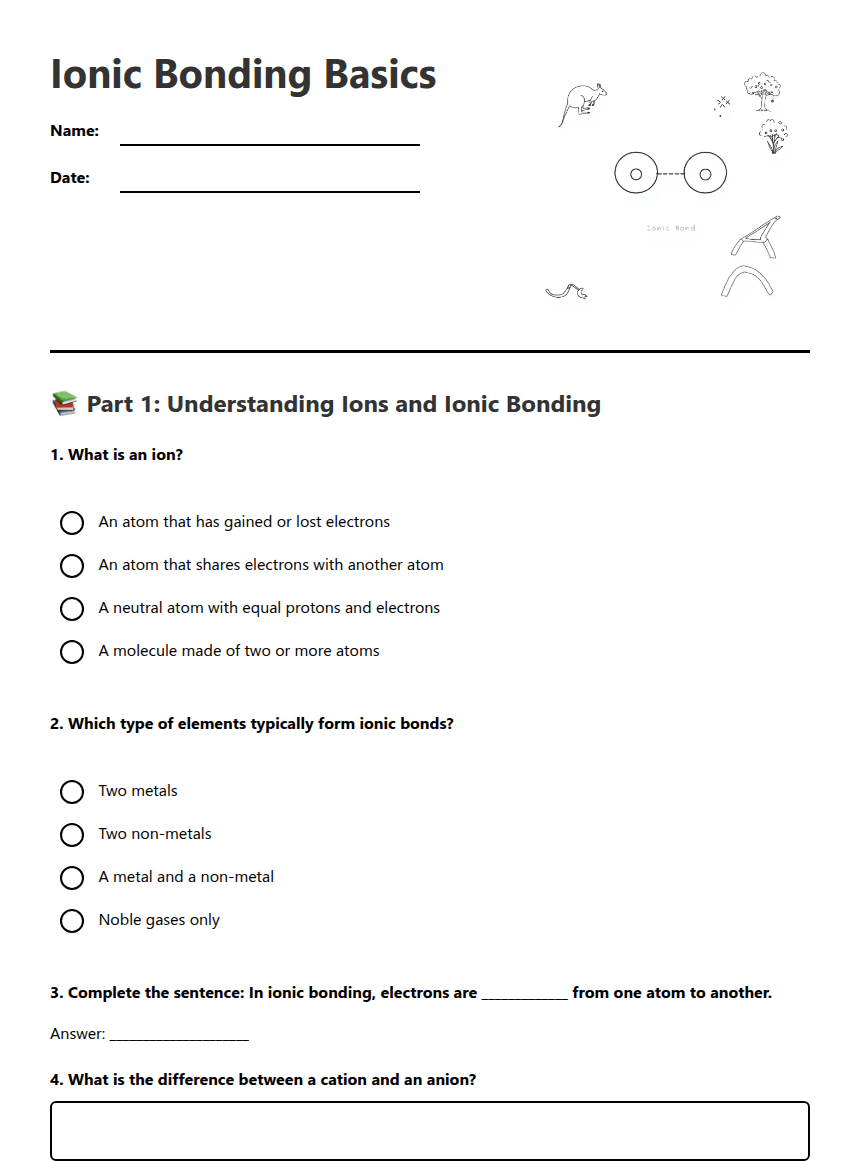
Ionic Bonding Basics

📚 Part 1: Understanding Ions and Ionic Bonding
1. What is an ion?
An atom that has gained or lost electrons
An atom that shares electrons with another atom
A neutral atom with equal protons and electrons
A molecule made of two or more atoms
2. Which type of elements typically form ionic bonds?
Two metals
Two non-metals
A metal and a non-metal
Noble gases only
3. Complete the sentence: In ionic bonding, electrons are _____________ from one atom to another.
Answer: _____________________
4. What is the difference between a cation and an anion?
5. Using the example of sodium chloride (NaCl), explain how an ionic bond forms between sodium and chlorine atoms.
⚡ Part 2: Properties of Ionic Compounds
6. Which of the following are properties of ionic compounds? (Select all that apply)
High melting and boiling points
Conduct electricity when solid
Often soluble in water
Conduct electricity when molten or dissolved
Form crystal lattice structures
7. Explain why ionic compounds have high melting points.
8. Why do ionic compounds conduct electricity when dissolved in water but not when solid?
9. Give two real-life examples of ionic compounds and state one use for each.
Example 1: _________________ Use: _________________________________
Example 2: _________________ Use: _________________________________
🔬 Part 3: Applying Your Knowledge
10. Create a flowchart showing the steps of ionic bond formation. Use the space below to draw your flowchart with arrows and labels.
11. Compare ionic bonding to covalent bonding by completing the table below:
| Feature | Ionic Bonding | Covalent Bonding |
|---|---|---|
| What happens to electrons? | ||
| Types of elements involved | ||
| Electrical conductivity |
Extension Activity: Research and explain why table salt (NaCl) dissolves easily in water but oil does not. What does this tell us about the nature of ionic compounds?
About This Worksheet
Free in Kuraplan
Sign up free, grab the PDF, and customize it for your class.
Print-Ready
Formatted for standard paper. Clean layout, easy to read.
AI-Generated
Created with Kuraplan's AI, designed for real classroom use.
For Teachers & Parents
Use in classrooms, for homework, tutoring, or homeschool.
Need a custom version of this worksheet?
Kuraplan's AI generates custom worksheets in seconds — differentiated for every learner, aligned to your curriculum.
Generate Custom Worksheets — Free No credit card Curriculum-aligned Under 60 seconds
More Science Worksheets
Year 8
Atomic Theory Research Worksheet
Free
Year 8
Physical and Chemical Changes
Free
Year 8
Physical and Chemical Changes
Free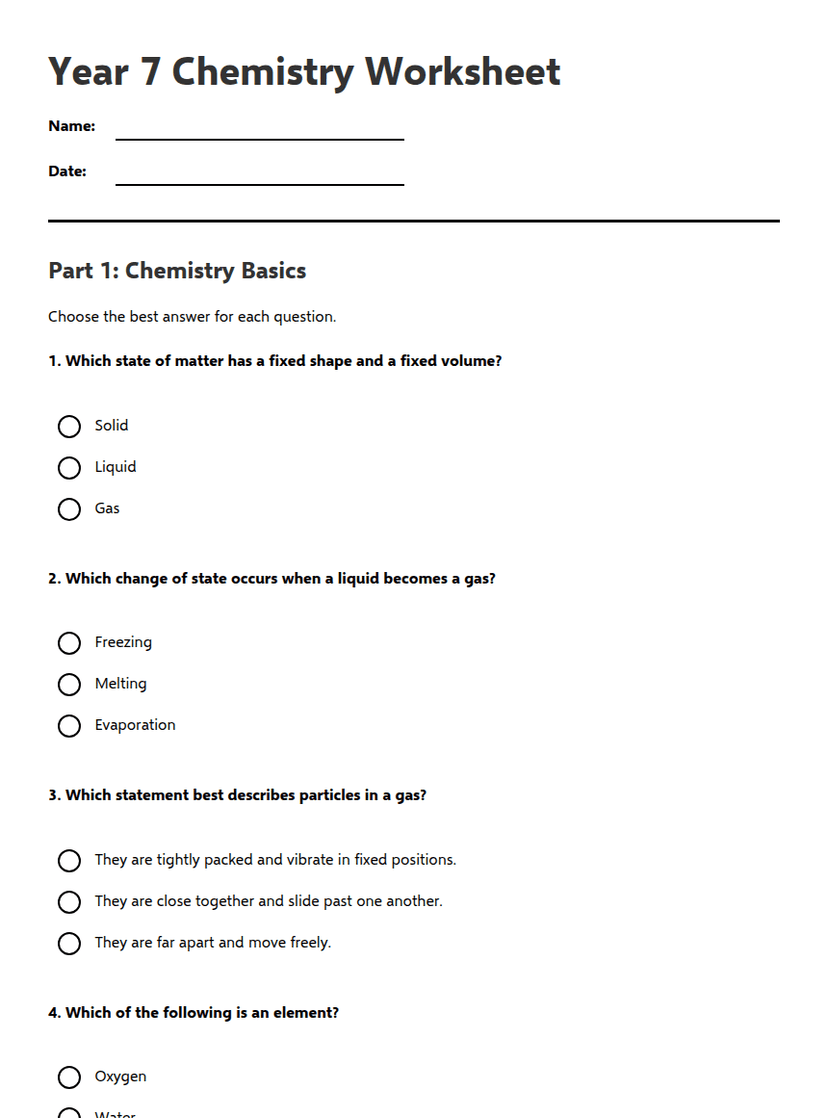
Year 7
Year 7 Chemistry Worksheet
Free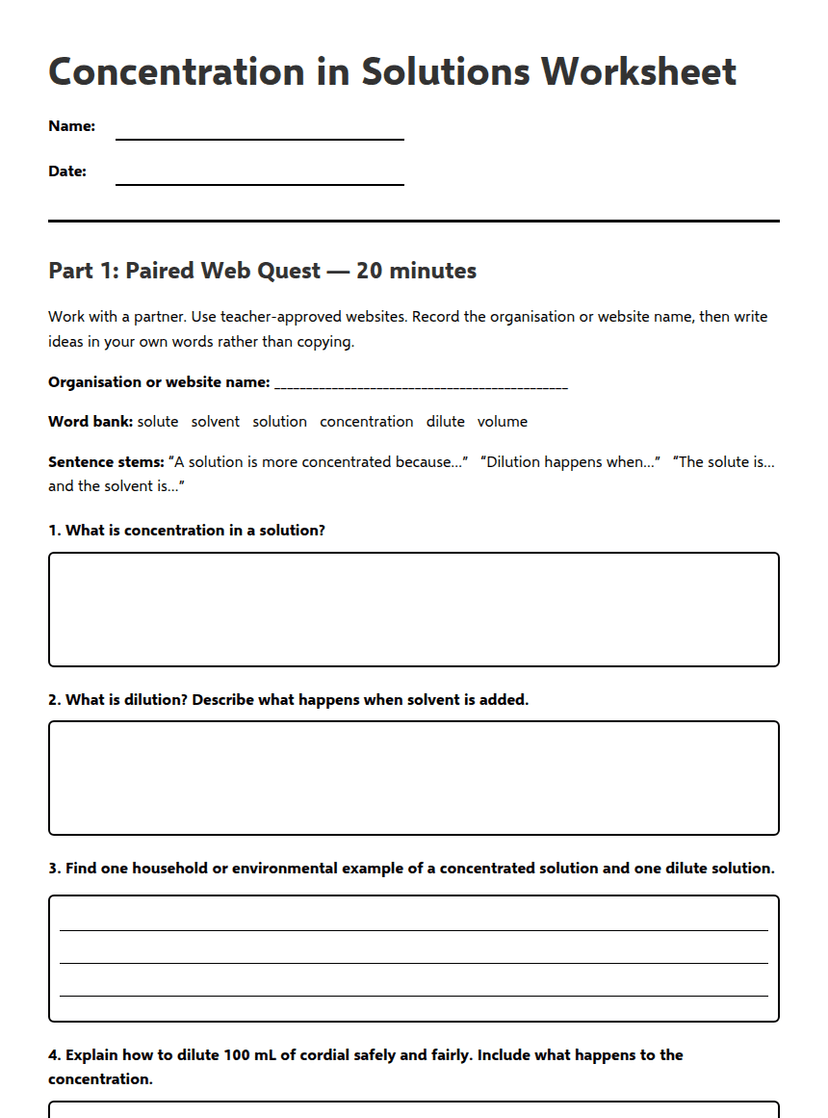
Year 7
Concentration in Solutions Worksheet
Free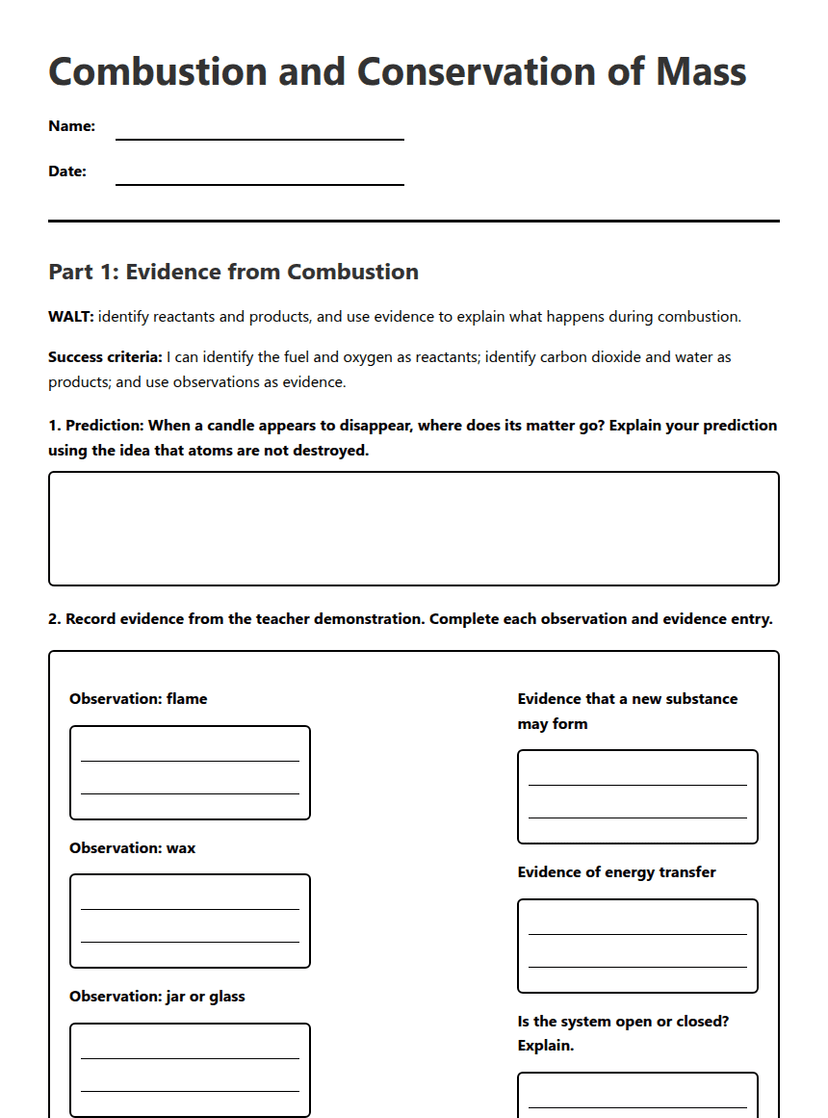
Year 9
Combustion and Conservation of Mass
Free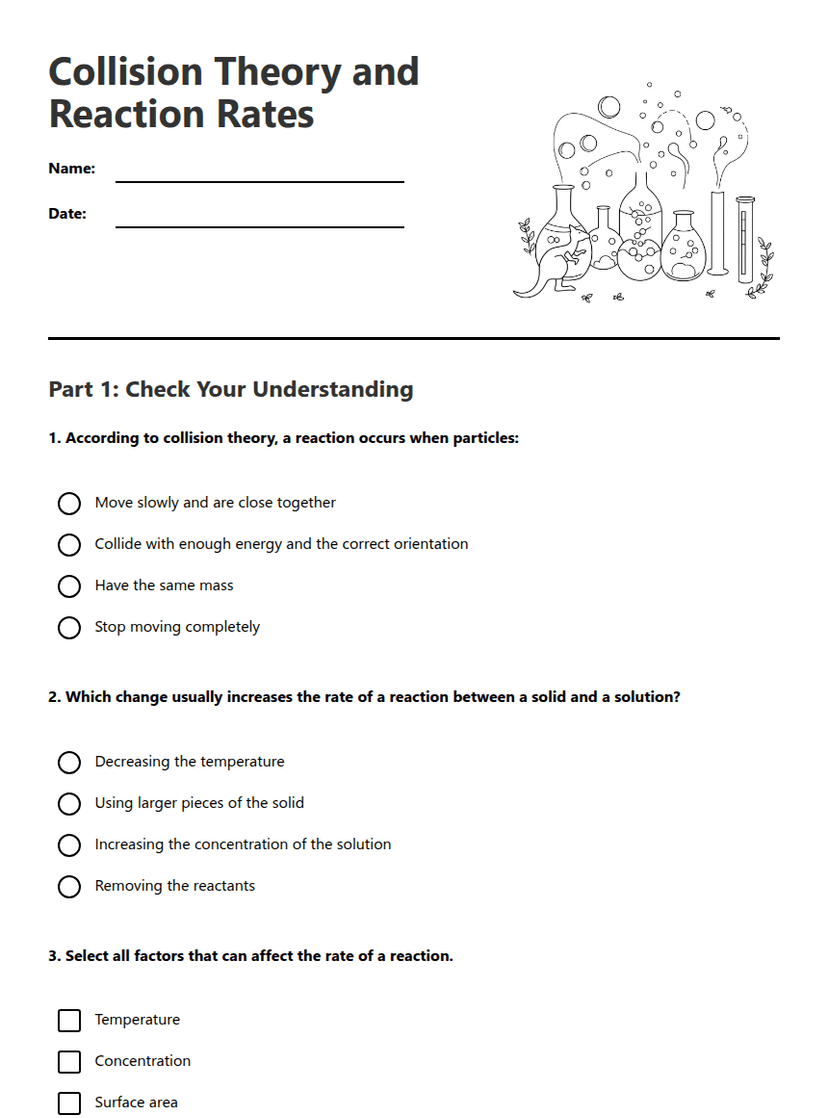
Year 10
Collision Theory and Reaction Rates
Free
Year 9