Marine Ecosystems and Impacts
A free science worksheet ready for your classroom. Open in Kuraplan to grab the print-ready PDF, customize it for your students, or generate a fresh version in seconds.
Marine Ecosystems and Human Impacts
Part 1: Read and Understand
Learning intention: We are learning how marine ecosystems function and how human activities can affect them.
Success criteria: I can describe a marine ecosystem, explain a food chain, use key vocabulary, and suggest a management strategy for an environmental impact.
Reading: Marine ecosystems
A marine ecosystem is a community of living organisms and non-living features in an ocean, estuary, reef or other saltwater environment. Organisms depend on each other and on conditions such as light, temperature, salinity and available nutrients.
Energy moves through a marine food chain. Producers, such as algae and seagrass, make their own food using sunlight. Small animals may eat producers, and larger animals eat smaller animals. Decomposers break down dead material and return nutrients to the ecosystem.
Biodiversity is the variety of living things in an ecosystem. High biodiversity can help an ecosystem remain healthy and recover from change. Human impacts such as plastic pollution, overfishing and climate change can reduce biodiversity and disturb food chains. Management strategies include reducing waste, setting fishing limits, protecting habitats and lowering greenhouse gas emissions.
Vocabulary matching
Answers: 1. ____ 2. ____ 3. ____ 4. ____
Marine food chain
____ seal ____ phytoplankton ____ fish ____ krill
Part 2: Impacts and Responses
Impact–effect–management table
Complete the table for one human impact.
Human impact: ______________________________________________
Effect on marine life: _______________________________________
________________________________________________________________________
Possible management strategy: ________________________________
________________________________________________________________________
Exit ticket
One idea I learned today is _________________________________________________
One question I still have is ________________________________________________
Teacher Answer Key
Vocabulary: 1. C 2. D 3. B 4. A
Food chain: Phytoplankton = 1, krill = 2, fish = 3, seal = 4. Energy arrows: phytoplankton → krill → fish → seal.
7. A marine ecosystem is a community of organisms and non-living features in a saltwater environment. Examples include fish and sunlight, or algae and temperature.
8. Producers make food using sunlight and provide the starting energy for most marine food chains.
9. Animals may swallow plastic, become entangled, or suffer injury and reduced health.
10. Overfishing can reduce the number of one species, leaving predators with less food or causing prey populations to increase.
11. Biodiversity provides a range of species and roles, helping ecosystems remain stable and recover from change.
12. Acceptable answers include reducing greenhouse gas emissions, using renewable energy, protecting habitats or supporting climate adaptation programs.
Impact table: Answers will vary. Suitable examples include plastic pollution causing injury or ingestion, managed by reducing single-use plastics; overfishing reducing fish populations, managed by fishing limits; or climate change causing coral bleaching, managed by reducing emissions and protecting resilient habitats.
About This Worksheet
Free in Kuraplan
Sign up free, grab the PDF, and customize it for your class.
Print-Ready
Formatted for standard paper. Clean layout, easy to read.
AI-Generated
Created with Kuraplan's AI, designed for real classroom use.
For Teachers & Parents
Use in classrooms, for homework, tutoring, or homeschool.
Need a custom version of this worksheet?
Kuraplan's AI generates custom worksheets in seconds — differentiated for every learner, aligned to your curriculum.
Generate Custom Worksheets — FreeMore Science Worksheets
Reducing Resource Impact Worksheet
Free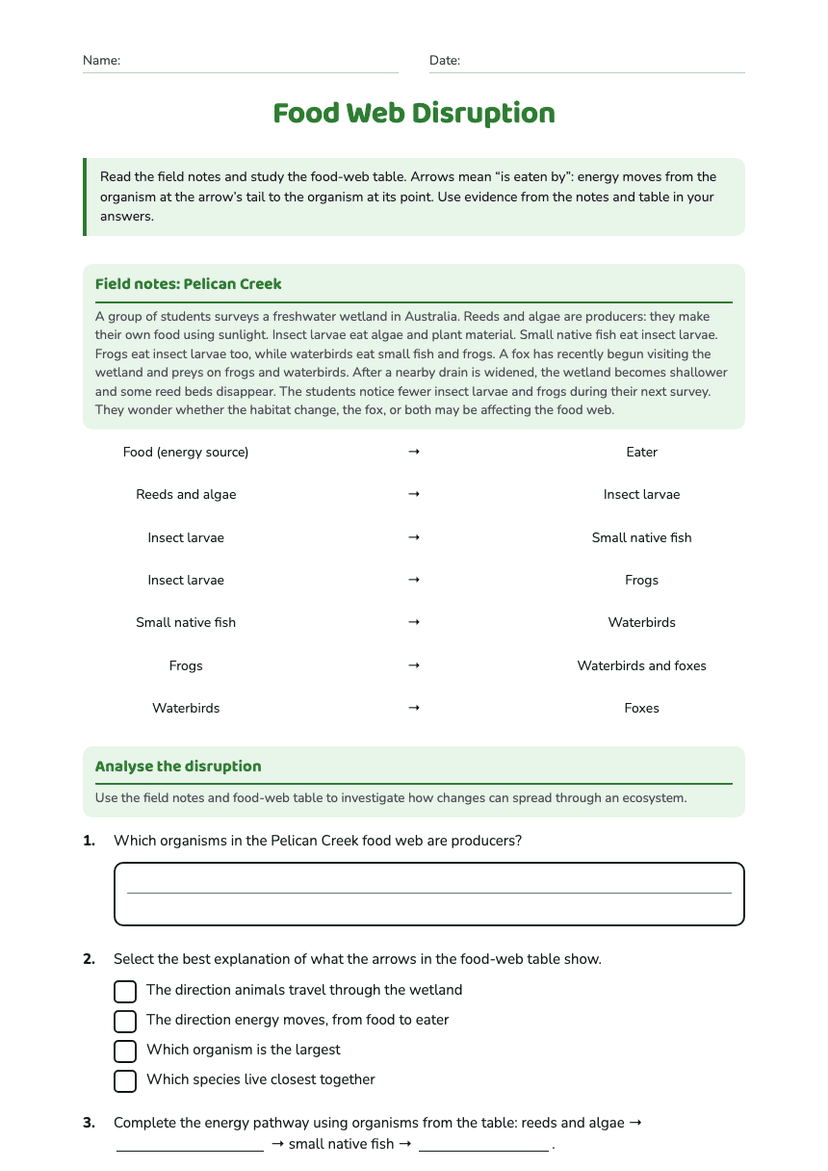
Food Web Disruption
Free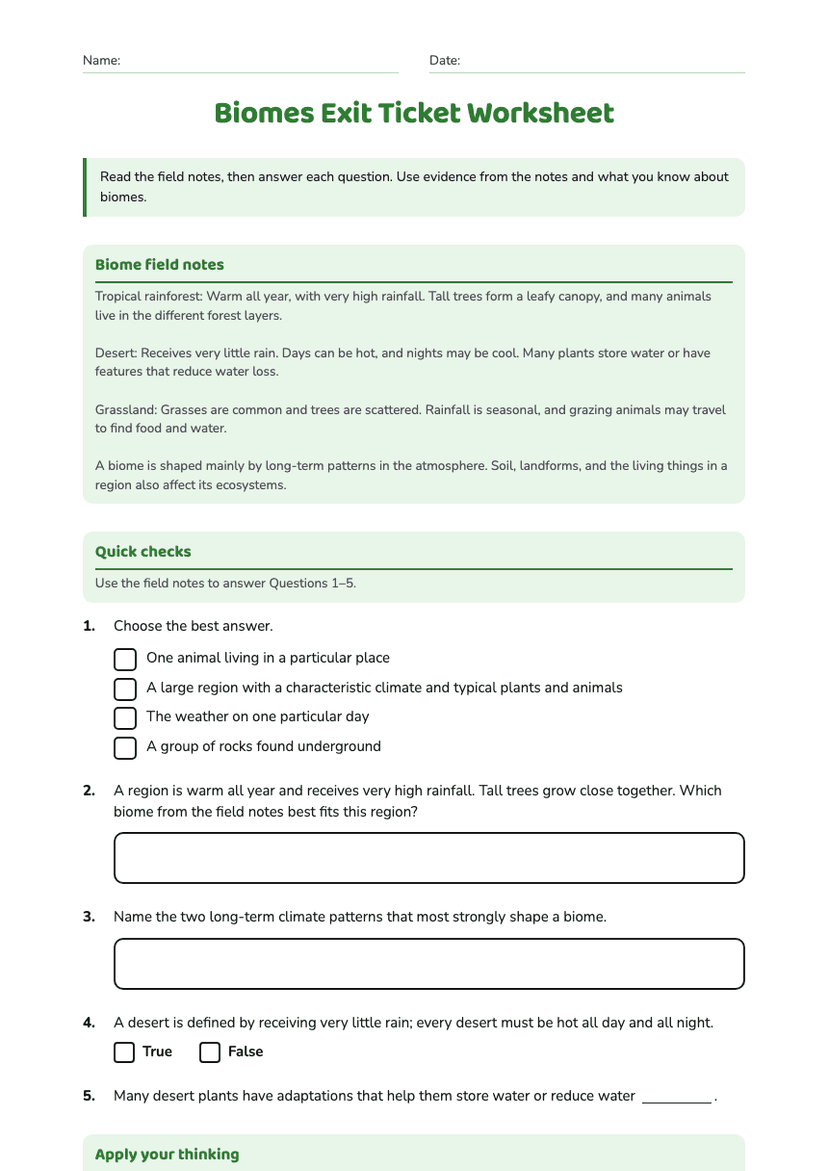
Biomes Exit Ticket Worksheet
Free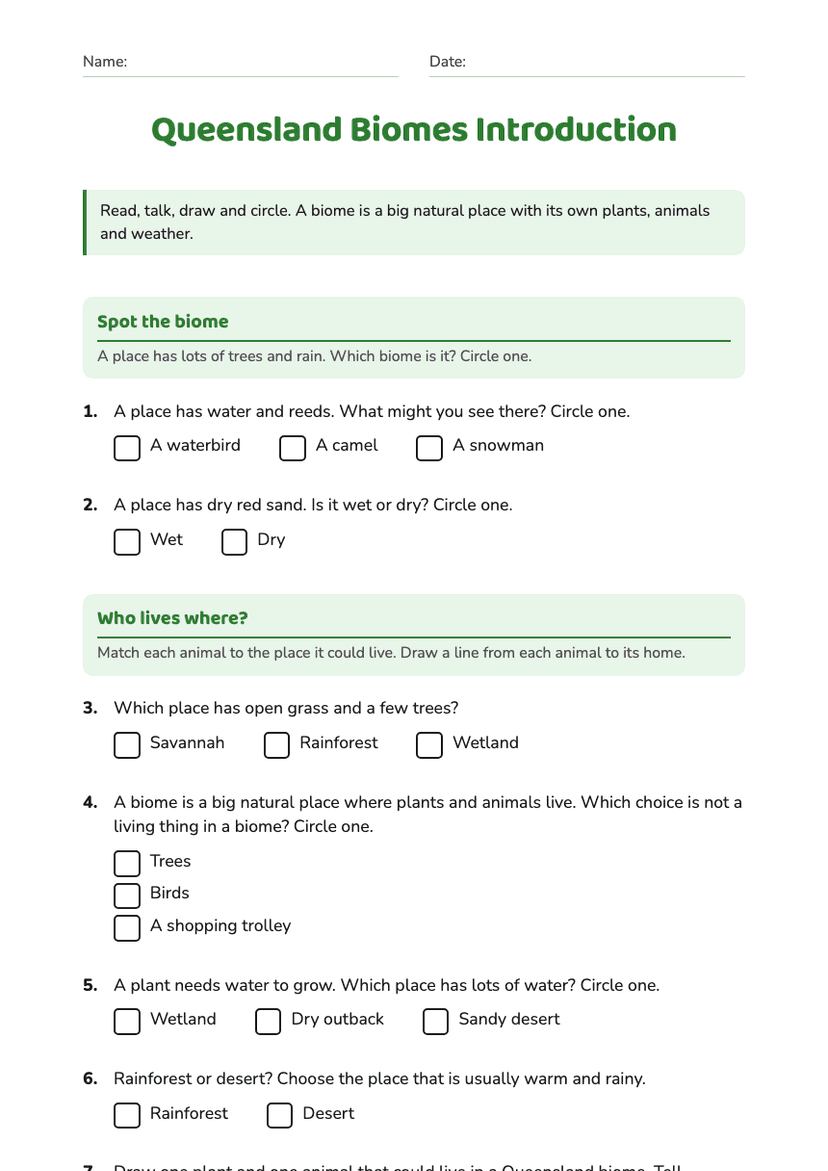
Queensland Biomes Introduction
Free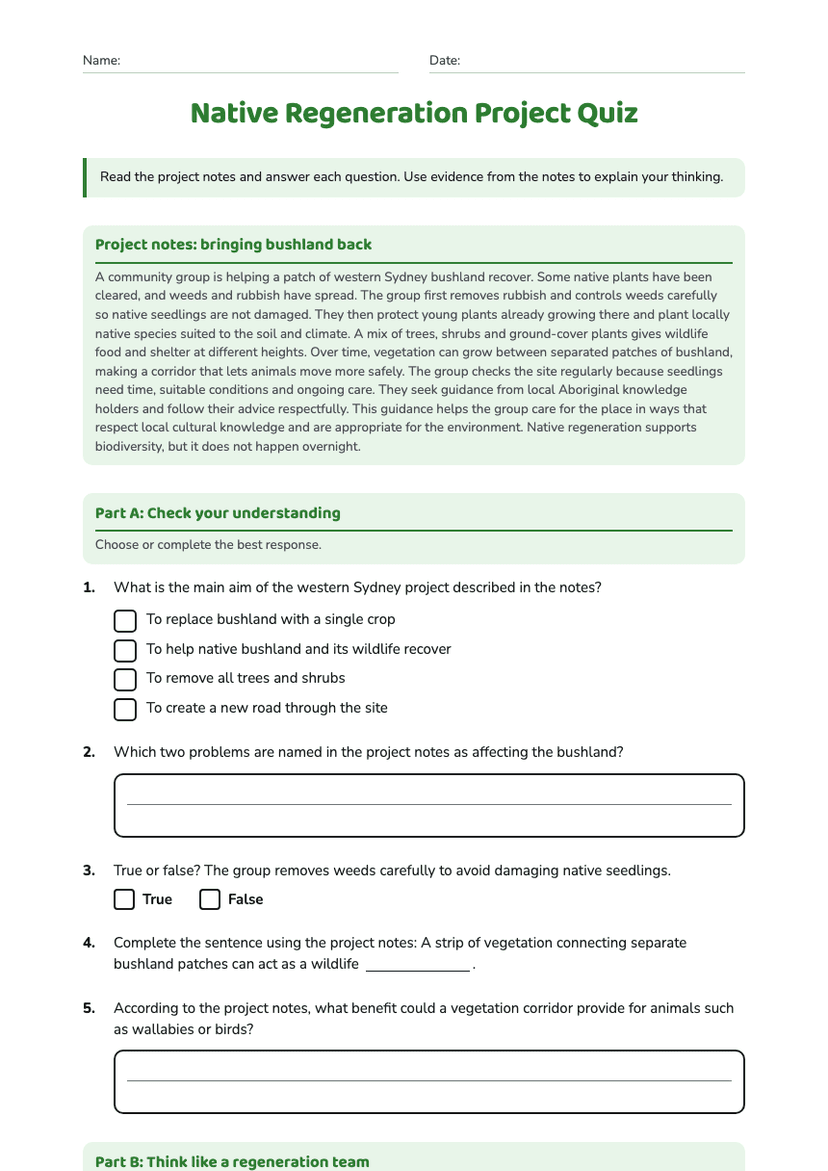
Native Regeneration Project Quiz
Free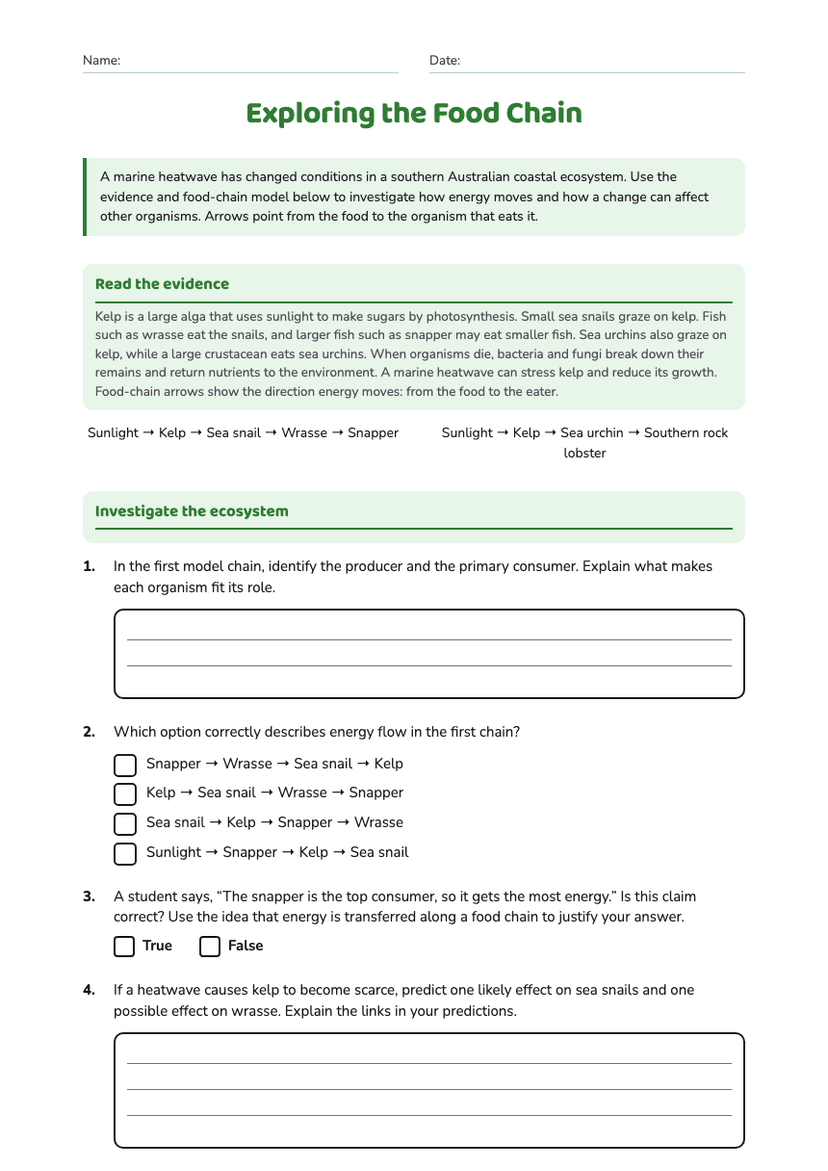
Exploring the Food Chain
Free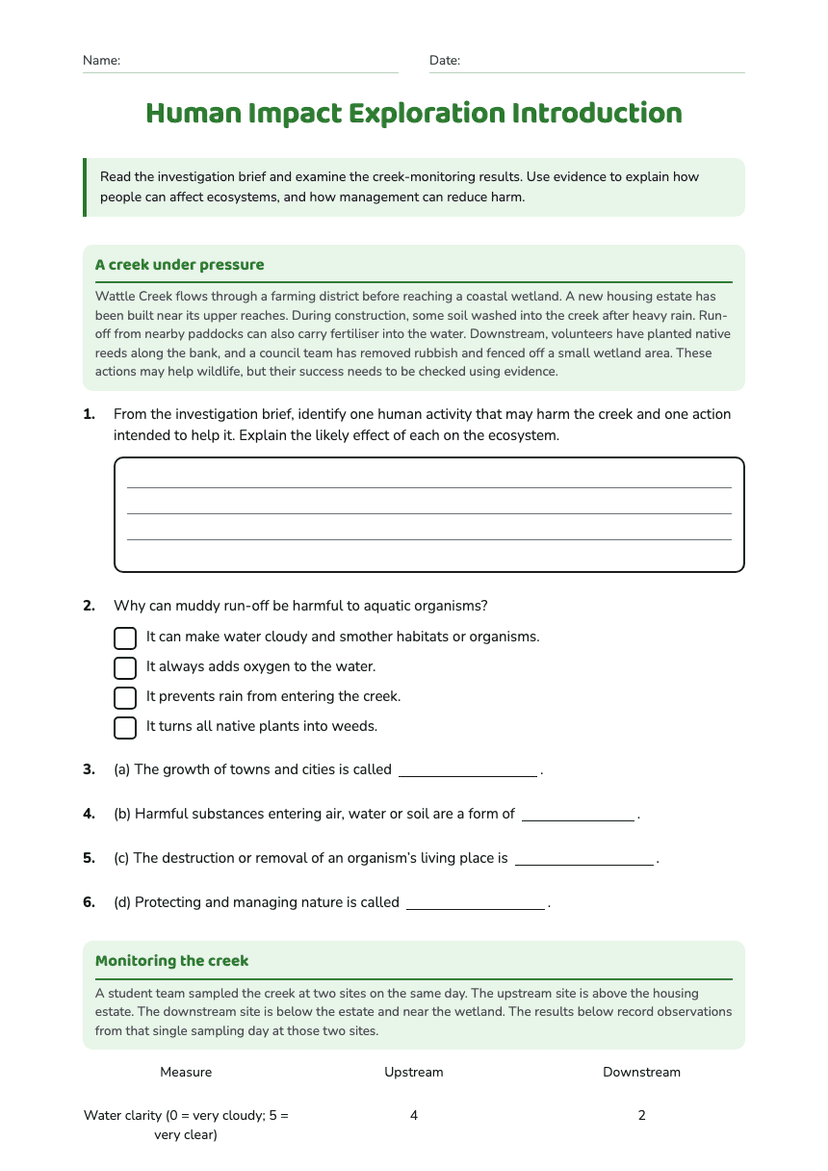
Human Impact Exploration Introduction
Free