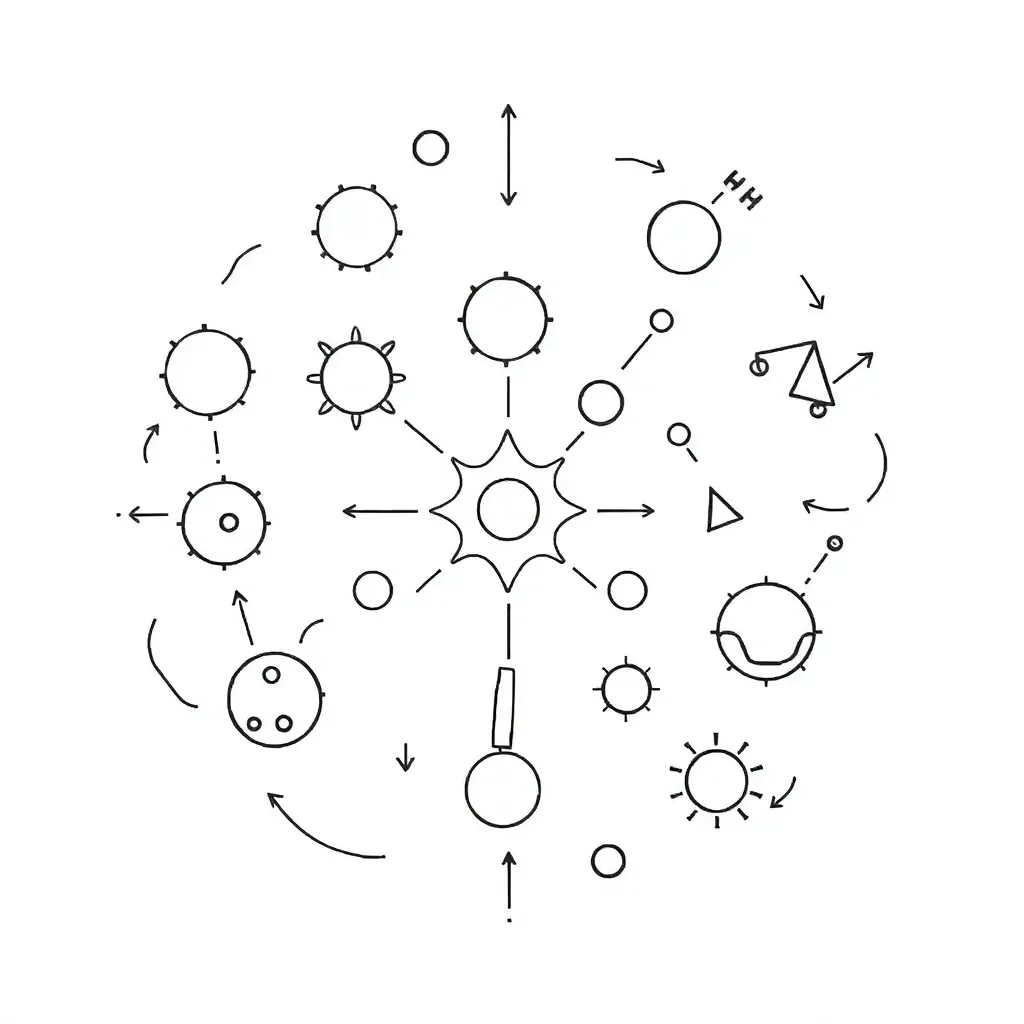
Particle Model Exploration
A free science worksheet ready for your classroom. Open in Kuraplan to grab the print-ready PDF, customize it for your students, or generate a fresh version in seconds.
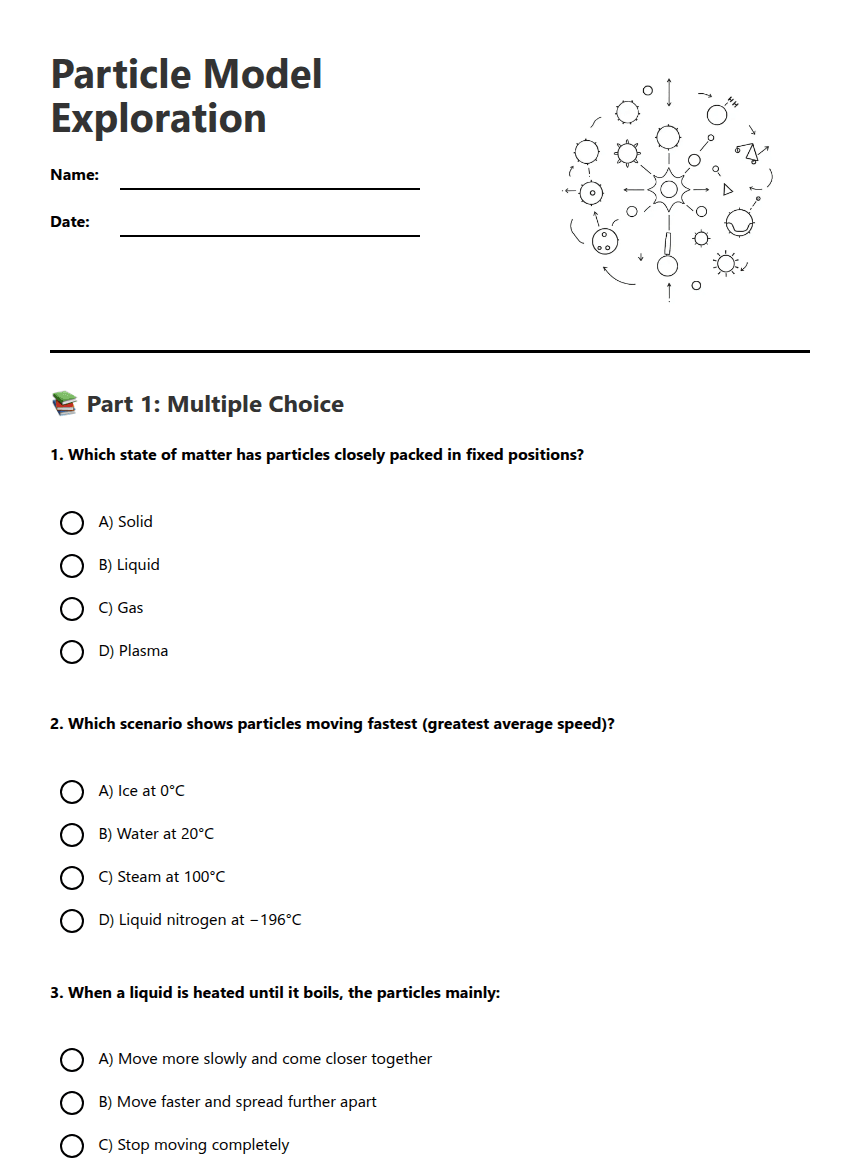
Particle Model Exploration
📚 Part 1: Multiple Choice
✏️ Part 2: Short Answers & Activities
✅ Answers
1. A) Solid
2. C) Steam at 100°C
3. B) Move faster and spread further apart
4. C) Compressing the gas (reducing volume)
5. Example answer: Particles far apart, random positions, arrows showing fast motion in all directions.
6. Example answer: Diffusion occurs because particles are constantly moving and gradually spread from regions of high concentration to low concentration, showing particles move independently.
7. Liquid water at 20°C is denser than ice at 0°C because ice particles form a more open structure (more space between particles) while liquid particles are closer together.
8. Particles vibrate more and move slightly further apart, so the rod typically becomes longer (thermal expansion).
9. 1–B, 2–A, 3–C, 4–D
10. The pressure decreases because cooling slows particle motion so particles collide with the walls less often and with less force.
About This Worksheet
Free in Kuraplan
Sign up free, grab the PDF, and customize it for your class.
Print-Ready
Formatted for standard paper. Clean layout, easy to read.
AI-Generated
Created with Kuraplan's AI, designed for real classroom use.
For Teachers & Parents
Use in classrooms, for homework, tutoring, or homeschool.
Need a custom version of this worksheet?
Kuraplan's AI generates custom worksheets in seconds — differentiated for every learner, aligned to your curriculum.
Generate Custom Worksheets — FreeMore Science Worksheets
Recycled Materials Picture Worksheet
Free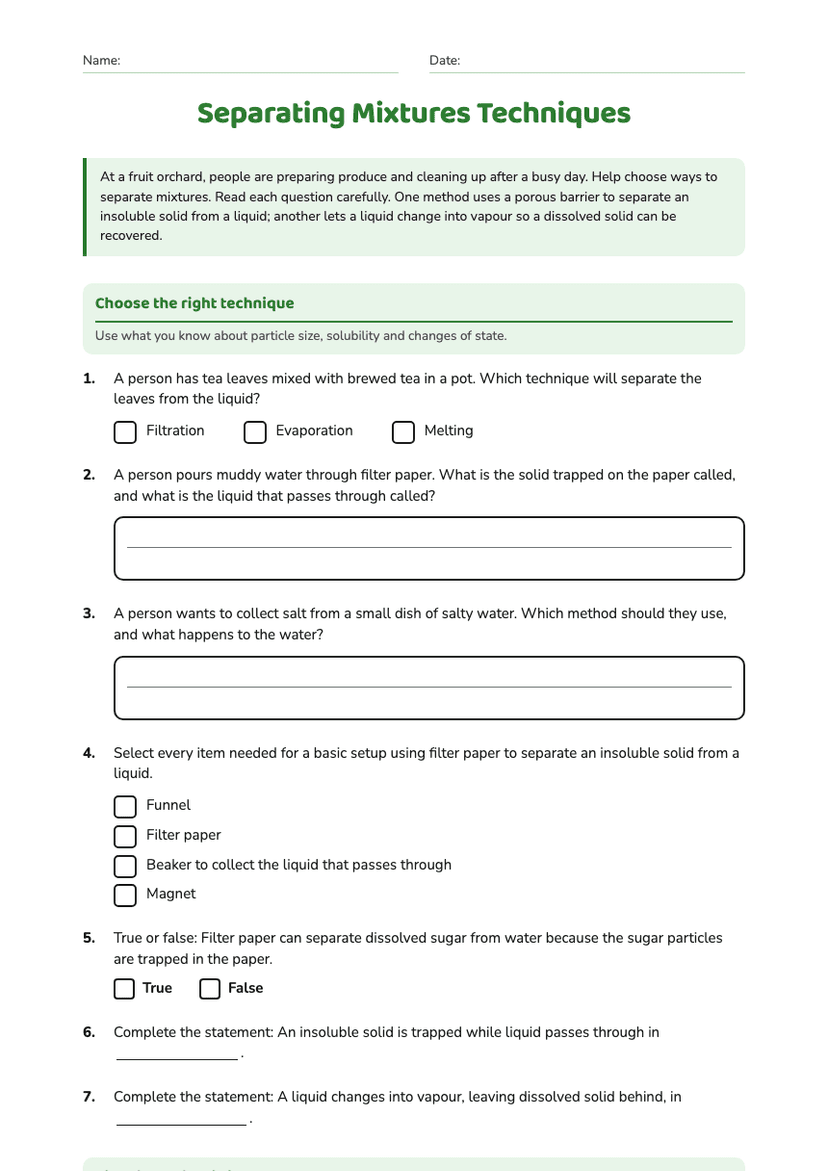
Separating Mixtures Techniques
Free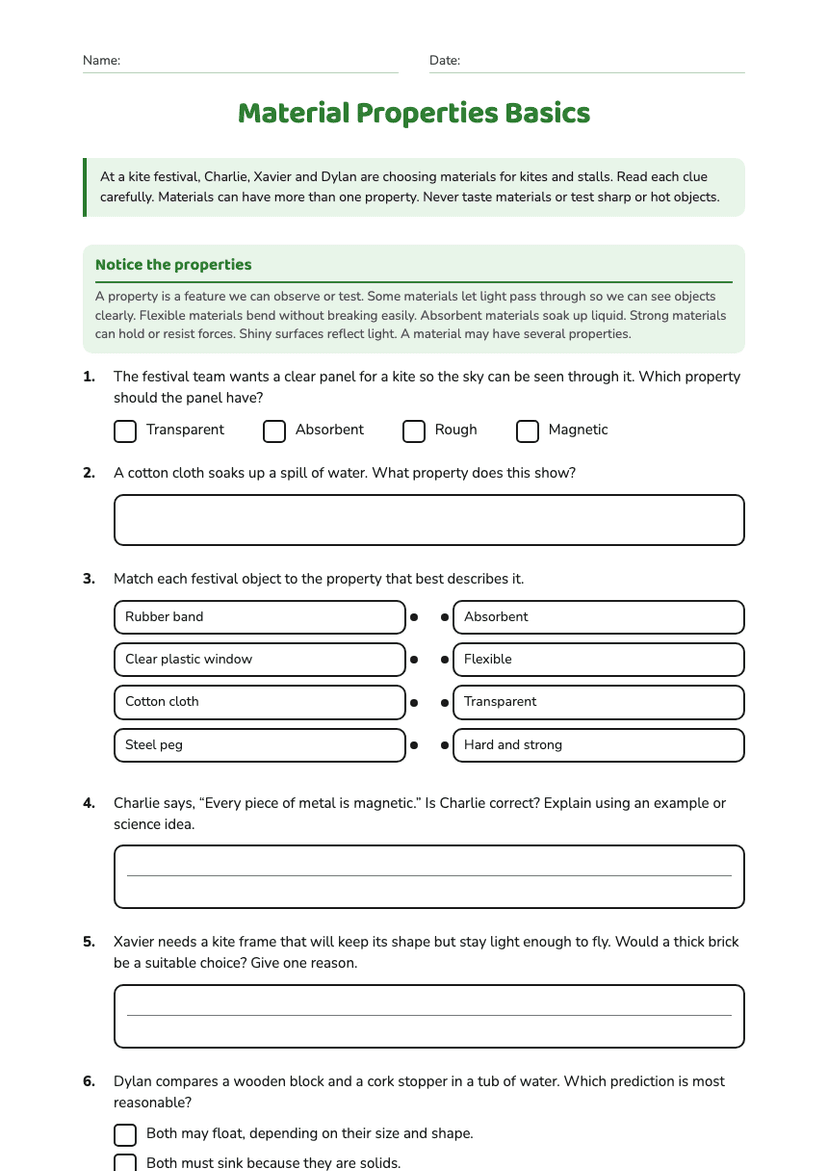
Material Properties Basics
Free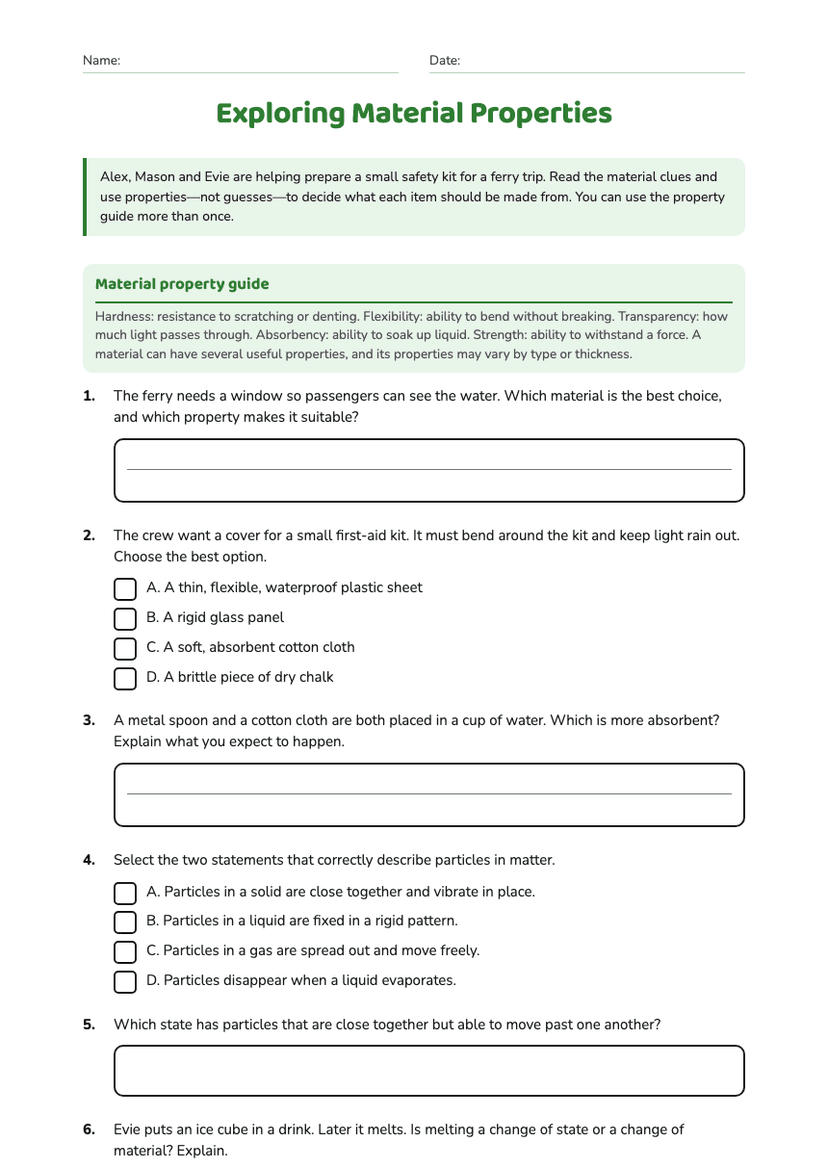
Exploring Material Properties
Free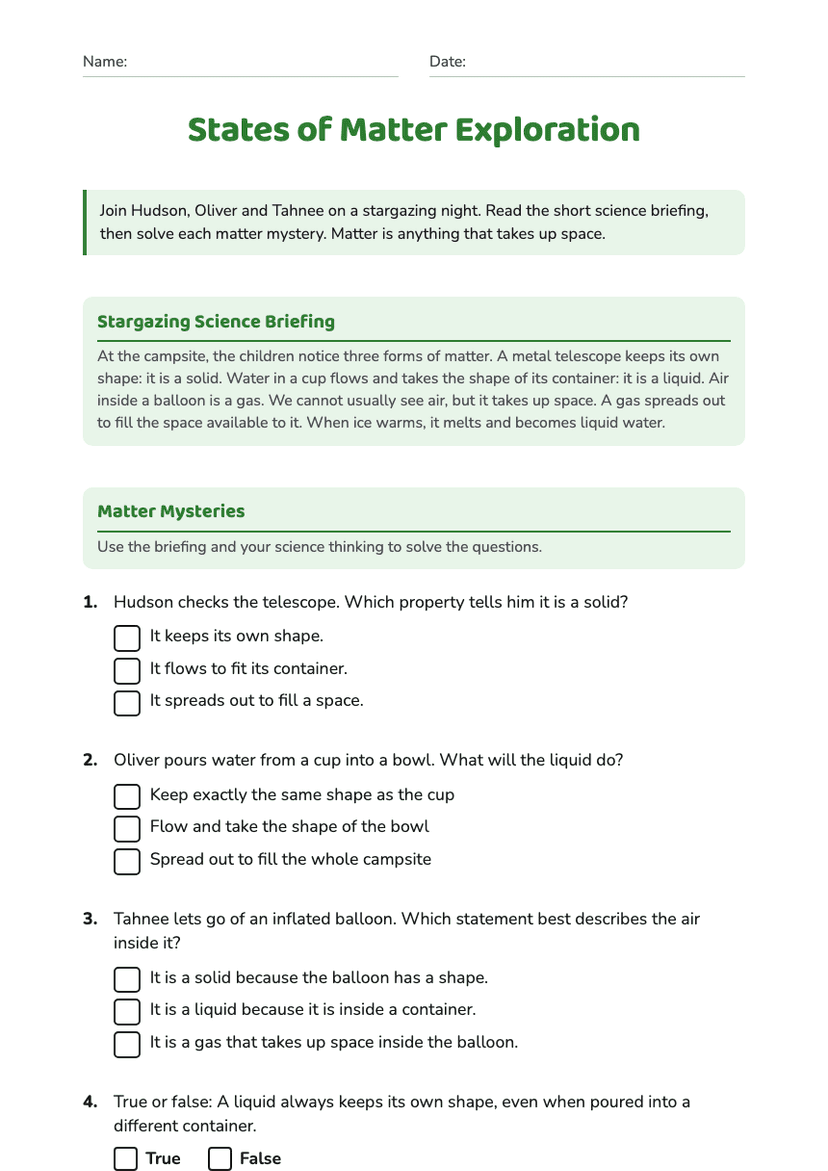
States of Matter Exploration
Free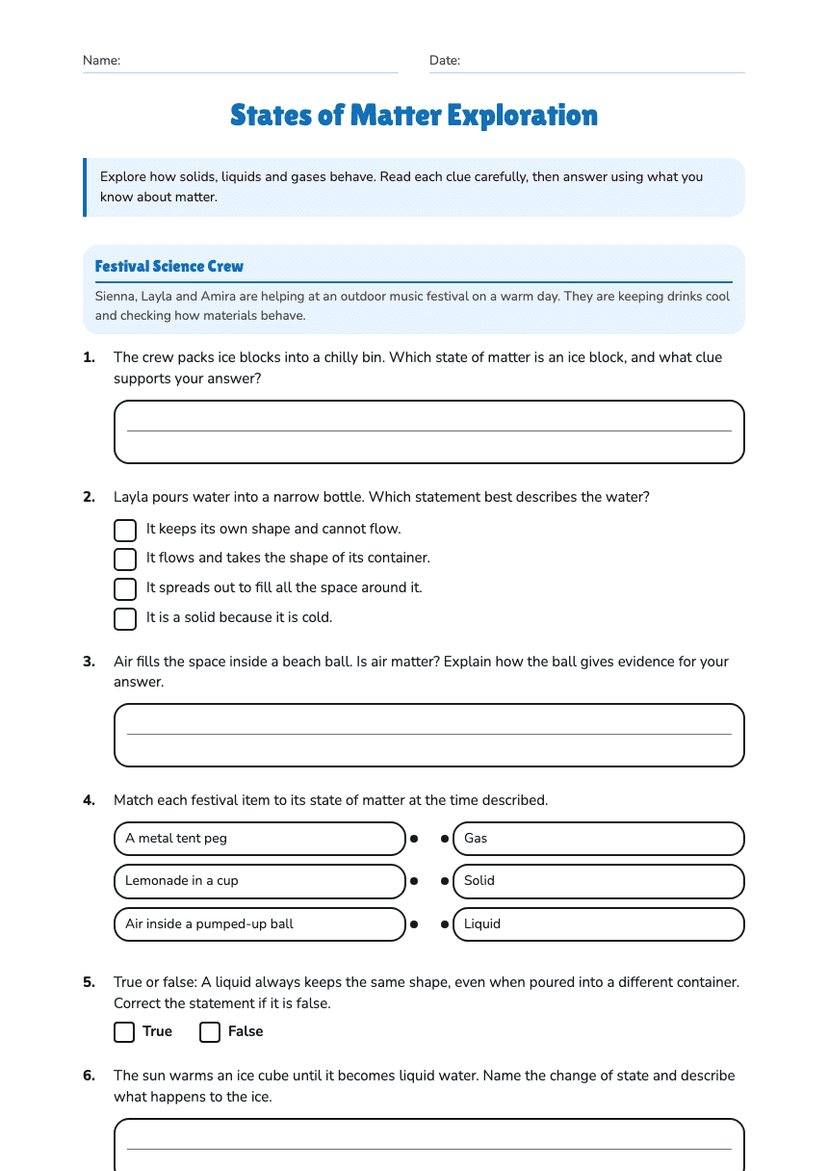
States of Matter Exploration
Free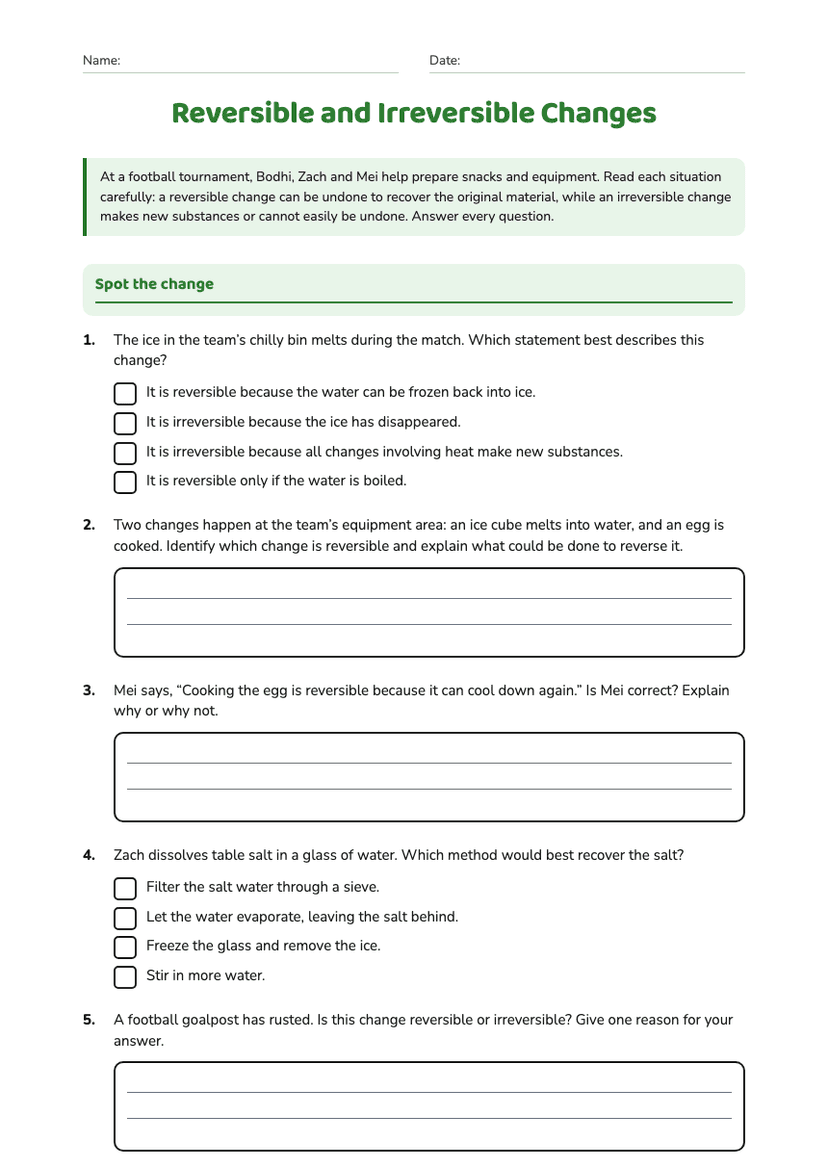
Reversible and Irreversible Changes
Free