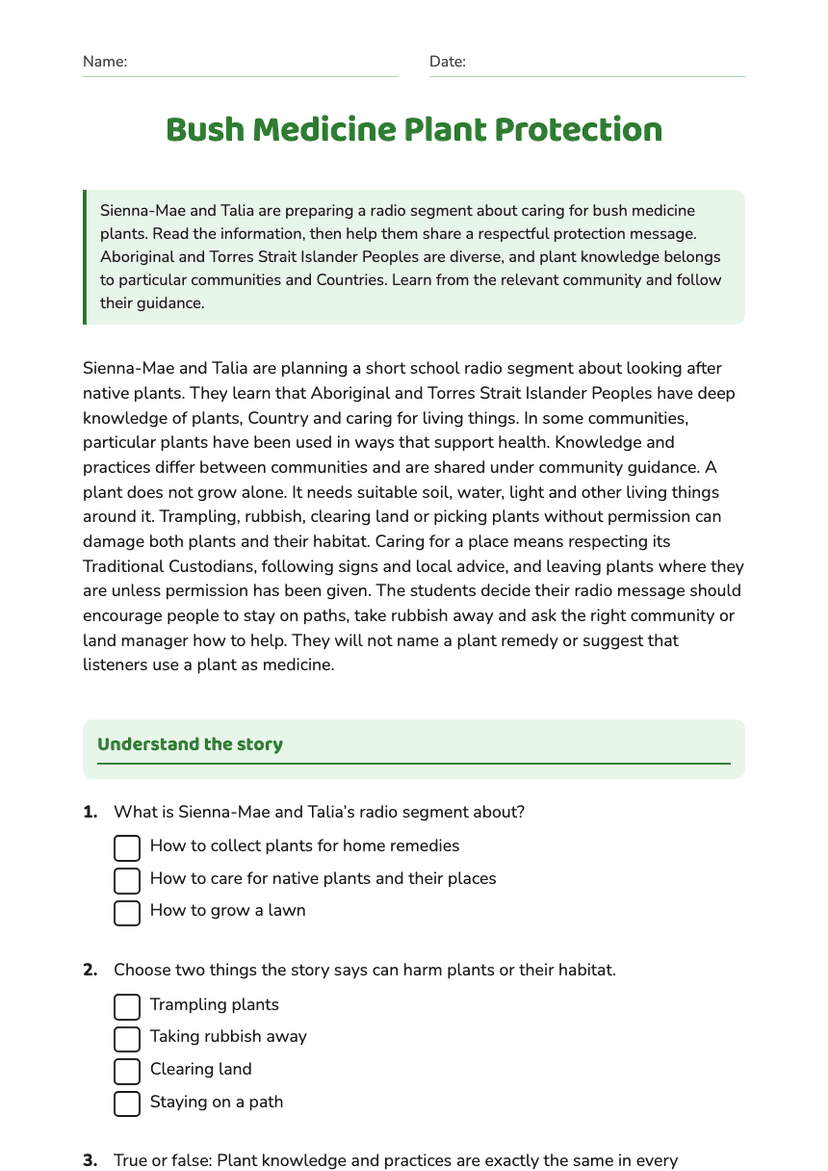
Water Management and Hazards
A free social sciences worksheet ready for your classroom. Open in Kuraplan to grab the print-ready PDF, customize it for your students, or generate a fresh version in seconds.
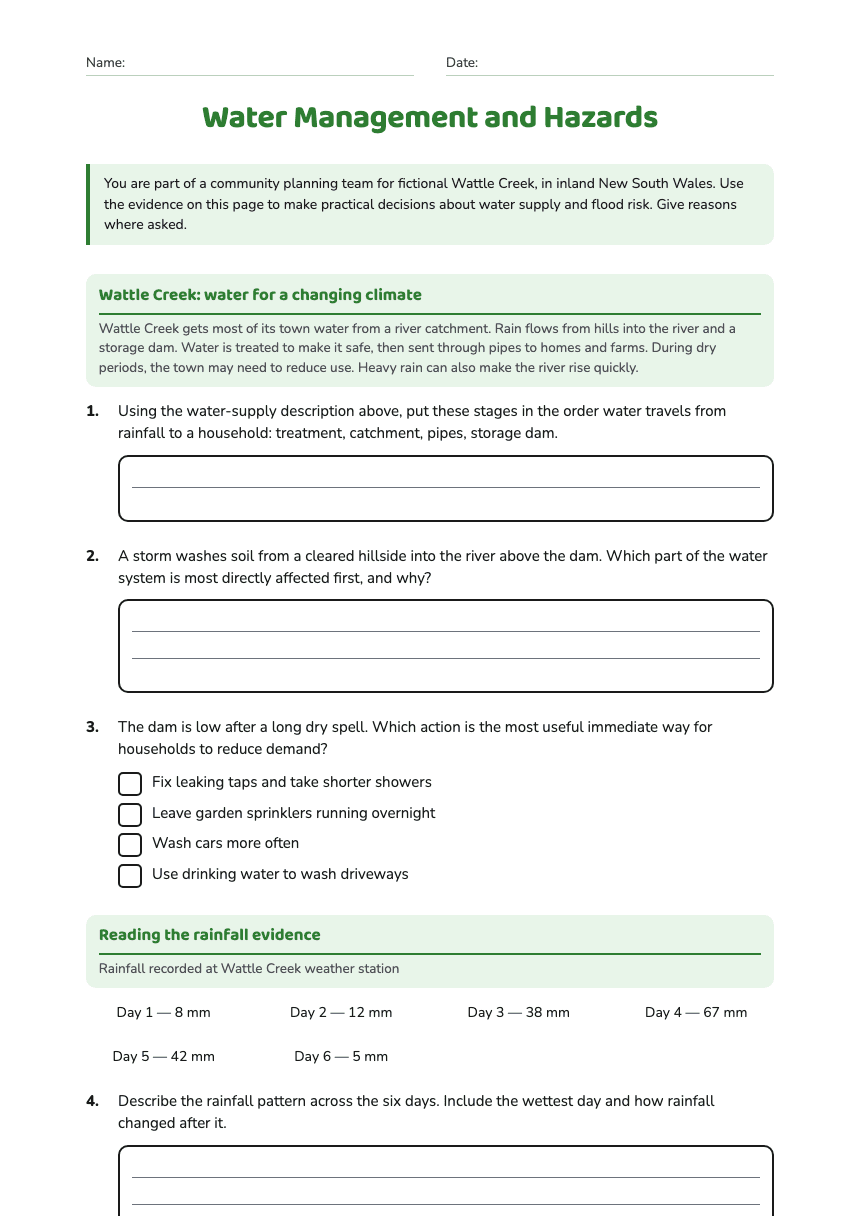
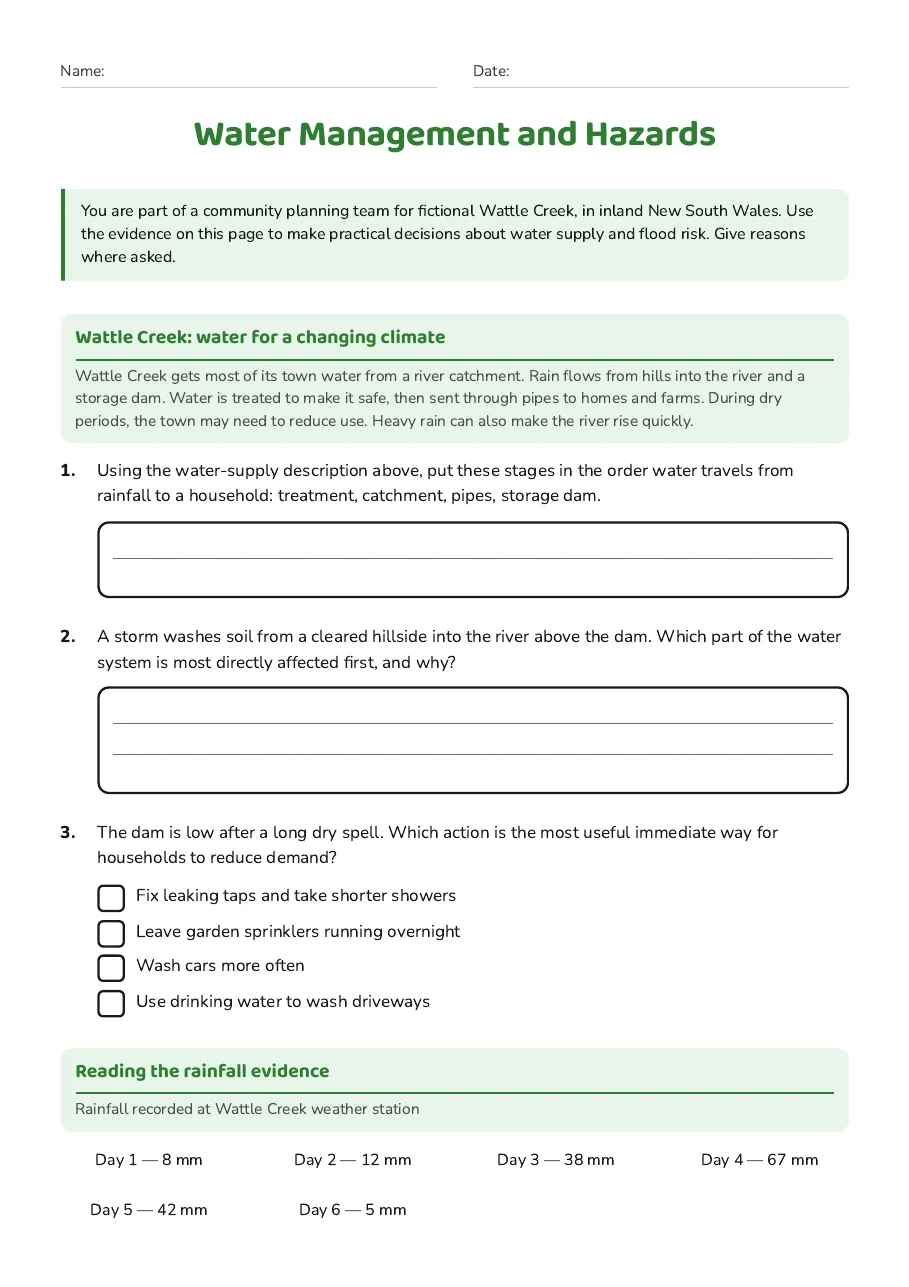
Water Management and Hazards
Wattle Creek: water for a changing climate
Wattle Creek gets most of its town water from a river catchment. Rain flows from hills into the river and a storage dam. Water is treated to make it safe, then sent through pipes to homes and farms. During dry periods, the town may need to reduce use. Heavy rain can also make the river rise quickly.
- Fix leaking taps and take shorter showers
- Leave garden sprinklers running overnight
- Wash cars more often
- Use drinking water to wash driveways
Reading the rainfall evidence
Rainfall recorded at Wattle Creek weather station
Day 1 — 8 mm
Day 2 — 12 mm
Day 3 — 38 mm
Day 4 — 67 mm
Day 5 — 42 mm
Day 6 — 5 mm
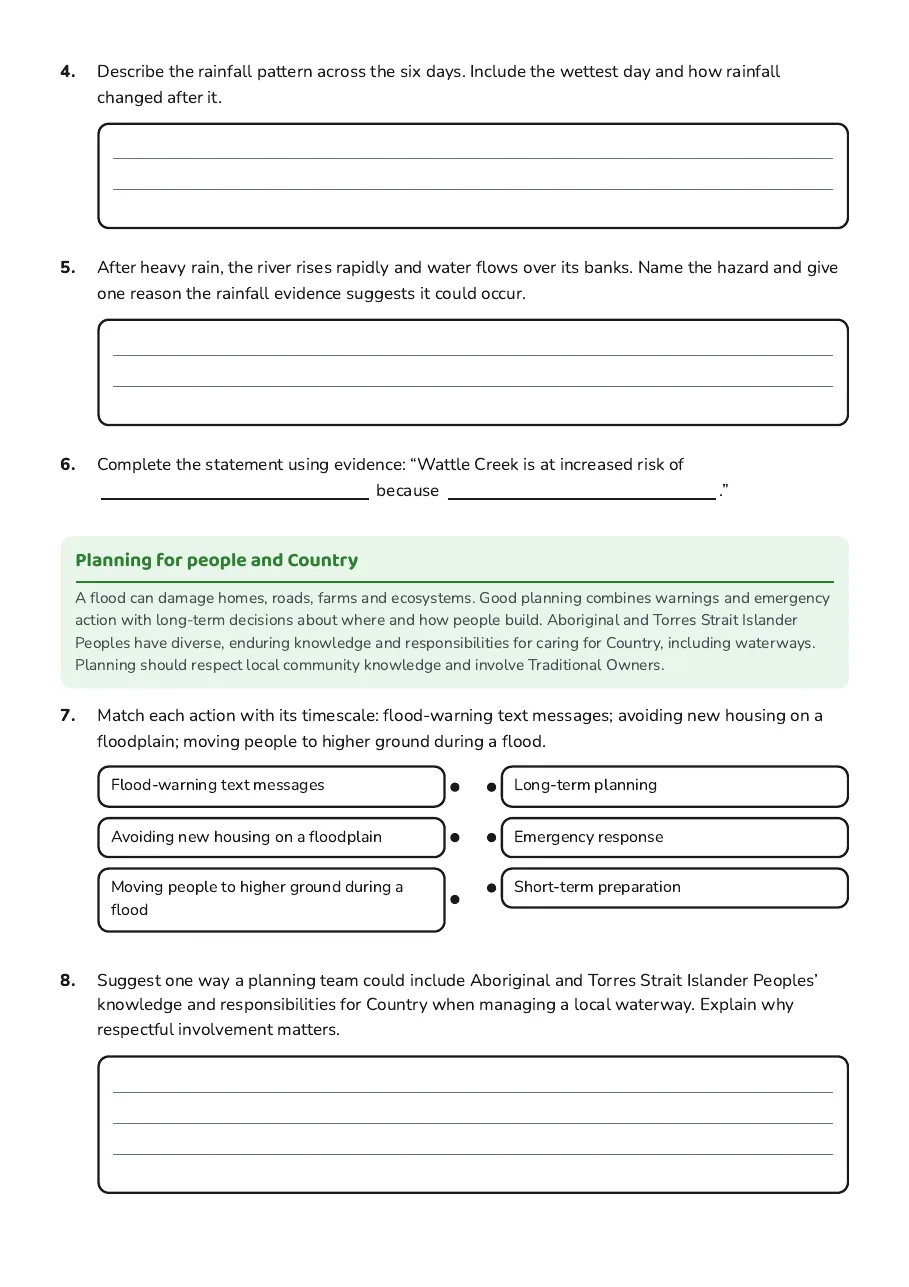
Planning for people and Country
A flood can damage homes, roads, farms and ecosystems. Good planning combines warnings and emergency action with long-term decisions about where and how people build. Aboriginal and Torres Strait Islander Peoples have diverse, enduring knowledge and responsibilities for caring for Country, including waterways. Planning should respect local community knowledge and involve Traditional Owners.
- Flood-warning text messages
- Avoiding new housing on a floodplain
- Moving people to higher ground during a flood
- Long-term planning
- Emergency response
- Short-term preparation
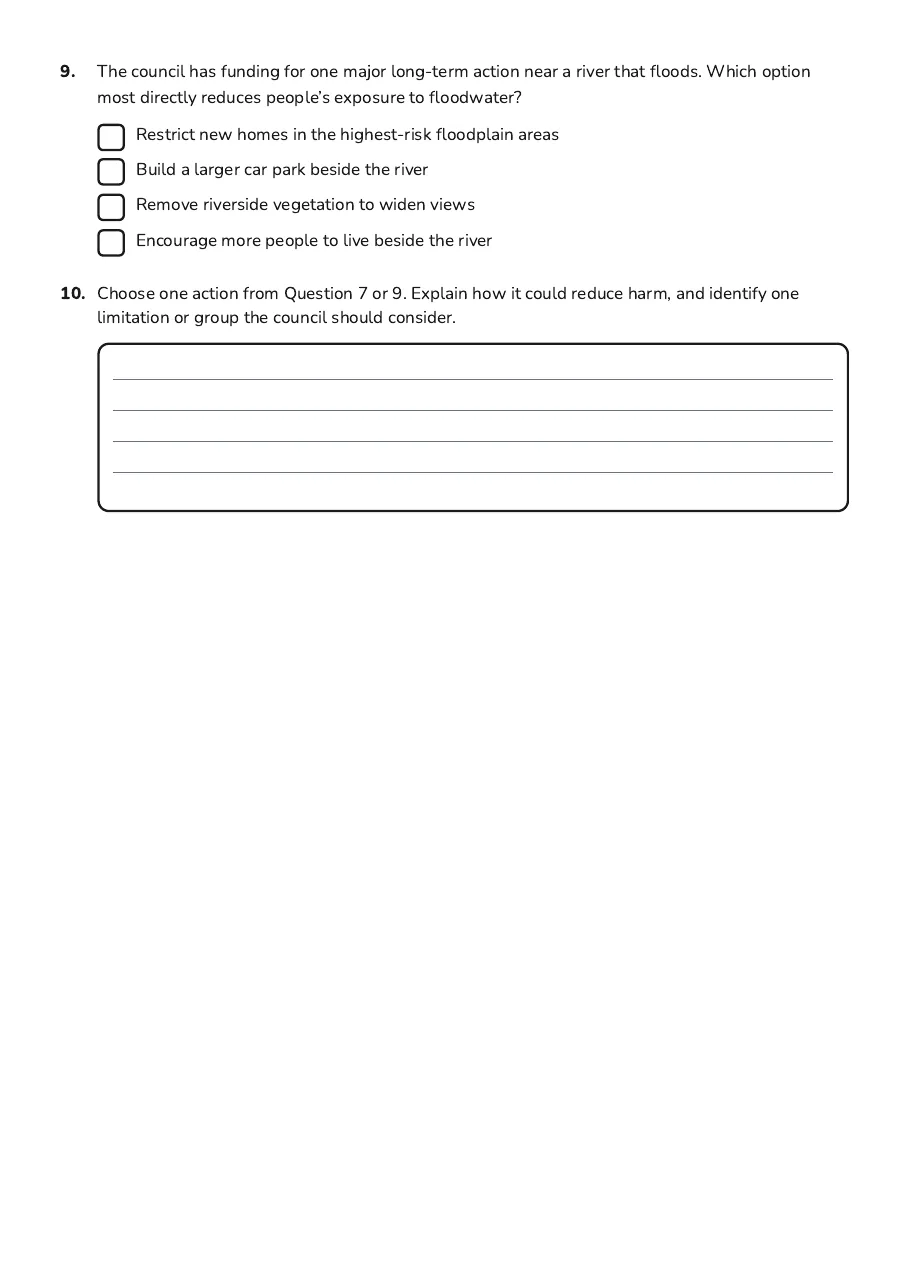
- Restrict new homes in the highest-risk floodplain areas
- Build a larger car park beside the river
- Remove riverside vegetation to widen views
- Encourage more people to live beside the river
3 printable pages
Page 1
Page 2
Page 3
About This Worksheet
Free in Kuraplan
Sign up free, grab the PDF, and customize it for your class.
Print-Ready
Formatted for standard paper. Clean layout, easy to read.
AI-Generated
Created with Kuraplan's AI, designed for real classroom use.
For Teachers & Parents
Use in classrooms, for homework, tutoring, or homeschool.
Need a custom version of this worksheet?
Kuraplan's AI generates custom worksheets in seconds — differentiated for every learner, aligned to your curriculum.
Generate Custom Worksheets — FreeMore Social Sciences Worksheets
Magnetic Island Sustainability Practices
Free
Indigenous Water Cultural Significance
Free
Community Stories and Connections
Free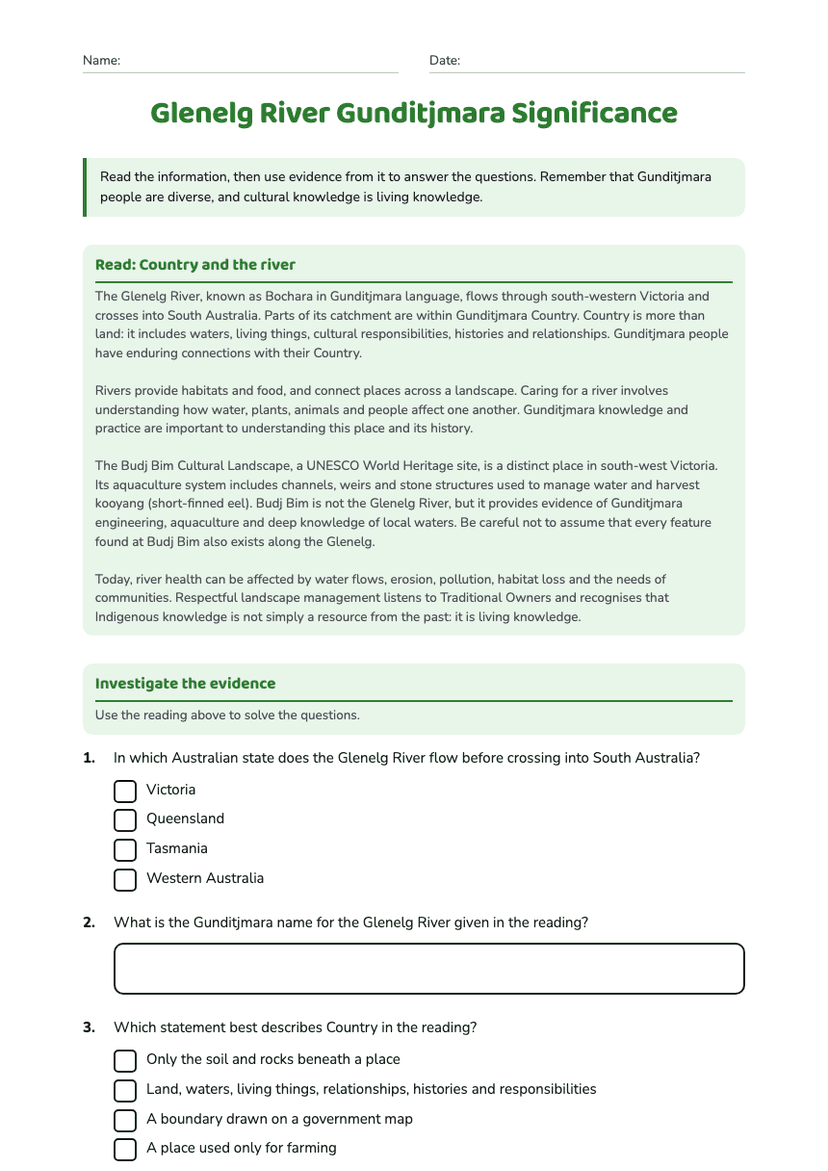
Glenelg River Gunditjmara Significance
Free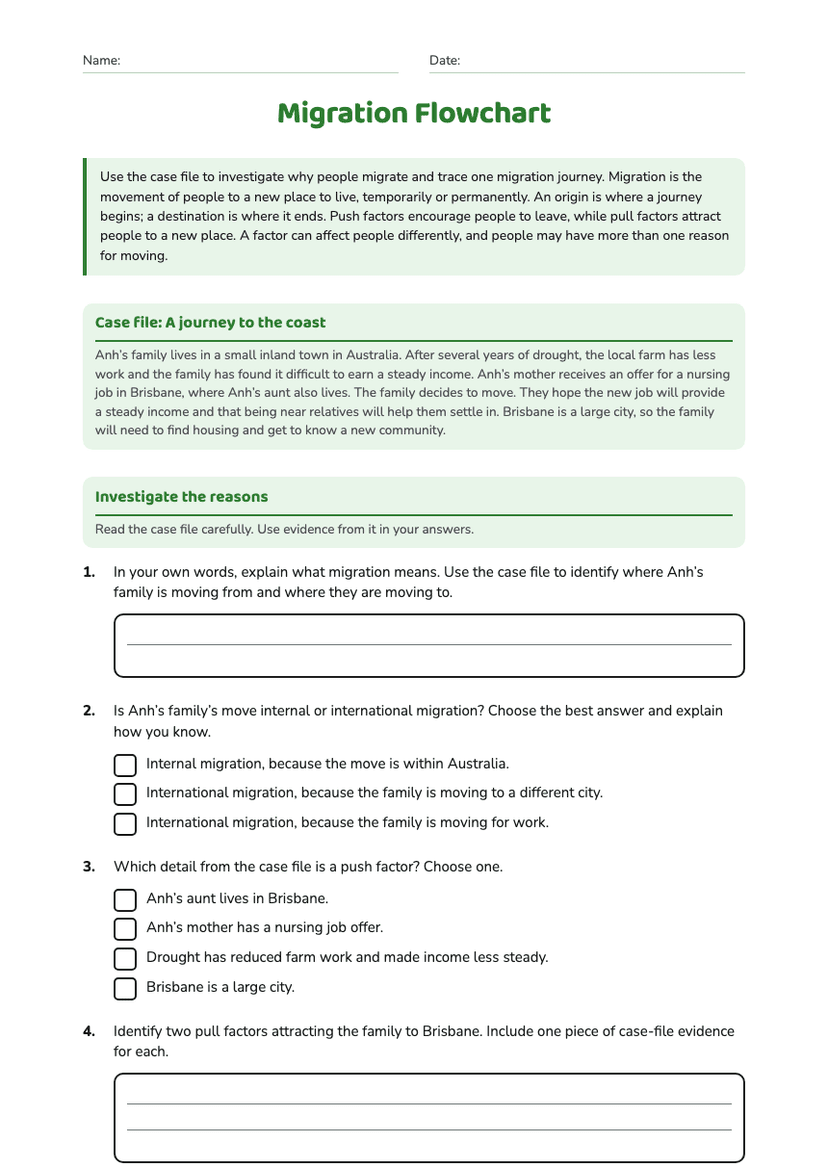
Migration Flowchart
Free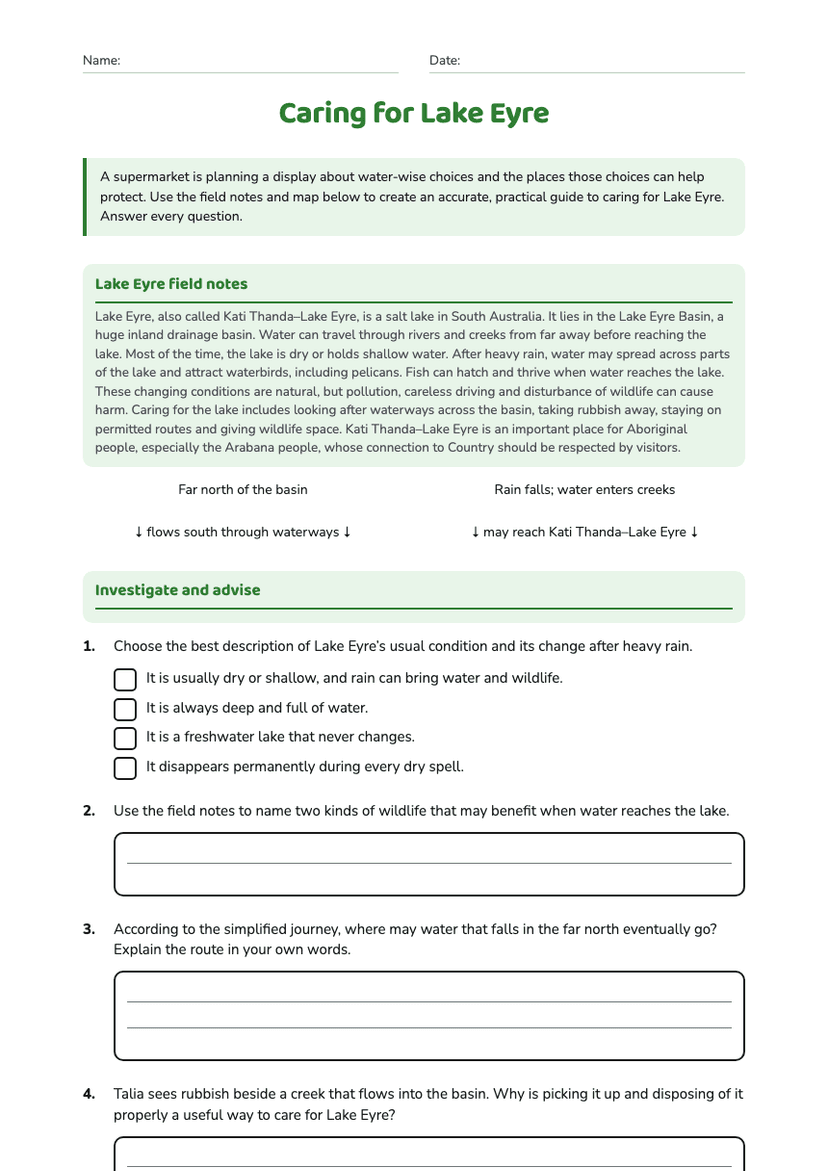
Caring for Lake Eyre
Free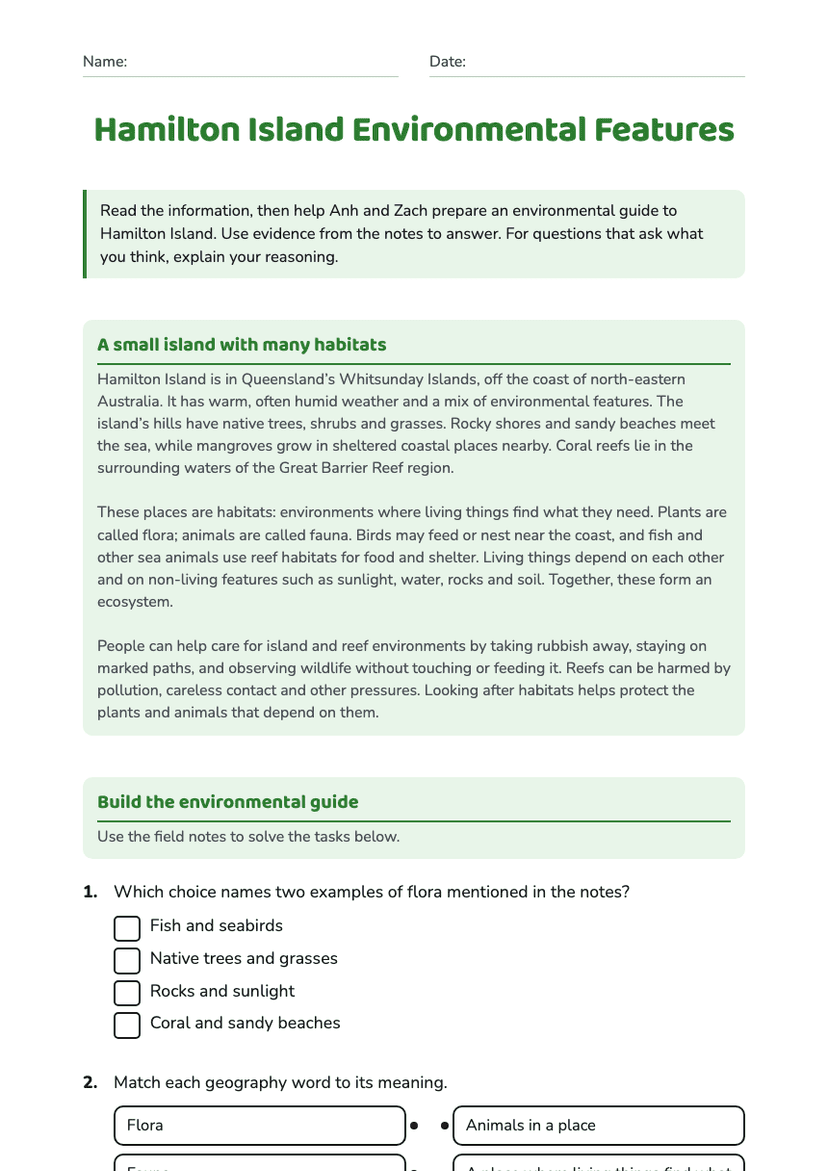
Hamilton Island Environmental Features
Free