Let's be real. Too many School Improvement Plans (SIPs) are compliance documents, not catalysts for change. They're filled with jargon, disconnected from daily classroom life, and ultimately, end up on a shelf, only to be dusted off for the next accreditation visit.
But what if a SIP could be a living roadmap that genuinely guides our work and helps students thrive? It's not a fantasy. The secret is starting with a clear, proven model. Instead of reinventing the wheel, we can learn from successful frameworks that others have tested in real schools. A well-structured plan, grounded in actionable strategies, transforms the process from a tedious requirement into a powerful tool for growth.
In this article, we're unpacking 10 powerful school improvement plan examples. We won’t just show you a template; we’ll dive into the 'how' and 'why' behind each one.
You will learn to:
- Analyze the core strategies of diverse models, from data-driven frameworks to SEL integration.
- Adapt proven tactics for your specific school context, whether you're focusing on literacy, equity, or STEM.
- Implement actionable steps that bridge the gap between planning and classroom practice.
Forget the dusty binders. Let's find a plan that actually works for your students, your staff, and your community.
1. 5-Year Comprehensive School Improvement Plan (CSIP) Template
A 5-Year Comprehensive School Improvement Plan (CSIP) is a long-term, strategic framework designed for sustained growth. Unlike single-year plans that can feel reactive, a CSIP provides a multi-year roadmap that guides decisions across academics, school climate, and operations. This approach is ideal for schools undertaking significant, systemic change, such as those addressing state accountability mandates or utilizing federal Title I funds.
Strategic Breakdown
The strength of a five-year plan lies in its structure. It breaks down huge goals into manageable, annual milestones. For instance, a goal to increase literacy proficiency by 20% over five years could be broken down into a 4% increase each year, with specific strategies assigned to each cycle. To ensure your school's initiatives are impactful and don't just gather dust, it's crucial to understand how to effectively design and implement strategic improvement. For guidance on creating and managing such strategies, consider learning how to define a performance improvement plan.
Key Insight: A 5-year timeline encourages schools to invest in deep-rooted professional development and curriculum alignment rather than chasing short-term fixes. It shifts the focus from "what are we doing this year?" to "where do we need to be in five years, and what's our first step?"
Actionable Takeaways
To make a CSIP work, connect the high-level goals to daily instruction.
- Embed Goals into Lesson Planning: Use tools like Kuraplan to align daily and weekly lesson plans directly with your CSIP’s academic targets. This ensures improvement strategies are not just discussed in meetings but are actively implemented in classrooms.
- Establish Annual Review Cycles: Don't wait until year five. Schedule rigorous annual reviews with your school leadership team and teachers to assess progress, identify roadblocks, and adjust the plan for the upcoming year.
- Involve All Stakeholders: From the start, include teachers, curriculum coordinators, and parent representatives in the planning process. This builds collective ownership and ensures the plan reflects on-the-ground realities.
2. Data-Driven School Improvement Model (DDSIM)
A Data-Driven School Improvement Model (DDSIM) is a cyclical approach that places continuous data analysis at the heart of decision-making. Instead of relying on annual summative scores, this model uses ongoing formative and benchmark data to identify learning gaps, implement targeted interventions, and measure impact in real-time. This dynamic process is perfect for schools aiming to make instruction highly responsive to student needs, such as those implementing Response to Intervention (RTI) or Multi-Tiered System of Supports (MTSS) frameworks.

Strategic Breakdown
The power of a DDSIM lies in its continuous feedback loop: collect data, analyze it, act on the insights, and then repeat. For example, a school might use benchmark assessments to identify a group of third graders struggling with phonics. The instructional team then implements a targeted phonics intervention, using weekly formative assessments to track progress and adjust their teaching strategies immediately rather than waiting for the next major test. To see how this works in practice, you can explore various data-driven instruction examples that bring this model to life.
Key Insight: This model transforms data from a tool for judgment into a tool for improvement. It shifts the conversation from "did our students pass?" to "what does this data tell us about what our students need next, and how do we adjust our instruction tomorrow?"
Actionable Takeaways
To effectively implement a DDSIM, schools must build systems that make data accessible and actionable for every teacher.
- Establish Collaborative Data Teams: Create dedicated time for grade-level or subject-area teams to meet regularly. Their sole focus should be analyzing student data, identifying trends, and collaboratively planning instructional responses.
- Link Insights to Lesson Planning: Use a platform like Kuraplan to translate data insights directly into instructional adjustments. If data shows a misconception in fractions, teachers can immediately find and integrate relevant resources and activities into the next week's lesson plans.
- Balance Data Sources: Combine high-level standardized test data with rich, classroom-level formative data. Some AI-powered lesson planners, like Kuraplan, have tools like integrated assessment rubrics that can help teachers easily generate and track this classroom-level data, providing a more complete picture of student learning.
3. Response to Intervention (RTI) School Improvement Framework
A Response to Intervention (RTI) framework is a proactive, data-driven approach to student support rather than a static document. This multi-tiered system is designed to identify and support struggling learners early through universal screening, progress monitoring, and increasingly intensive, research-based interventions. Its structure makes it one of the most effective school improvement plan examples for addressing academic and behavioral needs across an entire student population. This model is perfect for schools aiming to reduce special education referrals and close achievement gaps.
Strategic Breakdown
The power of RTI lies in its structured, three-tiered pyramid of support, which prevents students from falling through the cracks. The framework begins with high-quality core instruction for all students (Tier 1), then provides targeted small-group interventions for those needing more support (Tier 2), and finally offers intensive, individualized interventions for a small number of students (Tier 3). Data from universal screeners and progress monitoring tools drive all instructional decisions, ensuring that support is timely and targeted. This systematic approach shifts the school's focus from a "wait to fail" model to one of early and effective intervention.
Key Insight: A successful RTI framework depends on the strength of Tier 1 instruction. When at least 80% of students succeed with core instruction alone, the school can dedicate its limited intervention resources to the students who truly need them.
Actionable Takeaways
To implement an RTI framework effectively, schools must integrate its principles into daily practices.
- Strengthen Tier 1 Instruction: The foundation of RTI is excellent core instruction. Using a solid planning tool to ensure Tier 1 lessons are differentiated, standards-aligned, and engaging for all learners reduces the number of students needing intervention in the first place.
- Systematize Progress Monitoring: Schedule regular data review meetings where teachers analyze progress monitoring data to make informed decisions about moving students between tiers. Document all intervention adjustments and link them to specific learning outcomes.
- Align Intervention with Core Lessons: Use a tool like Kuraplan to create brief, targeted intervention lesson plans for Tiers 2 and 3. This ensures that supplemental support directly reinforces the skills and concepts being taught in the primary classroom, creating a cohesive learning experience for the student.
4. Professional Learning Communities (PLC) Improvement Model
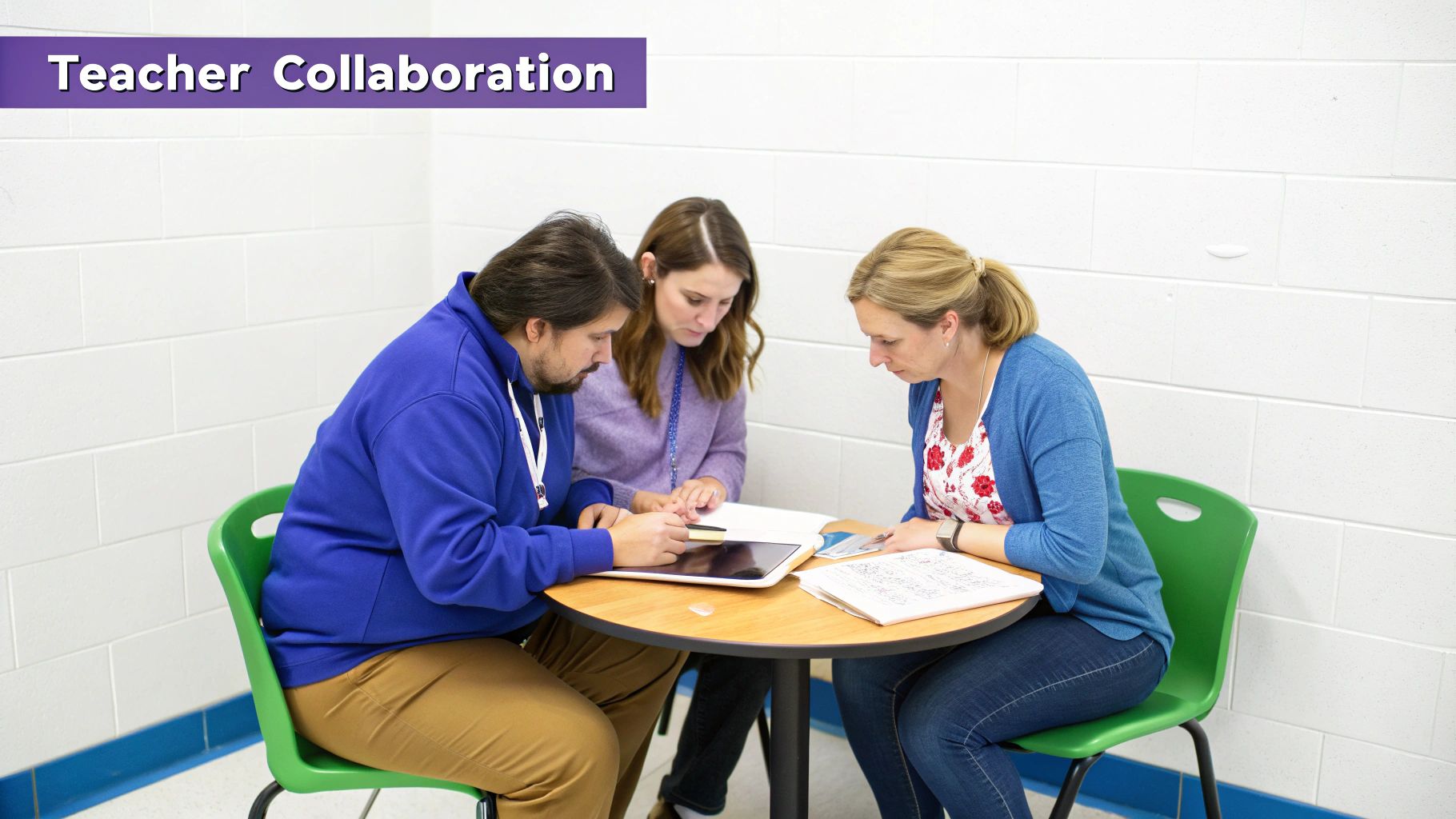
A Professional Learning Communities (PLC) model shifts the focus from isolated teaching to collective responsibility for student learning. This framework organizes teachers into collaborative teams to continuously analyze student data, refine instructional strategies, and improve outcomes. Instead of being a top-down mandate, it is a teacher-driven process centered on four critical questions: What do we want students to learn? How will we know if they have learned it? What will we do if they don’t? And what will we do if they already do?
Strategic Breakdown
The PLC model transforms staff meetings from logistical check-ins into powerful engines for instructional improvement. Teams examine evidence of student learning, such as common formative assessments or classwork, to identify specific learning gaps and strengths. This collaborative analysis allows teachers to share effective strategies in real-time, ensuring that best practices spread quickly across classrooms rather than remaining isolated. This makes it one of the most effective school improvement plan examples for fostering a culture of continuous growth.
Key Insight: The PLC model fundamentally changes the conversation from "How did I teach it?" to "How did my students learn it?" This collective inquiry creates a system of shared accountability and targeted support that directly addresses student needs.
Actionable Takeaways
To move a PLC from a meeting on the calendar to a dynamic force for improvement, focus on structured collaboration and efficient workflows.
- Establish Clear Protocols: Start by creating and committing to team norms and data analysis protocols. This ensures meetings are focused on student learning, not just planning logistics or venting frustrations.
- Streamline Lesson Planning: Use tools like Kuraplan to collaboratively build and share lesson plans within your PLC. Creating shared templates at the grade or subject level ensures consistency and frees up valuable meeting time for analyzing student work.
- Focus on Evidence: Use student work and assessment data as the foundation of every PLC conversation. By bringing student evidence from common assessments, teams can have concrete discussions about instructional impact and plan targeted re-teaching or enrichment activities.
5. Instructional Coaching and Classroom Walk-Through Improvement Model
An Instructional Coaching and Classroom Walk-Through Improvement Model shifts the focus from teacher evaluation to continuous, supportive professional growth. This model embeds trained instructional coaches within the school to work directly with teachers, offering non-evaluative feedback, co-planning lessons, and modeling effective strategies. Paired with frequent, low-stakes classroom walk-throughs, this approach creates a collaborative culture of refinement. It is ideal for schools aiming to build internal capacity and foster a culture where teachers feel safe to innovate and improve their practice.
Strategic Breakdown
The power of this model lies in its job-embedded, personalized support system. Instead of one-off professional development workshops, coaching provides ongoing, context-specific guidance that directly impacts classroom instruction. For example, a school goal to increase student engagement can be supported by coaches working with teachers to implement new collaborative learning structures. Instructional coaching can also guide educators in adopting innovative teaching strategies, such as exploring the flipped classroom model, to optimize in-class time and student engagement. This direct-support system ensures that improvement goals translate into tangible changes in teaching and learning.
Key Insight: This model separates growth from evaluation. By making coaching and walk-through feedback non-evaluative, it builds trust and encourages teachers to take risks and be open about their challenges, accelerating authentic professional development.
Actionable Takeaways
To implement this model effectively, focus on creating clear systems for support and feedback.
- Define a Coaching Cycle: Structure coaching with a clear cycle: pre-conference (goal setting), observation, and post-conference (reflection and next steps). Using a shared platform allows coaches and teachers to collaboratively plan and adjust lessons based on observation feedback.
- Focus Walk-Throughs on Specific Indicators: Instead of a general checklist, focus walk-throughs on one or two specific "look-fors" tied directly to your school improvement plan goals, such as checking for cognitive engagement or evidence of differentiation.
- Train Coaches in Adult Learning: Effective coaches need more than content expertise; they need strong interpersonal skills. Invest in training coaches from programs like Jim Knight's or Elena Aguilar's to ensure they provide supportive, growth-oriented feedback. To discover more practical approaches, explore these instructional coaching strategies.
6. Whole-School Literacy Improvement Initiative
A Whole-School Literacy Improvement Initiative is a coordinated, all-hands-on-deck strategy to embed reading and writing instruction across every grade level and subject area. Instead of treating literacy as solely the English department's responsibility, this approach ensures that every teacher, from science to physical education, is a teacher of literacy. This model is ideal for schools aiming to close significant reading gaps or create a unified, evidence-based instructional culture, making it a powerful school improvement plan example for systemic change.
Strategic Breakdown
The core of this initiative is coherence. It moves away from fragmented, program-of-the-month approaches to a single, aligned framework. In elementary grades, this often means adopting practices grounded in the Science of Reading, focusing on phonics, fluency, and comprehension. At the secondary level, the focus shifts to disciplinary literacy—teaching students how to read, write, and think like a scientist, historian, or mathematician. This ensures skills are applied in authentic, content-rich contexts.
Key Insight: A whole-school model treats literacy as a foundational skill essential for accessing all other content. It shifts the mindset from "teaching students to read" to "students reading to learn" by building a common language and set of instructional practices that follow students from one grade to the next.
Actionable Takeaways
To execute a literacy initiative effectively, you must connect high-level goals to classroom practice.
- Audit and Align Instruction: Before launching, conduct a comprehensive audit of current literacy practices. Use this data to identify gaps and build a cohesive, K-12 instructional framework that eliminates redundancies and contradictions.
- Create Shared Lesson Templates: Use a platform like Kuraplan to design shared reading and writing lesson templates for each grade level. This ensures consistency in how skills like close reading, evidence-based writing, and vocabulary acquisition are taught across all classrooms.
- Integrate Literacy Across Content Areas: A smart lesson planner can help design lessons that explicitly integrate literacy instruction into science, social studies, and math. For example, a history lesson can be built around analyzing primary source documents, or a science lab can focus on writing precise, evidence-supported conclusions.
7. STEM/STEAM Integrated Learning Improvement Model
A STEM/STEAM Integrated Learning Improvement Model shifts instruction from siloed subjects to an interdisciplinary framework. It integrates science, technology, engineering, the arts, and mathematics into cohesive, project-based learning experiences designed to boost critical thinking and creativity. This approach is one of the most forward-thinking school improvement plan examples, preparing students for future workforce demands through hands-on, real-world applications. It’s perfect for schools aiming to make learning more relevant and engaging.
Strategic Breakdown
The power of a STEM/STEAM model is its ability to connect abstract concepts to tangible outcomes. Instead of learning geometry formulas from a textbook, students might use them to design a 3D-printed solution to a community problem. The plan focuses on building teacher capacity for cross-curricular collaboration and designing authentic assessments that measure both content knowledge and process skills like problem-solving and teamwork. This requires a fundamental shift in scheduling, resource allocation, and instructional planning.
Key Insight: This model transforms the teacher's role from a content dispenser to a facilitator of inquiry. The goal is not just to teach science or math but to teach students how to think like scientists, engineers, and artists by solving complex, multi-faceted problems.
Actionable Takeaways
To successfully implement a STEM/STEAM model, focus on structured integration and clear learning targets.
- Design Cross-Disciplinary Units: Use a tool like Kuraplan to map out project-based units that explicitly connect standards from multiple content areas. Its planning features can help teams outline shared objectives, activities, and assessments in one coherent document.
- Start Small and Build Capacity: Begin with a single, grade-level integrated project before attempting a school-wide overhaul. Use this pilot to identify professional development needs, refine collaborative processes, and build momentum.
- Create Authentic Assessments: Develop rubrics that evaluate both disciplinary knowledge and essential skills like collaboration, communication, and critical thinking. This ensures your assessment practices align with the holistic goals of STEM/STEAM education.
8. Culturally Responsive Teaching and Equity-Focused Improvement Plan
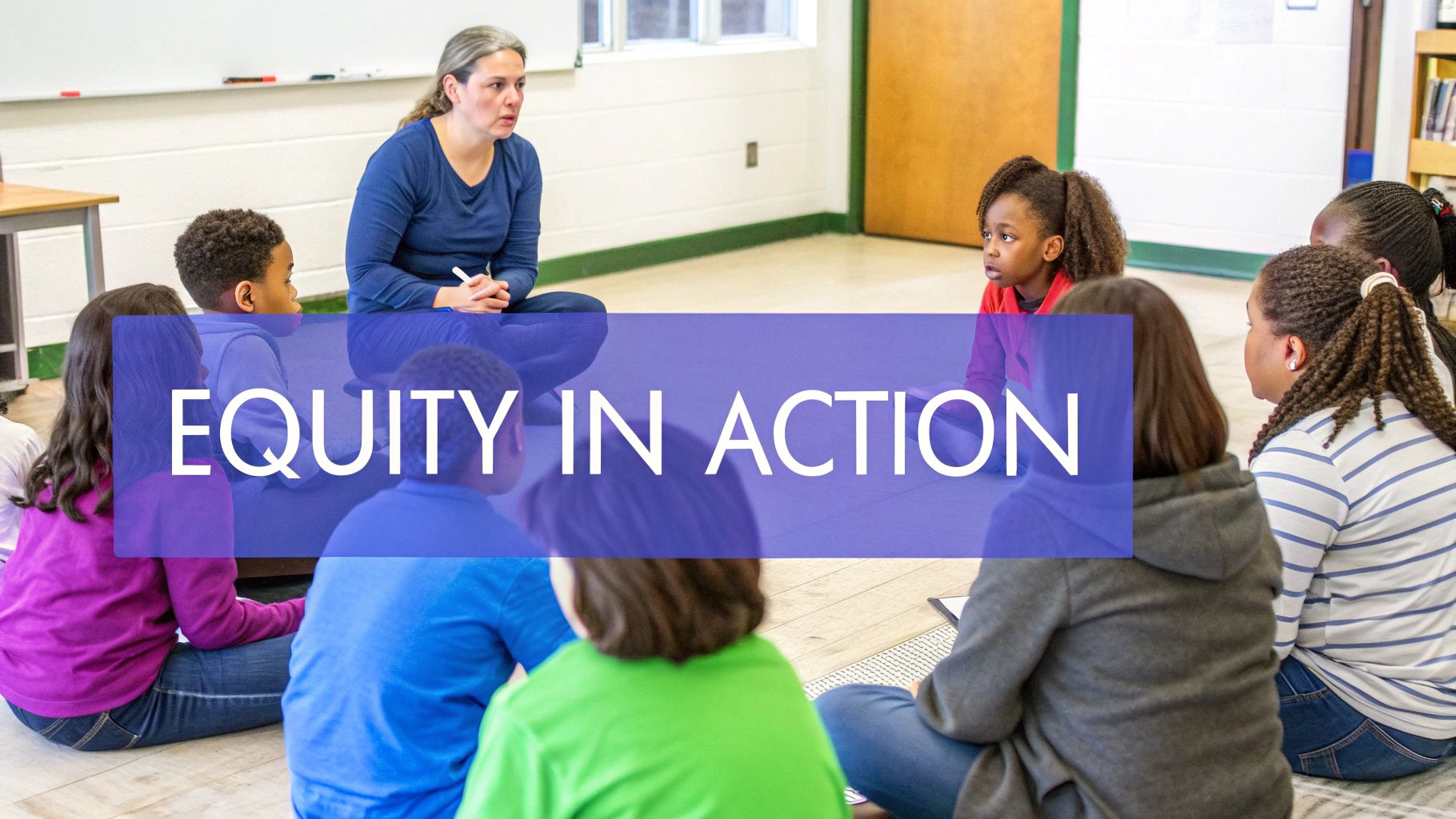
A Culturally Responsive Teaching and Equity-Focused Improvement Plan is not just an initiative but a fundamental shift in school culture. This approach centers on recognizing and validating students' cultural identities and experiences as assets in the learning process. It aims to eliminate achievement gaps and create truly inclusive classrooms by embedding equitable practices into curriculum design, student interactions, and school policy. This model is essential for schools committed to serving a diverse student body and dismantling systemic barriers to learning.
Strategic Breakdown
The core of this plan involves moving from a "one-size-fits-all" model to one that is responsive to student identities. Instead of simply celebrating diversity on special occasions, this strategy requires a systemic audit of policies, curriculum, and teaching practices to identify and remove biases. A school might begin with a district-wide equity audit to gather baseline data on discipline disparities or enrollment in advanced courses. This data then informs specific, measurable goals, like reducing suspension rates for marginalized student groups.
Key Insight: True equity work is about creating systems where every student’s identity is seen as a strength. This plan challenges educators to reflect on their own biases and adapt their pedagogy to build authentic relationships, making learning more relevant and accessible for every child.
Actionable Takeaways
An equity-focused plan succeeds when its principles are visible in daily classroom life.
- Conduct a Curriculum Audit: Systematically review classroom materials, texts, and resources for representation. Use tools to intentionally search for and incorporate diverse authors, historical perspectives, and scientific contributors that reflect your student population and the wider world.
- Integrate Cultural Knowledge: Design lessons that bridge academic concepts with students’ lived experiences and cultural backgrounds. For example, a math lesson on patterns could incorporate examples from traditional textiles, or a science unit could feature contributions from indigenous scientists.
- Provide Ongoing Professional Development: Equip staff with the tools and language to facilitate difficult conversations about race and bias. Frameworks like Glenn Singleton's "Courageous Conversations" provide protocols to build capacity for sustained equity work.
9. Special Education and Inclusive Instruction Improvement Plan
A Special Education and Inclusive Instruction Improvement Plan is a targeted strategy focused on ensuring students with disabilities have equitable access to a rigorous, grade-level curriculum. This approach moves beyond simple physical placement in general education classrooms to address true academic and social inclusion. It centers on Universal Design for Learning (UDL), co-teaching, and differentiated instruction to dismantle learning barriers, making it an essential model for creating an equitable environment.
Strategic Breakdown
This plan's effectiveness comes from its dual focus on access and achievement. It shifts the paradigm from asking "can this student learn here?" to "how can we design our instruction so every student can learn here?" For example, instead of pulling students out for support, a school might implement a co-teaching model where a general and special education teacher plan and deliver a lesson together, benefiting all learners. This proactive design prevents remediation cycles and fosters a sense of belonging for every student.
Key Insight: True inclusion isn't just about a student's location; it's about their access to high-quality instruction. This plan forces a system-wide shift, making inclusive practices the default rather than an exception or an add-on.
Actionable Takeaways
To make this plan a reality, schools must embed inclusive strategies into the fabric of daily instruction.
- Integrate IEP Goals into Daily Lessons: Use planning tools like Kuraplan to directly link a student's Individualized Education Program (IEP) goals and accommodations into your daily lesson plans. This ensures that specialized support is a seamless part of core instruction, not an afterthought.
- Design with Universal Design for Learning (UDL): Plan lessons from the outset with multiple means of representation, engagement, and expression. Instead of retrofitting a lesson for a few students, you build a flexible lesson that works for everyone from the start.
- Prioritize Co-Planning Time: For co-teaching models to succeed, collaborative planning is non-negotiable. Schedule dedicated, recurring time for general and special education teachers to co-plan lessons, review student data, and adjust instructional strategies together.
10. Social-Emotional Learning (SEL) Integration School Improvement Model
A Social-Emotional Learning (SEL) Integration School Improvement Model treats student well-being as a foundational component of academic success. Instead of isolating SEL into a separate weekly lesson, this model embeds competencies like self-awareness, self-management, and responsible decision-making directly into the curriculum, school culture, and daily routines. This approach is ideal for schools aiming to reduce disciplinary issues, improve classroom climate, and boost student engagement by addressing the whole child.
Strategic Breakdown
The power of an integrated SEL model is its systemic nature. It reframes academic instruction by infusing it with opportunities to practice social and emotional skills. For instance, a history lesson on a major conflict becomes a chance to practice perspective-taking, while a collaborative science project becomes an exercise in relationship skills. To effectively blend these elements, teachers need practical strategies. For inspiration on weaving these skills into your daily schedule, explore these social-emotional learning activities.
Key Insight: Integrating SEL shifts the focus from managing behavior to proactively teaching the skills students need to manage themselves. It recognizes that academic learning cannot happen in a vacuum; students must feel safe, connected, and emotionally regulated to engage deeply with content.
Actionable Takeaways
To move SEL from a concept to a classroom reality, embed it directly into your instructional planning and school-wide systems.
- Integrate SEL into Lesson Objectives: Use a planning tool like Kuraplan to add an SEL objective alongside your academic learning target for each lesson. For example, a math lesson on group problem-solving could have an academic goal (solve multi-step problems) and an SEL goal (practice constructive disagreement).
- Build Staff Capacity First: A successful SEL initiative begins with adult SEL. Provide professional development and create a safe, supportive environment for teachers to develop their own social-emotional competencies and model them for students.
- Use Data to Drive SEL Focus: Analyze school climate surveys, attendance records, and discipline data to identify a specific SEL competency to focus on. If data shows frequent peer conflicts, prioritize teaching relationship skills and conflict resolution across all subjects.
Comparison of 10 School Improvement Plans
| Model | 🔄 Implementation Complexity | ⚡ Resource & Speed Considerations | 📊 Expected Outcomes | 💡 Ideal Use Cases | ⭐ Key Advantages |
|---|---|---|---|---|---|
| 5-Year Comprehensive School Improvement Plan (CSIP) Template | High — multi-year coordination, annual checkpoints | Moderate–High — significant planning time and budget alignment; slower to show results | Sustained, system-wide gains; compliance with accountability systems | Districts with mandated plans or long-term turnaround goals | Long-term continuity, systematic tracking, meets state/federal requirements |
| Data-Driven School Improvement Model (DDSIM) | Moderate–High — ongoing cycles of assessment and analysis | High — robust assessment systems, dashboards, data literacy needed; enables quicker adjustments | Targeted achievement gains, rapid course corrections, equity insights | Schools with assessment infrastructure aiming to close subgroup gaps | Precision interventions, evidence-based decisions, real-time responsiveness |
| Response to Intervention (RTI) Framework | Moderate — tiered procedures and monitoring protocols | Moderate — screening tools, intervention staff, regular progress checks | Early remediation, fewer inappropriate special education referrals | K–8 schools needing structured early-identification and supports | Systematic early support with clear escalation criteria |
| Professional Learning Communities (PLC) Model | Low–Moderate — regular collaborative routines and protocols | Low–Moderate — protected meeting time and facilitation; relatively low cost | Improved instructional quality, shared practices, teacher growth | Schools prioritizing teacher development and collective ownership | Builds professional culture, peer feedback, scalable teacher improvement |
| Instructional Coaching & Walk-Throughs | Moderate — coaching cycles, observation protocols, feedback loops | High — trained coaches or reallocated staff; intensive time investment | Improved classroom practice and transfer of PD into instruction | Schools seeking individualized, job-embedded teacher support | Tailored, non-evaluative feedback; immediate, actionable improvement |
| Whole-School Literacy Initiative | High — K–12 coherence, curriculum alignment, multi-year rollout | High — curriculum adoption, extensive PD, screening and intervention tools | Broad literacy gains and downstream academic improvements | Schools with persistent literacy gaps or district-wide literacy goals | Foundational impact across subjects; research-based practices |
| STEM/STEAM Integrated Learning Model | Moderate–High — cross-curricular planning and project design | High — materials, technology, teacher training; planning-intensive initially | Increased engagement, 21st-century skills, improved STEM outcomes | Schools emphasizing hands-on, career-connected learning pathways | Real-world problem solving, interdisciplinary skill development |
| Culturally Responsive & Equity-Focused Plan | High — curriculum audits, ongoing reflection, systemic change | Moderate — sustained PD, curriculum revision, family/community engagement | Greater belonging, narrowed achievement gaps, higher engagement | Diverse schools committed to closing racial and cultural achievement gaps | Equity-centered instruction, relevance for historically underserved students |
| Special Education & Inclusive Instruction Plan | High — UDL, co-teaching models, IEP alignment across classrooms | High — specialist staff, assistive tech, ongoing collaborative planning | Increased access to grade-level standards and improved outcomes for SWD | Schools with significant populations of students with disabilities | Simultaneous access and achievement focus; reduces stigma and isolation |
| Social-Emotional Learning (SEL) Integration | Moderate — school-wide cultural shifts and embedded practices | Moderate — PD, counseling supports, time for routines; effects accumulate over time | Improved behavior, wellbeing, reduced discipline disparities, academic benefits | Schools addressing climate, behavior, and holistic student development | Enhances student wellbeing and classroom climate; supports academic learning |
From Plan to Practice: Making Your Improvement Efforts Stick
We've journeyed through a diverse landscape of school improvement plan examples, from comprehensive five-year roadmaps to targeted initiatives in literacy and SEL. Seeing these models laid out is the first step, but the real work begins now: translating these powerful ideas from paper into the daily pulse of your school community.
The most critical takeaway is this: a School Improvement Plan (SIP) is not a static document. It's a living commitment to continuous growth. Its success hinges on its ability to connect high-level strategic goals directly to the everyday actions of teachers and students in the classroom.
The Common Threads of Effective Plans
Across all the examples, from the data-heavy DDSIM to the collaboration-focused PLC model, several universal truths emerge. Effective plans are never built in a vacuum. They are born from a deep understanding of a school’s unique context, data, and, most importantly, its people.
Three core pillars support every successful implementation:
- Clarity of Purpose: Every stakeholder, from the principal to the newest teacher to the parent volunteer, should be able to articulate the "why" behind the plan. What specific student outcome are we trying to improve? Why does it matter right now?
- Collective Ownership: The most meticulously crafted plans fail when they are perceived as a top-down mandate. The examples that thrive, like the PLC and Culturally Responsive models, bake collaboration into their DNA, ensuring that the people responsible for implementation are also the architects of the plan.
- Actionable Steps: Vague goals lead to vague results. The best plans break down ambitious visions into manageable, measurable, and time-bound action steps. They answer not just what to do, but who will do it, by when, and how we will know if it's working.
Bridging the Gap Between Strategy and Daily Instruction
The most significant challenge in school improvement is bridging the chasm between the plan's strategic goals and the instructional reality of a Tuesday morning. A goal like "Increase use of differentiated instructional strategies" is laudable, but it can feel abstract to a teacher facing a mountain of grading and planning. This is where the process must become practical and supportive.
Consider the actionable takeaways from the examples we reviewed. The Instructional Coaching model provides direct, non-evaluative support to translate theory into practice. The RTI framework gives teachers a concrete structure for responding to student needs in real time. The power lies in making the plan's objectives a tangible part of a teacher's daily workflow, not an additional item on their to-do list.
This is precisely where modern tools can be a game-changer. An AI-powered platform like Kuraplan, for instance, can act as a direct conduit between SIP goals and lesson creation. When teachers can instantly generate differentiated activities, find resources aligned with SEL competencies, or embed literacy strategies into a science lesson, the plan stops being a document and starts becoming an embedded practice. By embedding your school’s improvement priorities directly into the tools teachers use daily, you ensure the plan doesn't just live on a shelf; it lives and breathes in every classroom.
Ultimately, the journey of school improvement is a marathon, not a sprint. It requires patience, resilience, and an unwavering focus on the students at the heart of it all. The school improvement plan examples in this article are not rigid prescriptions but flexible frameworks. Adapt them, combine their best elements, and tailor them to fit the unique soul of your school. By doing so, you move beyond compliance and begin the transformative work of building a better future, one lesson at a time.
Ready to bridge the gap between your plan and daily practice? See how Kuraplan can help your teachers instantly translate your school improvement goals into high-quality, differentiated lesson plans and activities. Explore Kuraplan to embed your strategic priorities directly into your team's daily workflow.