
Debating and Presenting Arguments
Grade 6 English Language Arts Ontario Curriculum 60-minute lesson for 20 students

Curriculum Connections
Ontario Language Curriculum Grade 6 Oral Communication: Listening and Speaking Writing: Developing and Organizing Content Focus on respectful communication and persuasive techniques

Learning Goals - 'I Can' Statements
I can clearly present a persuasive argument in a debate I can listen actively to opposing views and show respect I can use feedback from my peers to improve my arguments I can adapt my arguments to different audiences and situations
Success Criteria
Speak clearly and confidently during presentations Listen attentively and take notes during opposing arguments Ask thoughtful questions or provide respectful counterpoints Revise arguments based on peer and teacher feedback Use persuasive language and organized ideas

Warm-Up: Agree/Disagree Movement Game
Statement: 'School uniforms should be mandatory' Students move to 'Agree' or 'Disagree' sides of room Quick sharing of initial thoughts Introduces multiple perspectives on topics
Effective Debate Skills
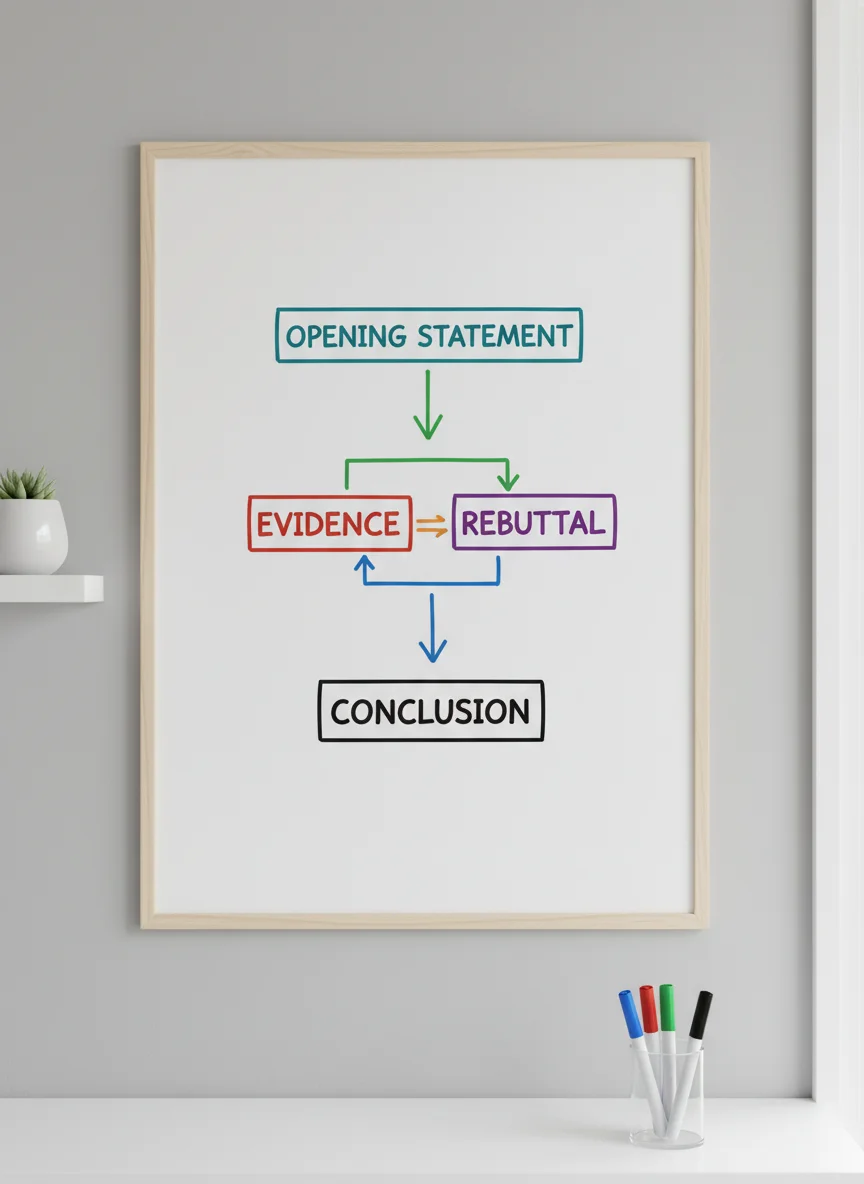
Structure your argument clearly Use respectful sentence starters: 'I understand your point, however...' Practice active listening: eye contact, summarize others' points Support your position with evidence and examples

Debate Preparation
{"left":"Groups of 4 students (balanced by ability)\nAge-appropriate topics: 'Should homework be banned?' or 'Are video games good for learning?'\nUse debate planning graphic organizers","right":"Support available: speech-to-text apps, scribe assistance\nTeacher and EA circulate for scaffolding\nReinforce key vocabulary and argument structure"}

Mini-Debate Format
Student 1: Opening statement (1 minute) Student 2: Supporting argument (1 minute) Student 3: Rebuttal (1 minute) Student 4: Closing statement (1 minute) Peer groups listen and take notes Brief feedback round after each debate

Reflection Questions
What did you find challenging about presenting your argument? How did listening to opposing views help you understand your topic better? How can feedback improve your persuasive skills? What would you do differently next time?

Assessment and Next Steps
Formative assessment through observation Review of debate planning sheets Peer and self-assessment checklists Teacher anecdotal notes on clarity and engagement Extension: Write persuasive letter to real audience Record presentations for self-review
More English (ELA) slide decks
Other ready-to-teach english (ela) decks for Canadian classrooms.


