
Electric Potential: History to Applications
From Franklin's Kite to Modern Technology Grade 12 Physics - SPH4U Exploring Voltage and Electric Potential Energy
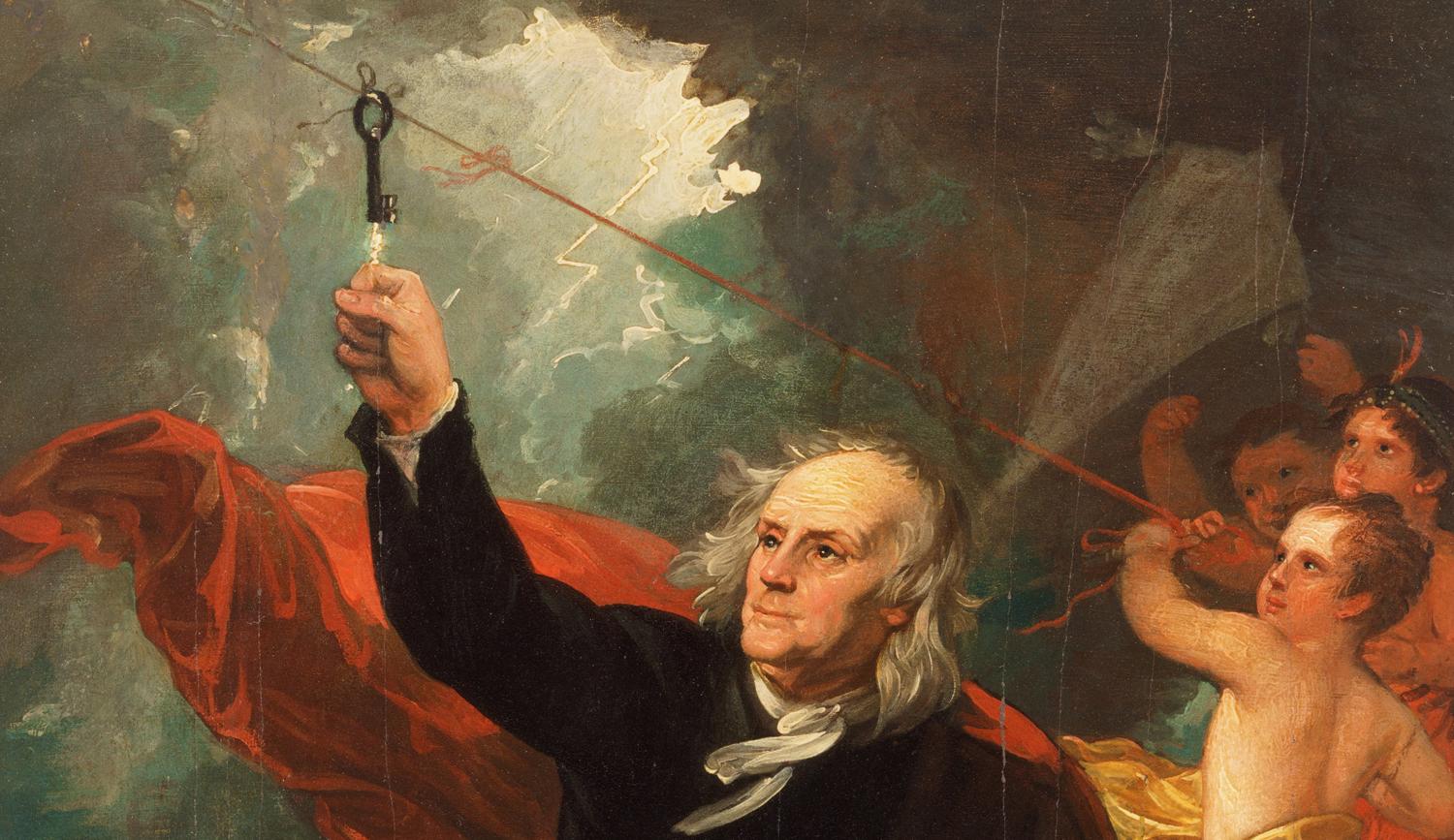
Historical Foundations: Franklin and Coulomb
Benjamin Franklin's kite experiment (1752) - first understanding of electric charge Charles-Augustin de Coulomb's torsion balance (1785) - quantified electric forces Alessandro Volta's voltaic pile (1800) - first battery and voltage measurement These experiments laid groundwork for electric potential energy concepts
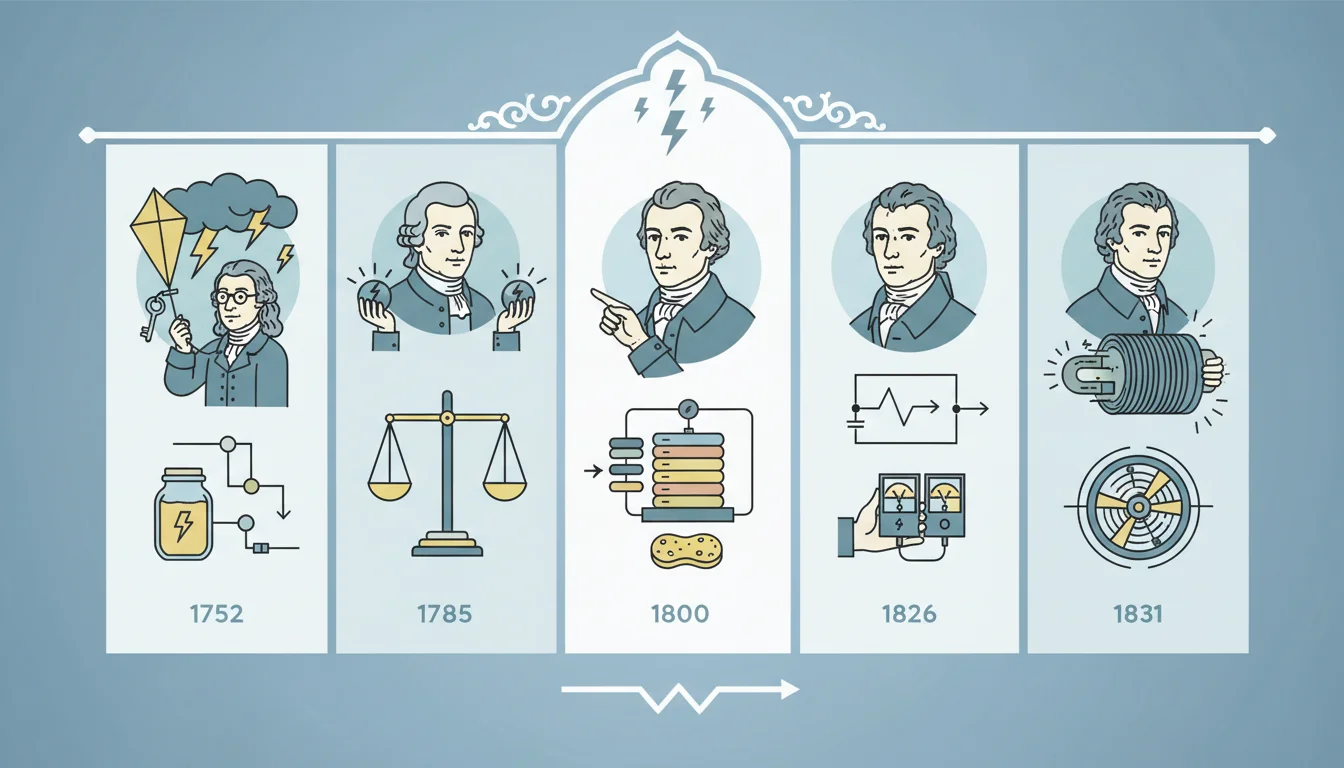
Timeline of Electric Potential Discovery

Understanding Electric Potential Energy
Electric potential energy: energy stored in electric field configurations Formula: PE = qV (charge × electric potential) Measured in Joules (J) Analogous to gravitational potential energy in gravitational fields Work done moving charge against electric field increases potential energy
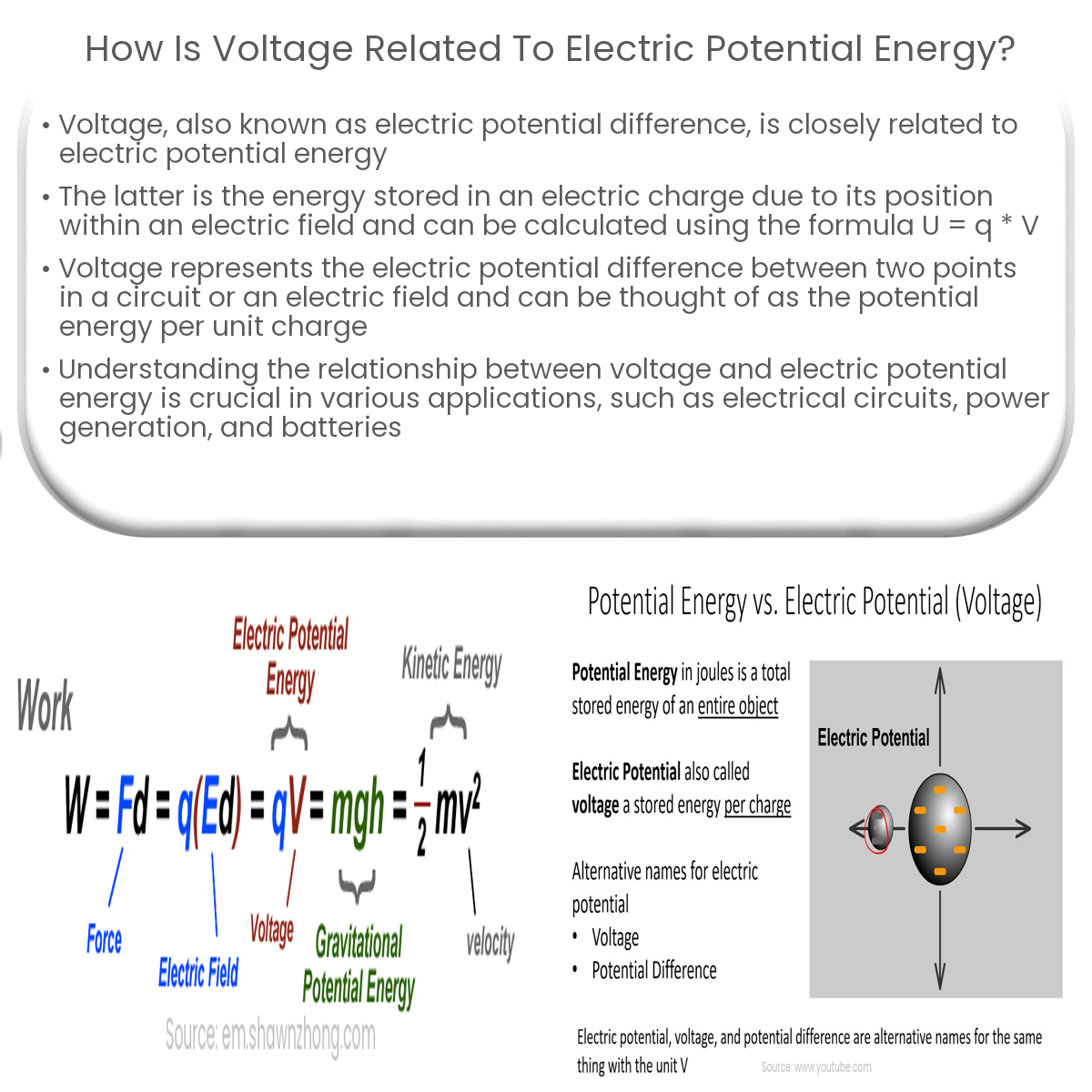
Electric Potential vs. Electric Potential Energy
{"left":"Electric Potential Energy (PE)\nDepends on both charge and position\nMeasured in Joules (J)\nPE = qV\nEnergy stored in the system","right":"Electric Potential (V)\nProperty of position in field only\nMeasured in Volts (V)\nV = PE/q\nVoltage difference drives current"}
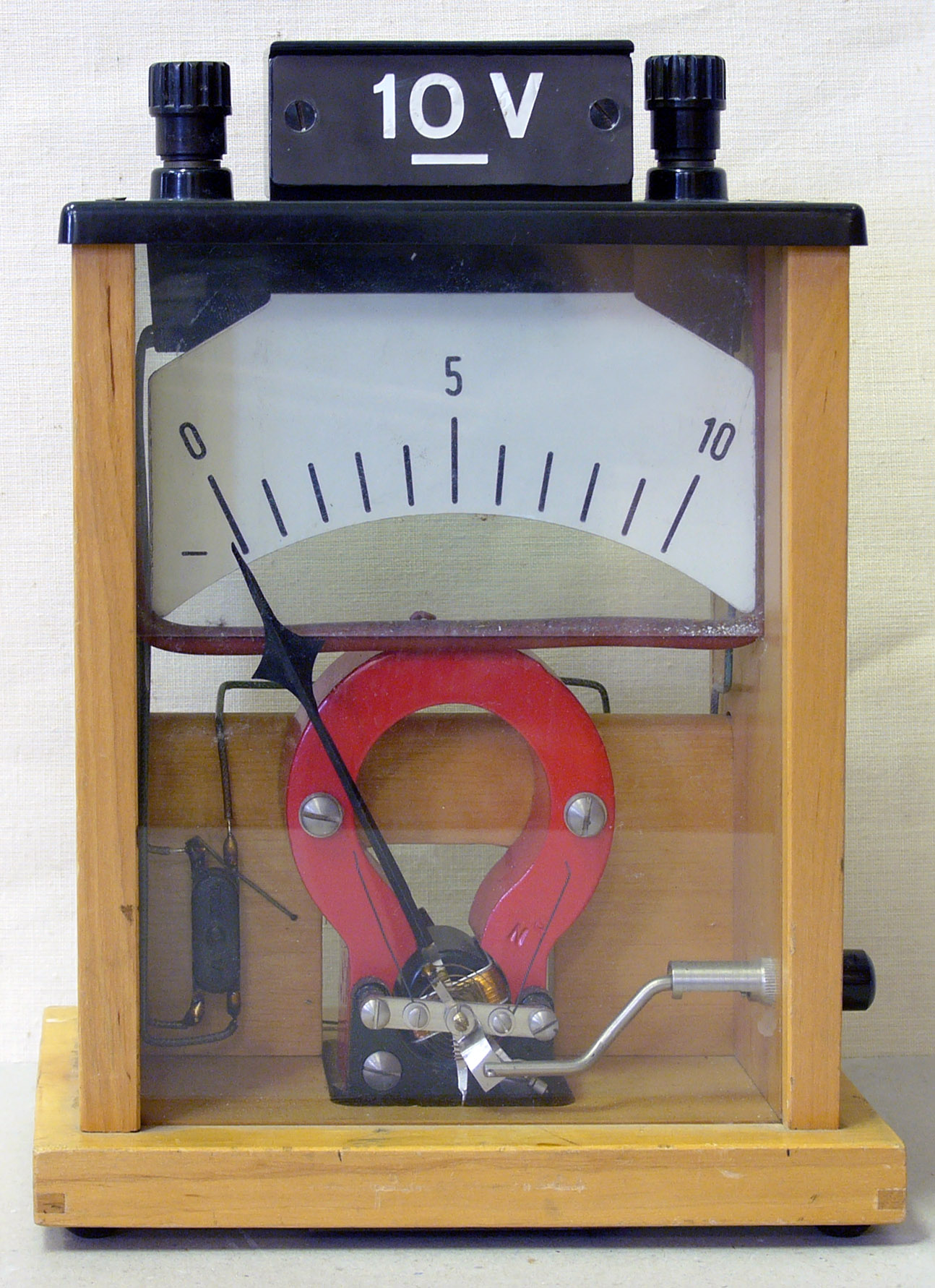
Voltage: The Driving Force of Electricity
Voltage = electric potential difference between two points Measured with voltmeters in parallel circuits Formula: V = W/q (work per unit charge) Creates electric current when circuit is complete Higher voltage = greater potential difference = stronger 'push' for electrons
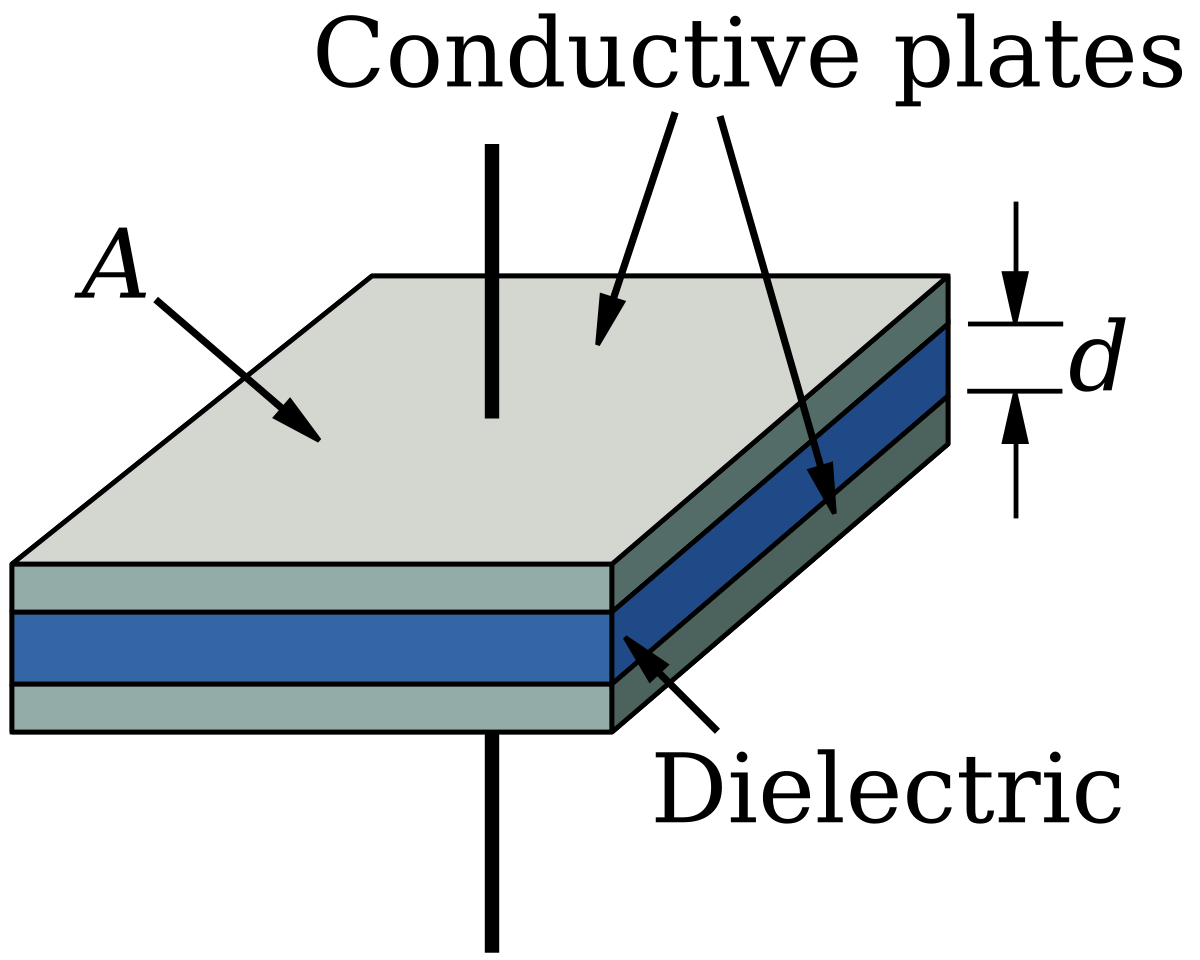
Parallel-Plate Capacitor: Theory and Function
Two parallel conducting plates separated by insulator (dielectric) Electric field uniform between plates: E = V/d Stores electric charge and energy Capacitance: C = Q/V Field lines perpendicular to plates, uniform distribution
Calculation Challenge: Parallel-Plate Capacitor
Given: Parallel-plate capacitor with d = 2.0 mm separation Voltage across plates = 12 V Calculate: Electric field strength between plates Formula: E = V/d Solution: E = 12 V / 0.002 m = 6000 V/m
Discussion: Modern Applications
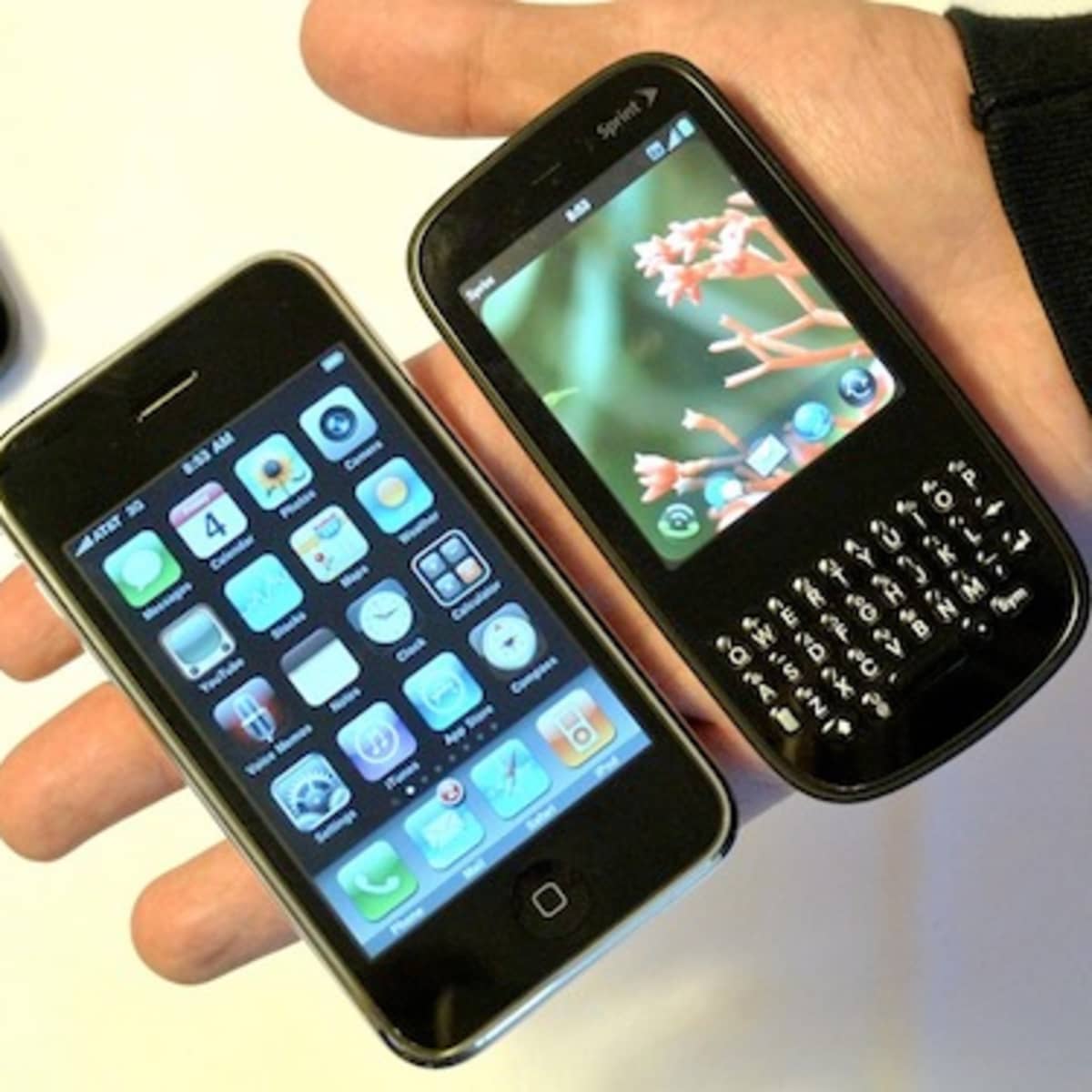
Where do we encounter capacitors in daily life? How do touchscreens use capacitive sensing? What role do capacitors play in camera flashes? Why are capacitors essential in computer power supplies?

Modern Applications and Future Research
Supercapacitors: rapid charging electric vehicles and energy storage Quantum capacitors: exploring quantum effects in electrical storage Biomedical applications: defibrillators and pacemaker technology Renewable energy: grid stabilization and power smoothing Future: room-temperature superconducting capacitors for lossless energy storage