Exploring 3D Shapes and Features
Grade 6 Mathematics Understanding edges, faces, and vertices
What Are 3D Shapes?
Three-dimensional objects that have length, width, and height Also called solid shapes or geometric solids Found everywhere in our daily lives Each shape has special features we can count and measure
Key Features of 3D Shapes
Faces: the flat surfaces of a shape Edges: where two faces meet Vertices: corners where edges come together We can count these features for any 3D shape
The Cube
6 square faces (all the same size) 12 edges (all the same length) 8 vertices Example: dice, Rubik's cube, ice cubes
The Rectangular Prism
6 rectangular faces (opposite faces are identical) 12 edges 8 vertices Example: books, cereal boxes, smartphones
The Triangular Prism
5 faces (2 triangular, 3 rectangular) 9 edges 6 vertices Example: tent, Toblerone chocolate, roof
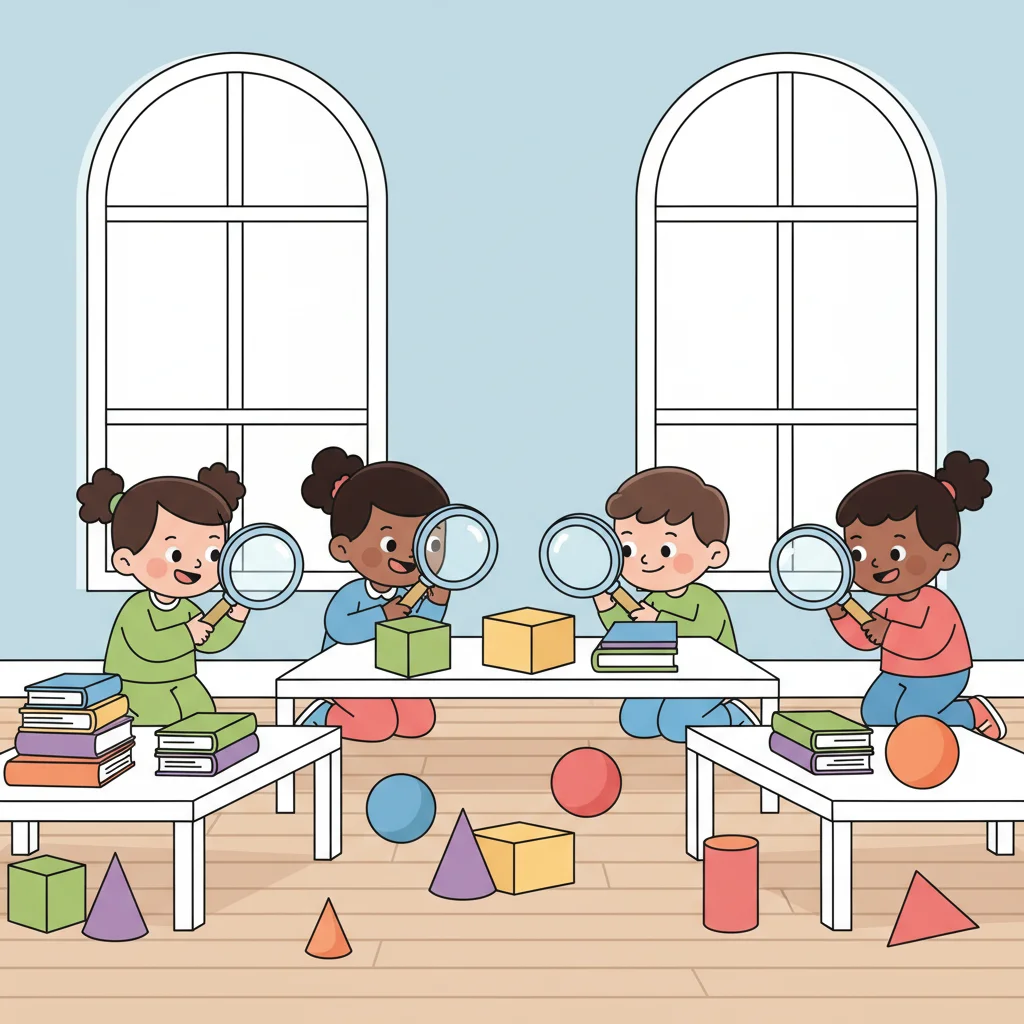
Shape Hunt Challenge
Look around the classroom Find one example of each shape we've learned Count the faces, edges, and vertices Share your discoveries with a partner
The Square Pyramid
5 faces (1 square base, 4 triangular) 8 edges 5 vertices Example: Egyptian pyramids, roof peaks
The Triangular Pyramid
4 faces (all triangular) 6 edges 4 vertices Also called a tetrahedron Example: pyramid-shaped tea bags, some dice
The Cylinder
3 faces (2 circular, 1 curved) 2 edges (where circles meet the curved surface) 0 vertices Example: cans, toilet paper rolls, pipes
The Cone
2 faces (1 circular base, 1 curved surface) 1 edge (where circle meets curved surface) 1 vertex (at the point) Example: ice cream cones, traffic cones, party hats
The Sphere
1 curved face 0 edges 0 vertices Perfectly round in all directions Example: balls, planets, bubbles
2 more slides available after you open the deck.
Download all 14 slides