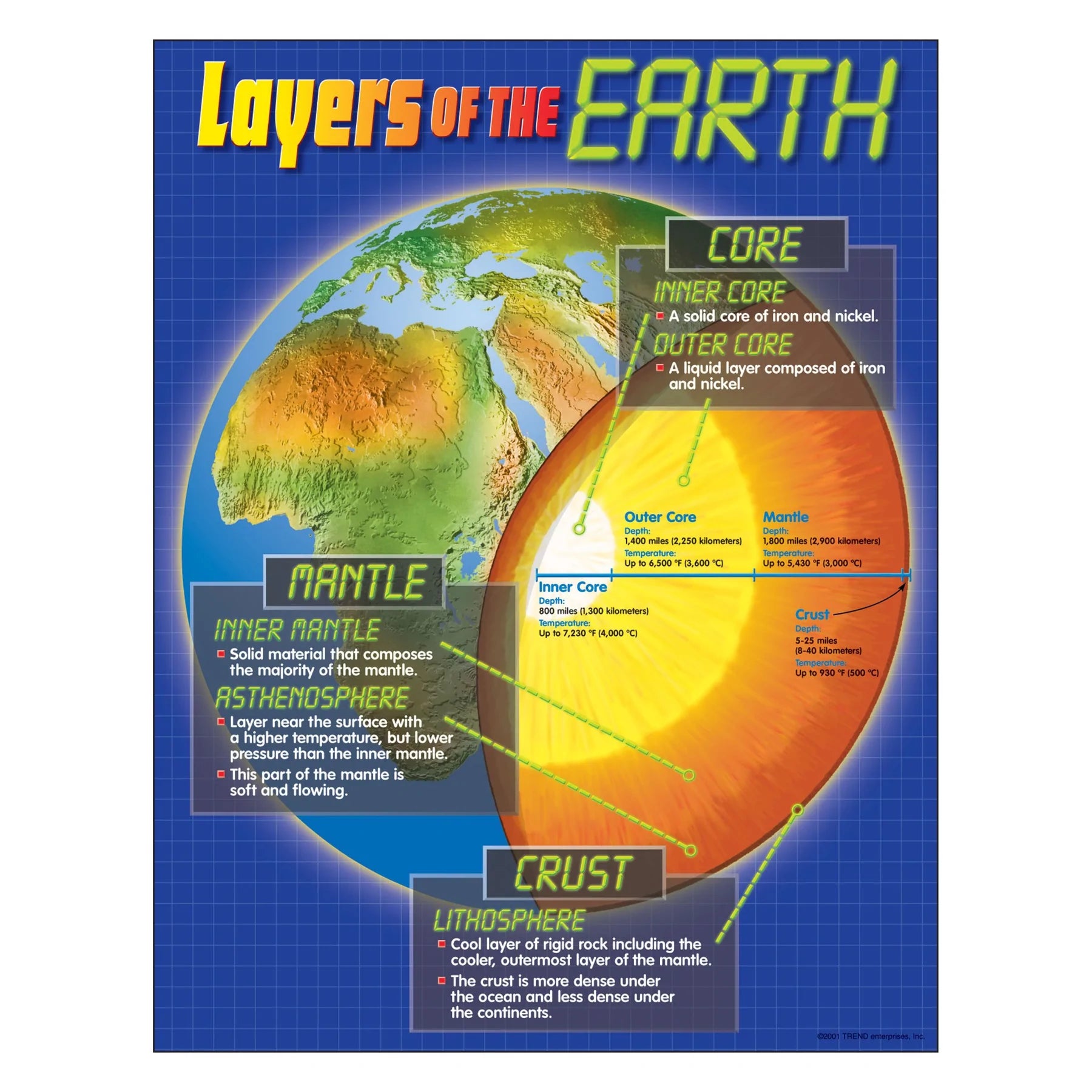
Inside Earth: Exploring Our Planet's Layers
Grade 7 Science Alberta Curriculum Earth and Space Science

What Do You Think Is Inside Earth?
Partagez vos idées avec un partenaire Pensez à ce que vous avez déjà entendu Considérez ce qui pourrait se trouver au centre
I Can Statements for Today
I can identify and name the four main layers of Earth I can describe key characteristics of each layer I can label a color-coded diagram of Earth's structure I can explain the difference between solid and liquid layers

Earth's Four Main Layers
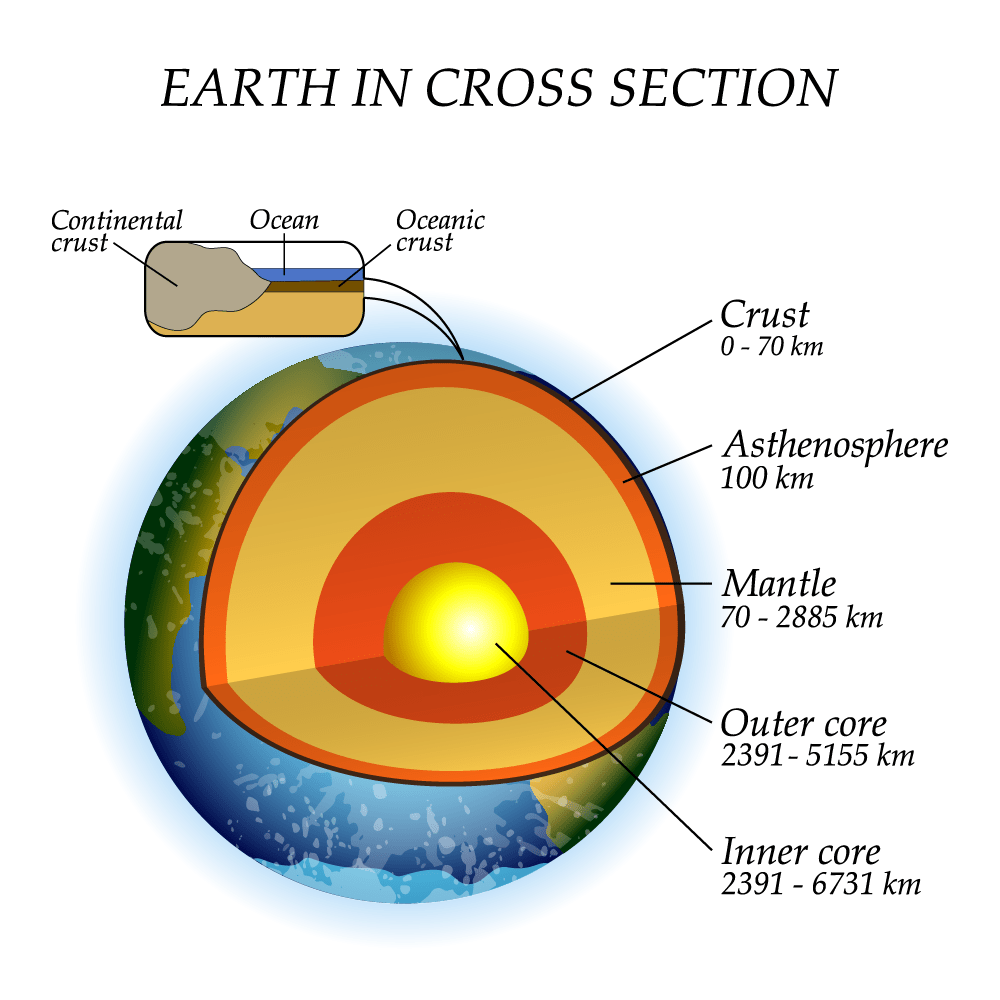
Comparing Earth's Layers
{"left":"CRUST: Thinnest layer, solid rock, where we live, like an apple's skin\nMANTLE: Thickest layer, hot melted rock, moves very slowly, orange-red color","right":"OUTER CORE: Liquid iron and nickel, creates Earth's magnetic field, extremely hot\nINNER CORE: Solid iron ball, hottest part of Earth, under extreme pressure"}
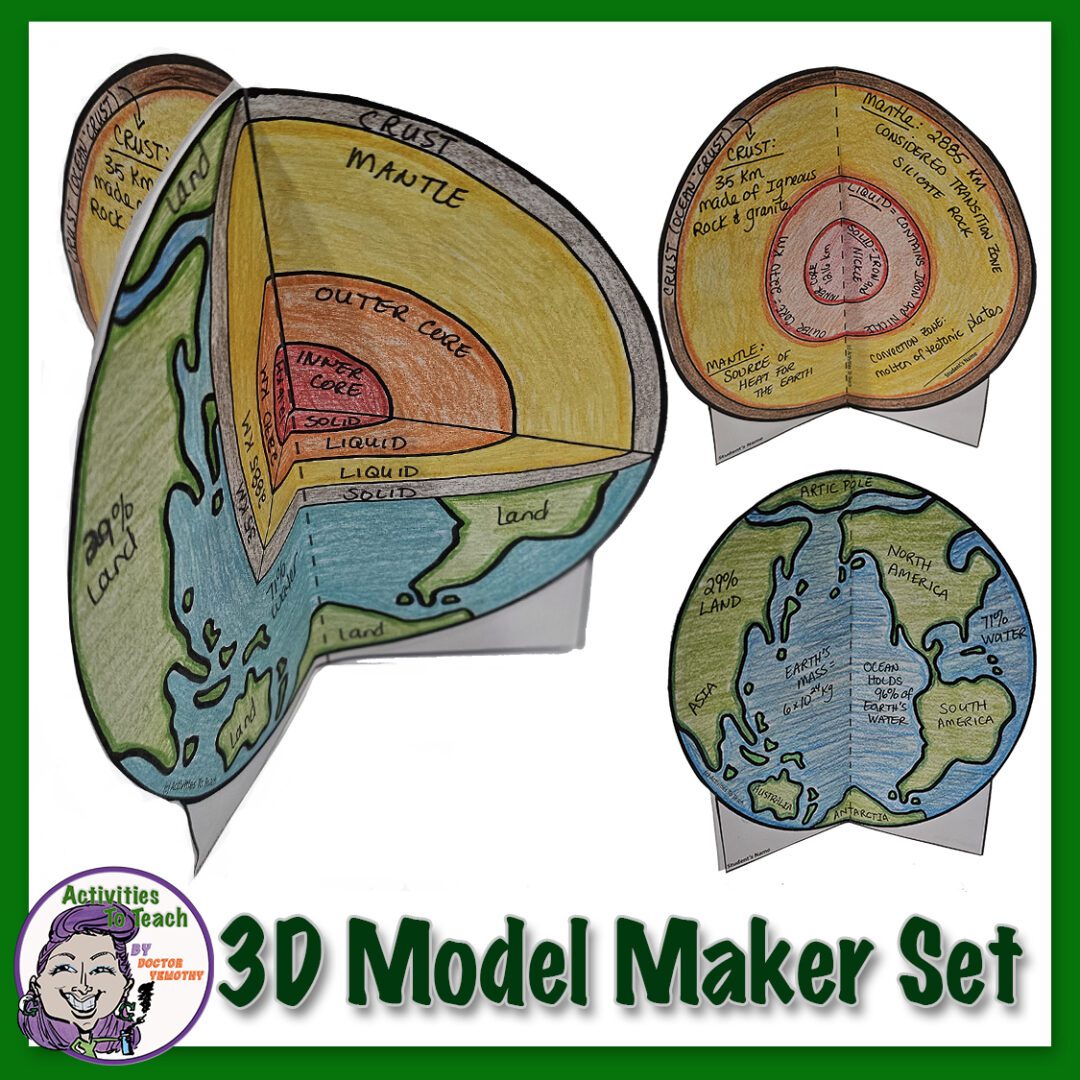
Hands-On Layer Exploration
Work with your partner to examine the 3D Earth model Feel the different layer thicknesses Use your color-coded handout to label each layer Write one interesting fact about each layer
Amazing Earth Layer Facts
The crust is only 0.5% of Earth's total volume The mantle contains 84% of Earth's total volume Temperatures in the inner core reach 5,000°C - as hot as the Sun's surface! If Earth were an apple, the crust would be thinner than the apple's skin

Check Your Understanding
Which layer do we live on? Which layer is the thickest? Which layer creates Earth's magnetic field? Share one new fact you learned today