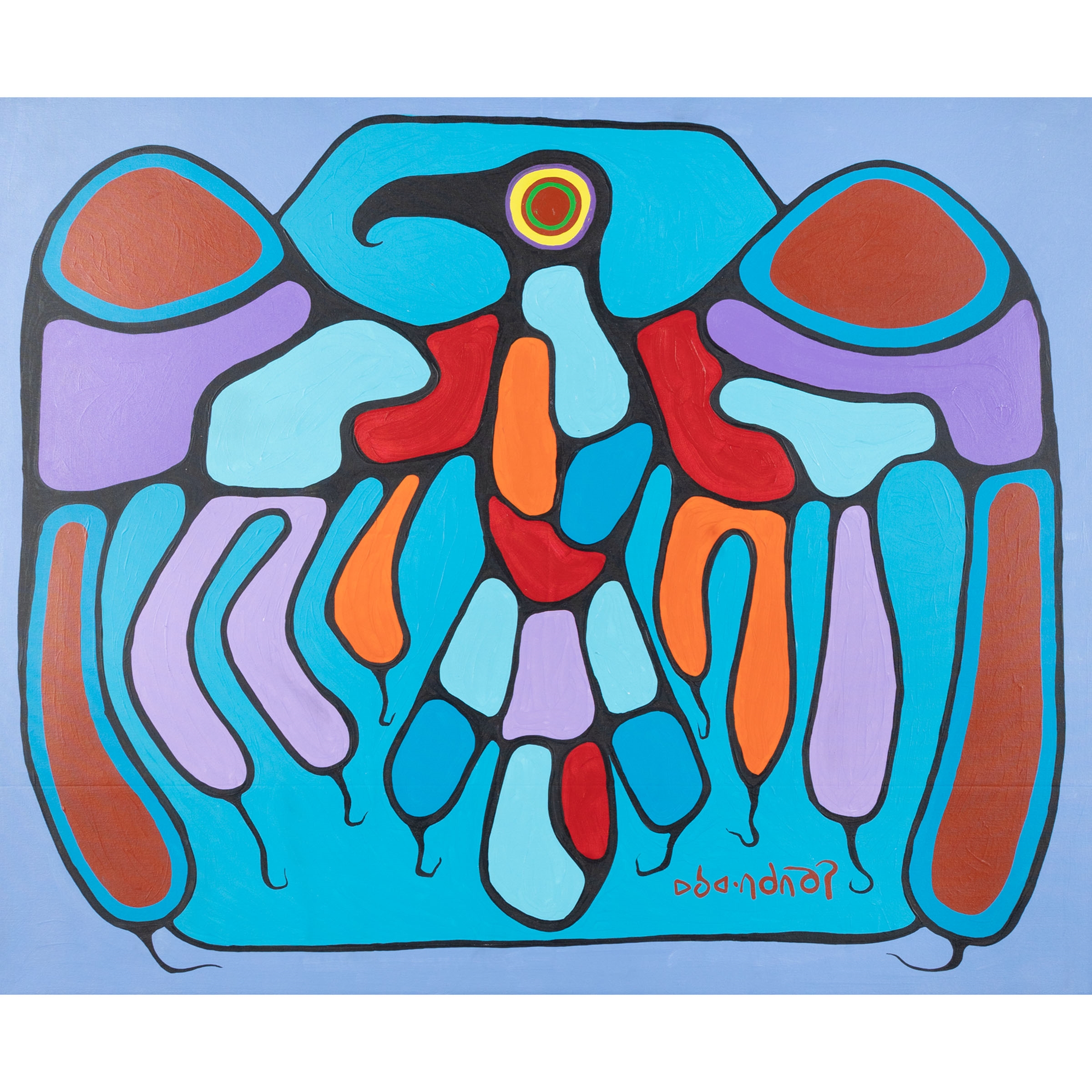
Norval Morrisseau: Art Tells Stories
Exploring Indigenous Art and Culture Grade 5 Language Arts 60-minute journey into storytelling through art
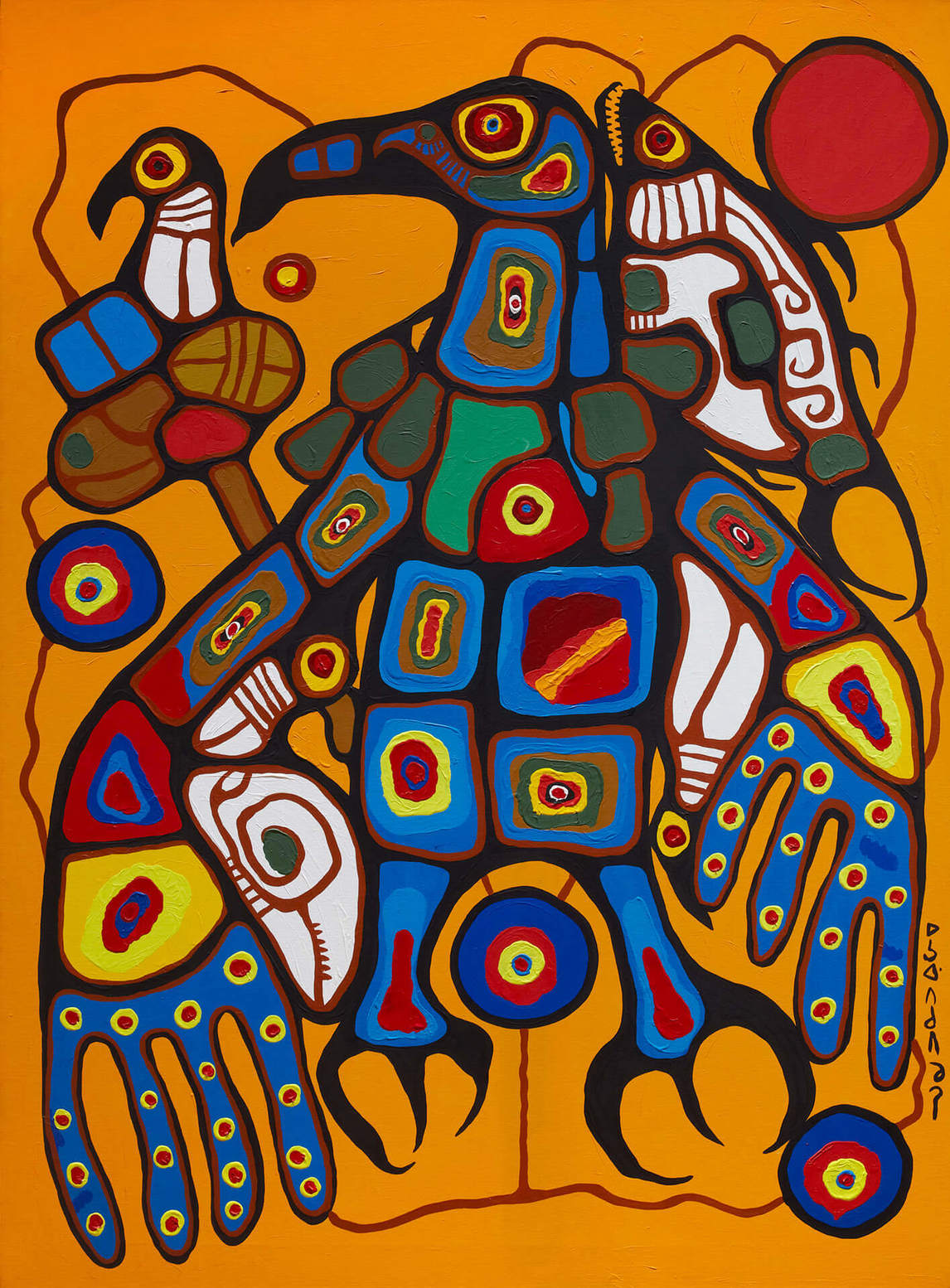
Who Was Norval Morrisseau?
Known as the 'Picasso of the North' Anishinaabe artist from Ontario First Indigenous artist to have a solo exhibition Used art to share traditional stories and culture Born in 1932 in northwestern Ontario
Traditional Anishinaabe Territory
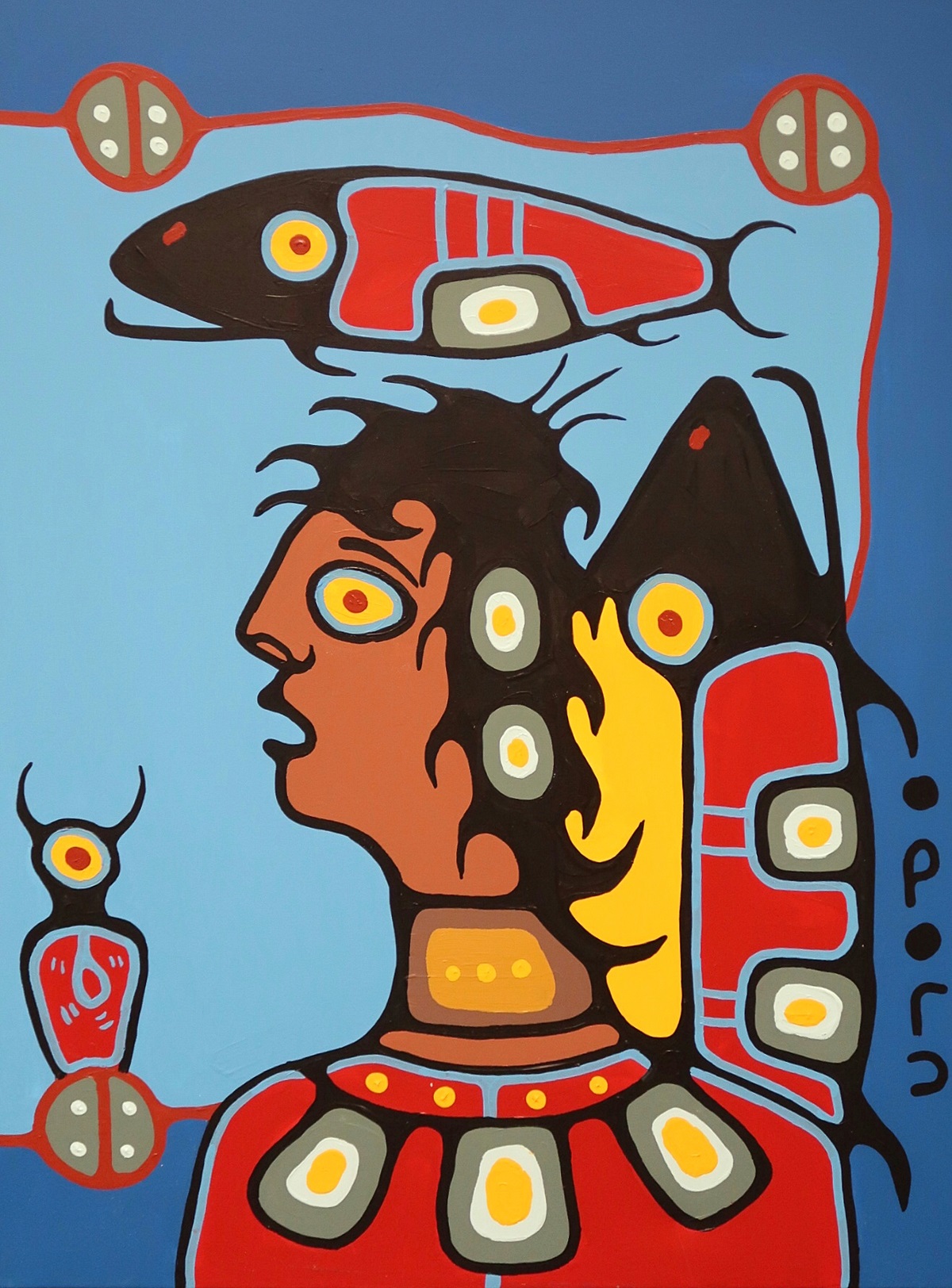
The Woodland School of Art
Art style created by Norval Morrisseau Bold black outlines around shapes Bright, vibrant colors X-ray vision showing spirits inside animals Flowing, organic shapes inspired by nature
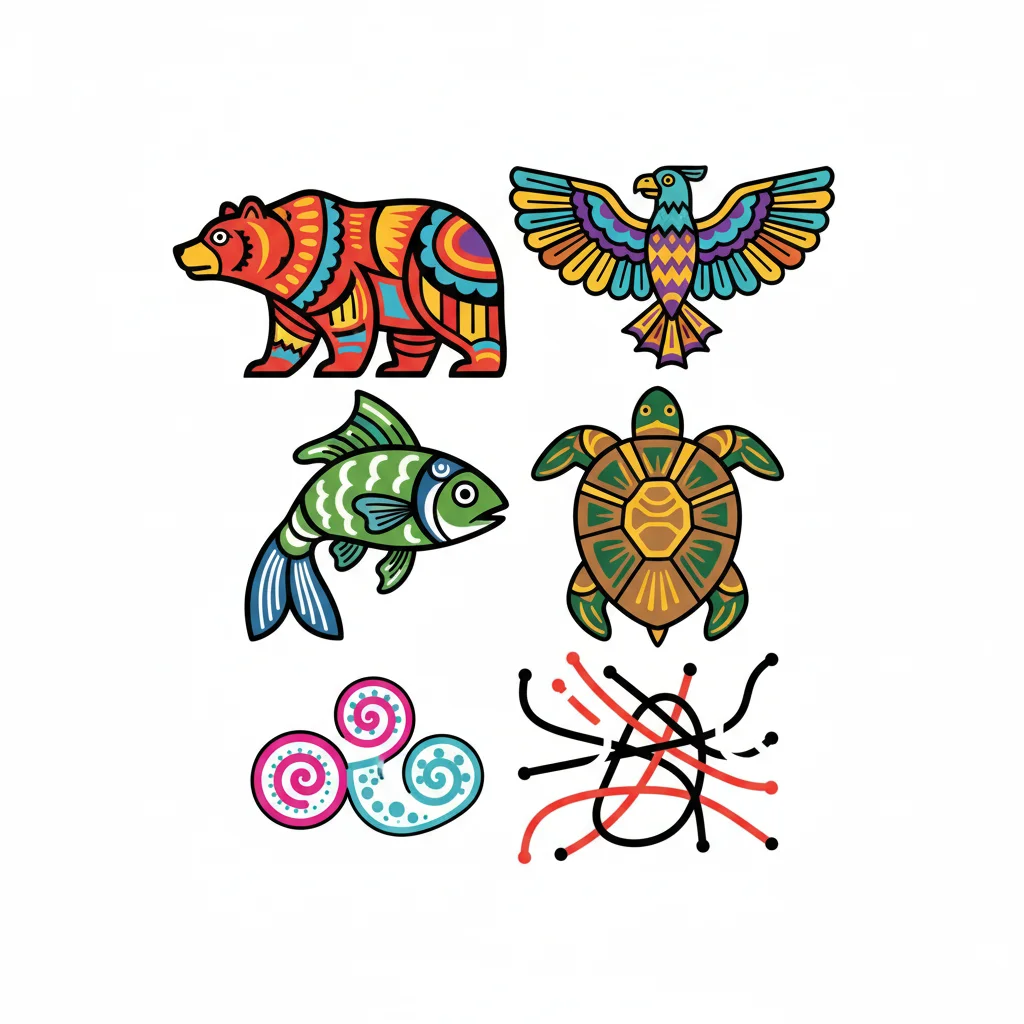
Symbol Detective Activity
Look at the artwork displayed Find these symbols with your partner: Animals (bear, bird, fish, turtle) Circles and spirals (representing life cycles) Lines connecting figures (showing relationships) Share what story you think the symbols tell
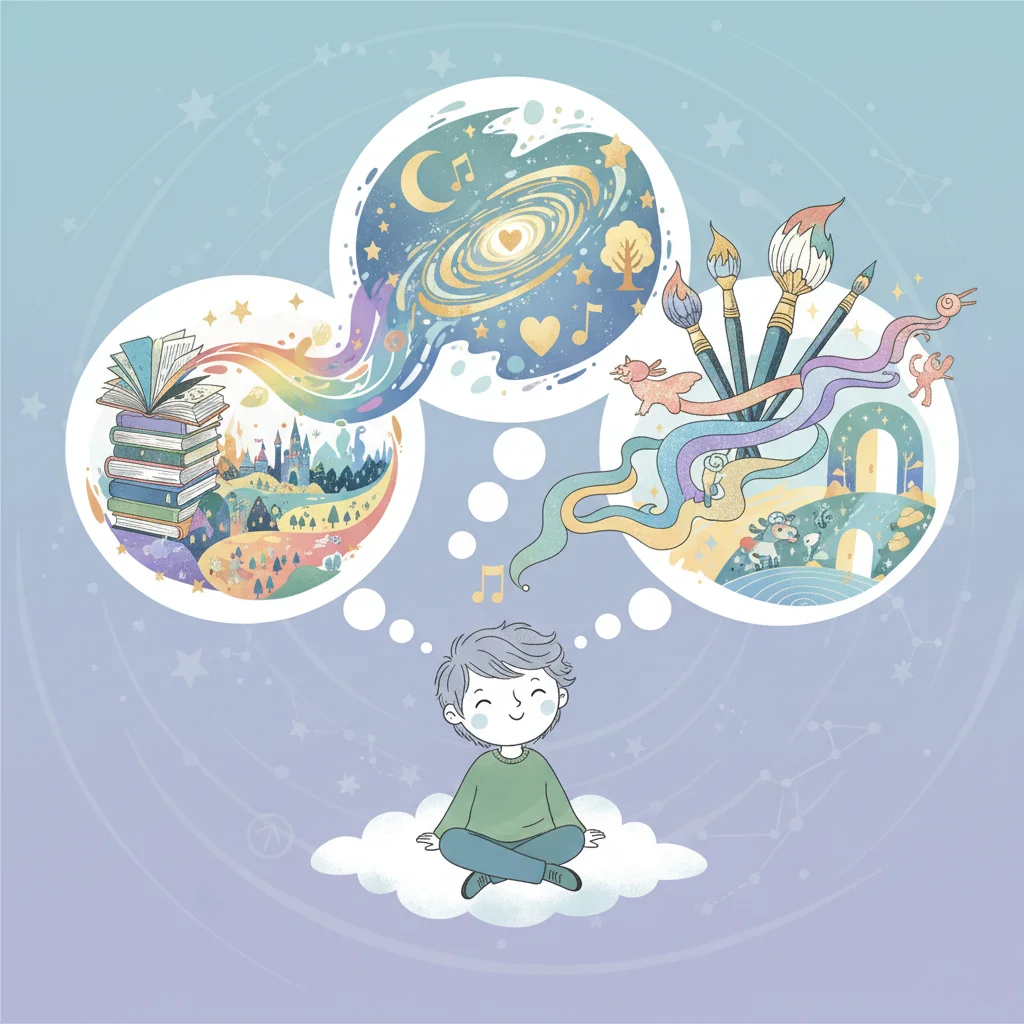
How Does Art Tell Stories?
Think about your favorite story How could you tell it without words? What symbols or pictures would you use? How do colors make you feel different emotions?
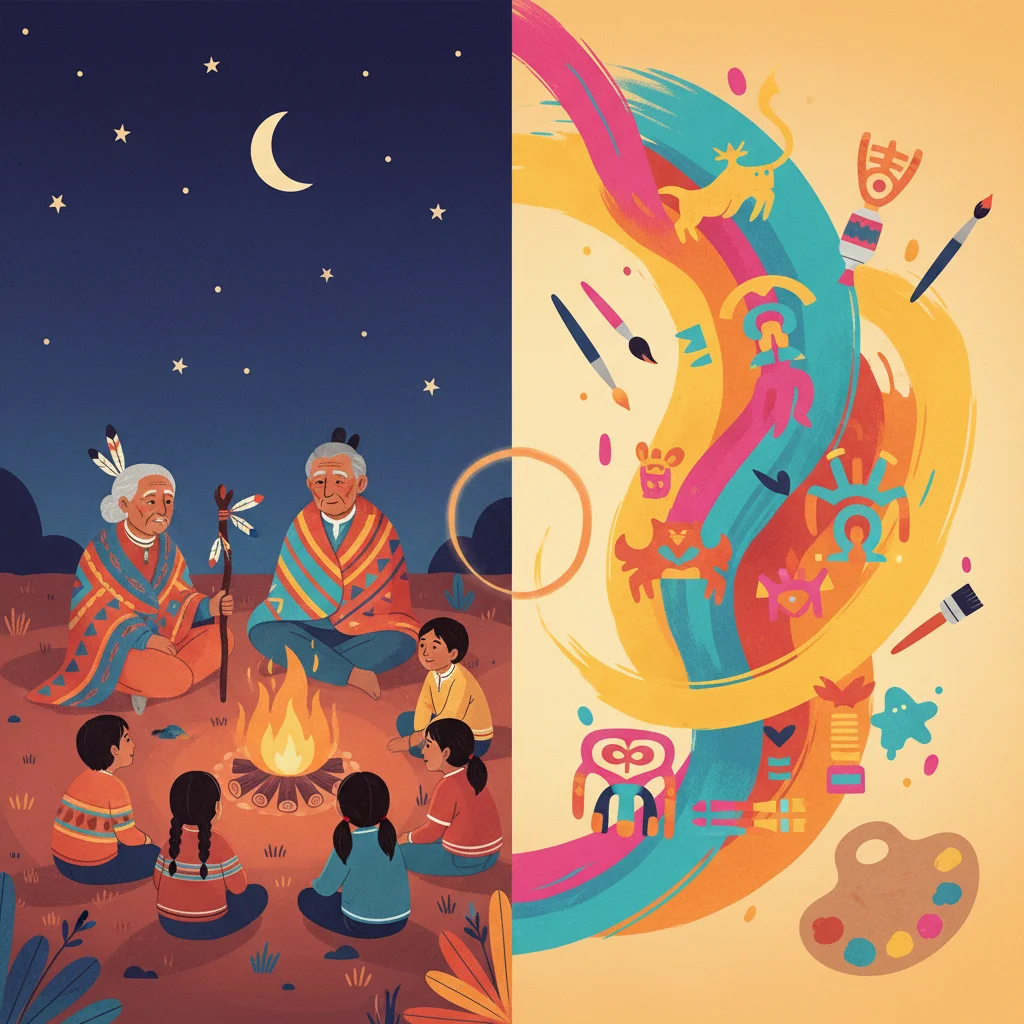
Traditional vs. Visual Storytelling
{"left":"Oral stories passed down through generations\nElders sharing wisdom around fires\nStories told through songs and dances\nMemory keeping culture alive","right":"Pictures showing stories instantly\nSymbols representing big ideas\nColors creating feelings and moods\nArt preserving stories forever"}
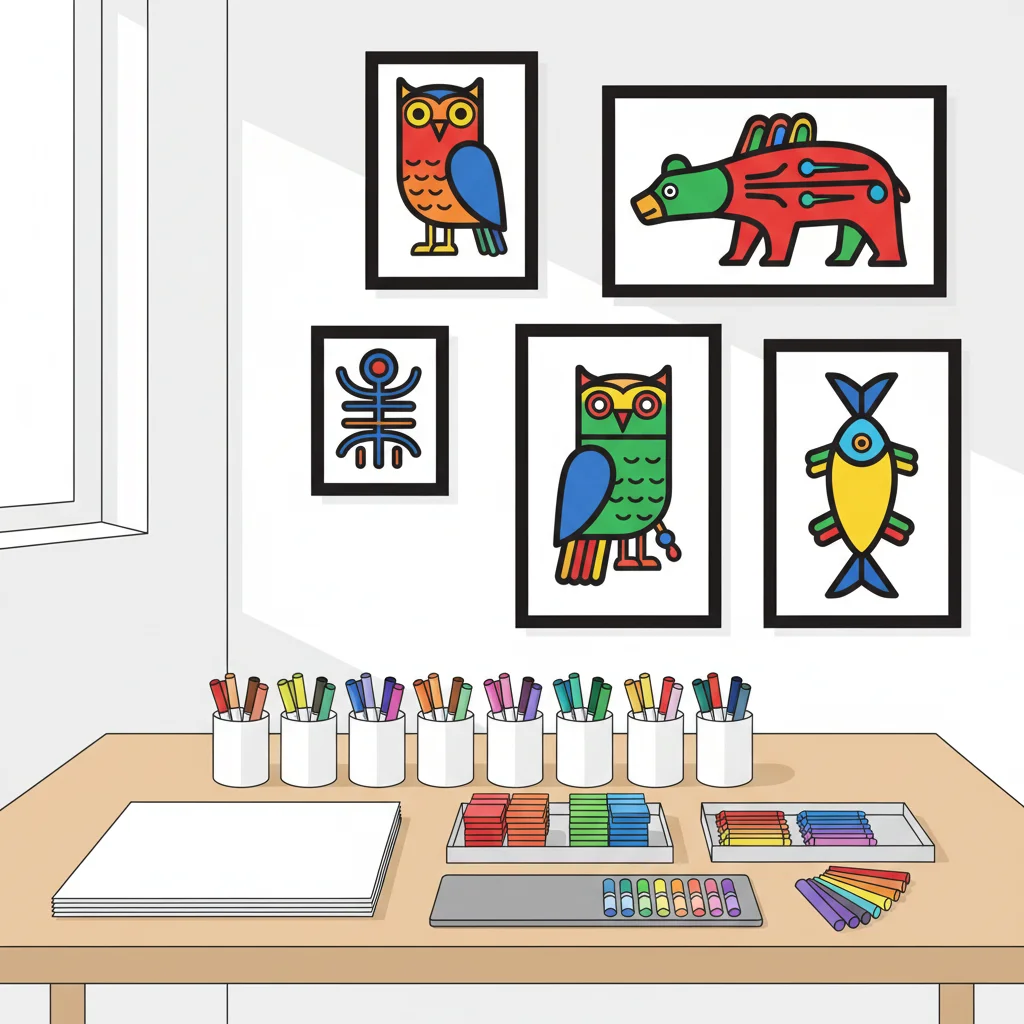
Create Your Story Art
Choose a personal story or memory Pick 2-3 symbols to represent your story Use bold black outlines like Morrisseau Fill with bright, meaningful colors Think about what your symbols mean Remember: your art should tell a story without words!

Morrisseau's Legacy
Opened doors for other Indigenous artists Helped preserve Anishinaabe culture and stories Showed the world the beauty of Indigenous art His artwork is in museums across Canada Inspired a whole generation of artists
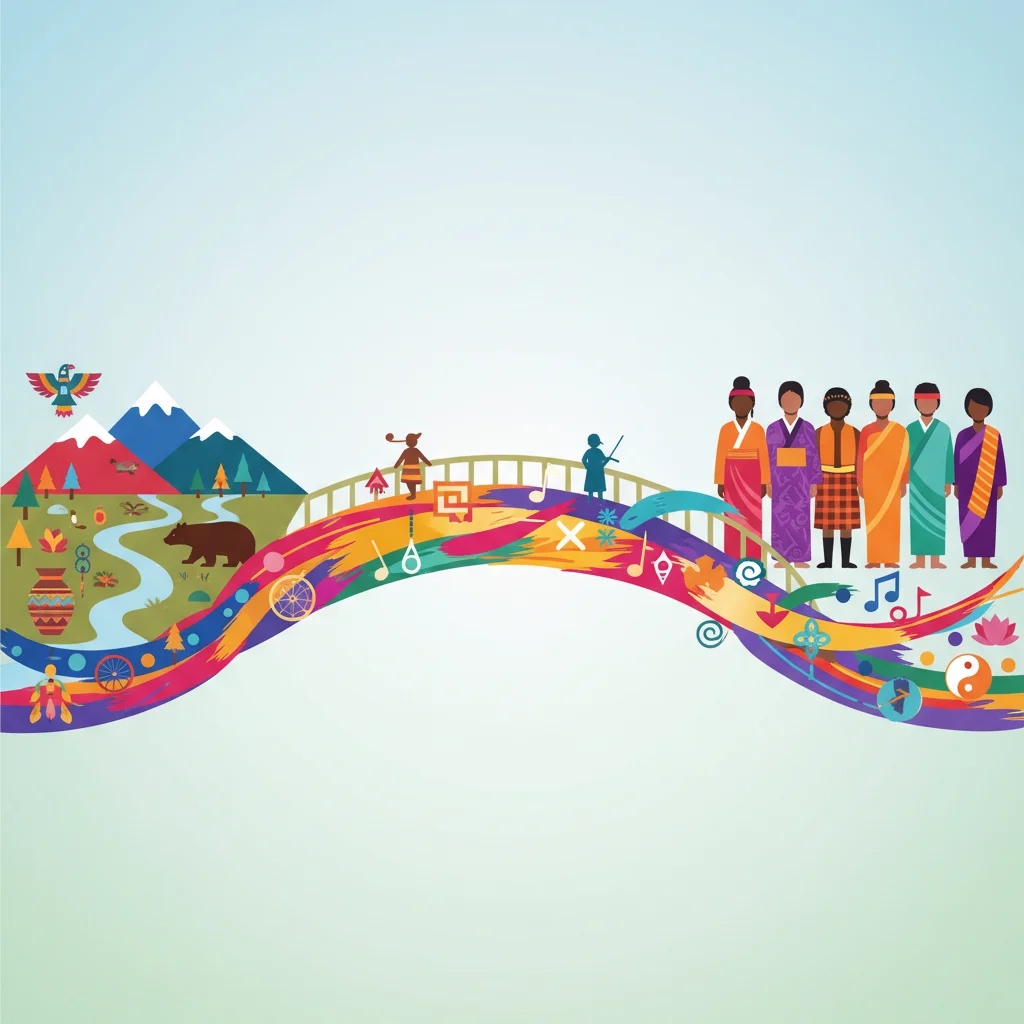
Art as a Bridge Between Cultures
'Art can help us understand each other's stories and experiences, building bridges between different cultures and communities.'