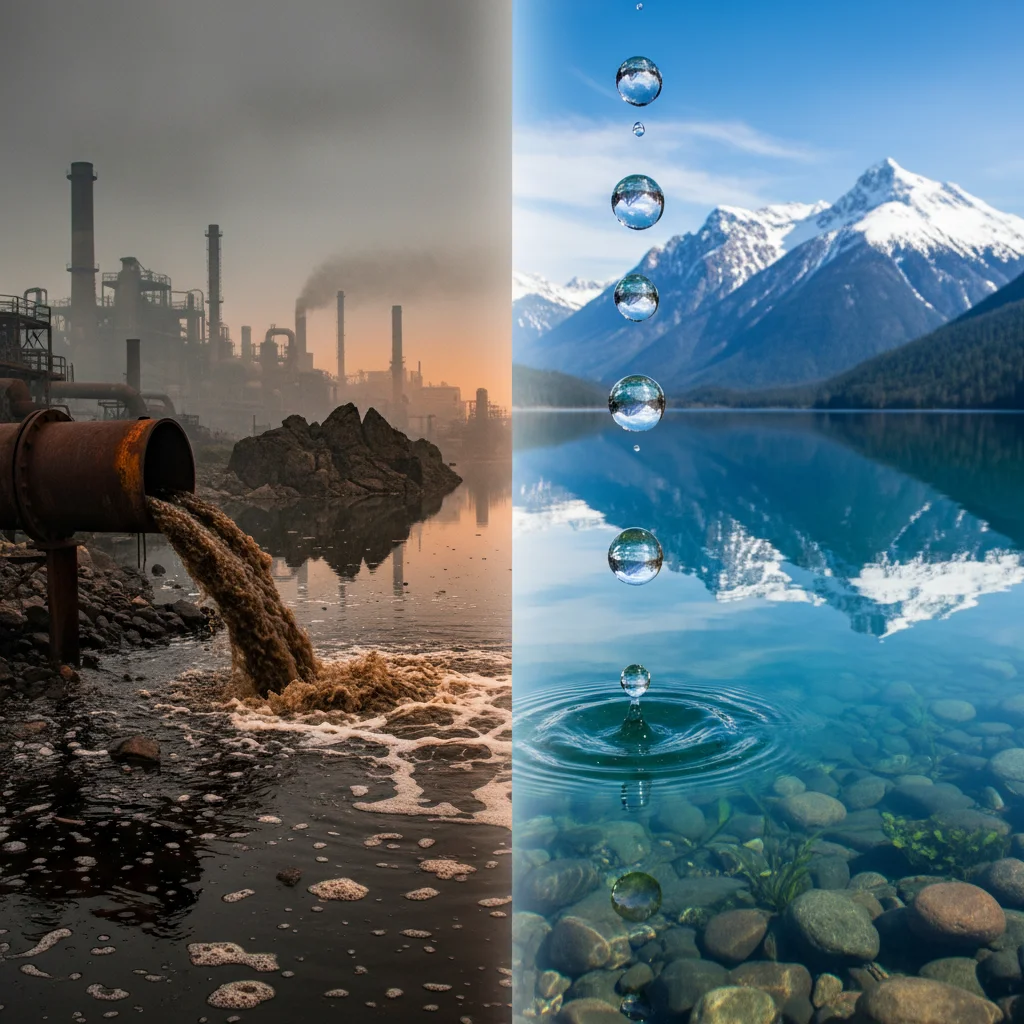
Water: From Pollution to Purification
Understanding water pollution sources Exploring water treatment processes Learning about safe water distribution
Why Water Matters
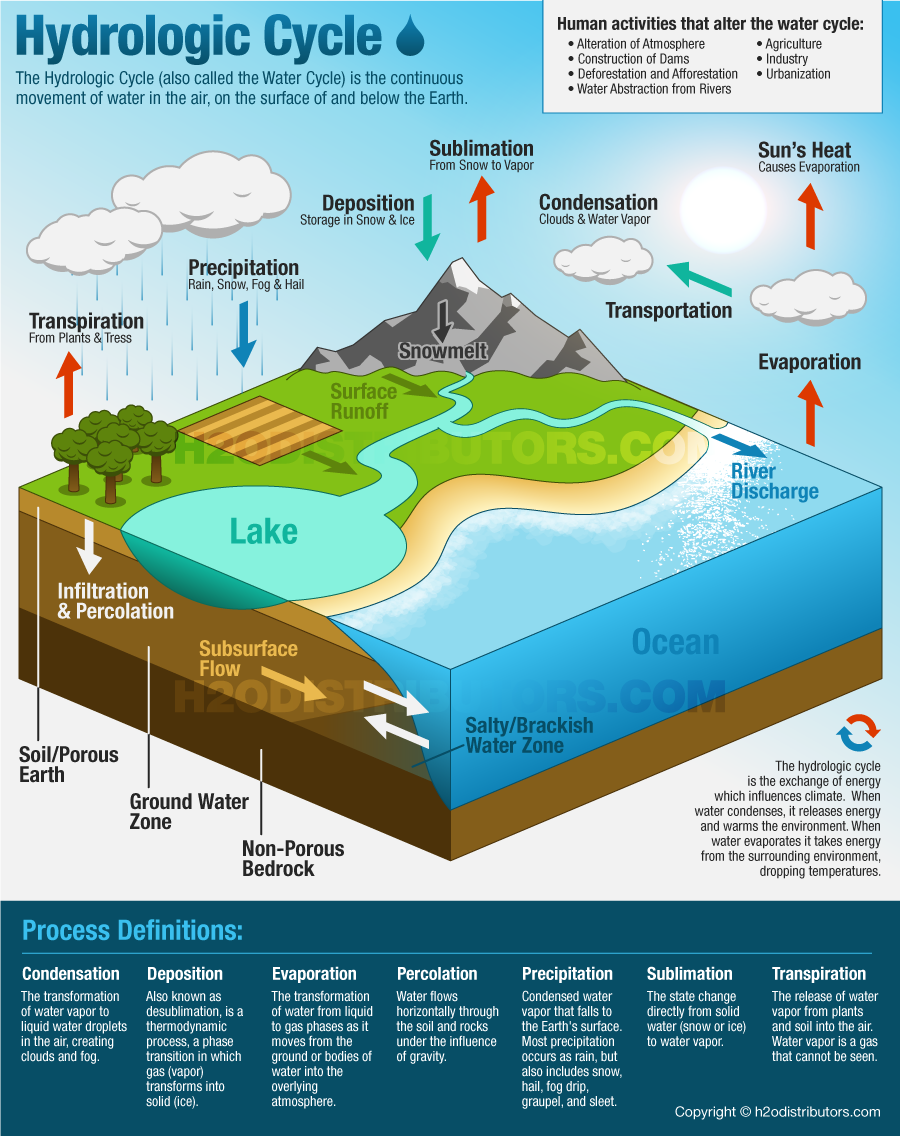
Essential for all life on Earth Human body is 60% water Used for drinking, cooking, cleaning, and agriculture Only 3% of Earth's water is freshwater Less than 1% is easily accessible for human use
What Makes Water Dirty?
Think about what you've seen polluting water in your community What happens when it rains on city streets? How might factories affect nearby rivers?
Sources of Water Pollution
{"left":"Point Source Pollution: Factories and sewage treatment plants\nAgricultural runoff with pesticides and fertilizers\nOil spills and chemical leaks\nNon-Point Source Pollution: City street runoff","right":"Household chemicals and detergents\nLitter and plastic waste\nSalt from winter road treatment"}
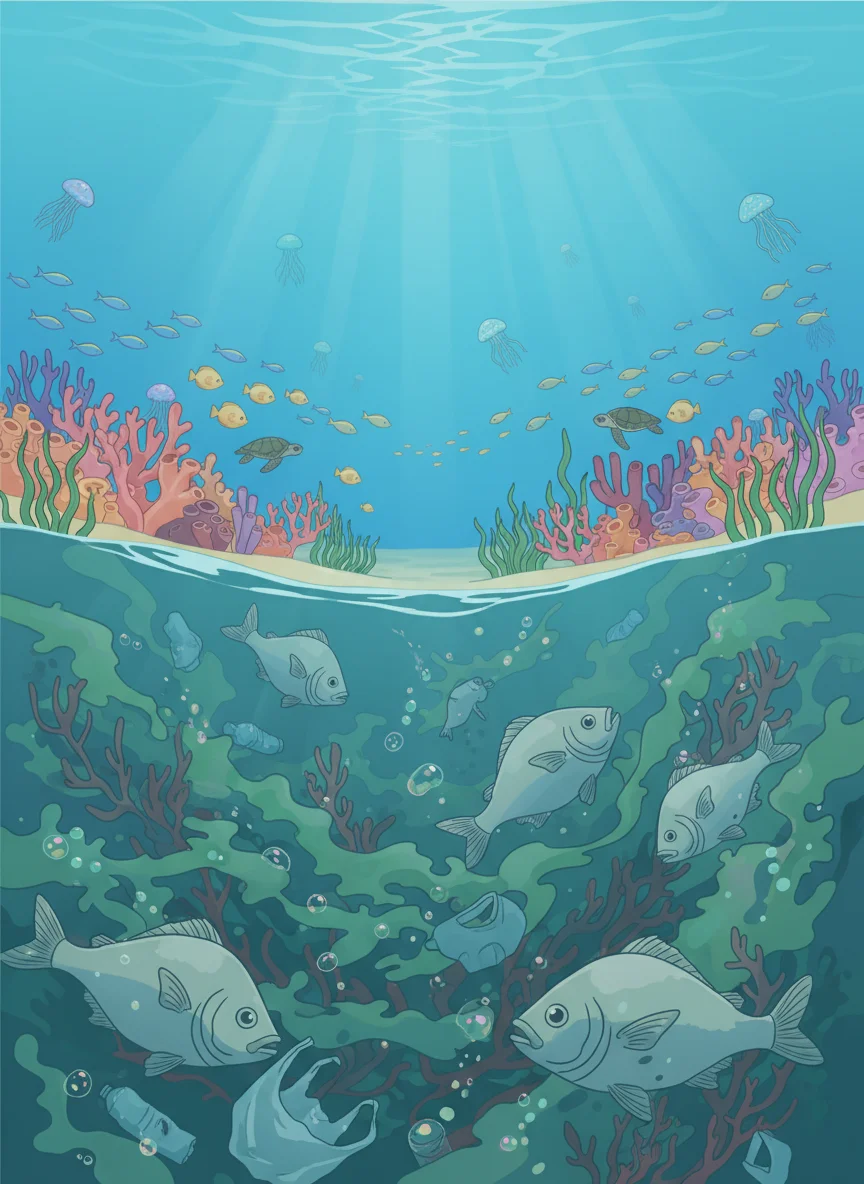
Effects of Water Pollution
Human health problems: waterborne diseases, cancer risks Aquatic life death and ecosystem disruption Algae blooms that deplete oxygen in water Contaminated food chain affecting all organisms Economic costs for cleanup and healthcare
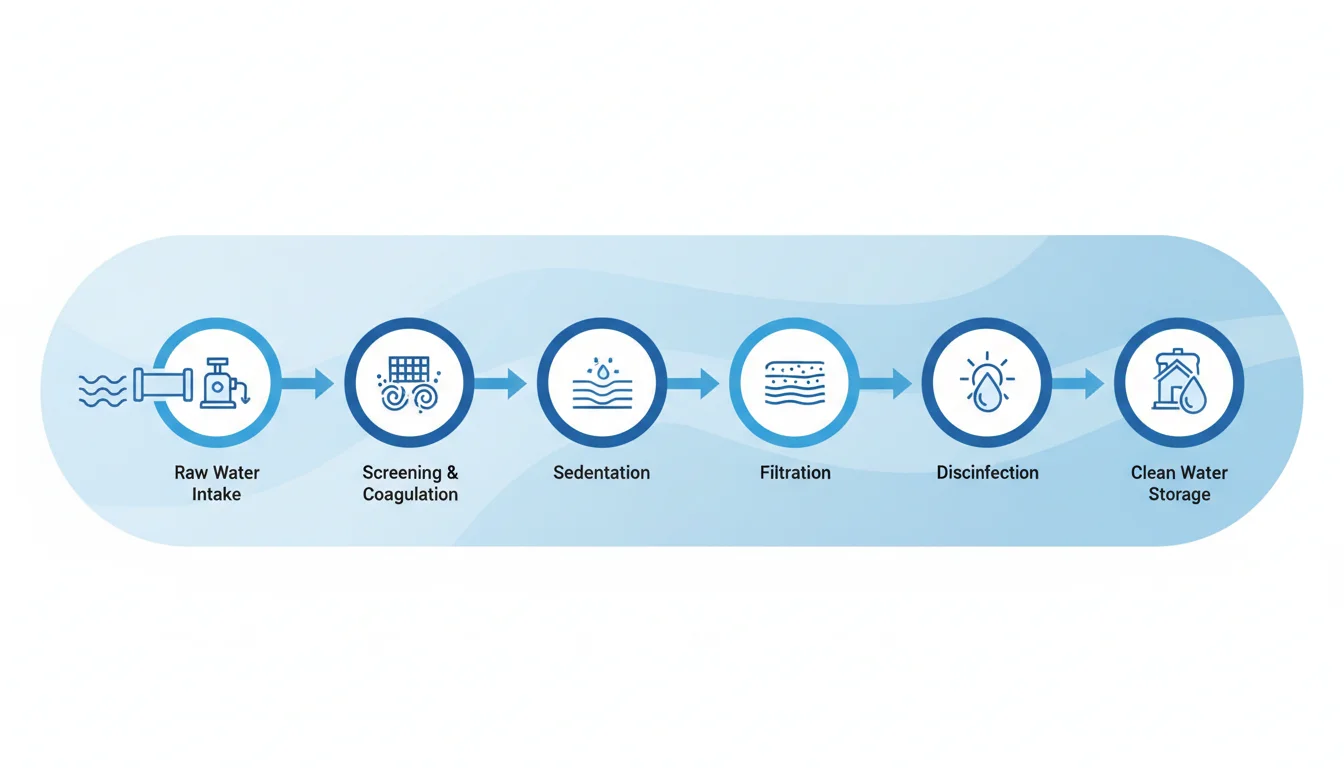
Water Treatment Process
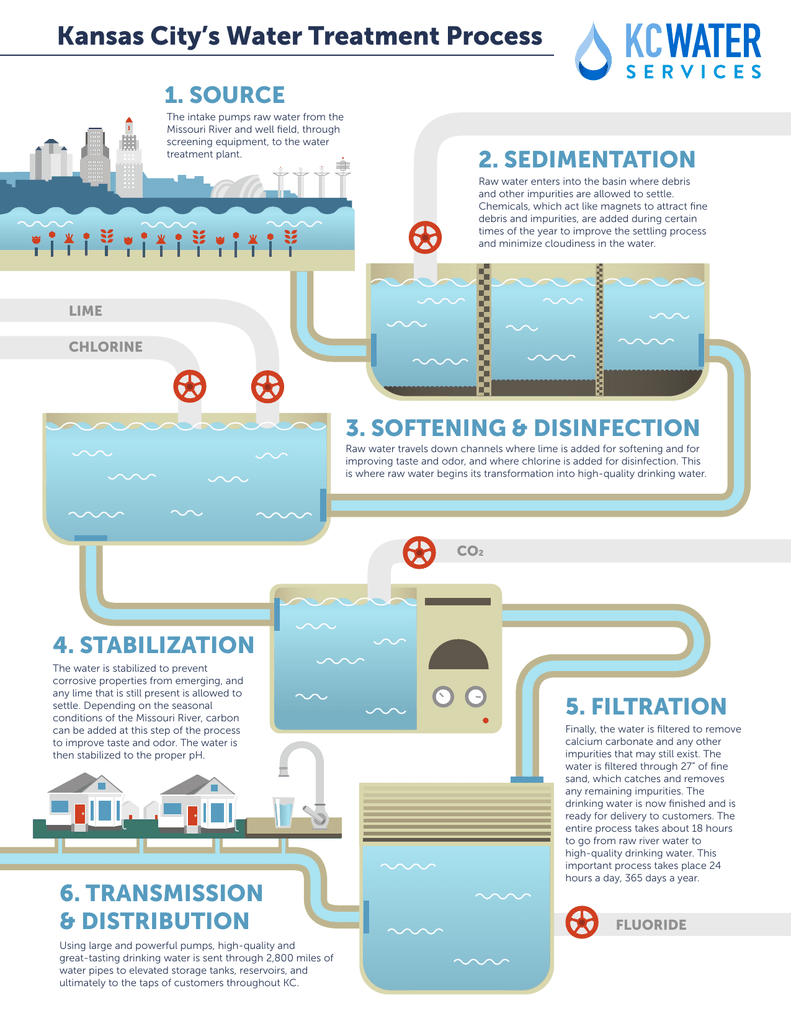
Step 1: Screening and Coagulation
Large debris removed by screens and filters Chemicals called coagulants are added Coagulants make tiny particles stick together Forms larger clumps called 'floc' Common coagulants: aluminum sulfate, iron chloride
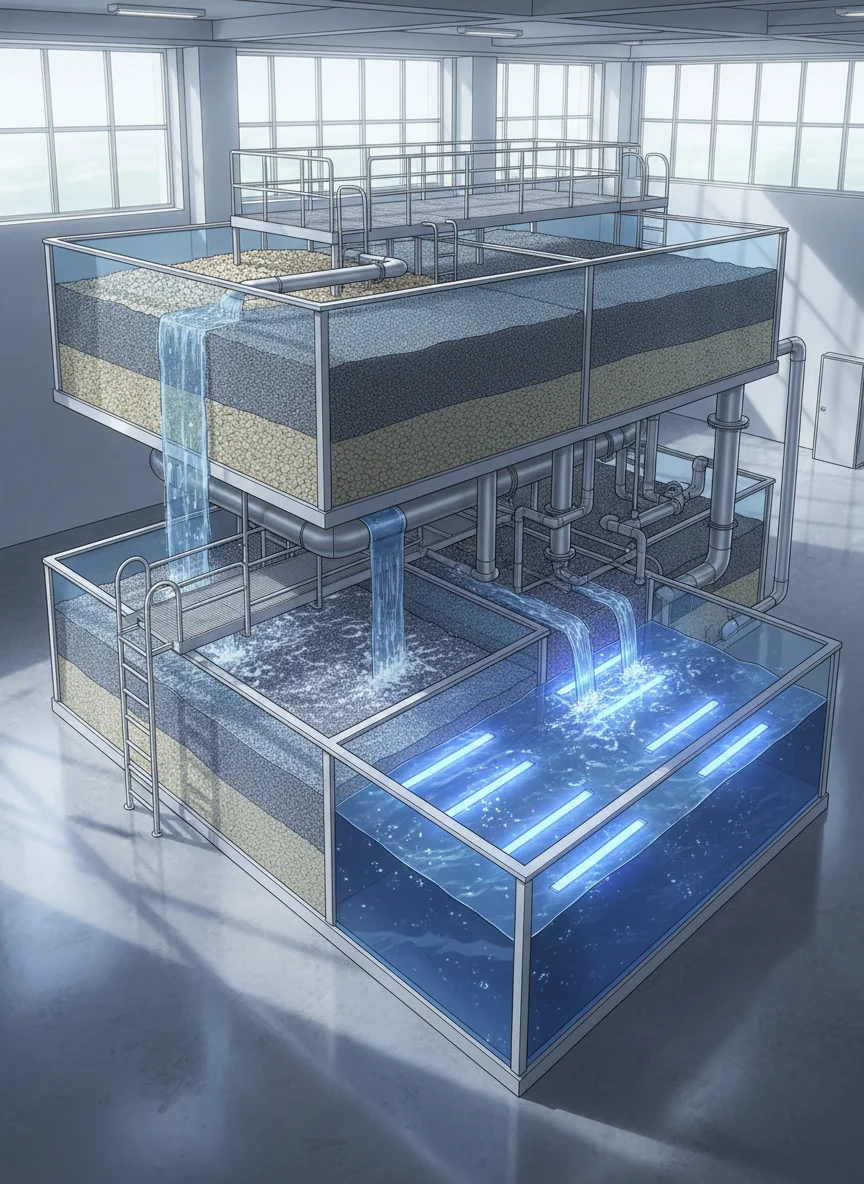
Steps 2-4: Sedimentation, Filtration & Disinfection
Sedimentation: Heavy floc settles to bottom of tanks Filtration: Water passes through sand, gravel, and carbon Removes remaining particles and some chemicals Disinfection: Chlorine or UV light kills harmful bacteria Final testing ensures water meets safety standards
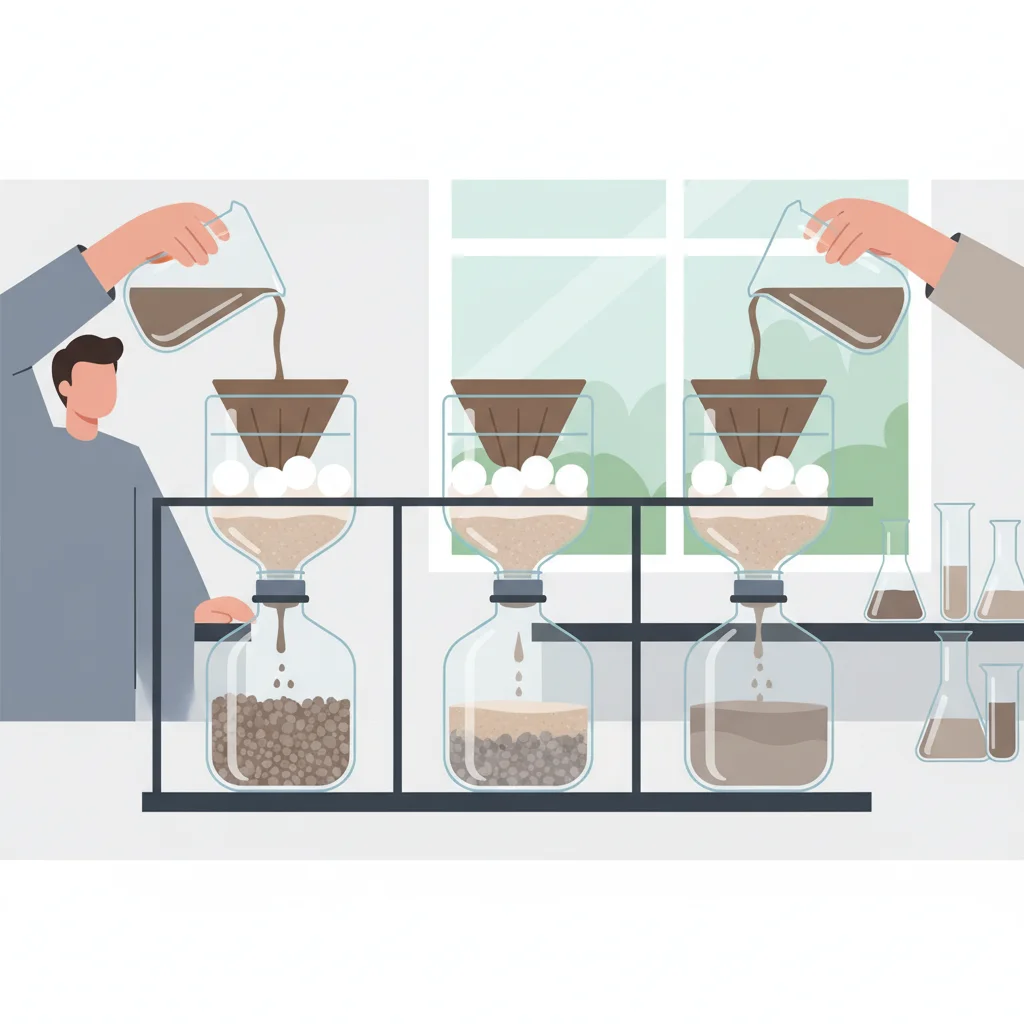
Build a Water Filter
Materials: plastic bottle, cotton, sand, gravel, coffee filter Layer materials from bottom to top: gravel, sand, cotton, coffee filter Pour dirty water (with soil) through your filter Observe how each layer cleans the water Compare results with classmates
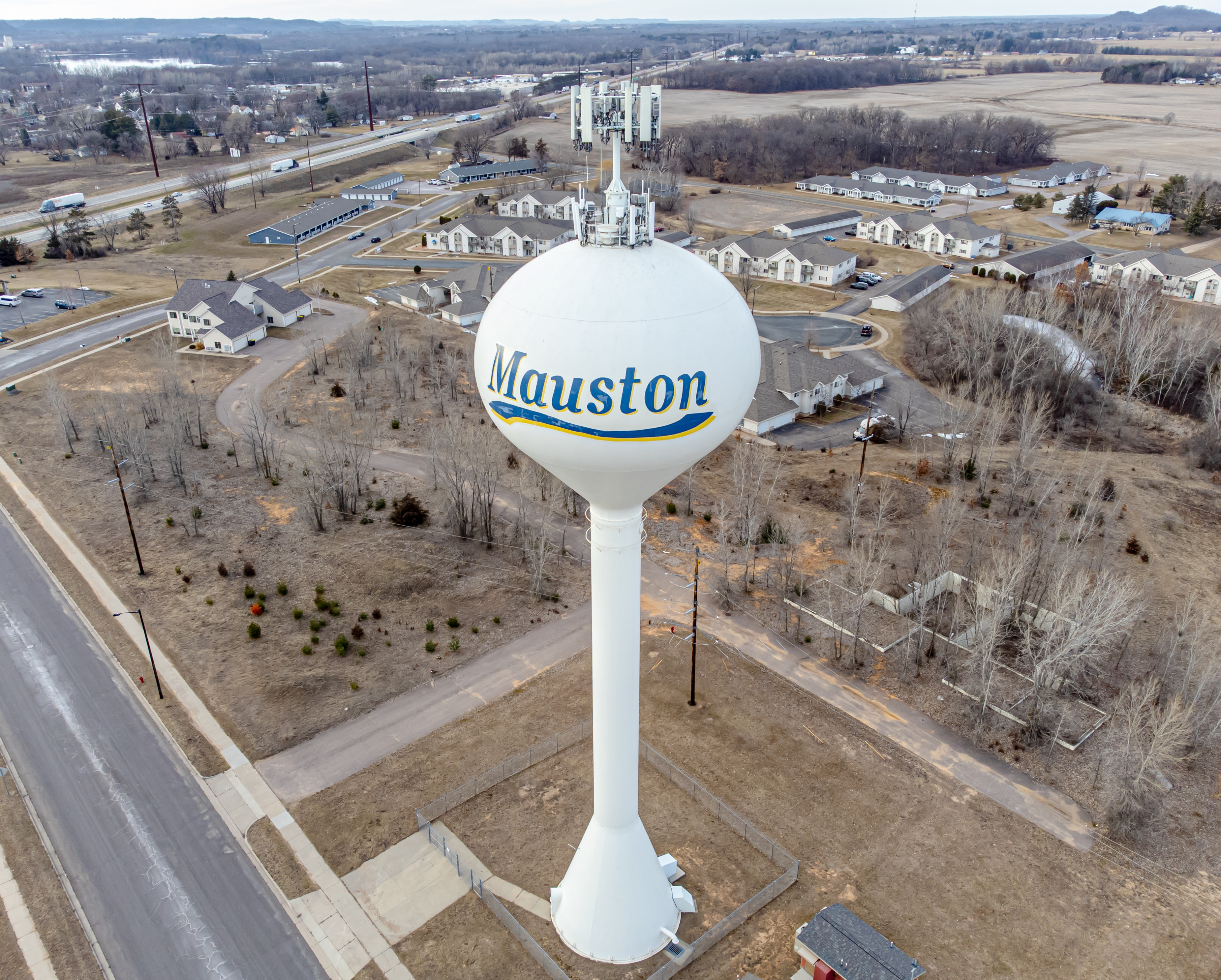
Water Distribution Systems
Treated water stored in large reservoirs Pumping stations maintain water pressure Underground pipes deliver water to homes Water towers provide gravity-fed pressure Regular testing throughout the distribution network Backflow prevention protects clean water supply
Our Responsibility
"Water is life's matter and matrix, mother and medium. There is no life without water." - Albert Szent-Györgyi Every action we take affects our water supply Prevention is better than treatment