You finish setting up desks, label the supply bins, and step back to look at the room. It looks polished. By the third week, though, the decor has faded into the background and students still need help understanding routines, entering new content, and staying invested in the work.
That is usually the difference between decoration and a theme with a job to do.
The strongest classroom theme ideas are not just visual. They organize how students move through the day, give units a consistent frame, and make academic tasks feel more coherent. A good theme can turn journal writing into field notes, class discussion into a studio critique, or problem-solving into a design challenge without creating extra management work.
That practical payoff matters because teachers do not need one more system to maintain. They need a room setup that supports instruction in September and still makes sense in March. I have found that the themes worth keeping are the ones that reduce decision fatigue. They make it easier to name routines, build centers, connect subjects, and refresh displays without starting from scratch.
This article focuses on that version of classroom themes. Each idea is treated as a teaching framework, not a decorating trend, with classroom moves, cross-curricular tie-ins, and realistic trade-offs. You will also see where AI tools can save time. For example, Kuraplan can help teachers build themed inquiry prompts, project paths, and lesson sequences inside an Explorers Toolkit classroom planning set instead of manually reinventing every activity.
The same principle shows up in language classrooms too. Teachers who are already applying gamification to ESL often see better follow-through because the theme shapes participation, feedback, and practice, not just the walls.
If you want a room that feels inviting and works harder instructionally, start with a theme that carries academic weight.
1. Themed Learning Environments
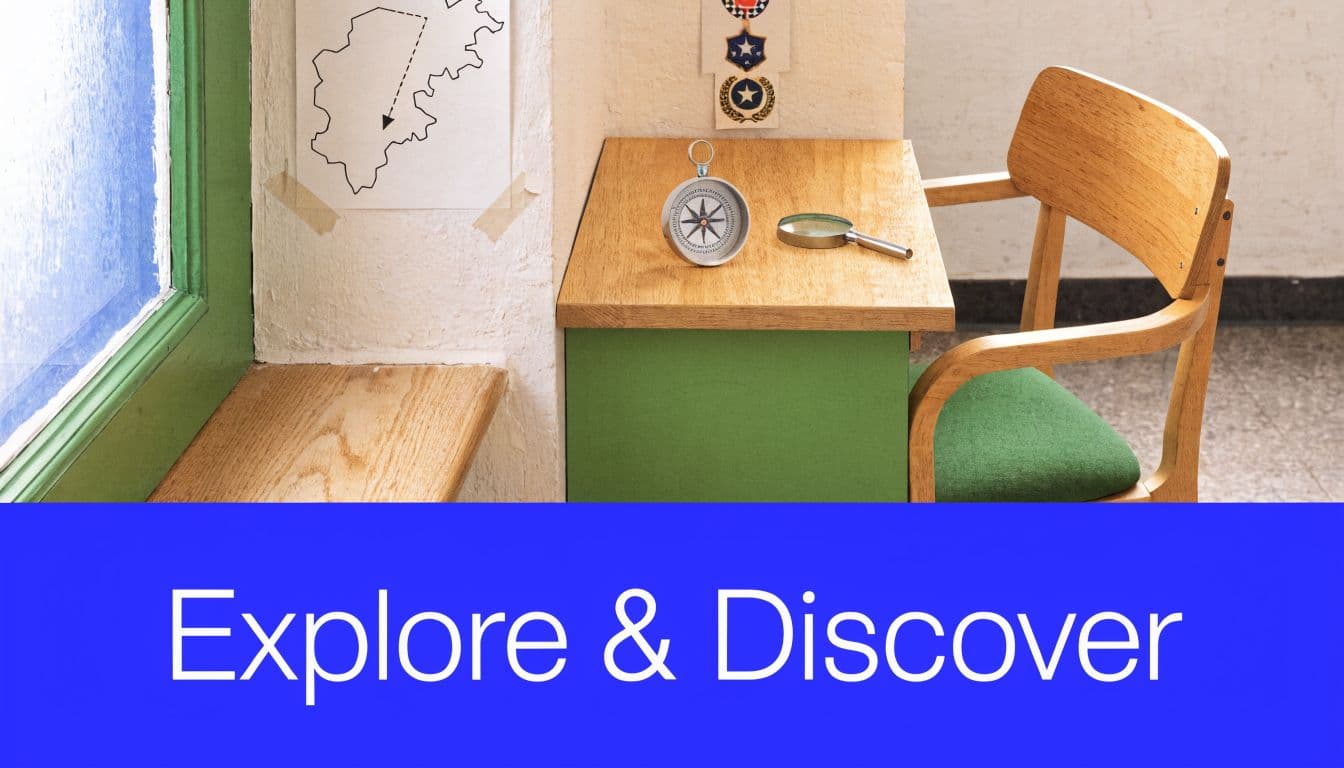
An adventure theme works because it gives everyday academic work a story line. Students aren’t just solving problems or reading a passage. They’re investigating, discovering, decoding, and documenting. That shift matters, especially for classes that need a little extra buy-in at the start of a unit.
In practice, this theme fits almost any grade. Primary students can go on habitat expeditions in science. Upper elementary students can tackle “treasure map” math review. Middle and high school students can use the language of field research, archaeology, or literary journeys to frame note-taking, inquiry, and projects.
What makes it work
The room doesn’t need to look like a theme park. A few consistent visual cues do more than a dozen unrelated decorations. Maps, compasses, trail markers, “expedition log” headings, and unit boards labeled as missions or discoveries usually carry the theme far enough.
What doesn’t work is overcommitting to props and underplanning instruction. If every activity gets a cute name but directions are still muddy, students lose patience fast.
Practical rule: Rename only the structures students already use. Journals become field notes. Warm-ups become entry tasks for the expedition. Exit tickets become checkpoint logs.
A good adventure room also pairs well with language learning. If you teach multilingual learners, the quest format can make repetition feel purposeful. This is one reason many teachers also borrow ideas from applying gamification to ESL when they build explorer-style routines.
How to keep prep light
Kuraplan is useful here because it can generate themed worksheets and visuals that still stay tied to your standards. Instead of designing every badge, tracker, and map-style handout from scratch, you can create one visual system and reuse it across subjects. For planning support, the Kuraplan Explorers Toolkit gives you a natural starting point for printables, prompts, and lesson framing.
Try these moves:
- Use one shared metaphor: Stick with explorer, detective, or field scientist. Mixing all three usually muddies the room.
- Build movement into the theme: Station rotations feel more natural when they’re checkpoints or research sites.
- Track progress visibly: Badges, passports, and investigation logs help students see completion without adding another grading layer.
2. STEM and STEAM Integration Classrooms
Some themes are mostly visual. A STEM or STEAM classroom changes how students expect to work. The room tells them that building, testing, revising, and explaining are normal parts of class.
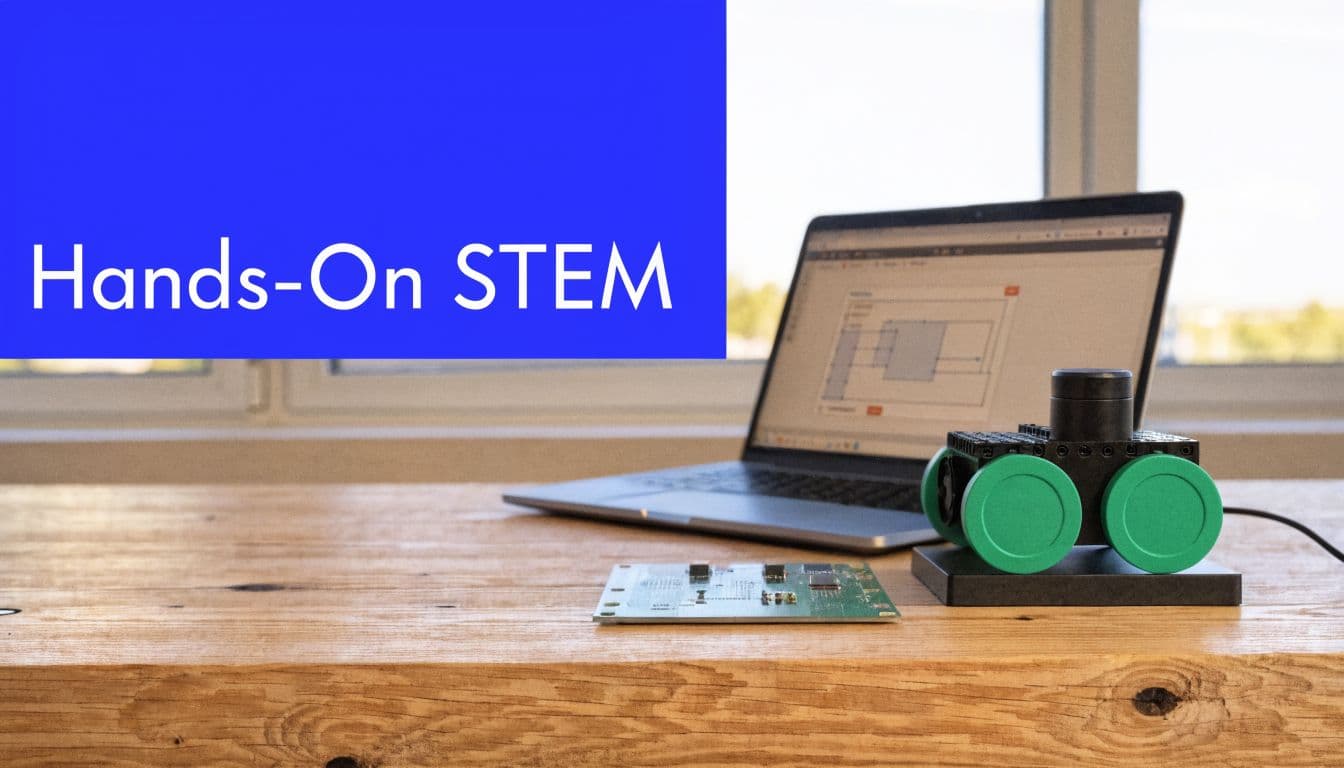
This theme fits naturally in science and math, but it’s just as useful in ELA, art, and social studies. Students can design prototypes after reading a novel, build historical solutions to civic problems, or create visual models that explain a system. The room becomes a workshop instead of a display case.
What to put on the walls
The best STEM-themed walls are functional. Put up the engineering design cycle, sentence stems for explaining evidence, model diagrams, tool routines, and sample reflection questions. Skip generic “future innovator” posters if they don’t support what students do.
That practical focus matters because many teachers want decor to connect more directly to outcomes. A 2024 EdWeek survey of 1,500 K-12 teachers found that 68% spend 10+ hours each year on decor, but only 22% report that themes enhance standards-based learning, as summarized in We Are Teachers classroom theme guidance.
Where AI helps
Kuraplan is especially helpful with STEM and STEAM because these projects often break down at the planning stage. Teachers need objective-aligned tasks, student directions, rubrics, and differentiated supports. That’s a lot to build manually.
Use it to generate:
- Project planners: Student templates for problem, constraints, materials, testing, and revision.
- Clear rubrics: Criteria that assess both the final product and the reasoning behind it.
- Visual supports: Diagrams, process posters, and kid-friendly illustrations for complex concepts.
Students also benefit from seeing iteration normalized. A “version one, version two, version three” board often teaches more than a perfect final display.
A short clip can help students picture that culture before the first challenge begins.
3. Culturally Responsive and Inclusive Classrooms
A culturally responsive theme isn’t a one-month display. It’s a year-long decision about whose stories, images, languages, and ways of knowing show up in the room.
That starts with materials. Students should see authors, scientists, historical figures, mathematicians, artists, and families that reflect real diversity. It also shows up in examples, word problems, mentor texts, classroom libraries, and visual references. If the theme lives only on one bulletin board, students notice.
What works better than “international decor”
Flags and maps can be part of the room, but they aren’t enough on their own. A stronger approach is to build representation into daily instruction. Feature bilingual labels. Use mentor texts from multiple traditions. Highlight current and historical contributors from varied backgrounds when you introduce a unit, not after it.
This theme also works best when students help build it. Family interviews, identity artifacts, home-language greetings, community maps, and student-curated spotlights all create more authenticity than teacher-selected posters alone.
Students don’t need a room that performs inclusion. They need a room that practices it every week.
Kuraplan can help you create visuals and worksheets that reflect varied family structures, names, and contexts. That matters more than people think. Students pick up quickly on whether examples always center the same kinds of lives. If you use AI for this theme, the key is intentional prompting. Ask for home-language support, culturally relevant contexts, and broad representation, then review with the same care you’d give any instructional material.
A useful litmus test is simple. Remove the posters and look at your assignments. If the room still feels inclusive, the theme is doing its job.
4. Biophilic and Nature-Connected Classrooms
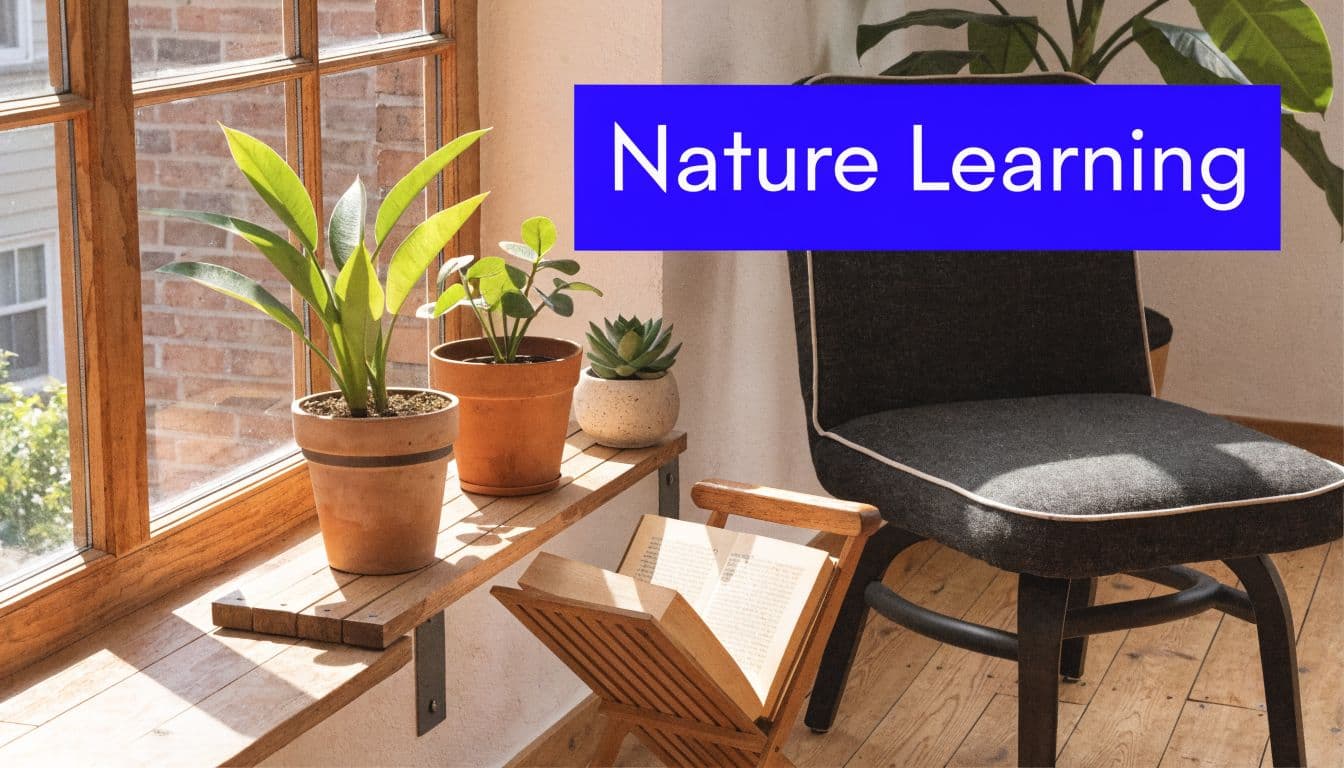
Nature themes often get reduced to leaves, earthy colors, and a few fake vines. The better version connects students to observation, stewardship, and sensory balance.
That can be as simple as keeping a plant-care routine, using natural textures, and setting up seasonal observation notebooks. It can also grow into outdoor sketching, schoolyard ecosystem studies, weather tracking, descriptive writing, or environmental problem solving. The point isn’t to mimic a forest. It’s to help students pay attention.
Keep the room calm and usable
Nature-connected rooms tend to work best when they’re restrained. A windowsill of plants, a basket of field guides, wood tones, and a simple display of student observations usually feel better than a wall covered in every leaf printable you could find. Students need visual rest as much as visual interest.
This is also one of the easiest classroom theme ideas to make cross-curricular. In ELA, students can keep nature journals and write precise sensory descriptions. In math, they can graph growth, weather, or daylight observations. In science, they can document patterns and systems. In art, they can sketch from direct observation instead of only from imagination.
Low-lift ways to use it
Kuraplan can save time here by generating observation sheets, identification guides, journal prompts, and simple rubrics for outdoor or plant-based tasks. It’s especially handy if you want materials for different grades or reading levels without remaking the same worksheet five times.
A few solid options:
- Observation journals: Best for science notebooks, quick writes, and SEL check-ins.
- Class jobs with purpose: Plant care, recycling monitors, weather trackers, and materials stewards fit the theme naturally.
- Seasonal anchor charts: Phenology, life cycles, habitats, and environmental vocabulary all belong here.
Nature themes are also forgiving. If your budget is tight, one live plant, one observation station, and better natural light can do more than a cart full of matching decor.
5. Choice-Based and Student-Centered Classrooms
If you want a theme that changes student behavior more than wall color, this is the one. A choice-based classroom signals that students have real agency, but within structures you control.
That’s an important distinction. Choice doesn’t mean unlimited options. It means students can select from well-designed pathways that all point toward the same learning target. A reading board with three response formats, a project menu with shared criteria, or math practice with leveled task cards all fit this theme.
What usually goes wrong
Teachers sometimes make a student-centered room too open too fast. Then students stall, ask a hundred clarifying questions, or choose the easiest path every time. The fix isn’t removing choice. It’s narrowing it and making expectations visible.
The room should tell students how to work independently. Post model timelines, reflection prompts, “when you’re stuck” steps, and examples of acceptable products. That kind of visual structure matters more than decorative consistency.
Good choices are planned choices
Kuraplan is useful here because it can generate multiple activity versions aligned to the same objective. That saves you from building every menu and tiered assignment manually. It also makes it easier to support students who need different entry points without making the class feel split into tracks.
Use this theme well by building around a few repeatable systems:
- Choice boards: Keep the format consistent so students learn the routine, not just the assignment.
- Must-do and can-do tasks: Students need a clear baseline before they branch out.
- Reflection forms: Ask what they chose, why they chose it, and what they’d adjust next time.
A student-centered room shouldn’t feel loose. It should feel predictable, with room for ownership.
6. Global Citizenship and World Perspectives Classrooms
A student points to a map during a science lesson and asks why drought hits one region harder than another. That question is the heart of this theme. A global citizenship classroom uses the room and the curriculum to help students compare systems, perspectives, and lived experiences across places.
That shift matters because the theme is bigger than decor. A world map, multilingual signs, and artifact displays can support it, but the academic value comes from the questions students practice asking. Who benefits? Who is affected? What changes across regions, and what stays the same?
In elementary grades, this can grow out of familiar content such as family traditions, foods, weather patterns, folktales, and school routines. In secondary classrooms, it fits naturally with migration, climate, public health, economics, media literacy, and scientific collaboration. The room should signal that multiple perspectives belong in everyday learning, not only during a special unit.
Build the theme around inquiry
The strongest version of this classroom uses recurring structures teachers can manage without adding a huge planning load. One bulletin board can track a monthly global question. One map can become a reference tool for novels, current events, and data analysis. One discussion routine can carry across subjects.
A water unit, for example, can include local usage, regional shortages, infrastructure, and conservation choices in different countries. A reading lesson can compare whose voice is centered in a text and whose is missing. A math class can examine population, trade, rainfall, or energy data from several regions and ask students to interpret patterns with context.
If you want one decor element that earns its wall space, a world map still does the job well. This guide for UK renters on map decals is useful if you need a flexible option without making permanent changes.
Make the room support academic habits
This theme works best when students can use the space to do real comparison work. Label a map wall with student questions, not only place names. Add sentence stems for perspective-taking and evidence-based discussion. Keep a shelf or display bin for texts, articles, and visuals from different regions so students see global context as part of normal classwork.
Layout matters too. If students are doing map analysis, partner discussion, and short research tasks, they need surfaces and movement paths that support those routines. A few smart zone changes often help more than extra posters. If you are reworking traffic flow or small-group areas, this classroom layout ideas guide gives practical ways to set up spaces for discussion, research, and collaborative work.
Use AI to widen the examples, not flatten them
Kuraplan is useful here because it can generate parallel lesson materials from different geographic or cultural contexts while keeping the same standard in view. That saves time, especially when the textbook examples are narrow or repetitive.
Ask it for comparative case studies, region-specific discussion prompts, short reading sets at different levels, or project ideas that connect local issues to global ones. The trade-off is accuracy and nuance. AI can help you build options quickly, but teachers still need to check representation, language, and context before putting materials in front of students.
A global citizenship classroom is working when students stop treating other places as trivia. They start using comparison, empathy, and evidence as regular academic habits.
7. Flexible, Multi-Purpose Learning Spaces
Some themes are mostly conceptual. This one changes the physical workflow of the room. A flexible learning space treats layout as part of instruction, not a fixed backdrop.
That doesn’t require expensive furniture. Plenty of effective rooms use existing desks, a small carpet area, standing corners, whiteboard stations, and a few clearly defined zones. The key is that students know what each space is for and how to move between them without chaos.
Zones need names and routines
This theme works best when every area has a job. You might have a direct instruction zone, a collaboration table, an independent practice corner, a conferencing spot, and a materials station. Students learn quickly if those zones are tied to consistent expectations.
What doesn’t work is rearranging constantly without teaching transitions. A “flexible” room can feel disorganized if the class hasn’t practiced movement, volume, cleanup, and reset routines. In that case, the room becomes the problem instead of the support.
Keep design tied to instruction
If you want ideas for zone planning, traffic flow, and layout logic, Kuraplan’s classroom layout ideas guide is a solid place to start. It’s especially useful when you’re trying to fit multiple teaching modes into one room without overcomplicating things.
The broader digital classroom shift also supports this kind of setup. The global digital classroom market is projected to reach USD 177.71 billion in 2026, with software solutions holding 42.31% market share in 2025, and the hybrid model segment projected to grow at a 17.89% CAGR through 2031, according to Mordor Intelligence digital classroom market analysis. For teachers, the practical takeaway is simple. Flexible spaces work better when your materials, routines, and displays move smoothly between paper and digital use.
A few strong tools for this theme are station cards, visual timers, rotation boards, and posted norms for each zone. Kuraplan can generate those supports fast, which matters because setup time is usually the biggest barrier to doing flexible learning well.
8. Historical Timeline and Era-Immersion Classrooms
A historical theme can be unforgettable when the room feels like a lived-in archive instead of a costume set. Students respond well when time and place become visible. Chronology stops being abstract once they can trace it across the room.
This works especially well in social studies, but it can also enrich ELA, art, science, and music. A Renaissance room can include perspective drawing, scientific discovery, and literary form. An Ancient Egypt room can include geometry, trade, belief systems, and visual symbolism. The best version is immersive without becoming gimmicky.
Focus on evidence, not novelty
A timeline wall is usually the anchor. Add primary-source excerpts, maps, artifact images, vocabulary, and cause-and-effect links. When students can move from one point in time to the next and explain what changed, the room is doing instructional work.
What tends to fail is leaning too hard on props. A few role cards, replica documents, or simulation materials can help. Too many costume-style touches can cheapen the content, especially with older students.
Use the environment to support historical thinking. Sourcing, sequencing, perspective, and evidence should be easier in the room than they are in a blank space.
Kuraplan can generate era-specific organizers, source analysis sheets, role-play cards, and illustrated timelines that match your grade level. That’s particularly useful when you want materials that feel coherent across a whole unit rather than assembled from six different websites.
9. Calm, Mindfulness, and Well-Being Centered Classrooms
Some years call for a room that lowers the temperature the moment students walk in. A calm theme can do that, but only if it’s more than beige bins and scripted affirmations.
The strongest version of this theme is built around routines. Predictable entry tasks, visual schedules, emotion check-ins, quiet reset spaces, and clear sensory expectations matter more than any poster. Students feel calm when the room is readable.
Keep it calm, not empty
A soothing classroom still needs intellectual energy. The room shouldn’t become so muted that it feels sterile or disconnected from learning. Keep anchor charts purposeful, choose a small color palette, and leave enough open wall space that students can focus on what matters.
This is one area where restraint helps. Existing coverage often misses budget-conscious and low-maintenance options, even though many teachers need practical choices for shared spaces or frequent turnover. That gap is part of why simpler, flexible approaches matter, as noted in cheap and easy classroom decoration hacks.
Build emotional supports into academics
Kuraplan is a good fit here because it can create SEL-aligned materials without making them feel disconnected from content instruction. You can generate reflection prompts, self-regulation visuals, discussion stems, and emotion vocabulary cards that match your students’ age and subject area. If you want ideas to blend well-being supports into instruction, the Kuraplan SEL activities guide gives you practical options.
You can also borrow from broader actionable strategies for SEL leaders if you’re building routines across a grade level or school.
A calm room works best when students know exactly where to look, what to do next, and how to reset without making a scene.
10. Author and Artist Study Classrooms
This is one of the most content-rich classroom theme ideas because it turns the room into both studio and seminar space. Students aren’t just studying creators. They’re working like creators.
In elementary classrooms, that might look like an Eric Carle study paired with texture experiments and pattern writing. In middle school, it can become a genre study built around a mentor author. In high school, it might become a craft-based workshop where students analyze moves and then try them in their own writing or art.
Let student work share the spotlight
The room should include mentor examples, but it shouldn’t stop there. Put process on display. Drafts, revisions, technique studies, color experiments, sentence imitations, sketchbook pages, and peer feedback all belong in this kind of environment. Students need to see creation as iterative, not polished on the first try.
This theme also pairs especially well with standards because craft is teachable. Tone, line, symbolism, structure, imagery, composition, and revision all translate into visible, assessable targets.
Make production visible
Kuraplan can help generate mentor-text organizers, creative process templates, revision guides, and rubrics focused on craft growth. That’s where it saves the most time. Teachers often have the vision for this theme, but not the hours to build all the supports that make workshop teaching run smoothly.
The back-to-school market also shows why ready-made but adaptable materials matter. The global back-to-school market was valued at USD 172.3 billion in 2024, with U.S. K-12 spending reaching USD 38.8 billion in 2024, according to StackAdapt back-to-school market analysis. Teachers are already buying and building for their rooms. A creative-production theme works best when those materials serve actual student making, not just the look of the room.
Comparison of 10 Classroom Themes
| Theme | Implementation Complexity 🔄 | Resource Requirements ⚡ | Expected Outcomes 📊 | Ideal Use Cases 💡 | Key Advantages ⭐ |
|---|---|---|---|---|---|
| Themed Learning Environments (Adventure/Explorer) | High, extensive prep and room reorganization | Medium–High, decor, consumables, badges | Increased engagement, cross-curricular connections, collaborative problem-solving | Elementary/middle inquiry units, PBL quests, literacy adventures | Highly engaging; motivates diverse learners, ⭐⭐⭐ |
| STEM/STEAM Integration Classrooms | High, teacher PD and curricular integration needed | High, makerspace tools, tech, consumables | Strong 21st‑century skills, hands‑on learning, iterative design experience | Robotics, engineering challenges, integrated science–art projects | Prepares for careers; fosters innovation, ⭐⭐⭐⭐ |
| Culturally Responsive and Inclusive Classrooms | Medium–High, ongoing PD and authentic curriculum work | Medium, diverse texts, multilingual resources | Greater belonging, improved outcomes for marginalized students, cultural competence | Diverse classrooms, ELL support, culturally centered units | Promotes equity and engagement, ⭐⭐⭐⭐ |
| Biophilic and Nature‑Connected Classrooms | Medium, plant care and space adaptations | Low–Medium, plants, natural materials, outdoor gear | Improved focus, reduced stress, environmental stewardship, better well‑being | Environmental science, garden‑based learning, outdoor lessons | Enhances well‑being and concentration, ⭐⭐⭐ |
| Choice‑Based and Student‑Centered Classrooms | High, complex planning and systems for choice | Medium, varied materials, tracking tools | Increased agency, intrinsic motivation, personalized mastery pathways | Differentiated instruction, student projects, self‑paced units | Builds autonomy and ownership, ⭐⭐⭐⭐ |
| Global Citizenship and World Perspectives Classrooms | Medium, coordination and curriculum framing | Medium, tech for exchanges, global resources | Greater cultural competence, global critical thinking, real‑world relevance | Social studies, virtual exchanges, sustainability projects | Develops global awareness and empathy, ⭐⭐⭐ |
| Flexible, Multi‑Purpose Learning Spaces | High, design, furniture, and staff training required | High, modular furniture, adaptable tech | Versatile instruction, increased collaboration, supports multiple modalities | Schools needing adaptable spaces, PBL, mixed‑age settings | Extremely versatile; supports many pedagogies, ⭐⭐⭐⭐ |
| Historical Timeline and Era‑Immersion Classrooms | High, curation of artifacts and era‑accurate detail | Medium–High, props, primary sources, decor | Deep contextual understanding, memorable historical perspective | Social studies units, living history simulations, era studies | Makes history concrete and immersive, ⭐⭐⭐ |
| Calm, Mindfulness, and Well‑Being Centered Classrooms | Medium, shifts in routines and teacher practice | Low–Medium, sensory tools, calming materials | Reduced anxiety, improved self‑regulation and academic focus | Trauma‑informed settings, SEL programs, high‑stress contexts | Supports emotional regulation and SEL, ⭐⭐⭐ |
| Author/Artist Study and Creative Production Classrooms | Medium, collection of mentor texts and workshop structures | Medium, art/writing materials, display space | Improved craft, authentic creative output, revision habits | ELA workshops, art studios, publication projects | Models craft; fosters authentic creative work, ⭐⭐⭐ |
Making Your Theme Work for You
Choosing a theme is fun. Living with it in October, January, and testing season is the true test.
The best classroom themes don’t ask you to maintain a performance. They support routines you already use and make learning feel more coherent. If a theme looks great on meet-the-teacher night but creates extra prep every week, it’s probably not the right fit. If it helps students understand expectations, connect ideas across subjects, and feel like the room has a clear identity, it’s doing real work.
That’s why I’d choose function over novelty every time. A strong adventure theme gives students a reason to persist. A STEM room normalizes revision. A calm room supports regulation. A culturally responsive room builds belonging into daily instruction. An author study room makes creative process visible. The decor matters, but only because it reinforces what happens academically.
There’s also no rule that says you have to theme every inch of the room. In fact, less is often better. A few repeated visuals, a clear color system, and one or two anchor structures usually do more than covering every surface. Teachers already spend enough time setting up classrooms, and many are still trying to balance cost, maintenance, and standards alignment. One of the smartest moves is picking a theme that can stretch across lessons, labels, student work, and routines without demanding constant updates.
If you’re deciding between several classroom theme ideas, ask a few practical questions:
- Will this theme still make sense in February? Seasonal excitement fades fast. Instructional themes last longer.
- Can I use it across subjects or units? The more flexible the theme, the less work it creates.
- Does it help students do something? Better transitions, clearer expectations, richer discussion, stronger reflection, or deeper engagement are all good answers.
- Can I maintain it cheaply and quickly? If replacing pieces feels expensive or time-consuming, simplify now.
- Does it fit my students, not just my Pinterest board? A theme should meet the class in front of you.
A lot of teachers also want themes to connect more directly to curriculum, and that’s where planning tools make a difference. Kuraplan is especially useful when you want the room and the learning to match. You can generate themed worksheets, standards-aligned lesson plans, classroom visuals, rubrics, and printable materials without building every piece by hand. That matters because setup isn’t usually the hardest part. Keeping the theme academically meaningful all year is.
I’d also start smaller than you think you need. Pick one strong theme signal. Maybe it’s an explorer board, a calm corner system, a studio wall for creative process, or a STEM design station. Then add only what students use. Once a theme proves helpful, it’s easy to expand. If it doesn’t, you haven’t sunk hours into redoing the room.
Good classroom themes save decisions. Great classroom themes save energy and improve learning. That’s the target.
If you want a faster way to turn classroom theme ideas into actual lessons, visuals, and printables, try Kuraplan. It helps K-12 teachers create standards-aligned lesson plans, themed worksheets, rubrics, and custom educational visuals in minutes, so your classroom theme supports learning instead of creating more prep.