Ancient Egypt and the Nile
Year 6 History Discovering the Land of the Pharaohs

Geography of Ancient Egypt
Located in northeast Africa Surrounded by deserts on both sides The Nile River flows from south to north Delta region where river meets Mediterranean Sea

The Gift of the Nile
Annual floods brought rich soil Floods happened every summer Created fertile black soil called 'kemet' Without the Nile, Egypt would be all desert
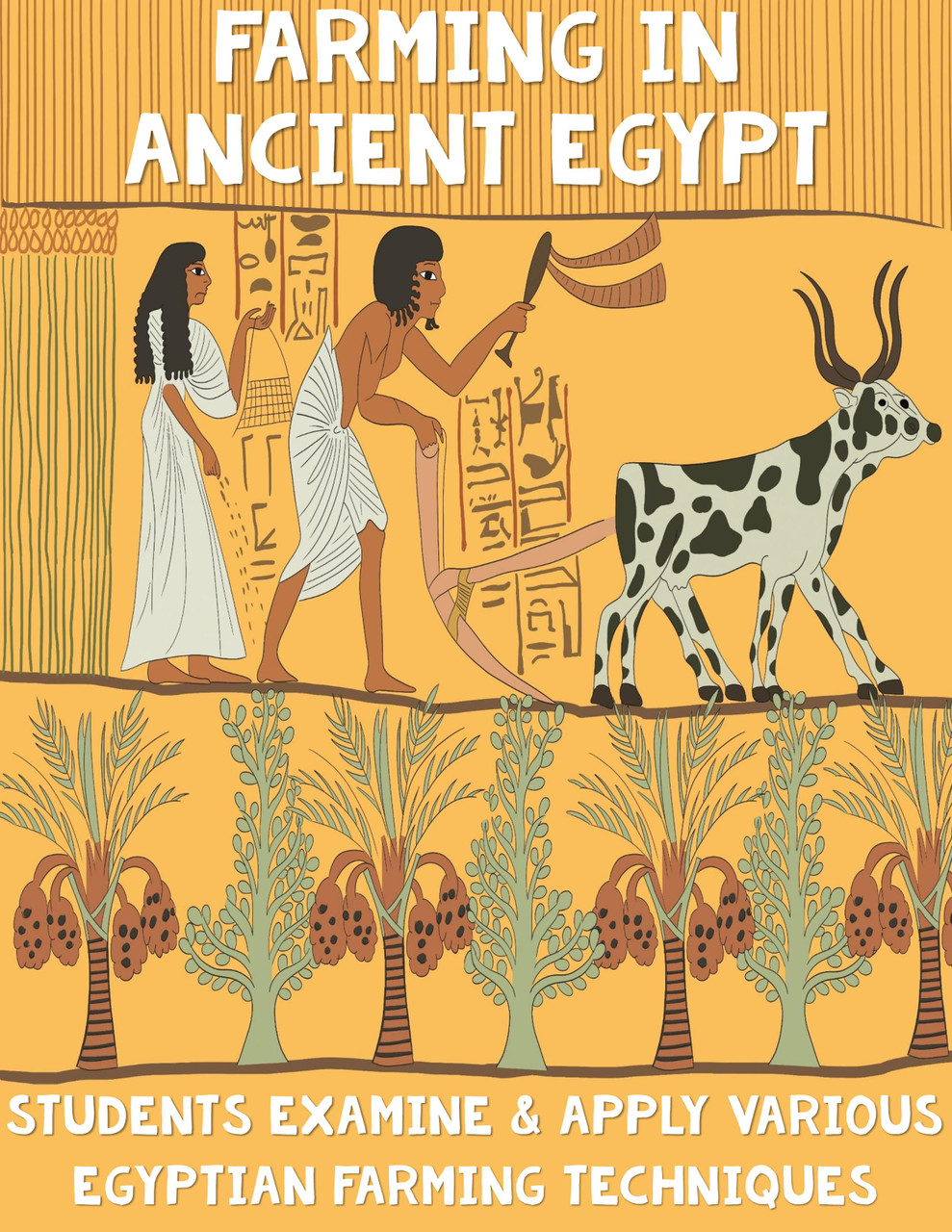
Farming and Agriculture
Grew wheat, barley, and flax Used simple tools like wooden ploughs Built irrigation canals and channels Stored grain in mud-brick granaries
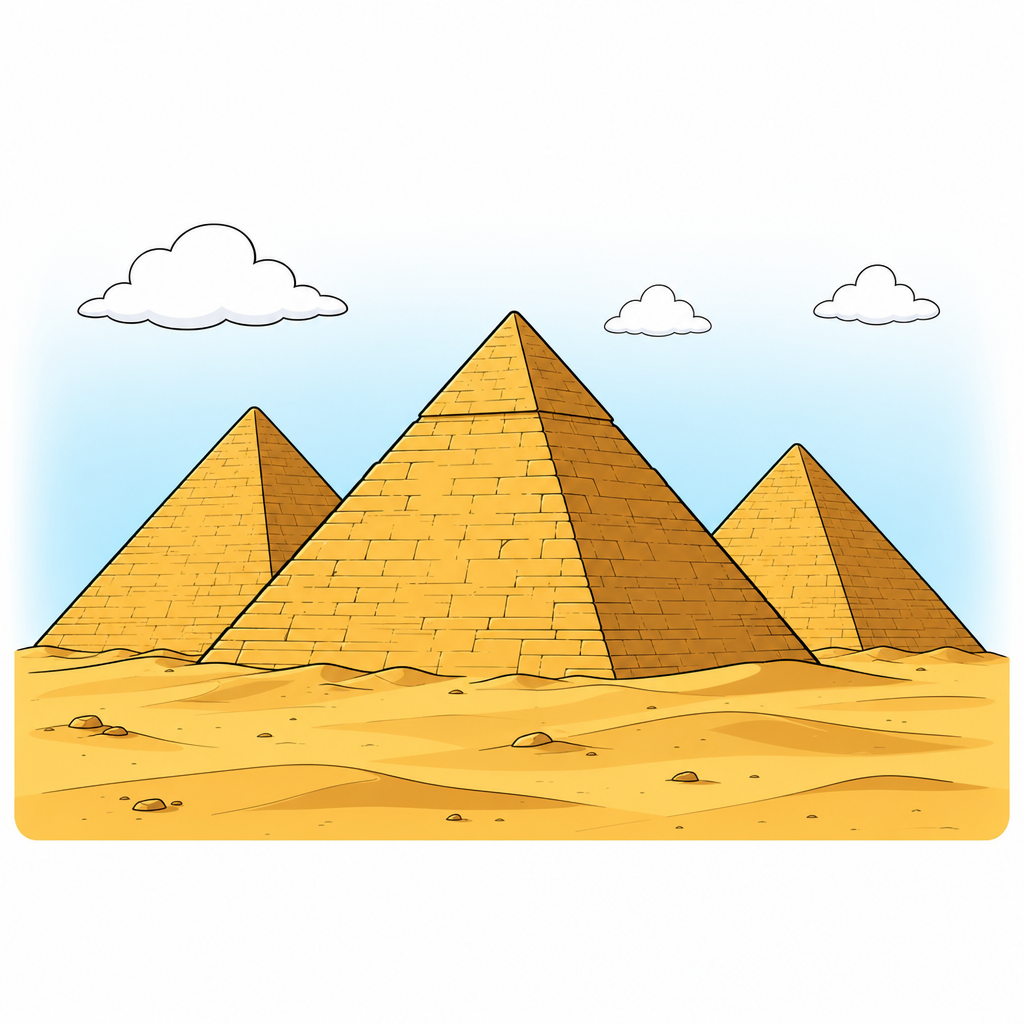
The Great Pyramids

Pharaohs - Egypt's God-Kings
Rulers believed to be living gods Wore the double crown of Upper and Lower Egypt Famous pharaohs include Tutankhamun and Cleopatra Built monuments to show their power

Hieroglyphs - Picture Writing
Used pictures and symbols to write Over 700 different hieroglyphs Written on papyrus and stone Only priests and scribes could read and write

The Rosetta Stone
Found in 1799 by French soldiers Same message written in three scripts Greek, hieroglyphs, and demotic Helped scholars decode hieroglyphs
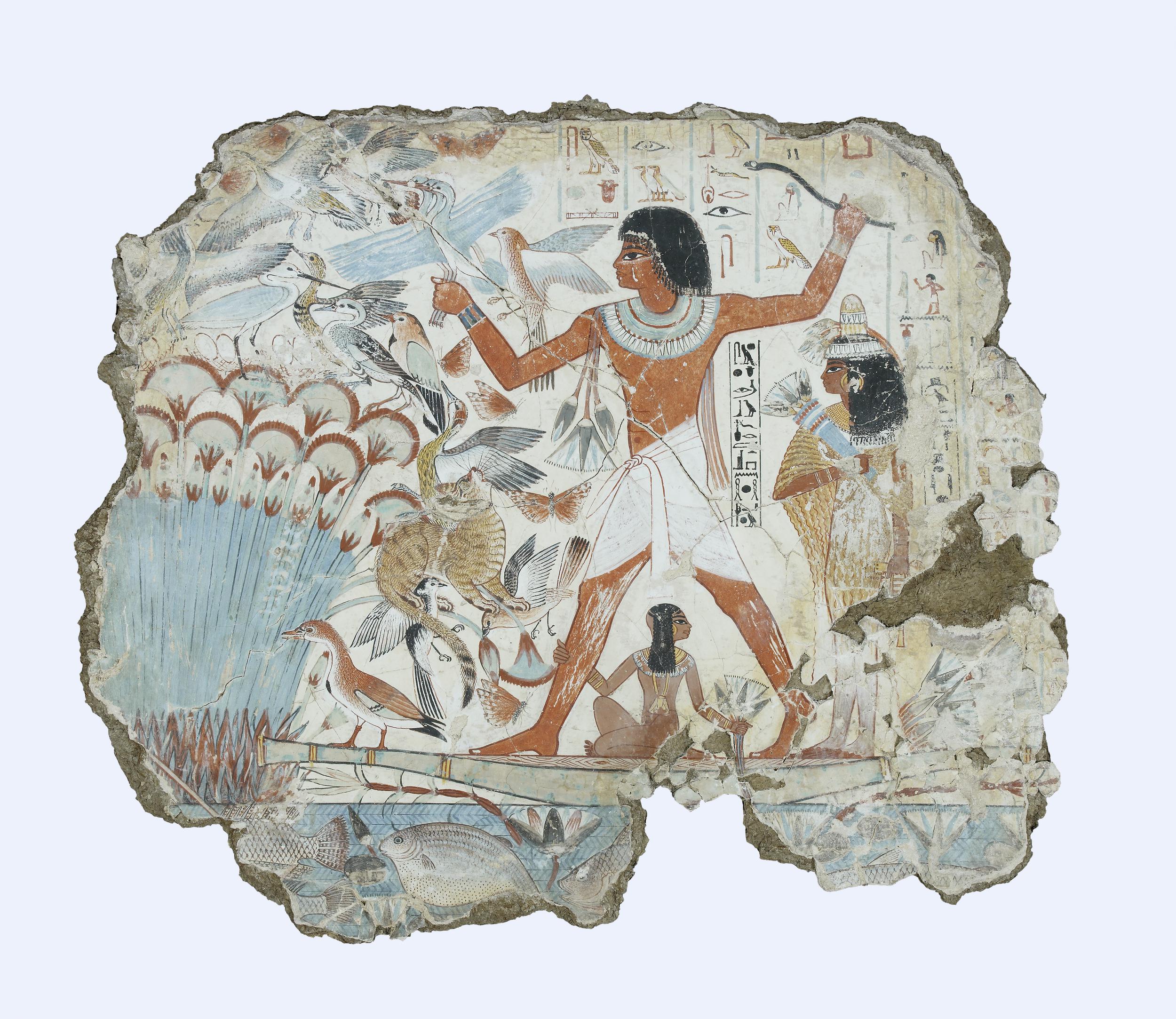
Source Analysis Activity
Look at the ancient Egyptian wall painting What can you see in the image? What does this tell us about daily life? How reliable is this source?
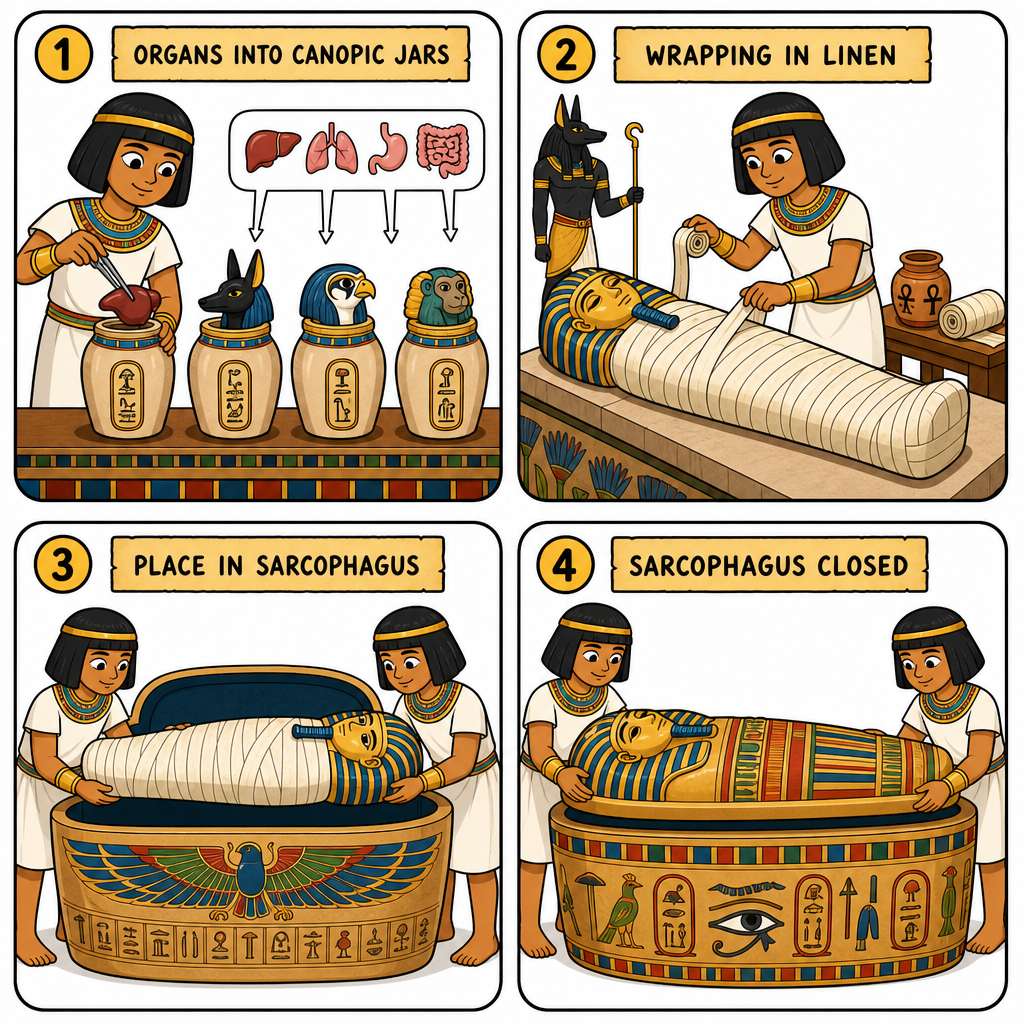
Mummification Process
Preserved bodies for the afterlife Removed organs and dried the body Wrapped in linen bandages Process took 70 days
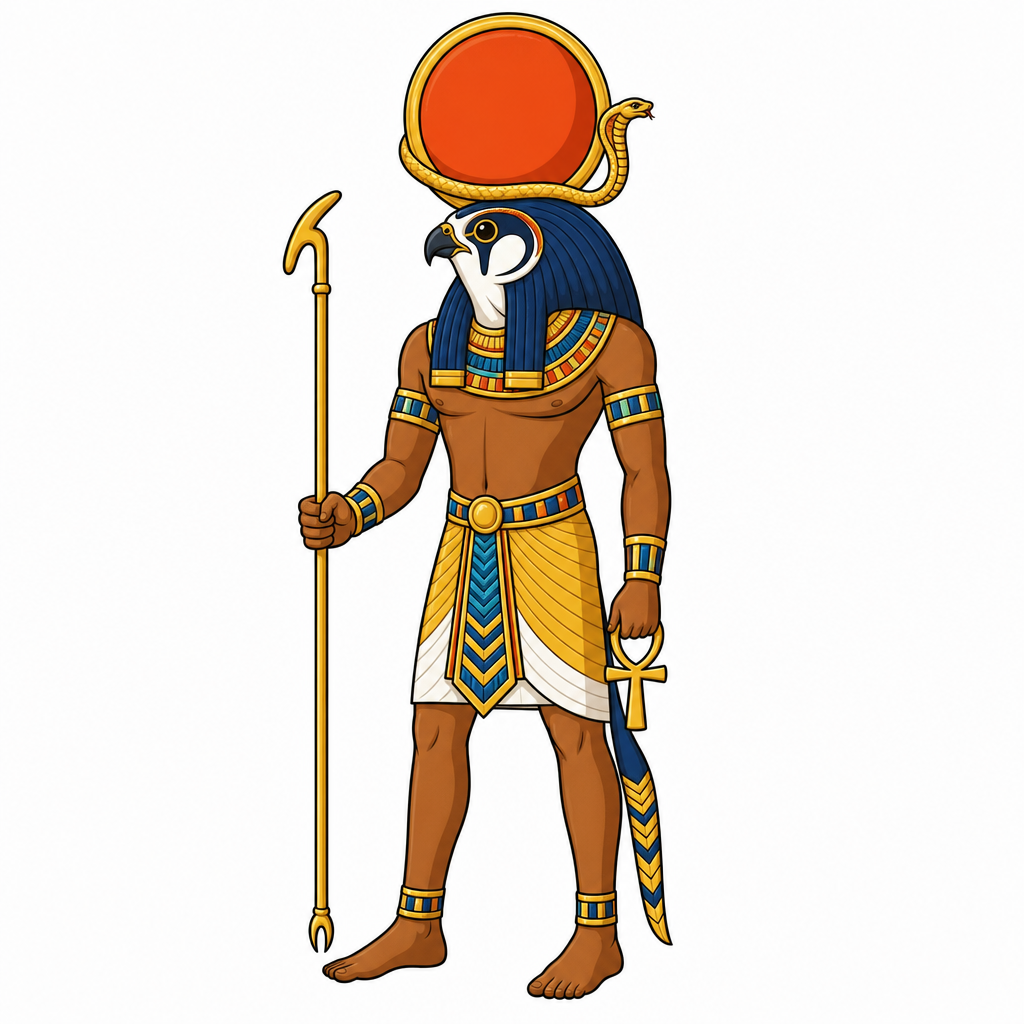
Egyptian Gods and Goddesses
{"left":"Ra - Sun god with falcon head\nAnubis - God of mummification with jackal head\nIsis - Goddess of magic and motherhood","right":"Horus - Sky god with falcon head\nThoth - God of wisdom with ibis head\nBastet - Cat goddess of protection"}
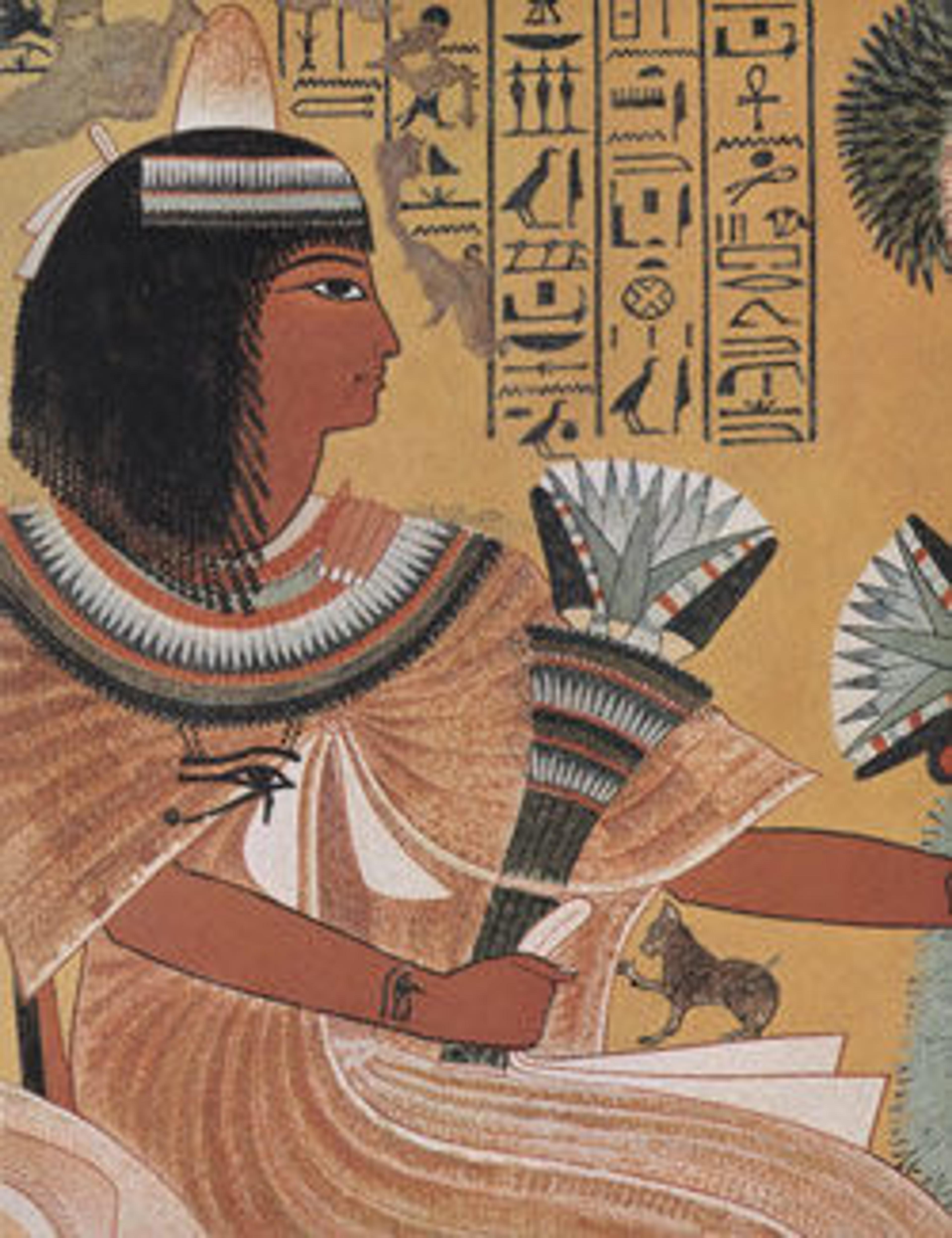
Daily Life in Ancient Egypt
Most people were farmers Children played with toys and games Women could own property and businesses People wore linen clothes and makeup
3 more slides available after you open the deck.
Download all 15 slides