
Comparing Numbers Greater, Less, Equal
Year 4 Mathematics Understanding >, <, and = symbols
What does the equals sign mean?
Think about this number sentence: 4 + 3 = 7 What do you think the equals sign tells us?
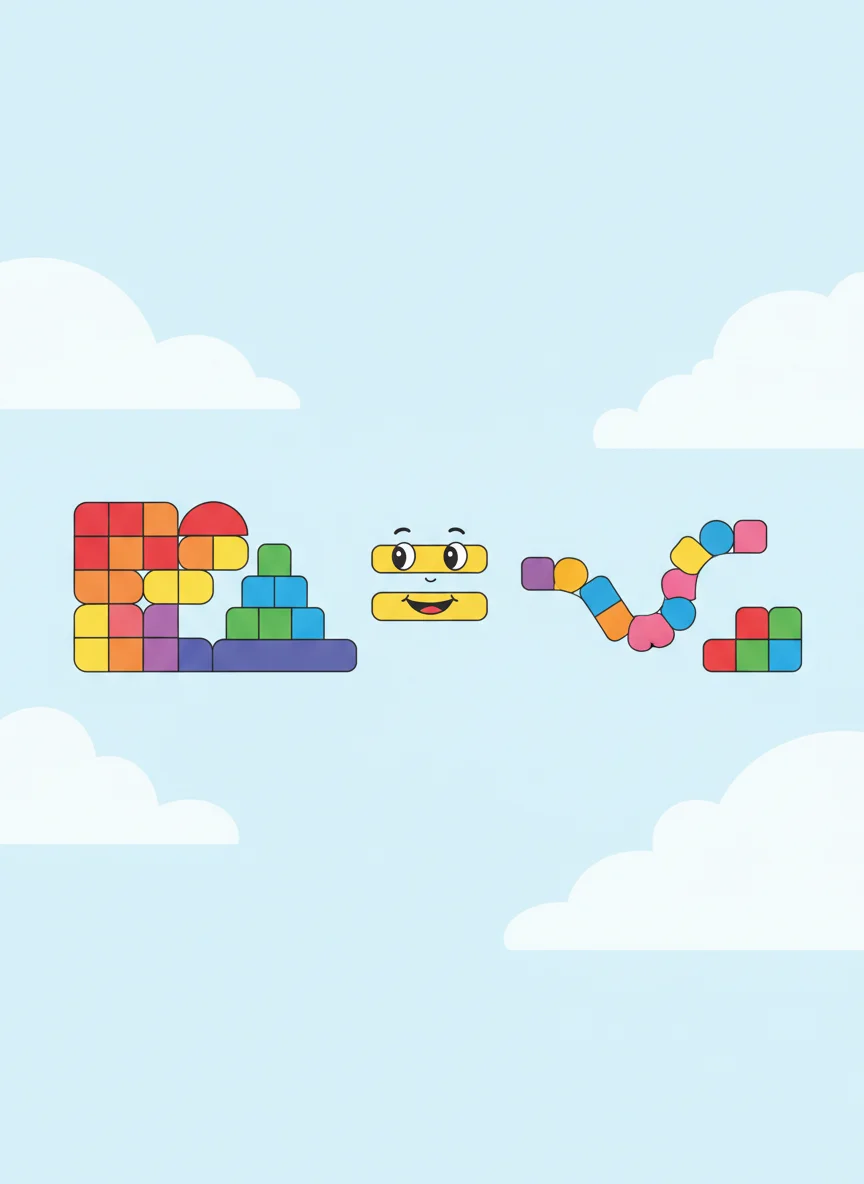
The Equals Sign Means 'The Same As'
The equals sign (=) shows that both sides are equivalent It's like a balance scale - both sides must be equal Not just 'the answer' but 'the same amount' Example: 15 + 10 = 20 + 5 (both sides equal 25)
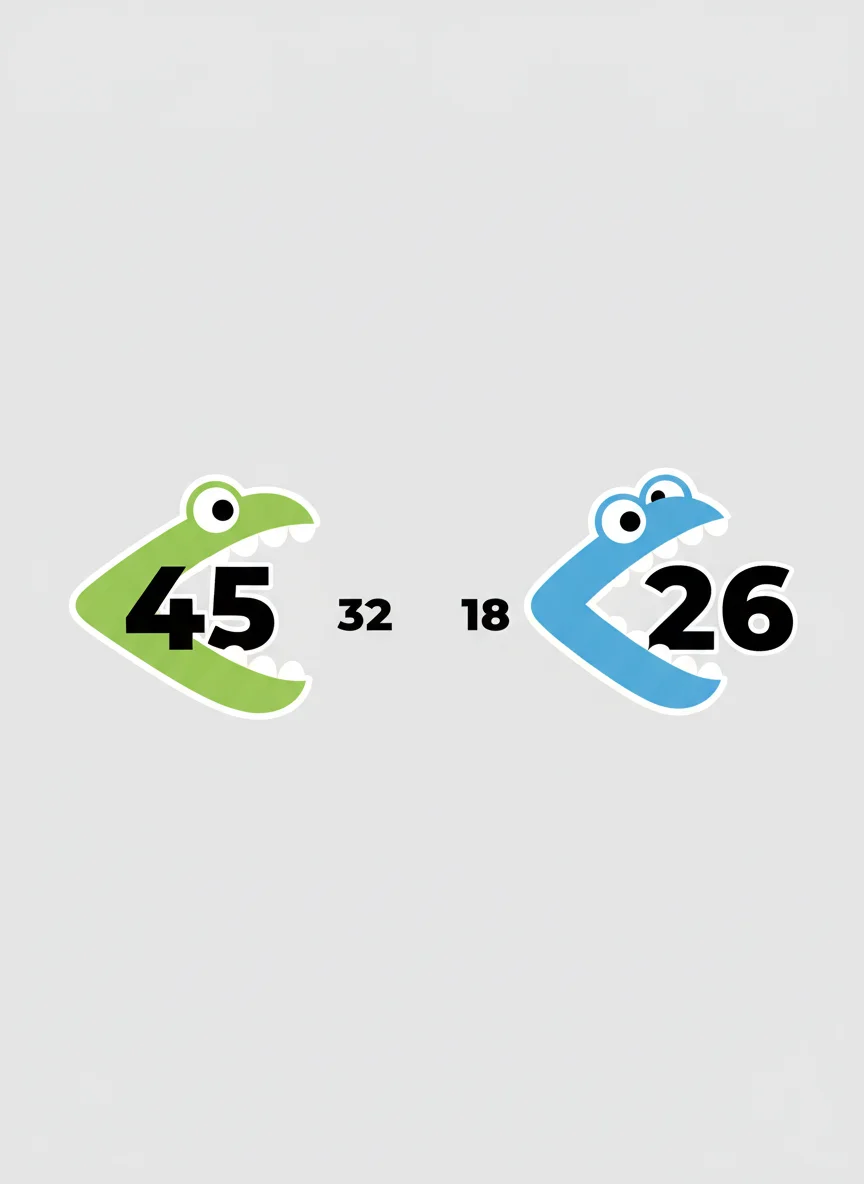
Greater Than and Less Than Symbols
Greater than (>) means 'is bigger than' Less than (<) means 'is smaller than' The symbol always 'eats' the bigger number Example: 45 > 32 and 18 < 26
Number Line Detective
Look at the number line Find where each number sits Use the position to compare numbers Remember: numbers get bigger as we move right
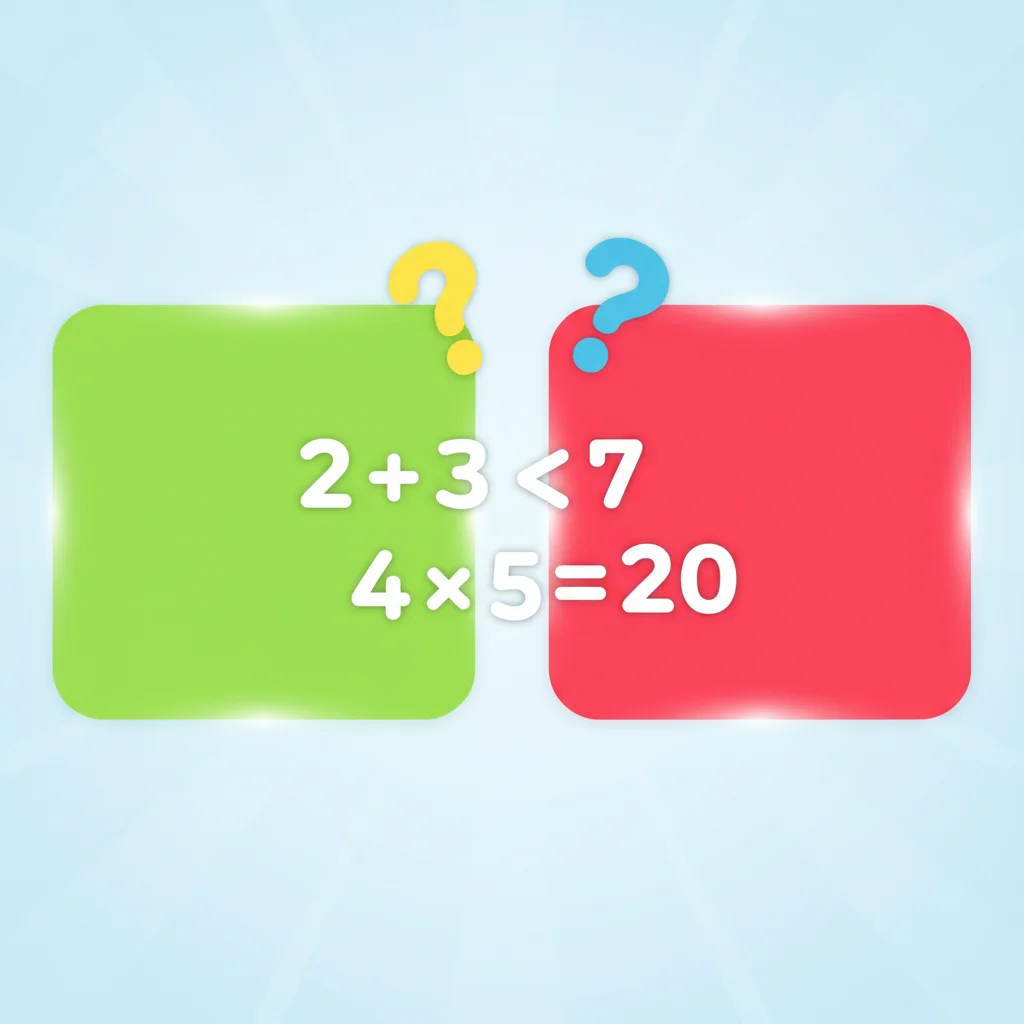
True or False Challenge
{"left":"35 > 28\n15 + 5 = 25\n42 < 39","right":"10 + 10 = 5 + 15\n67 > 76\n30 - 5 = 20 + 5"}
Create Your Own Number Sentences
Work in pairs Use number cards to make true sentences Try making false sentences too Explain why each sentence is true or false
Remember This Key Idea
The equals sign (=) means both sides show the same amount - it's about balance and equivalence!