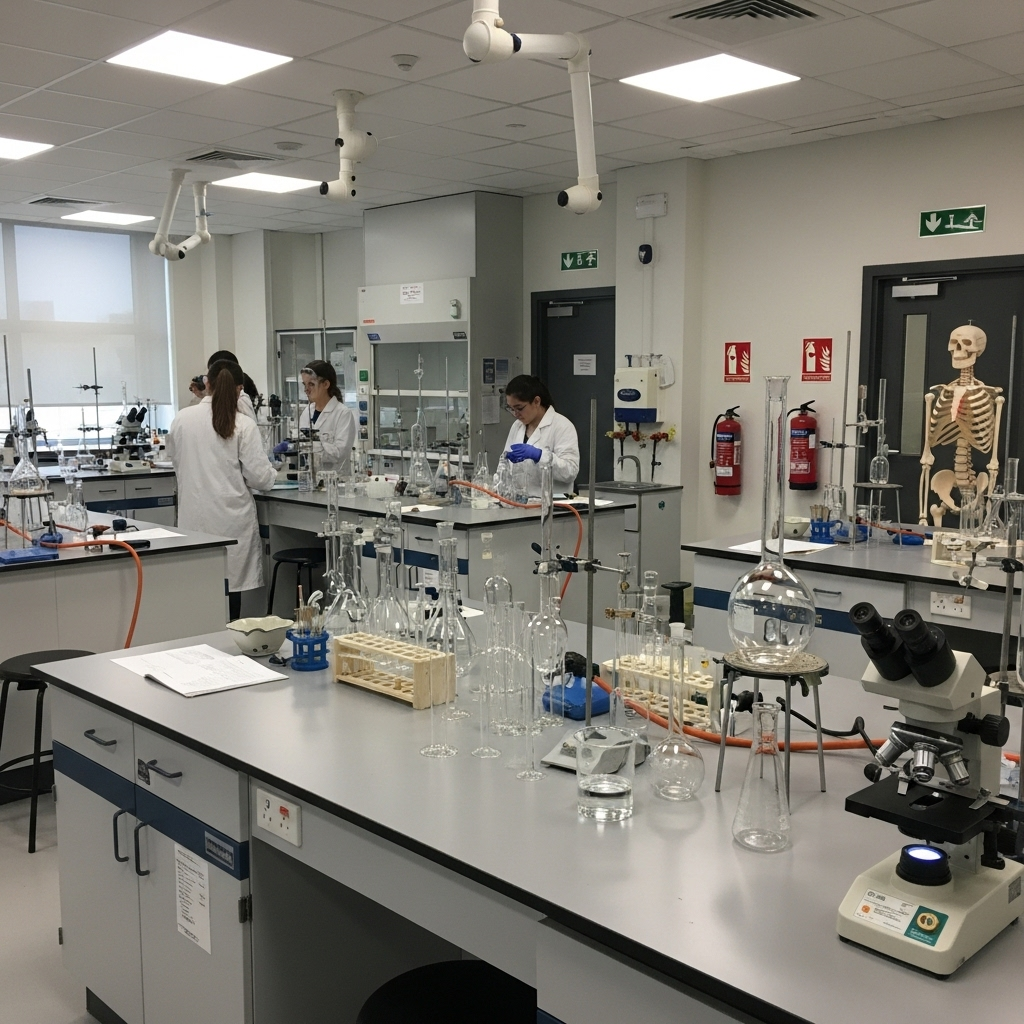
Identifying Unknown Anions in Solution
Year 12 Chemistry Taupo-nui-a-Tia College Duration: 50 minutes

Learning Intentions
Use solubility rules to predict precipitate formation Identify unknown anions through systematic testing Apply both primary and secondary data in analysis

What is an Anion?
Think about ionic compounds you know Consider the charge and behavior of different ions

Key Definitions
Anion: A negatively charged ion Precipitate: An insoluble solid formed during a chemical reaction Qualitative Analysis: Identifying what substances are present in a sample

Common Anions We'll Identify
Chloride (Cl⁻) - found in table salt Sulfate (SO₄²⁻) - found in Epsom salts Carbonate (CO₃²⁻) - found in limestone and baking soda

Primary vs Secondary Data
{"left":"Primary Data: Direct observations from your experiments\nWhat you see when solutions are mixed\nColor and texture of precipitates formed","right":"Secondary Data: Information from reference sources\nSolubility rules and tables\nExpected reaction outcomes from literature"}
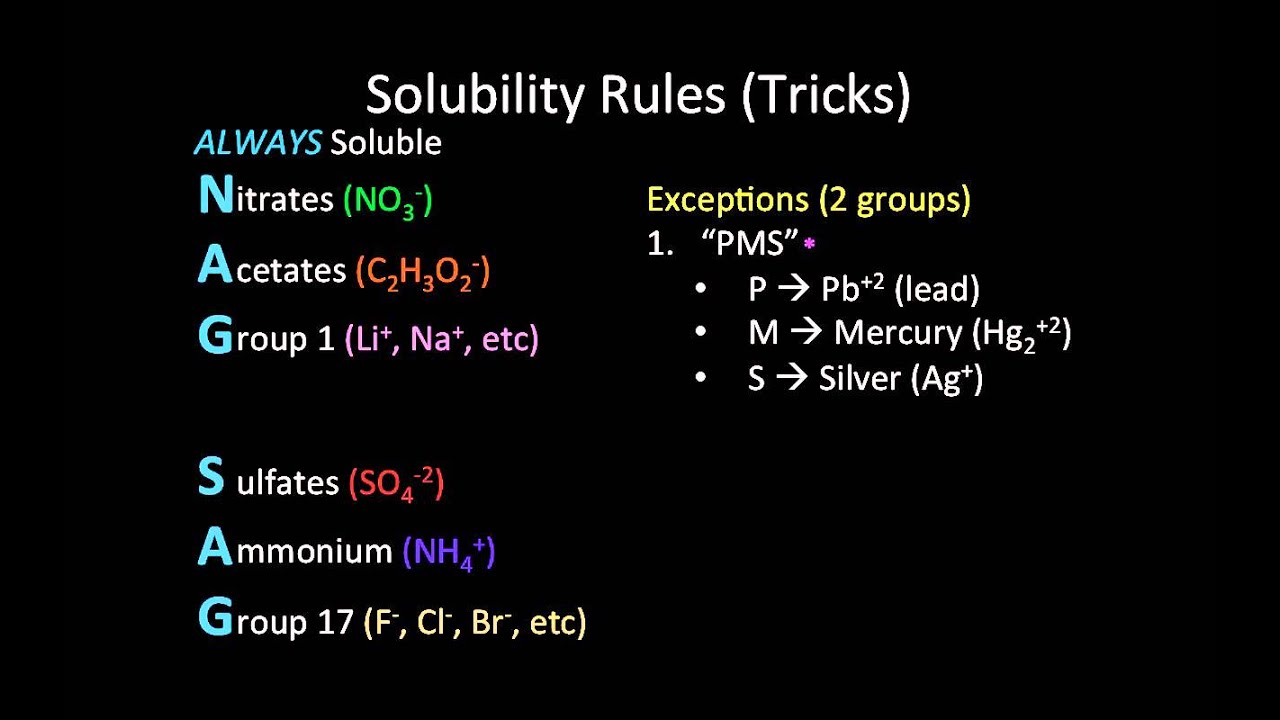
Solubility Rules Chart
:max_bytes(150000):strip_icc()/precipitation-reaction-when-adding-lead-nitrate-to-pottasium-iodine-to-form-lead-iodine-as-yellow-precipitate-in-bottle-131985882-58ea34a53df78c5162f899a7.jpg)
Precipitation Reactions
Occur when two aqueous solutions are mixed Result in formation of an insoluble solid Example: AgNO₃ + NaCl → AgCl(s) + NaNO₃

Predicting Precipitates
Use your solubility rules to predict outcomes Will BaCl₂ + Na₂SO₄ form a precipitate? What about AgNO₃ + KBr? Write the complete reactions including states

Testing for Chloride Ions (Cl⁻)
Add dilute nitric acid first (removes interfering ions) Add silver nitrate solution (AgNO₃) White precipitate indicates chloride presence AgNO₃ + Cl⁻ → AgCl(s) + NO₃⁻
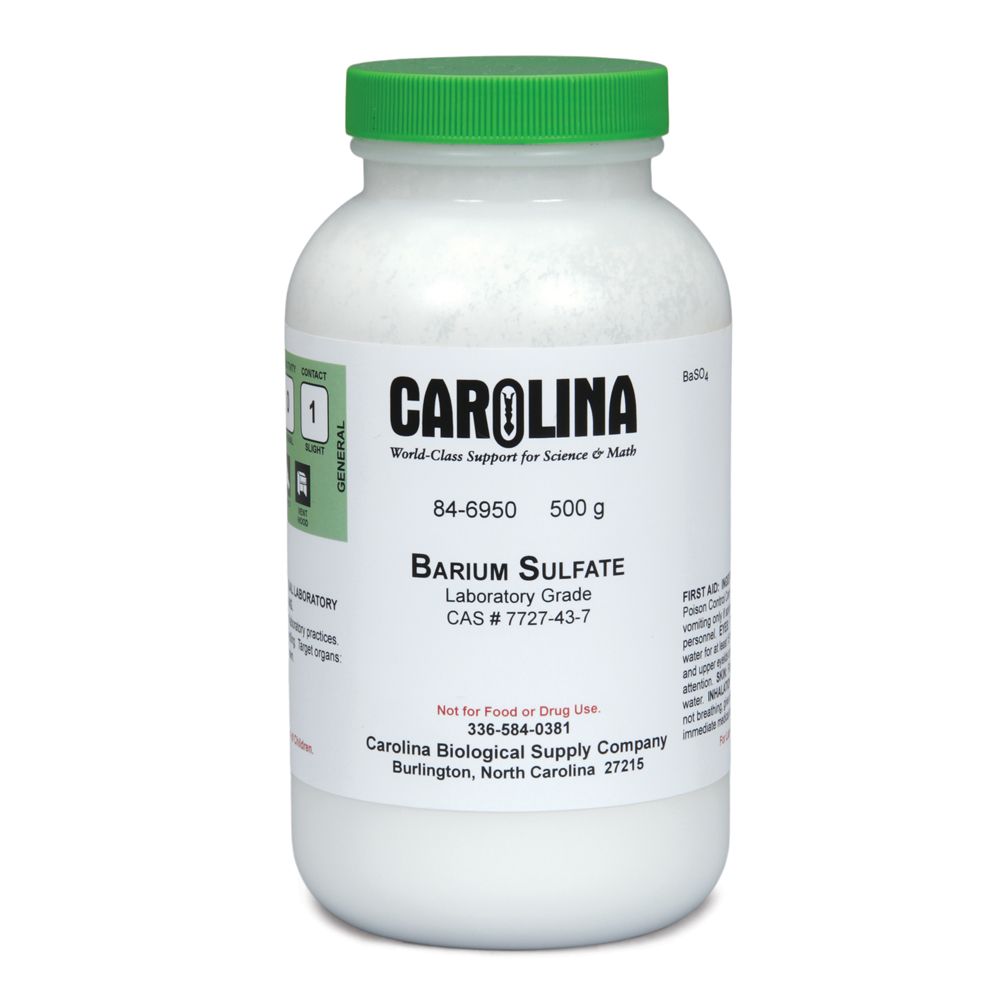
Testing for Sulfate Ions (SO₄²⁻)
Add dilute hydrochloric acid first Add barium chloride solution (BaCl₂) White precipitate indicates sulfate presence Ba²⁺ + SO₄²⁻ → BaSO₄(s)
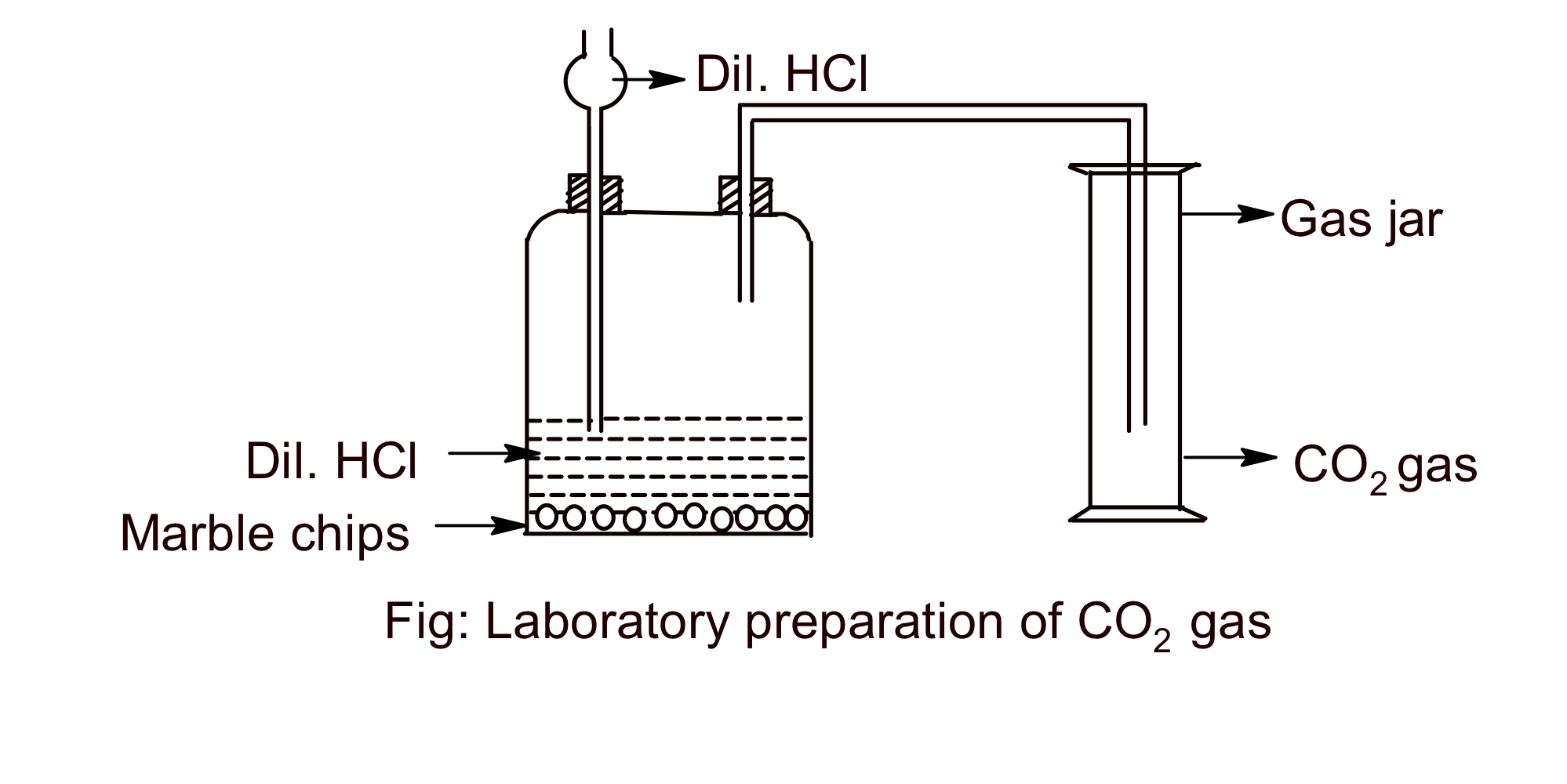
Testing for Carbonate Ions (CO₃²⁻)
Add dilute hydrochloric acid Look for effervescence (bubbling) Gas produced is carbon dioxide CO₃²⁻ + 2H⁺ → CO₂(g) + H₂O
4 more slides available after you open the deck.
Download all 16 slides