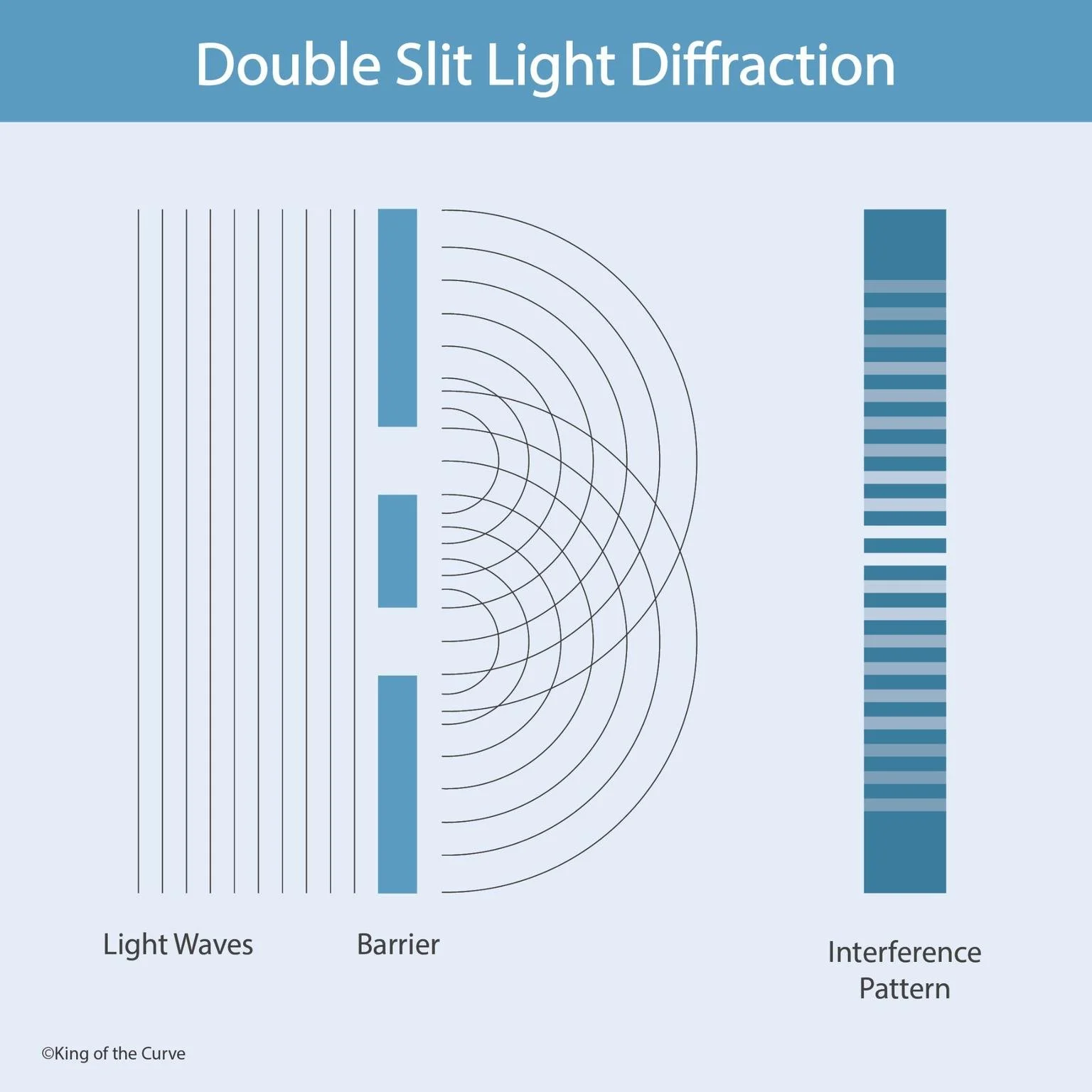
Light Diffraction: Waves Through Images
Year 12 Physics Understanding wave behaviour through observation New Zealand Curriculum Level 8
WALT: Understand Light as a Wave
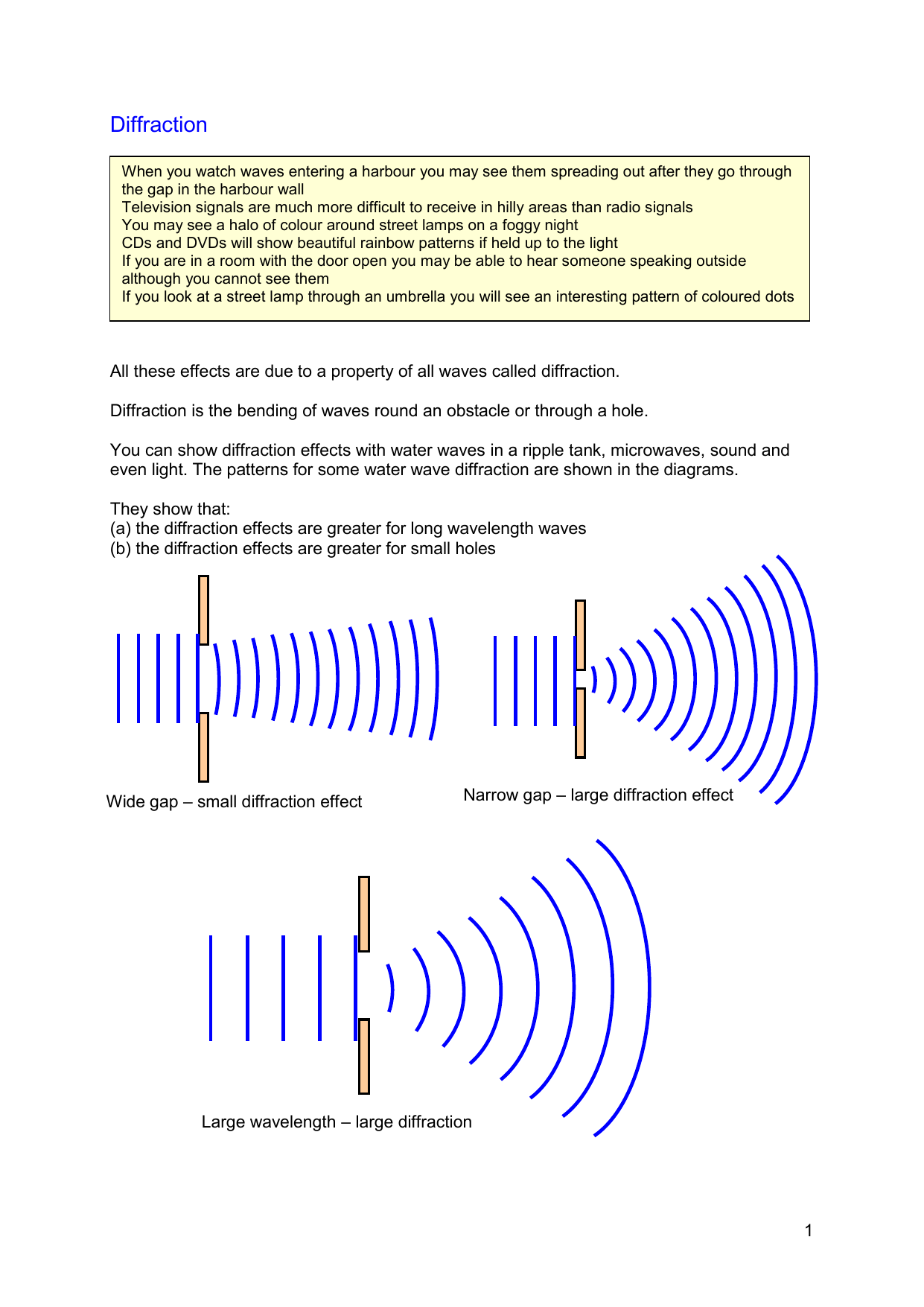
We Are Learning To identify wave properties of light Observe diffraction patterns in everyday situations Explain why light bends around obstacles Connect wave theory to real-world phenomena Success Criteria: Can describe diffraction using wave terminology Success Criteria: Can predict where diffraction occurs

Diffraction in Nature and Technology

Hands-On Diffraction Investigation
Equipment: Laser pointer, hair strand, white screen Method: Shine laser through single hair onto screen Observe: Pattern of light and dark bands Measure: Width of central bright band Record: How pattern changes with hair thickness Safety: Never look directly at laser beam
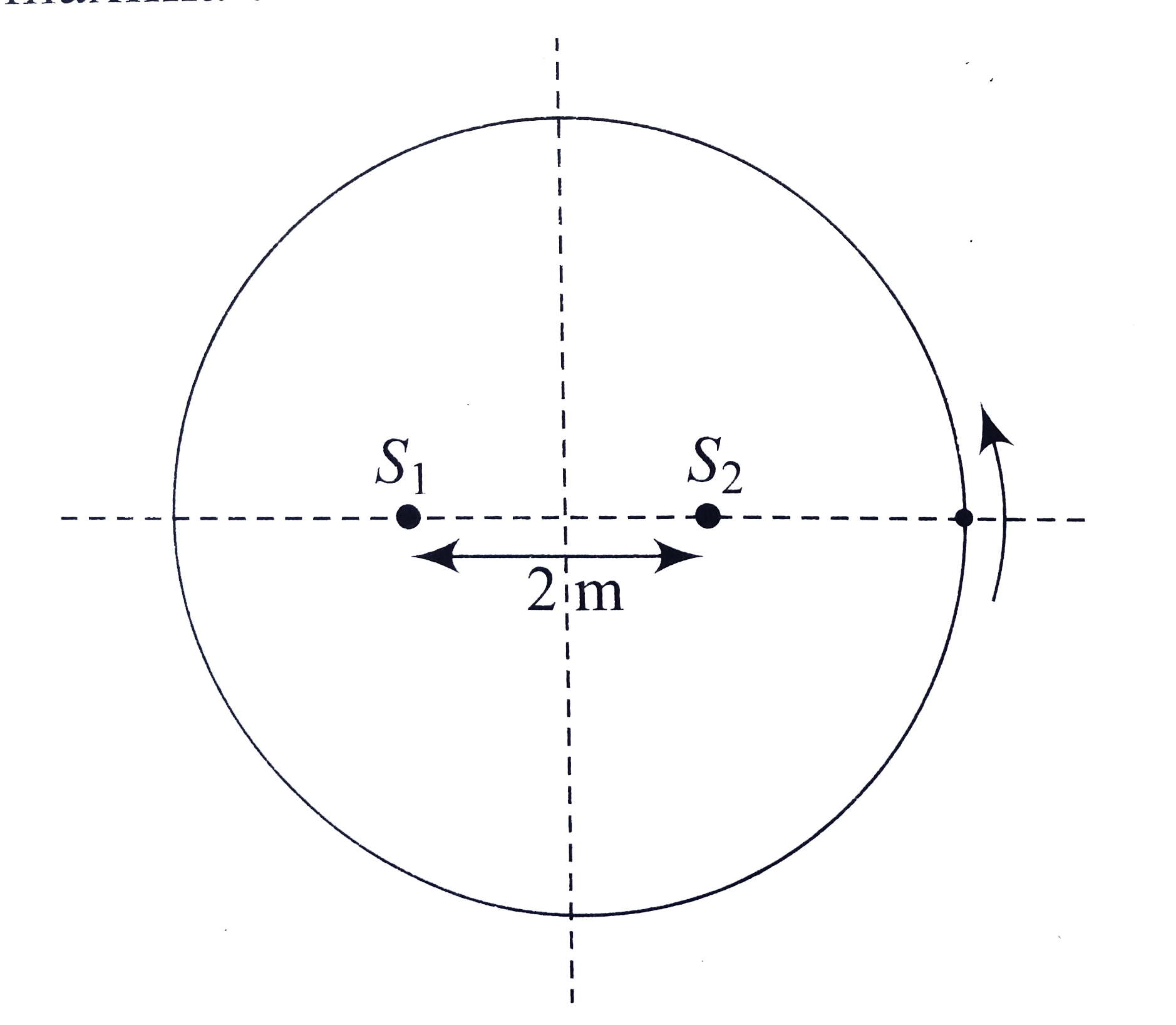
Two Point Source Interference Calculations
Path difference = |d₁ - d₂| where d₁ and d₂ are distances to each source Constructive interference when path difference = nλ (whole wavelengths) Destructive interference when path difference = (n + ½)λ Use Pythagoras to find distances: d = √(x² + y²) Bright fringes occur at specific calculated positions

Small vs Large Obstacles: When Does Diffraction Occur?
{"left":"Obstacle much larger than wavelength: Sharp shadows form, minimal bending\nObstacle similar to wavelength: Significant bending occurs, curved wave fronts\nObstacle much smaller than wavelength: Waves pass around easily, strong diffraction","right":"Light wavelength ≈ 500 nanometers\nEveryday objects are millions of times larger\nDiffraction most visible with very small openings"}

Apply Your Understanding
Why can you hear someone talking around a corner, but you can't see them? Hint: Think about wavelengths of sound vs light Discussion: What other examples of diffraction can you identify in daily life? Extension: How might engineers use diffraction principles?
More Physics slide decks
Other ready-to-teach physics decks for New Zealand classrooms.

