Mastering Metric Measurement Year 4
Measuring Length, Mass and Capacity Using Metric Units Converting Between Units
WALT - We Are Learning To
Compare and order objects using metric units Use the right tools for measuring Convert between metres and centimetres Measure length, mass and capacity accurately
Success Criteria - How We Know We've Succeeded
I can choose the correct tool for measuring I can read measurements accurately I can compare which object is longer, heavier or holds more I can convert metres to centimetres and back
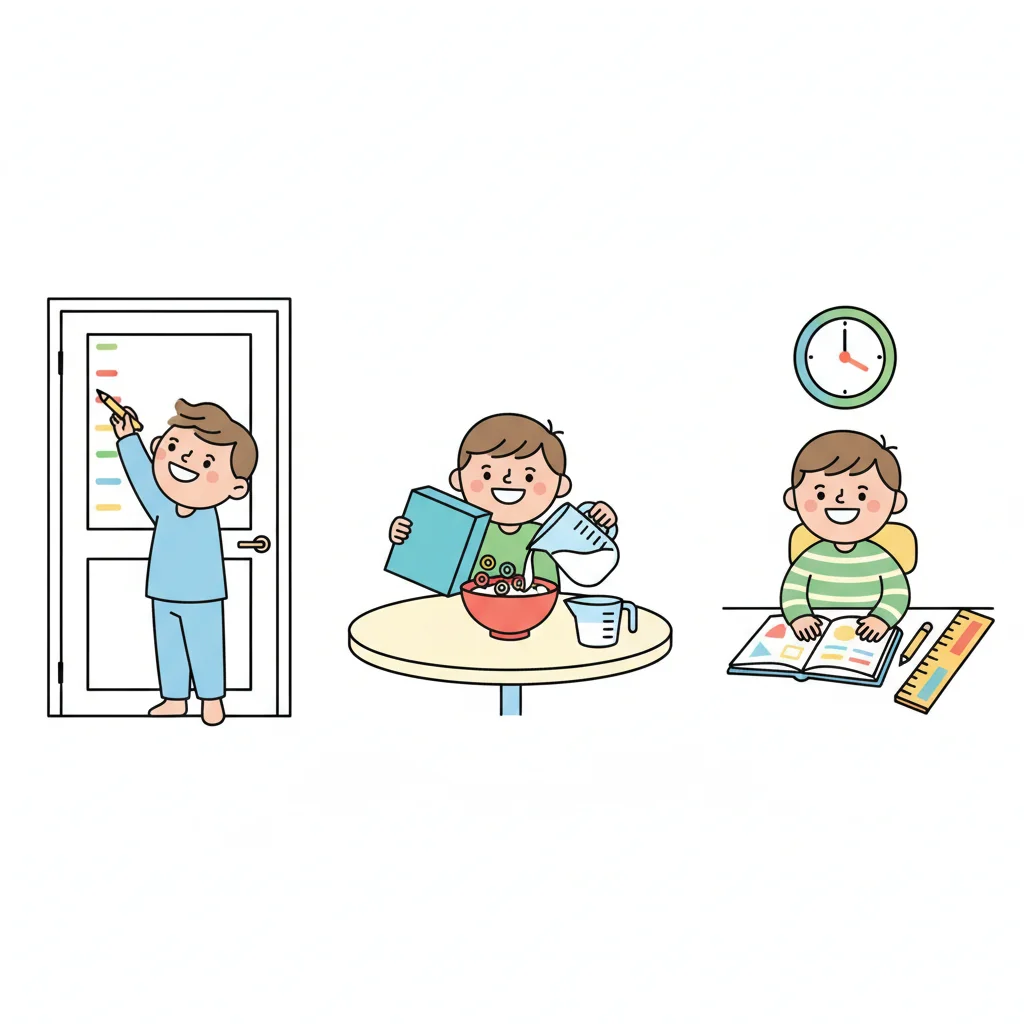
What Do We Measure Every Day?
Think about your morning routine What things do you measure? Turn and talk to your partner
The Three Types of Measurement
LENGTH - How long or tall something is MASS - How heavy something is CAPACITY - How much something can hold
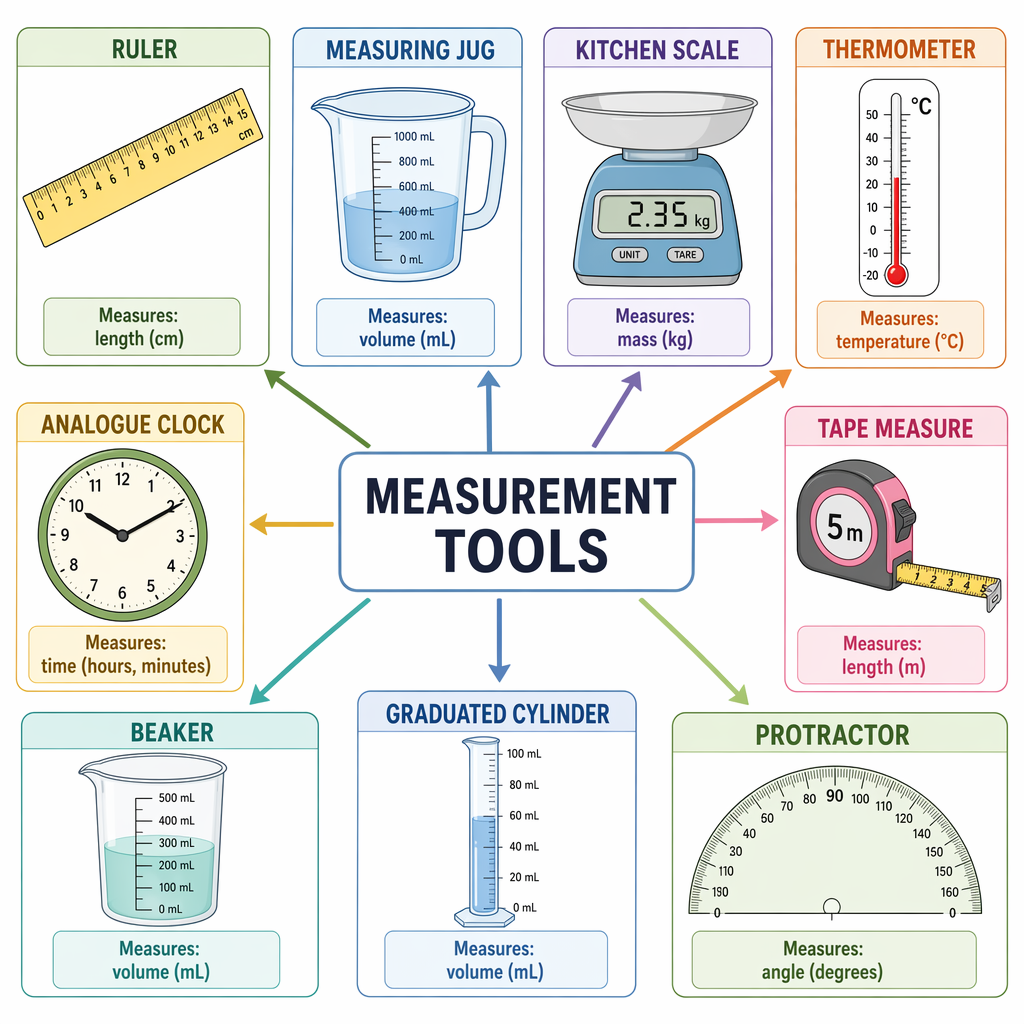
Measurement Tool Match
Match each tool to what it measures Ruler → Length Scales → Mass Measuring cup → Capacity

Measuring Length - The Tools We Use
Ruler - for small objects (up to 30cm) Metre stick - for medium objects (up to 1m) Tape measure - for longer distances Trundle wheel - for very long distances
Length Estimation Challenge
Look at these classroom objects Estimate their length FIRST Then we'll measure to check How close were your estimates?
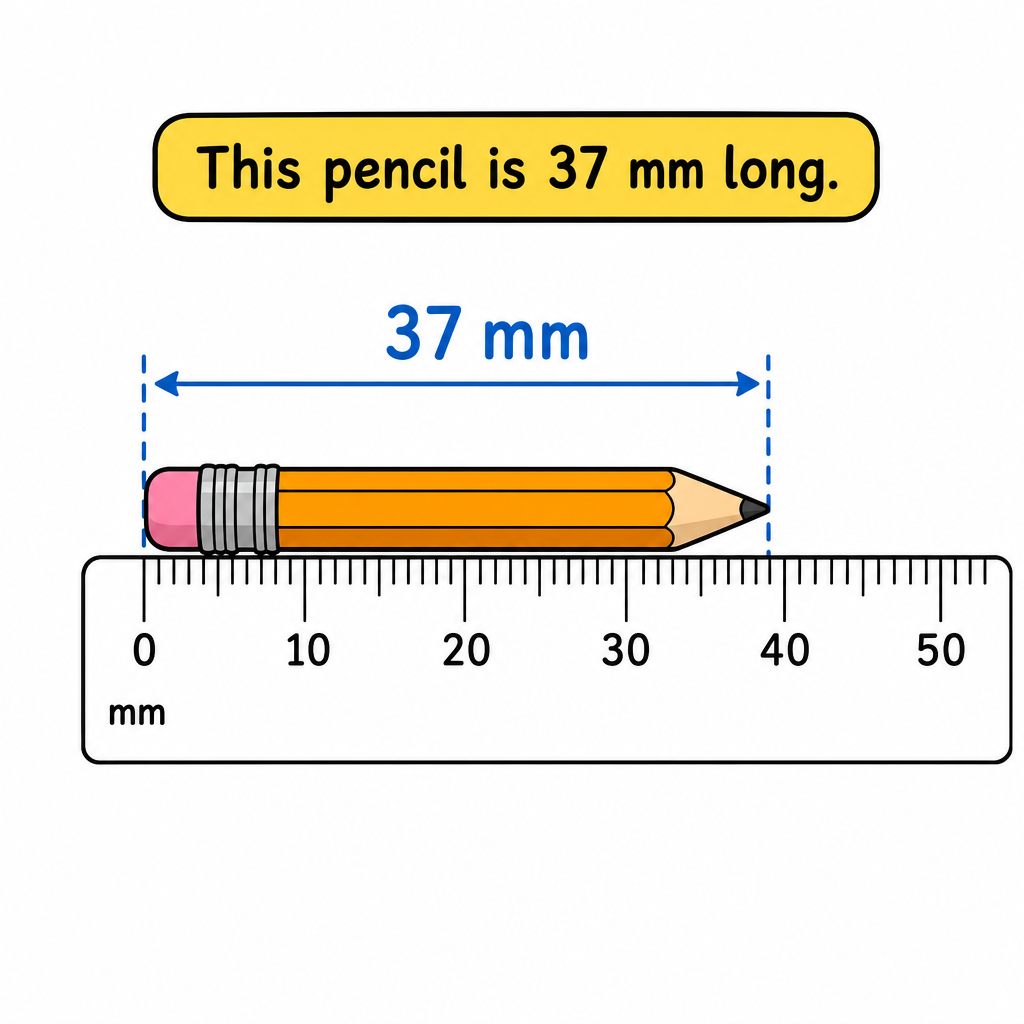
Reading Measurements Accurately
Start from zero on your ruler Look straight down at the measurement Read to the nearest centimetre Write the number and unit (cm or m)
Metres and Centimetres
{"left":"1 metre = 100 centimetres\n1m = 100cm\nWe can write measurements in mixed units","right":"Example: 1m 23cm\nThis is the same as 123cm\nOr we can convert to one unit"}
Converting Practice
Convert these measurements: 2m = ___ cm 150cm = ___m ___cm 3m 45cm = ___cm Work with your partner!

Measuring Mass (Weight)
Mass is how heavy something is We use kilograms (kg) for heavy things We use grams (g) for light things 1 kilogram = 1000 grams
17 more slides available after you open the deck.
Download all 29 slides