
Mastering Stage Presence and Performance
Year 13 Drama/Theatre Arts Voice Projection & Group Dynamics Practical Demonstration Techniques
Learning Objectives
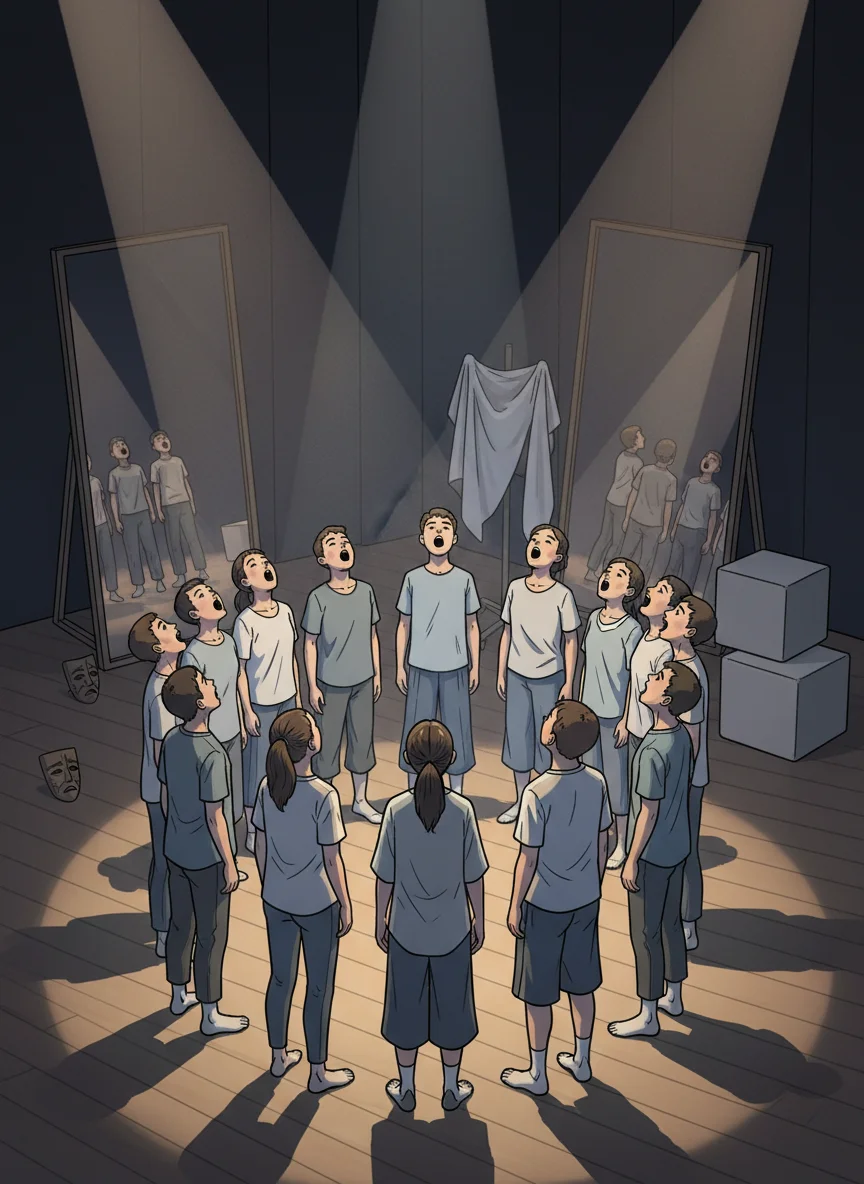
Master efficient voice projection techniques Understand group organization strategies Practice demonstration-based learning Apply skills in practical exercises

The Foundation of Performance
"The voice is the actor's most powerful tool - it must reach every seat in the house without strain." - Konstantin Stanislavski

Voice Projection Fundamentals
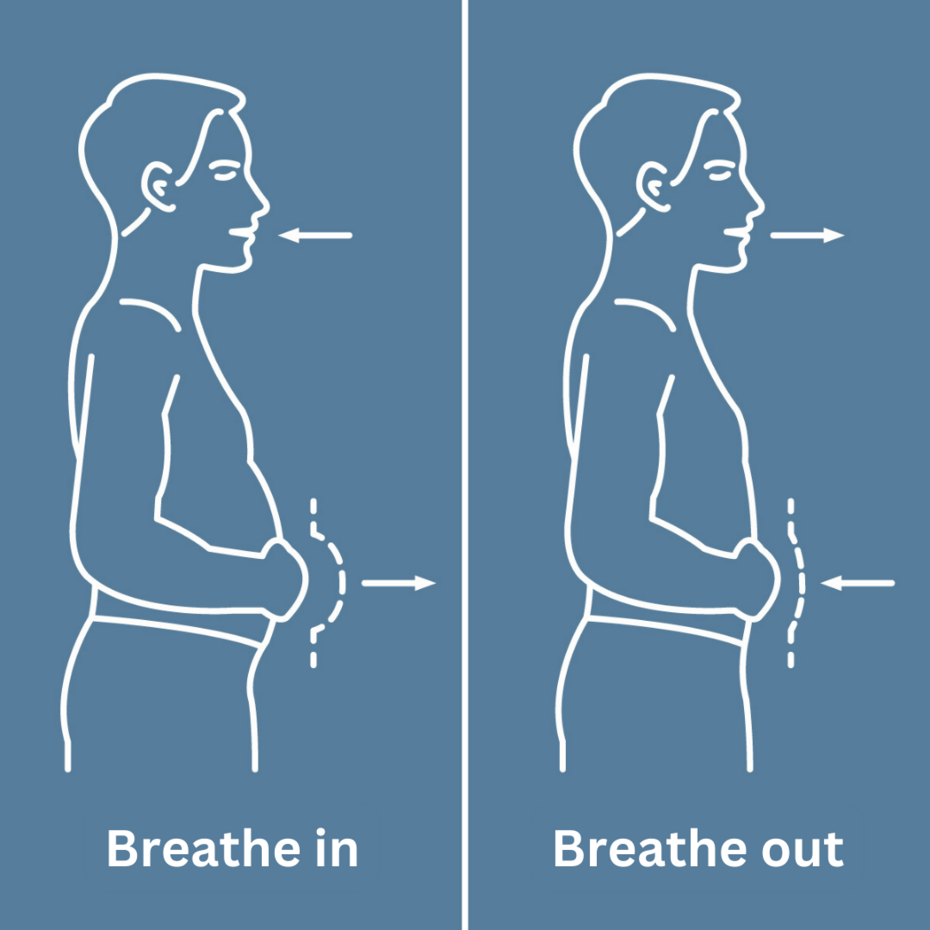
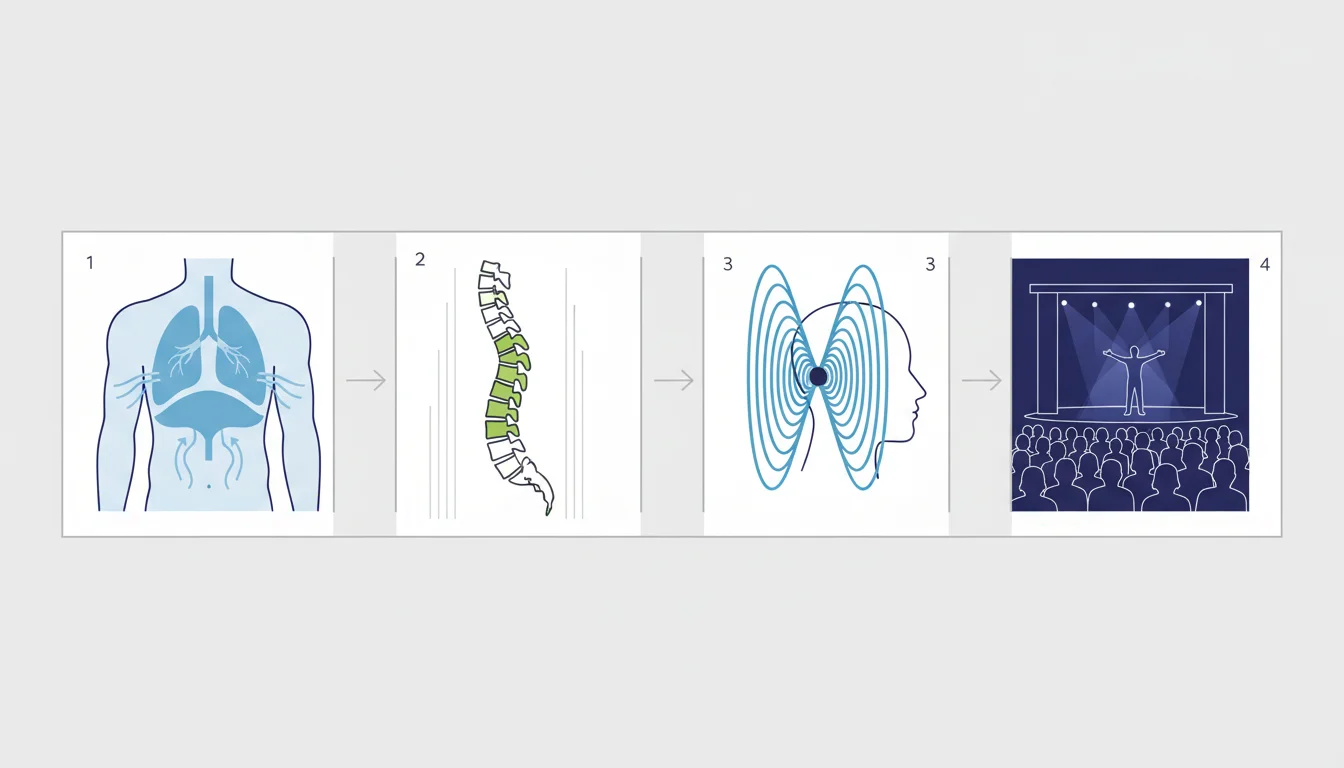
Diaphragmatic breathing is the foundation Posture affects vocal power and clarity Resonance amplifies without strain Articulation ensures audience comprehension
Breathing Exercise Demo
Place one hand on chest, one on stomach Breathe so only the stomach hand moves Count: 4 counts in, hold 4, out 8 Repeat 5 times as a group
Efficient vs Inefficient Projection
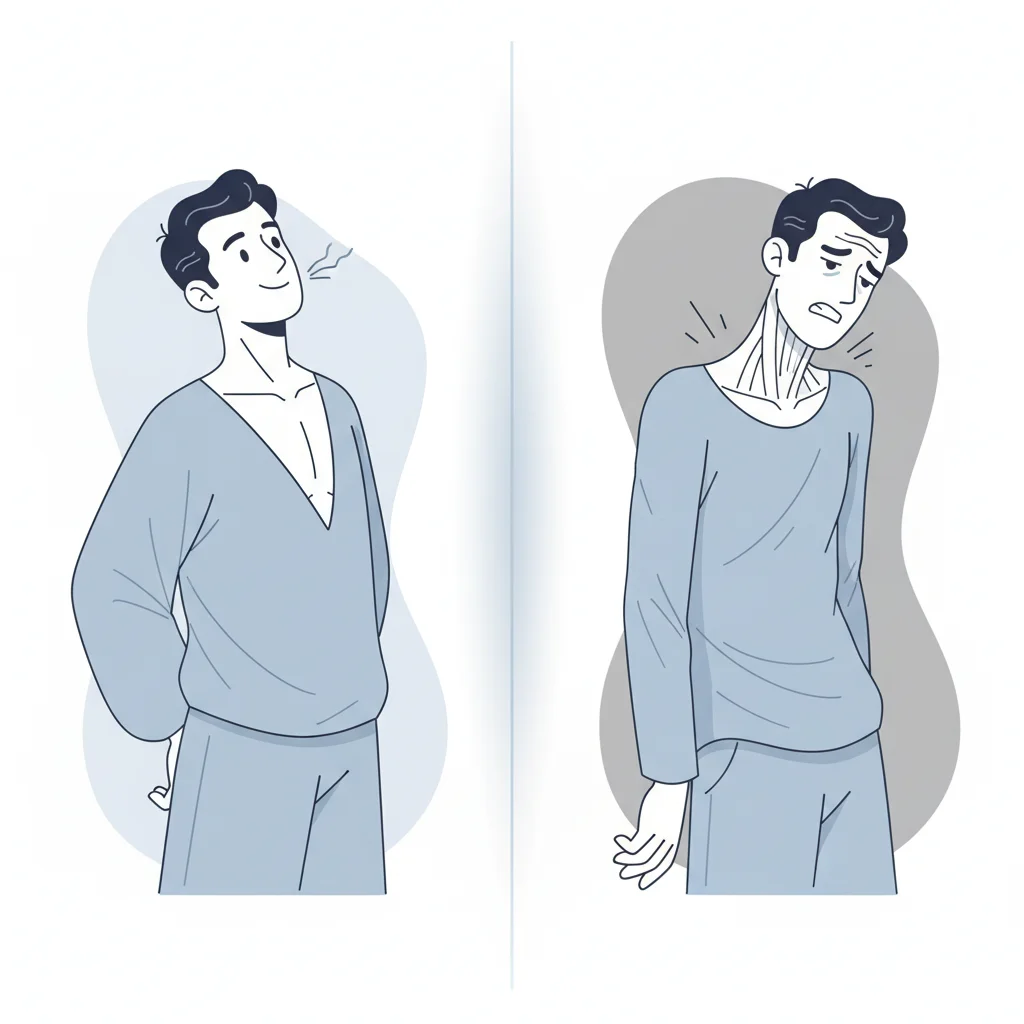
{"left":"Uses diaphragm and core support\nMaintains natural pitch range\nPreserves vocal health long-term\nReaches audience without strain","right":"Relies on throat and neck tension\nForces higher pitch artificially\nCauses vocal fatigue quickly\nCreates harsh, unpleasant sound"}

Group Organization Strategy
Divide into groups of 4-5 students Assign roles: Director, Voice Coach, Observer, Performers Rotate roles every 10 minutes Practice projection exercises within groups
Voice Projection Technique Progression

Reflection & Assessment
What physical changes do you notice when projecting correctly? How does group feedback improve your technique? Which stage of projection feels most challenging?

Key Takeaways & Next Steps
Voice projection requires physical technique, not volume Group practice provides valuable feedback Regular demonstration reinforces learning Continue daily breathing exercises Apply techniques in upcoming scene work