Measuring Length: Design Your Garden
Year 5 Mathematics Using metric units to create garden layouts WALT: We Are Learning To measure accurately

WALT - We Are Learning To
Estimate and accurately measure length using metric units Choose appropriate tools and units for measuring Use measurement to design a simple garden layout Understand relationships between metric units

Success Criteria
I can estimate lengths using my body or informal units I can use rulers and measuring tape accurately I can explain why I choose certain units and tools I can design a garden layout using measurements I work collaboratively, sharing ideas and checking measurements

Metric Units for Length
Millimetres (mm) - very small measurements Centimetres (cm) - small to medium measurements Metres (m) - large measurements 1 metre = 100 centimetres 1 centimetre = 10 millimetres

Body Benchmarks for Estimating
Measure your thumb width (about 2cm) Measure your hand span (about 20cm) Measure your arm span (about your height) Measure your step length Use these to estimate garden measurements

Design Your Garden Activity
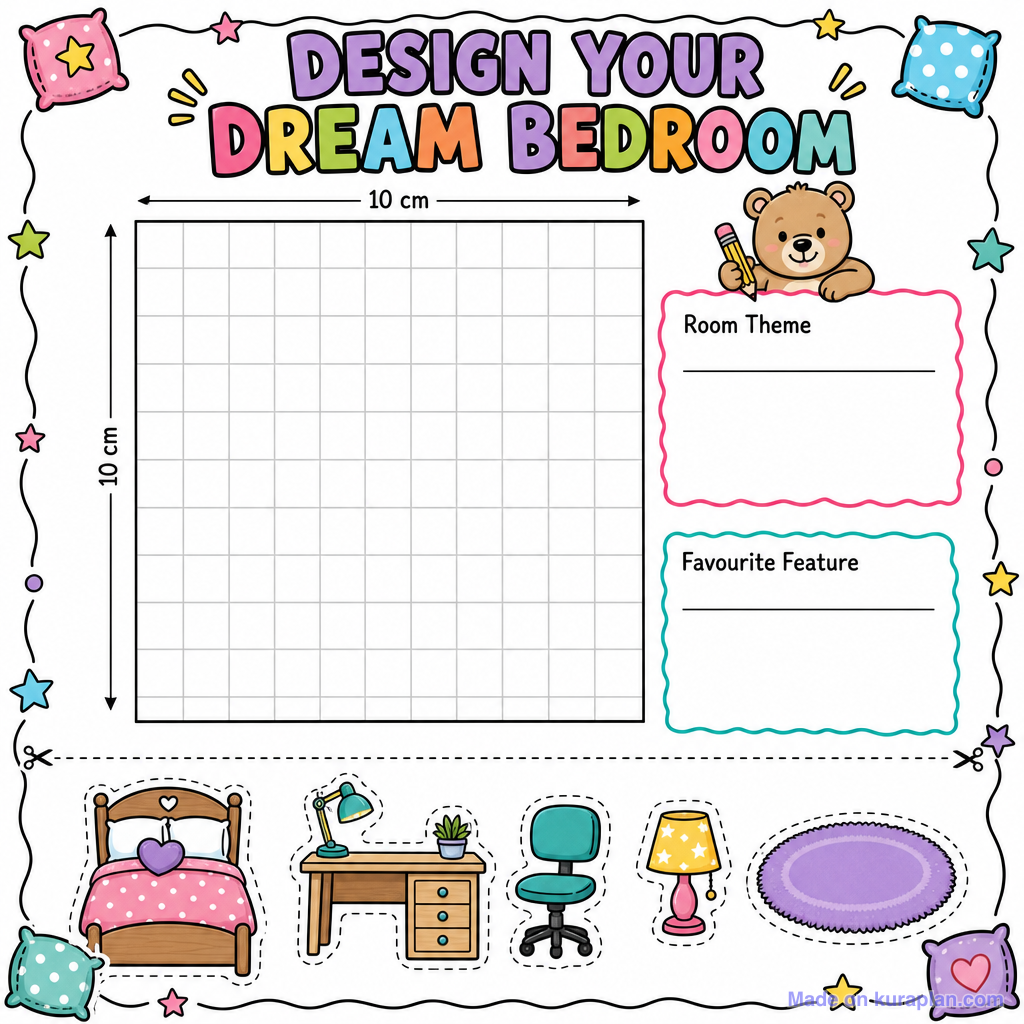
Work in pairs to design a small garden Use squared paper to draw your layout Estimate measurements first, then measure accurately Label all measurements with correct units Include paths, plant beds, and garden features

Reflection Question
Why is it important to measure accurately when designing a garden? What might happen if our measurements were wrong? When would you use centimetres vs metres in garden design?

What We Learned Today
We can estimate using body benchmarks Different units are appropriate for different measurements Accurate measurement is important for real projects Collaboration helps us check our work Measurement connects to real-world activities like gardening
More Real World Math slide decks
Other ready-to-teach decks on real world math.


Free Area images
Drop these illustrations straight into your lesson.