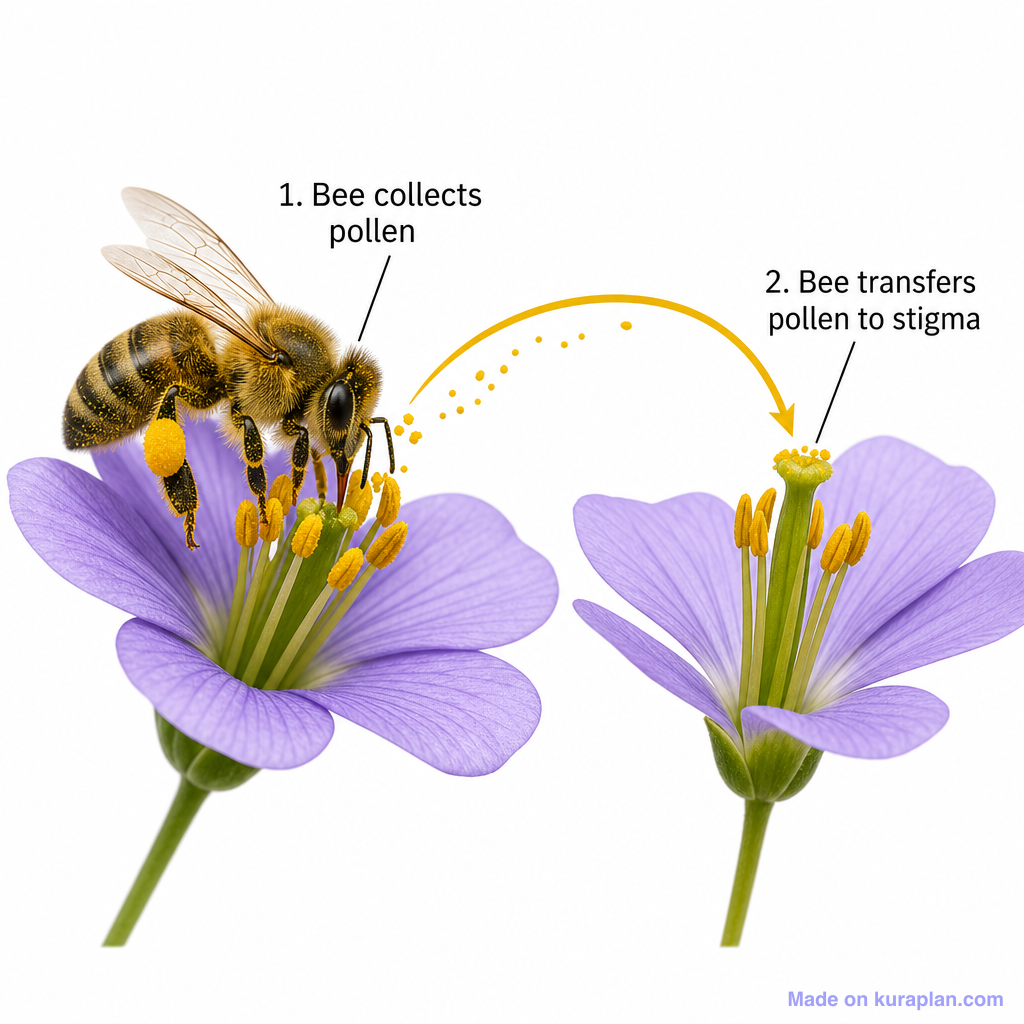
Plant Fertilisation: A Step-by-Step Guide

Biology / ScienceYear 930 slidesNew Zealand curriculum
Plant Fertilisation: A Step-by-Step Guide

Open this deck in Kuraplan

Sign in to view all 30 slides, customise, present or download.

Open in Kuraplan

Slide preview

First 12 of 30 slides

Plant Fertilisation: A Step-by-Step Guide
Slide 1

Plant Fertilisation: A Step-by-Step Guide

Year 9 Biology Understanding Sexual Reproduction in Plants From Pollination to Seed Formation

WALT: We Are Learning To
Slide 2

WALT: We Are Learning To

Identify the parts of a flower involved in reproduction Describe the process of pollination and fertilisation Explain how seeds and fruits develop Compare different methods of pollination Understand the importance of fertilisation for plant survival

Success Criteria
Slide 3

Success Criteria

I can label the parts of a flower accurately I can explain pollination in my own words I can describe what happens during fertilisation I can identify different types of pollination I can explain why fertilisation is important for plants

What do you already know about plant reproduction?
Slide 4

What do you already know about plant reproduction?

Think about flowers you've seen What do you notice about their structure? Why do you think plants produce flowers?

What is Plant Fertilisation?
Slide 5

What is Plant Fertilisation?

Sexual reproduction in flowering plants Combines genetic material from two parents Produces seeds that can grow into new plants Essential for plant species survival Creates genetic diversity in plant populations

Complete Flower Structure
Slide 6

Complete Flower Structure

Male Reproductive Parts
Slide 7

Male Reproductive Parts

Stamen - the male reproductive organ Anther - produces and releases pollen Filament - supports the anther Pollen grains contain male gametes Usually multiple stamens per flower

Female Reproductive Parts
Slide 8

Female Reproductive Parts

Pistil - the female reproductive organ Stigma - receives pollen grains Style - connects stigma to ovary Ovary - contains ovules Ovules - contain female gametes

Flower Dissection Activity
Slide 9

Flower Dissection Activity

Work in pairs to examine real flowers Identify and label male and female parts Use magnifying glasses to observe pollen Draw and annotate your observations Compare different flower types

What is Pollination?
Slide 10

What is Pollination?

Transfer of pollen from anther to stigma First step in plant reproduction Can occur within same flower or between flowers Essential before fertilisation can happen Enables genetic material to meet

Types of Pollination
Slide 11

Types of Pollination

{"left":"Self-pollination occurs within the same flower or plant\nCross-pollination occurs between different plants\nSelf-pollination is more reliable but less genetic diversity","right":"Cross-pollination increases genetic variation\nBoth types are important for plant survival\nMany plants can do both depending on conditions"}

Wind Pollination
Slide 12

Wind Pollination

Pollen carried by air currents Flowers often small and not colorful Produce large amounts of pollen Examples: grasses, trees, corn Pollen is light and dry for easy transport