Pollination Types and Detailed Examples
Understanding Nature's Reproductive Strategies Year 9 Biology New Zealand Curriculum

WALT - We Are Learning To
Identify and explain different types of pollination Describe the role of various pollinators in ecosystems Analyze adaptations of flowers for specific pollinators Evaluate the importance of pollination for biodiversity Apply knowledge to New Zealand native examples

Success Criteria
I can name at least 5 different types of pollinators I can explain how flower structures attract specific pollinators I can give detailed examples of pollination relationships I can describe the process of pollination step-by-step I can evaluate threats to pollination and suggest solutions

What is Pollination?
Think about what you already know Share your ideas with a partner Consider: Why might plants need this process?

What is Pollination?
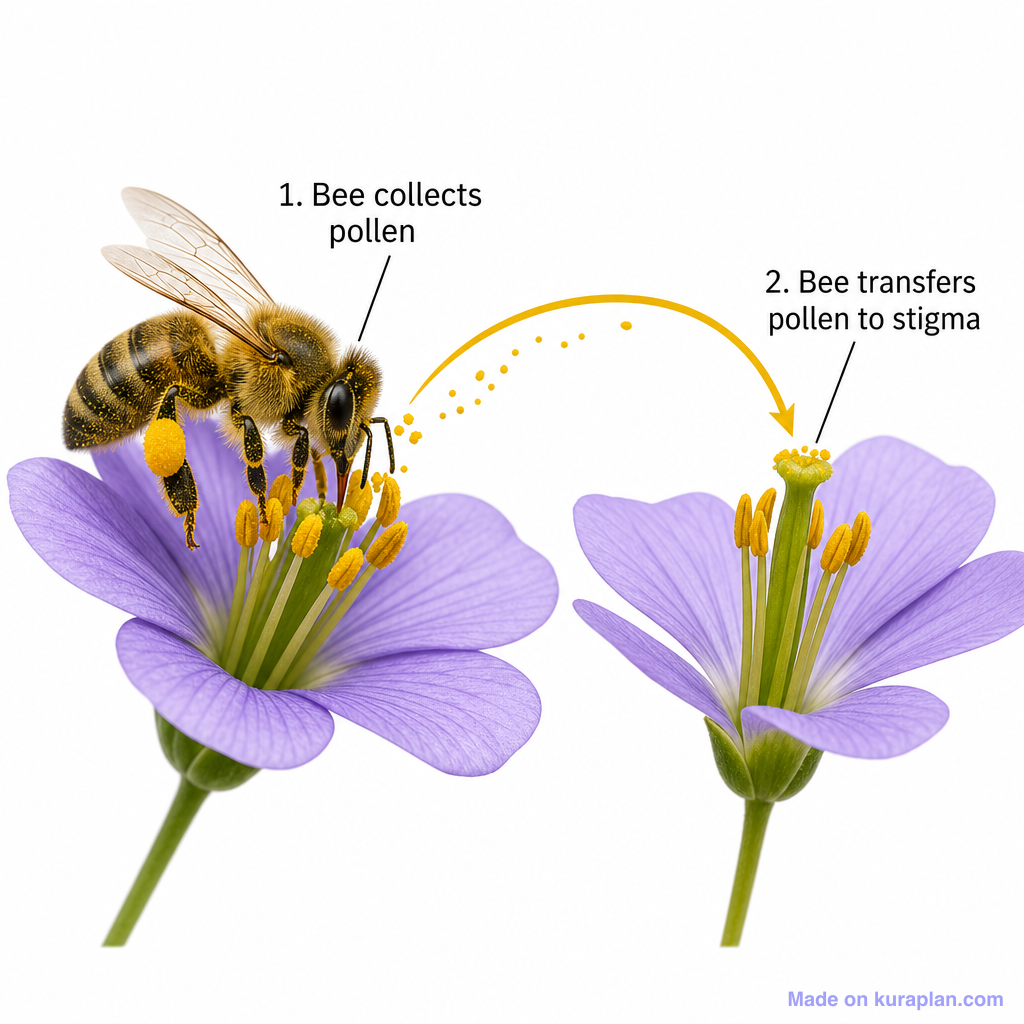
Transfer of pollen from male parts (anthers) to female parts (stigma) Essential for plant reproduction and seed formation Enables genetic diversity in plant populations Foundation of most food webs and ecosystems Critical for agricultural crop production

The Pollination Process

Types of Pollination
Self-pollination: within the same flower or plant Cross-pollination: between different plants of same species Biotic pollination: using living organisms Abiotic pollination: using non-living factors Each type has advantages and disadvantages

Self vs Cross Pollination
{"left":"Self-pollination ensures reproduction when pollinators are scarce\nRequires less energy expenditure\nProduces genetically similar offspring\nLimited genetic diversity","right":"Cross-pollination increases genetic variation\nProduces stronger, more adaptable offspring\nRequires pollinators or external agents\nHigher energy cost for the plant"}

Animal Pollination - Overview
Most diverse and widespread pollination type Co-evolution between plants and animals Animals receive rewards: nectar, pollen, shelter Plants benefit from efficient pollen transfer Over 80% of flowering plants use animal pollinators

Pollinator Matching Activity
Match the pollinator to their preferred flower type Consider: size, color, shape, timing Work in groups of 3-4 Extension: Explain the adaptations you observe

Bee Pollination - Detailed Example
Most important pollinators globally Excellent vision for UV patterns on flowers Branched body hairs trap pollen efficiently Communicate flower locations through 'waggle dance' Examples: apple, clover, sunflower

Butterfly Pollination - Detailed Example
Long proboscis reaches deep into tubular flowers Attracted to bright colors, especially red and purple Active during daytime with good color vision Light body weight requires sturdy flower platforms Examples: butterfly bush, lantana, native hebe
20 more slides available after you open the deck.
Download all 32 slidesMore Pollination slide decks
Other ready-to-teach decks on pollination.

Free Pollination images
Drop these illustrations straight into your lesson.