
Premium Pricing Strategies for Year 11
Understanding value-based pricing in business Exploring luxury market dynamics Building strategic pricing skills

What is Premium Pricing?
Setting prices above competitors for similar products Based on perceived value rather than cost Creates exclusivity and prestige Targets customers willing to pay more for quality or status

Premium vs Standard Pricing Comparison
{"left":"High price point\nQuality focus\nExclusive positioning\nBrand prestige","right":"Competitive price point\nValue for money focus\nMass market appeal\nAccessibility emphasis"}

Real-World Premium Pricing Examples
Apple iPhone - technology premium Starbucks - coffee experience premium Nike Air Jordan - athletic lifestyle premium Dyson - innovation and design premium

Premium Brand Investigation Activity
Choose a premium brand you know Research their pricing strategy Identify what justifies their high prices Present findings to the class in 3 minutes

Why Do Businesses Use Premium Pricing?
Higher profit margins per unit sold Creates strong brand positioning Attracts quality-conscious customers Reduces price competition Builds customer loyalty and exclusivity

Discussion Question
Would you pay $200 for a plain white t-shirt? What would make you consider it? Think about brand, quality, and status factors

Challenges of Premium Pricing
Limited customer base High expectations for quality Vulnerable to economic downturns Constant need to justify value Risk of competitor undercut

Premium Pricing Strategy Design
Create a premium version of an everyday product Justify your pricing with specific features Design a marketing message Present your strategy to the class
Key Takeaways
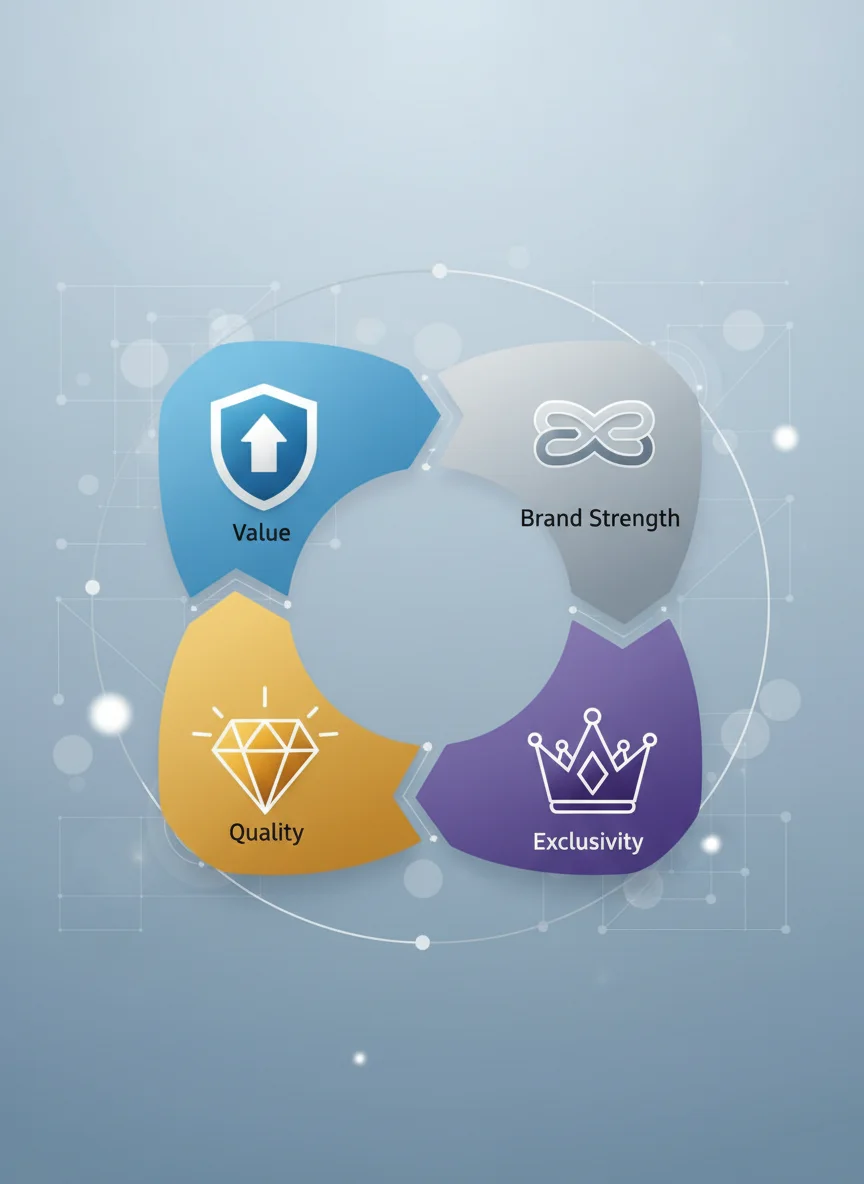
Premium pricing is about perceived value, not just high prices Successful premium brands consistently deliver quality and experience It targets specific customer segments willing to pay more Requires strong brand positioning and marketing Can provide higher profits but comes with unique challenges