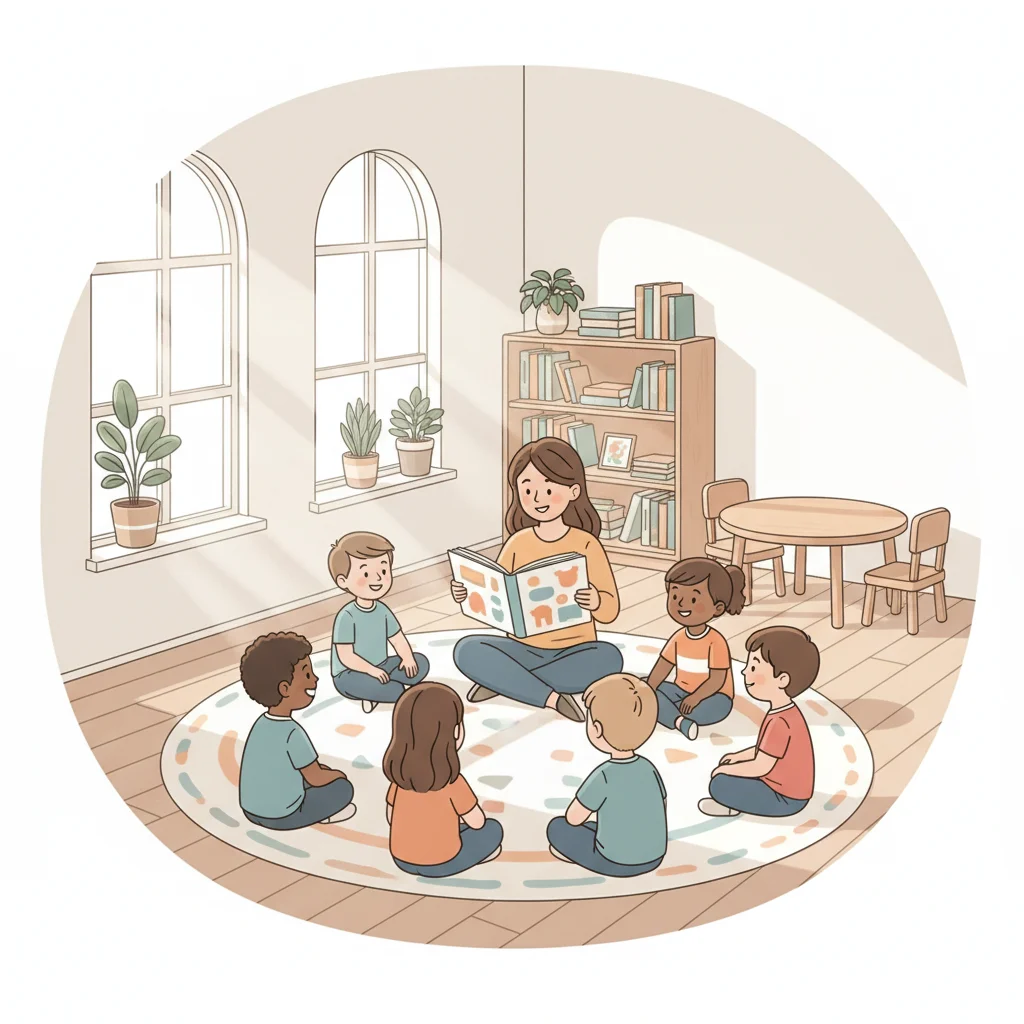
Storytelling Magic in Early Childhood Education
Unlocking imagination and learning through stories Supporting young storytellers in the classroom
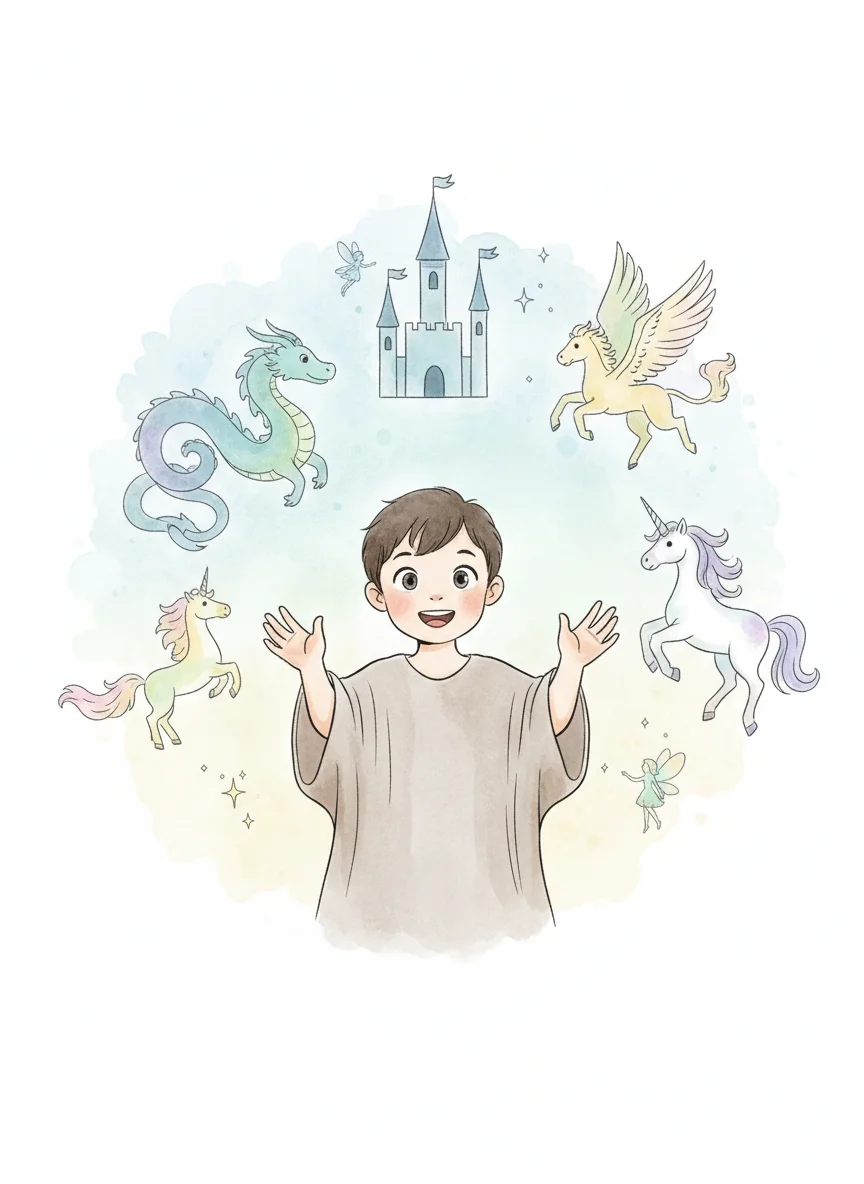
Why Storytelling Matters in ECE
Develops language and vocabulary Builds emotional intelligence Enhances creativity and imagination Supports cultural understanding Strengthens memory and sequencing skills
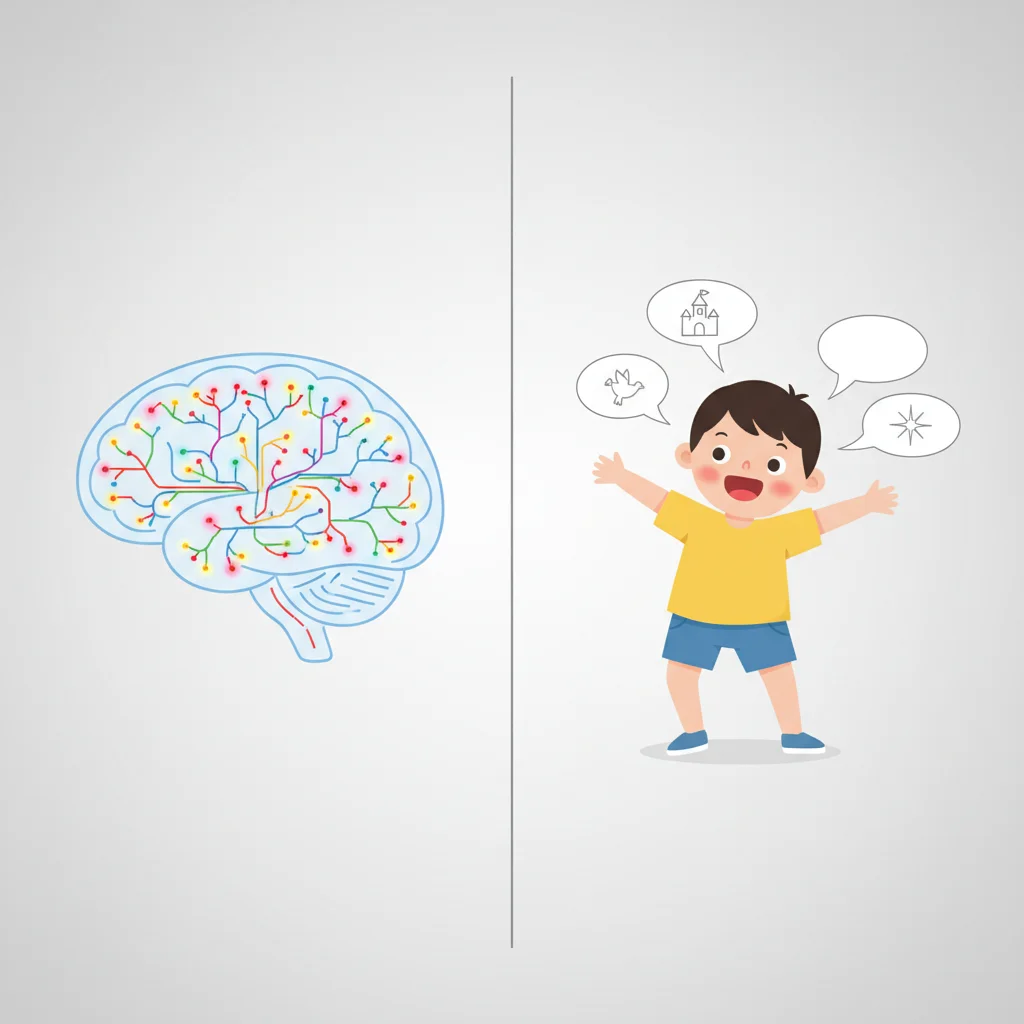
Benefits for Different Developmental Areas
{"left":"Cognitive Development: Problem-solving, sequencing, cause and effect\nSocial-Emotional: Empathy, self-expression, emotional vocabulary","right":"Physical Development: Fine motor through props, gross motor through acting\nLanguage Development: Vocabulary expansion, sentence structure, communication skills"}
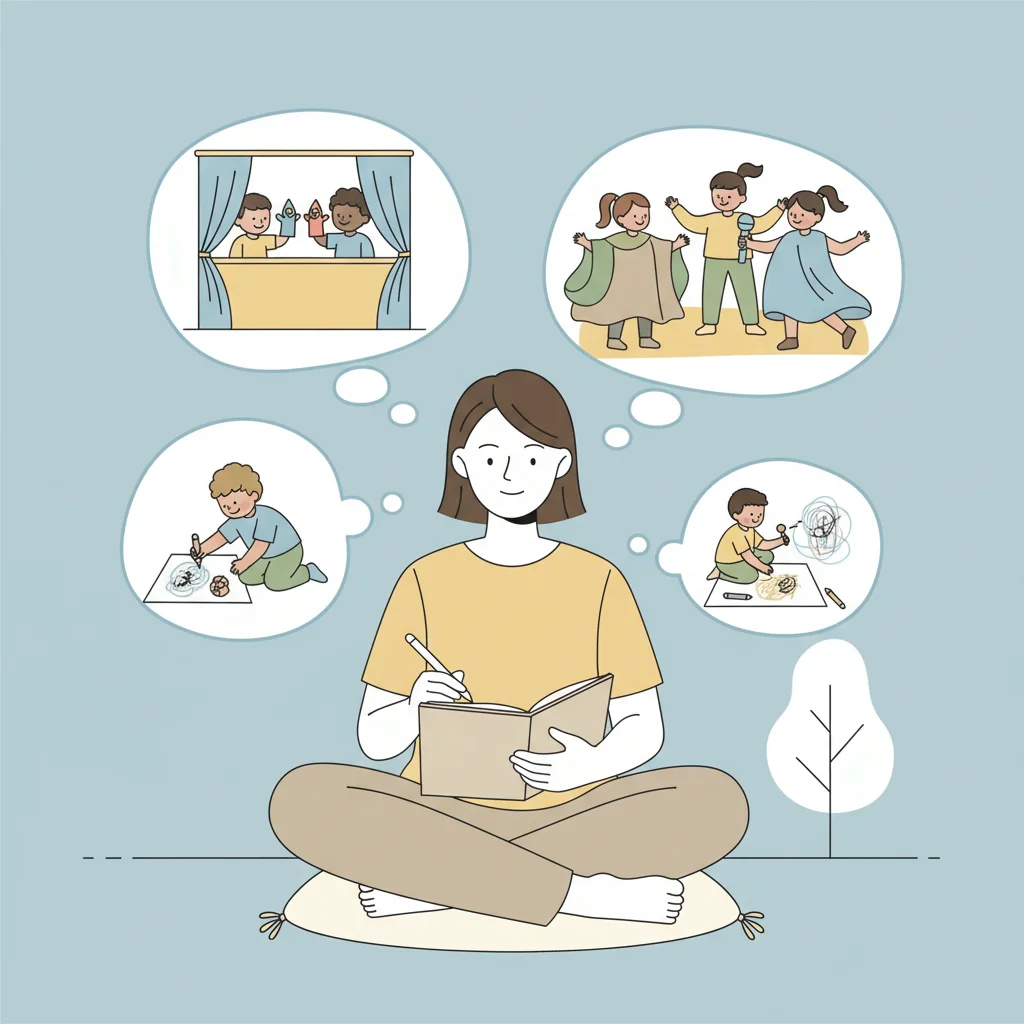
Reflection Question
Think about a child in your setting who loves to tell stories. What themes do they often explore? How do you currently respond to their storytelling attempts?
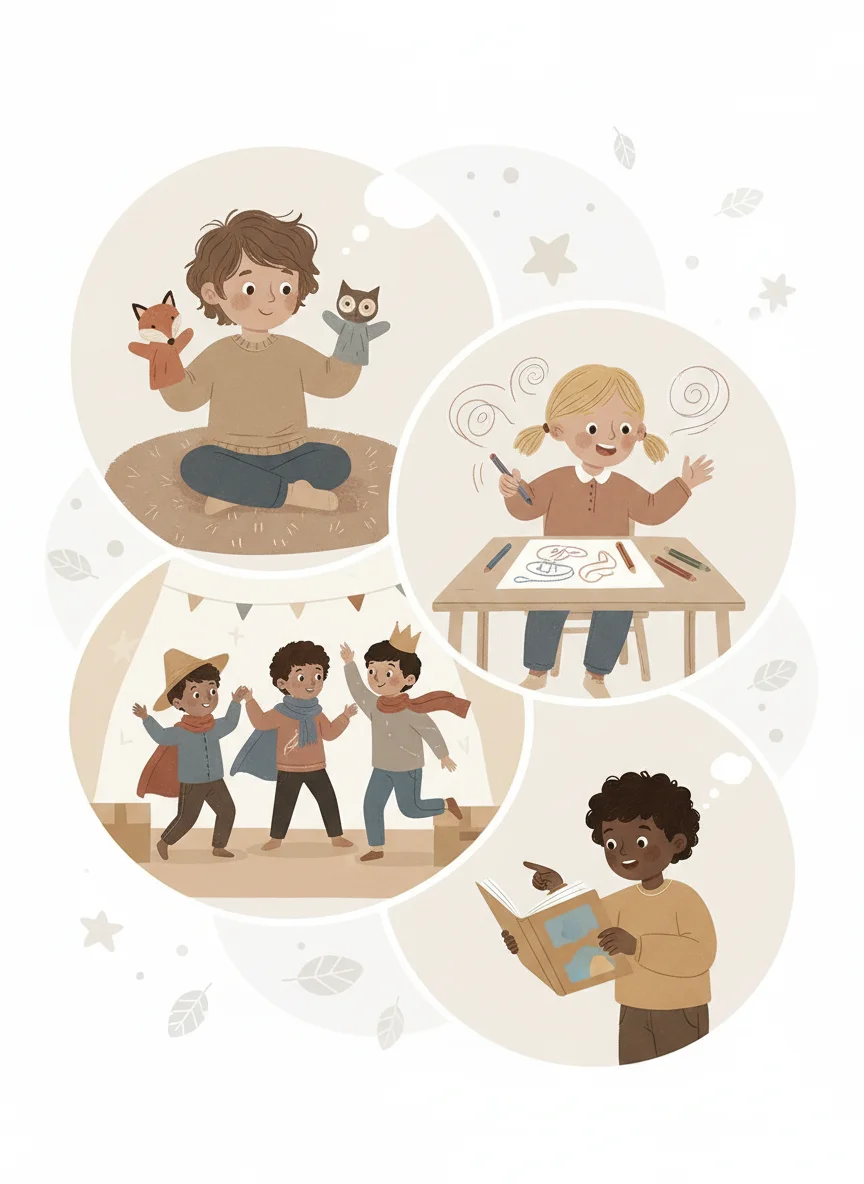
Recognising Storytelling Interest in Children
Uses props and toys to create narratives Enjoys retelling familiar stories with variations Creates elaborate pretend play scenarios Draws pictures and explains detailed stories about them Shows strong emotional reactions to stories Asks many 'what if' questions
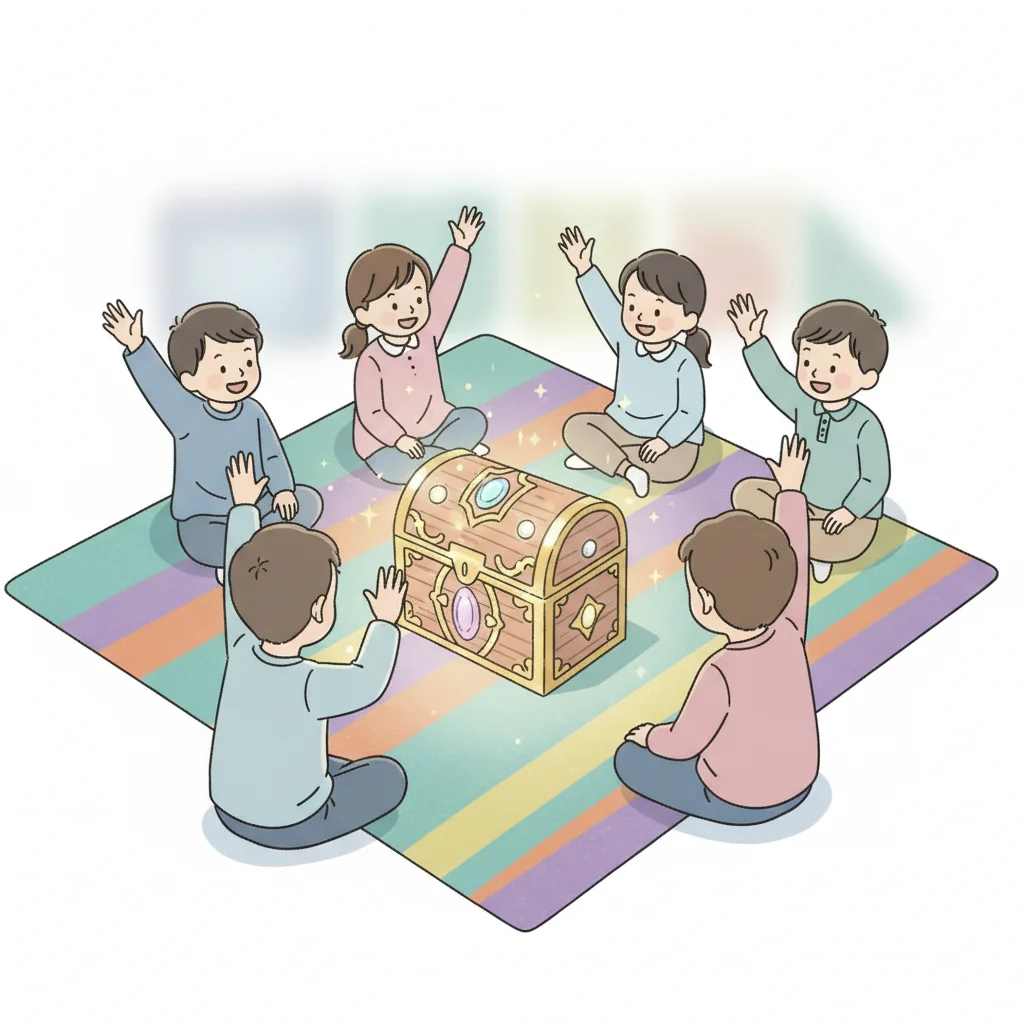
Story Starter Activity
Try this with children: 'Once upon a time, there was a magical box that could only be opened by...' Encourage children to continue the story Record their ideas on chart paper Celebrate all contributions, no matter how simple

Creating a Storytelling-Rich Environment
Dedicated story corner with comfortable seating Variety of books representing diverse cultures Props box with scarves, hats, and simple costumes Recording devices for children to capture their stories Display space for story artwork and dictated stories Quiet spaces for individual storytelling
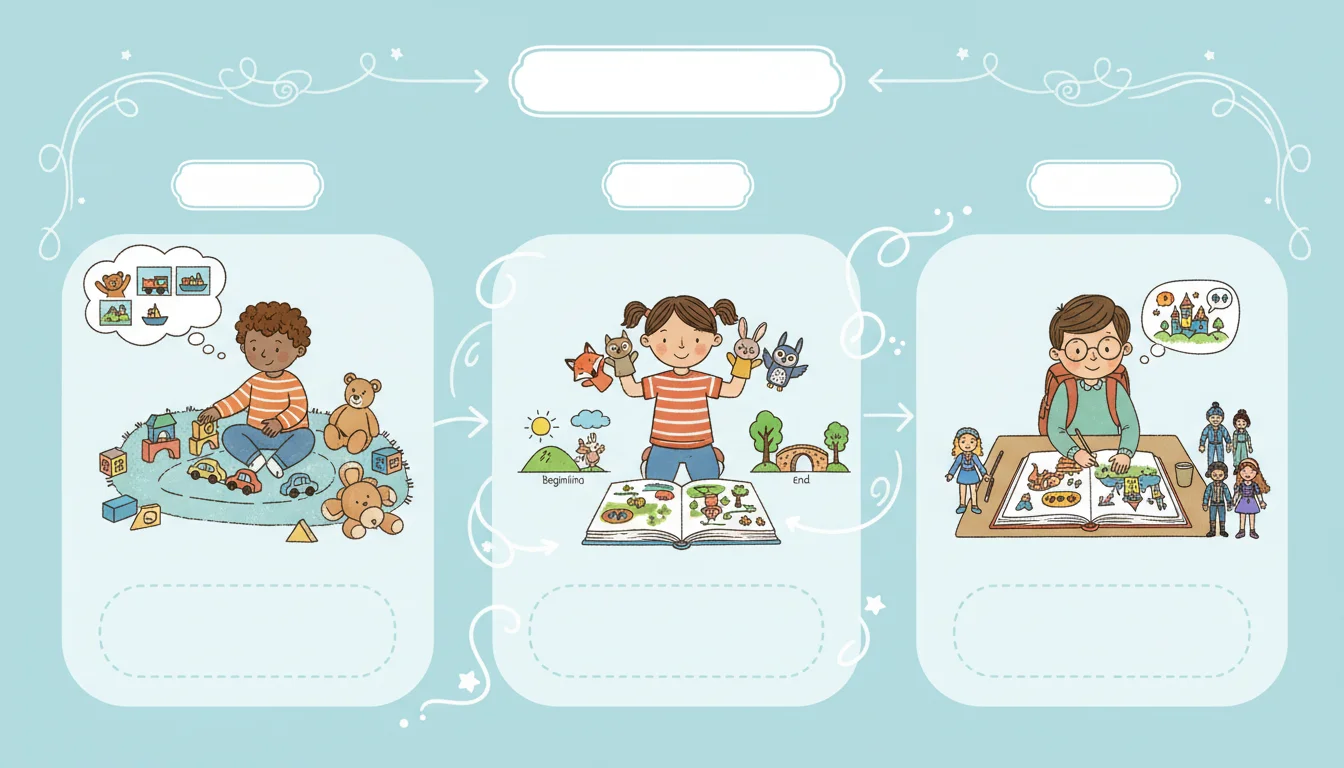
Supporting Storytelling Development Stages
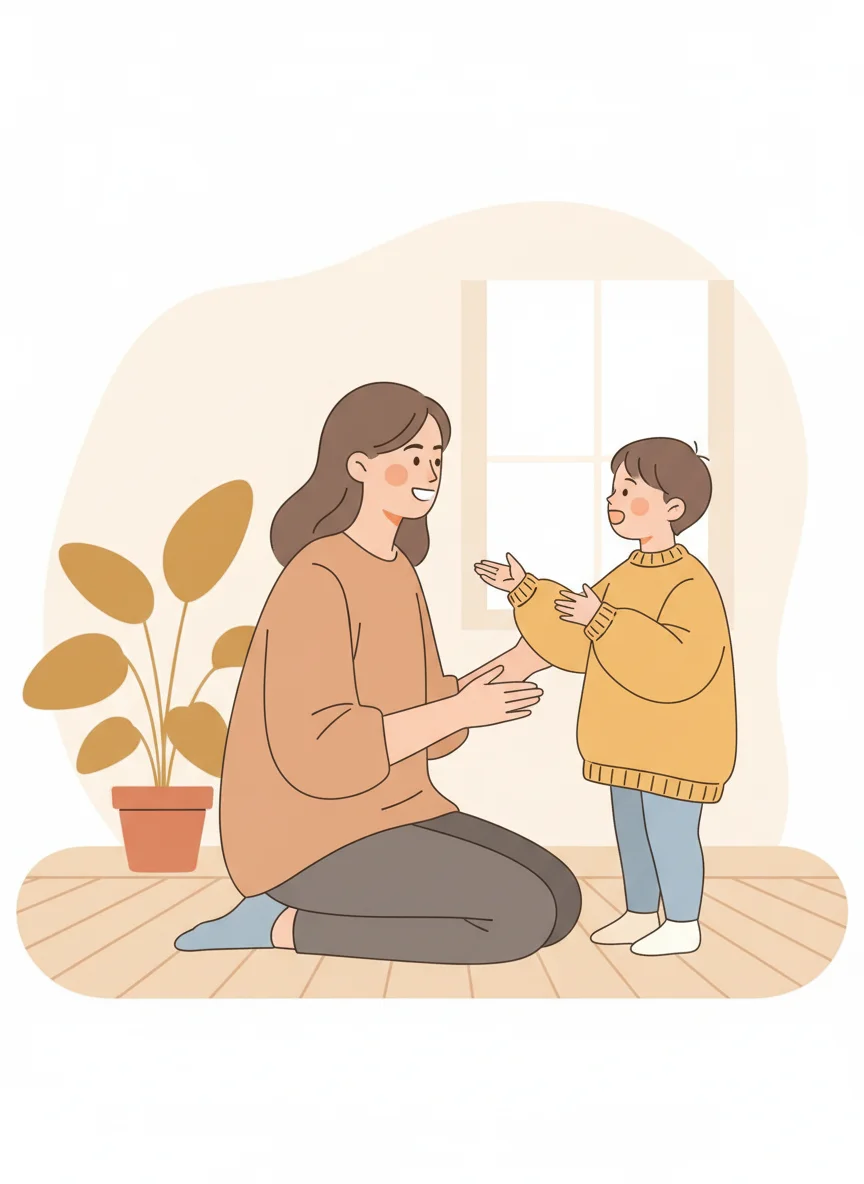
Practical Support Strategies
Listen actively and show genuine interest Ask open-ended questions: 'What happened next?' Provide thinking time - don't rush Offer story stems and prompts when needed Document and celebrate children's stories Connect stories to children's experiences Model storytelling yourself
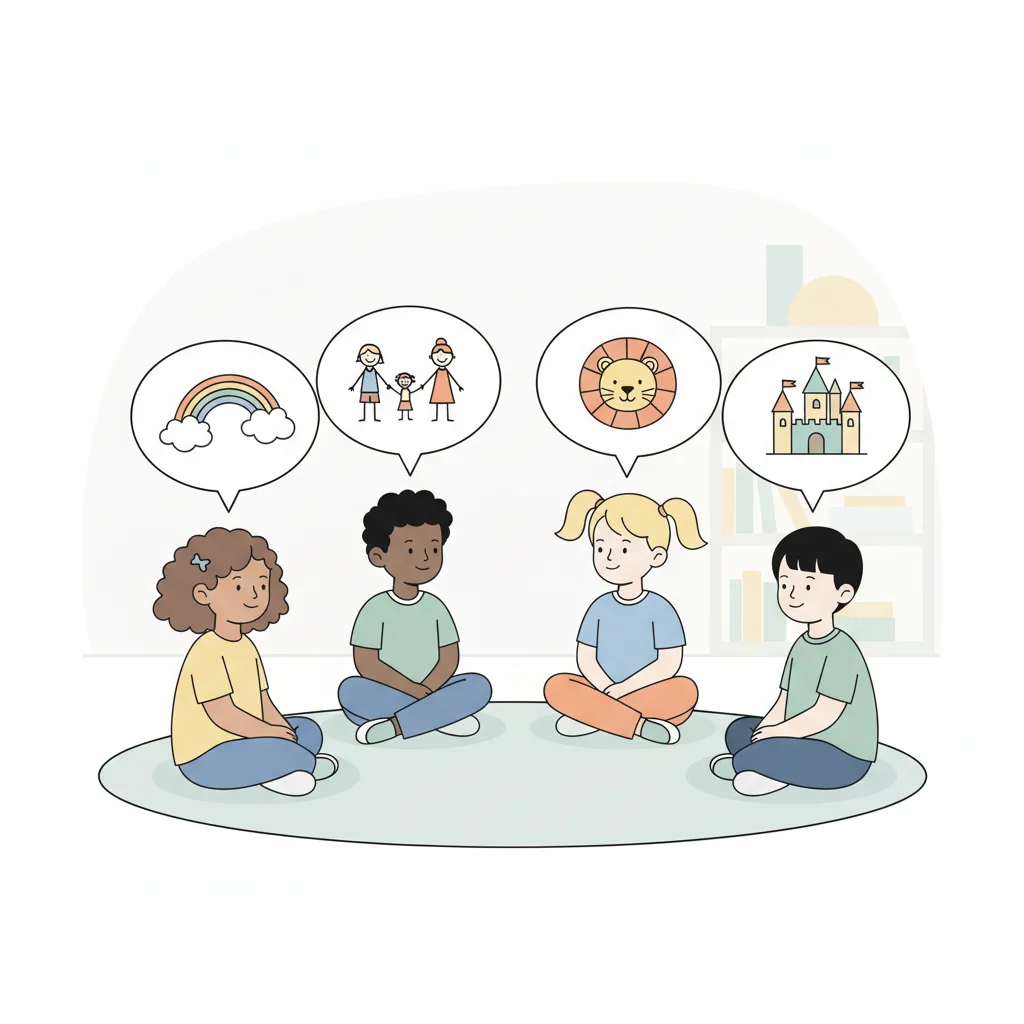
Remember
Every child has a story to tell. Our role is to create the space, time, and encouragement for those stories to emerge and flourish.