Workshop Safety: Tools and PPE
Personal Protective Equipment Tool Safety Protocols Creating a Safe Workshop Environment Year 11 Technology Education
Safety First Mindset
"Safety isn't expensive, it's priceless. The cost of an accident far exceeds the investment in prevention."
Why Workshop Safety Matters
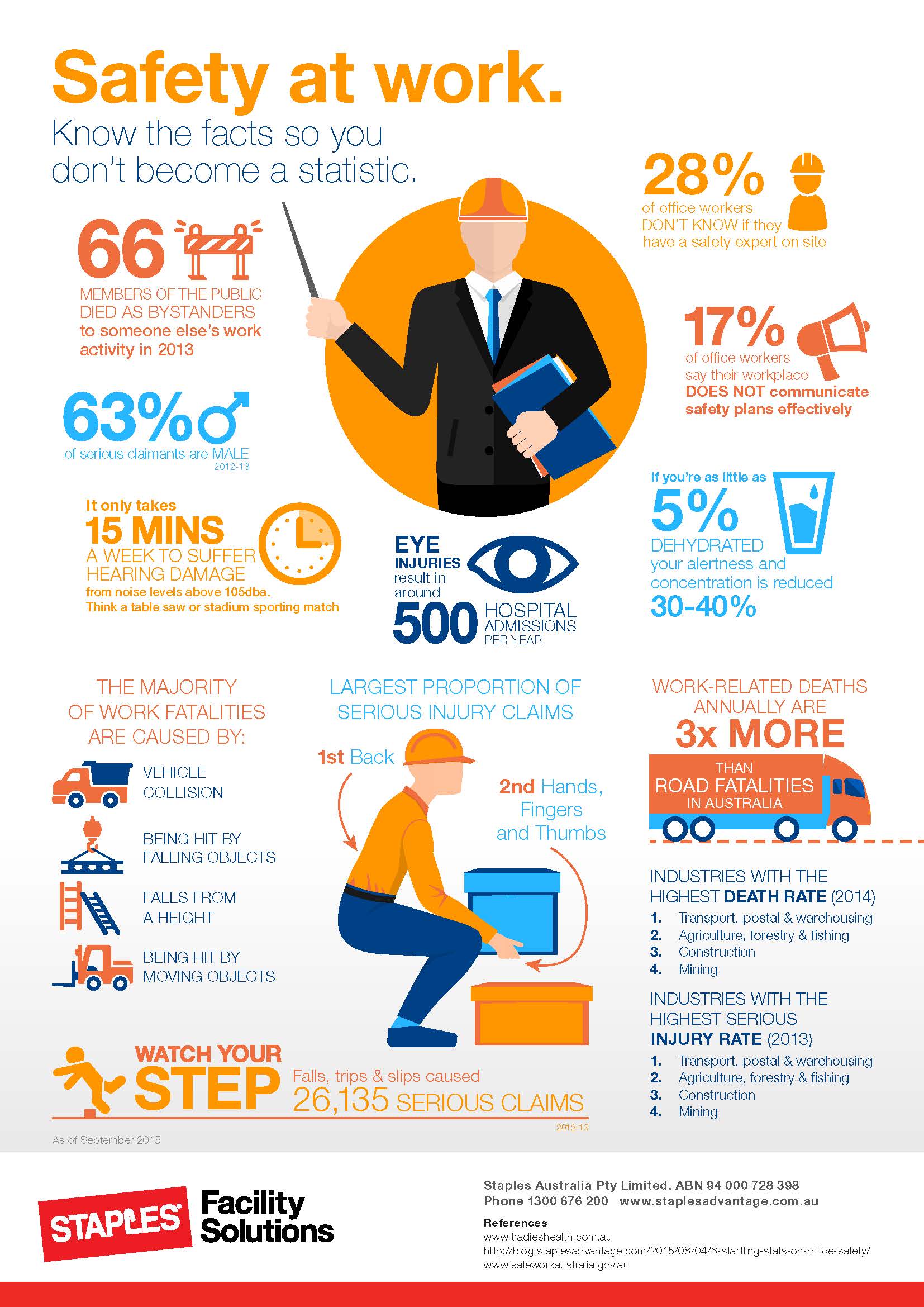
Prevents serious injuries and accidents Creates a productive learning environment Develops professional workplace habits Legal requirement in all workplaces Protects equipment and materials from damage

Common Workshop Hazards
Essential Personal Protective Equipment (PPE)
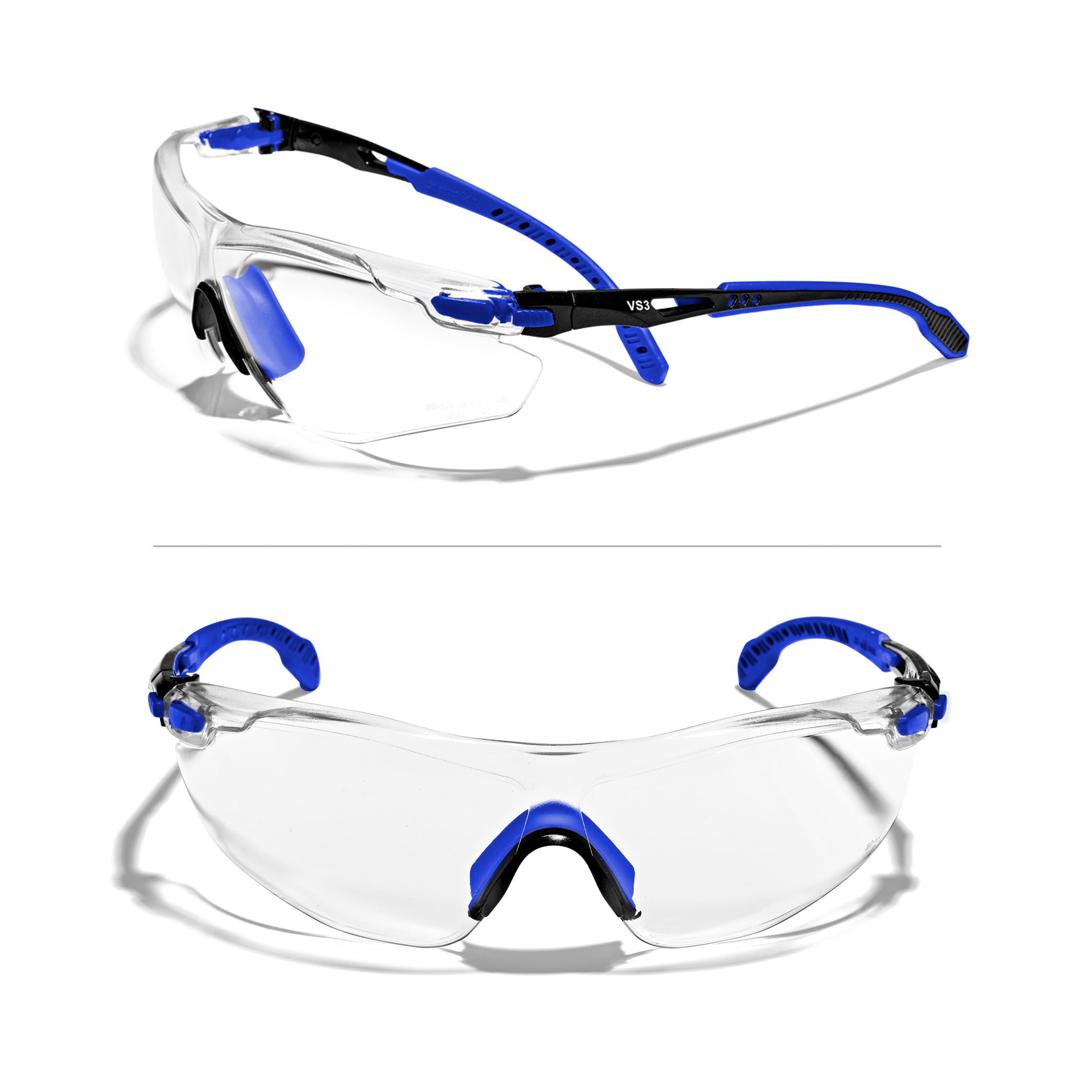
{"left":"Safety glasses - protect eyes from debris and chemicals\nHearing protection - prevent noise-induced hearing loss\nWork gloves - protect hands from cuts and splinters","right":"Closed-toe shoes - protect feet from falling objects\nDust masks - prevent inhalation of particles\nAprons - protect clothing and body from spills"}
PPE Selection Challenge
Scenario 1: Using a circular saw to cut timber Scenario 2: Sanding wooden surfaces Scenario 3: Applying wood stain or varnish Scenario 4: Using a drill press Work in pairs to identify required PPE for each scenario

Hand Tool Safety Principles
Keep tools sharp and well-maintained Use the right tool for the job Carry tools safely - never in pockets Store tools properly when not in use Inspect tools before each use Never force a tool beyond its capacity

Power Tool Safety Rules
Always disconnect power when changing bits or blades Secure workpieces before cutting or drilling Keep guards and safety devices in place Maintain firm footing and good balance Never remove safety devices or bypass switches Wait for tools to stop completely before setting down

Safety Scenario Discussion
A student is rushing to finish their project before the end of class. They decide to skip putting on safety glasses because they're 'only making one quick cut.' What could go wrong, and what should they do instead?
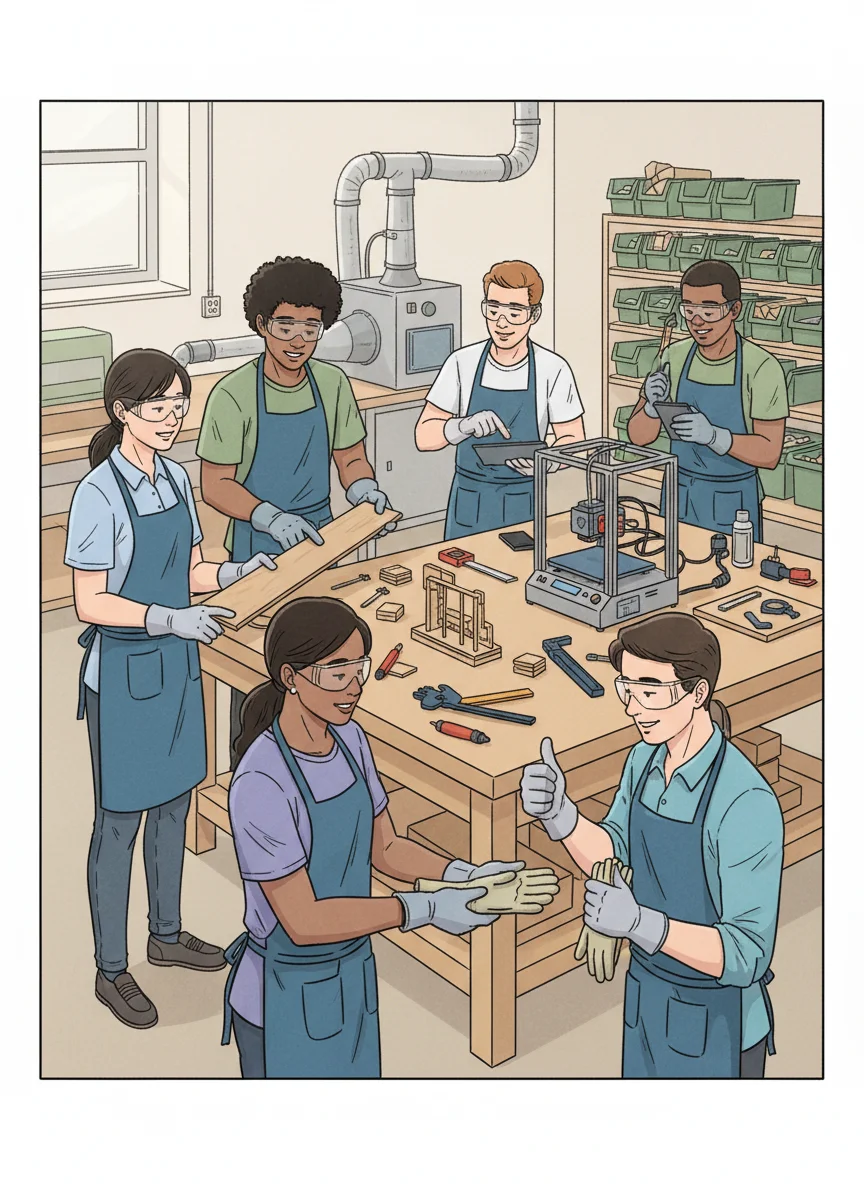
Creating a Safety Culture
Report unsafe conditions immediately Help others follow safety procedures Keep work areas clean and organized Ask questions when unsure about safety Lead by example in all workshop activities Continuous learning about new safety practices