Alice Language Features Worksheet
A free english worksheet ready for your classroom. Open in Kuraplan to grab the print-ready PDF, customize it for your students, or generate a fresh version in seconds.
Alice Language Features Worksheet
📖 Instructions
Task: Read the excerpt from Alice in Wonderland (Page 23) and identify language features in each category below. Use the examples provided to help you understand each language feature, then find your own examples from the text.
🔤 Part 1: The Code (Phonology and Orthography)
Definition: The Code refers to the spelling, punctuation, and sound patterns used in written language.
Examples from Alice in Wonderland:
• Standard spelling: "curious", "wonderful", "tumbling"
• Punctuation: Exclamation marks (!), question marks (?), commas (,)
• Contractions: "I'm", "don't", "can't", "won't"
• Dialogue punctuation: "Oh dear!" said Alice
📝 Part 2: Syntax
Definition: Syntax refers to how words are arranged to form phrases, clauses, and sentences.
Examples from Alice in Wonderland:
• Simple sentences: "Alice was beginning to get very tired."
• Complex sentences: "When she thought it over afterwards, it occurred to her..."
• Questions: "What is the use of a book without pictures?"
• Exclamations: "Oh dear! Oh dear! I shall be late!"
Simple sentence: _________________________________________________
Complex sentence: _________________________________________________
Question: _________________________________________________
Exclamation: _________________________________________________
🔧 Part 3: Morphology
Definition: Morphology is the study of word formation, including prefixes, suffixes, compound words, and word parts.
Examples from Alice in Wonderland:
• Contractions: "I'm" (I am), "don't" (do not)
• Compound words: "rabbit-hole", "pocket-watch"
• Suffixes: "wonderful" (-ful), "beginning" (-ing), "tired" (-ed)
• Possessives: "Alice's sister", "rabbit's waistcoat"
Compound words: _________________________________________________
Words with suffixes: _________________________________________________
Possessives: _________________________________________________
🎨 Part 4: Figurative Language
Definition: Figurative language uses words in creative ways to create vivid imagery and deeper meaning.
Types of Figurative Language:
• Similes: Comparisons using "like" or "as" - "fell like a stone"
• Metaphors: Direct comparisons - "time is money"
• Personification: Giving human qualities to non-human things
• Symbolism: Objects representing deeper meanings
• Hyperbole: Exaggeration for effect
🏆 Part 5: Analysis and Reflection
About This Worksheet
Free in Kuraplan
Sign up free, grab the PDF, and customize it for your class.
Print-Ready
Formatted for standard paper. Clean layout, easy to read.
AI-Generated
Created with Kuraplan's AI, designed for real classroom use.
For Teachers & Parents
Use in classrooms, for homework, tutoring, or homeschool.
Need a custom version of this worksheet?
Kuraplan's AI generates custom worksheets in seconds — differentiated for every learner, aligned to your curriculum.
Generate Custom Worksheets — FreeMore English Worksheets
Mythical Settings: Descriptive Language
Free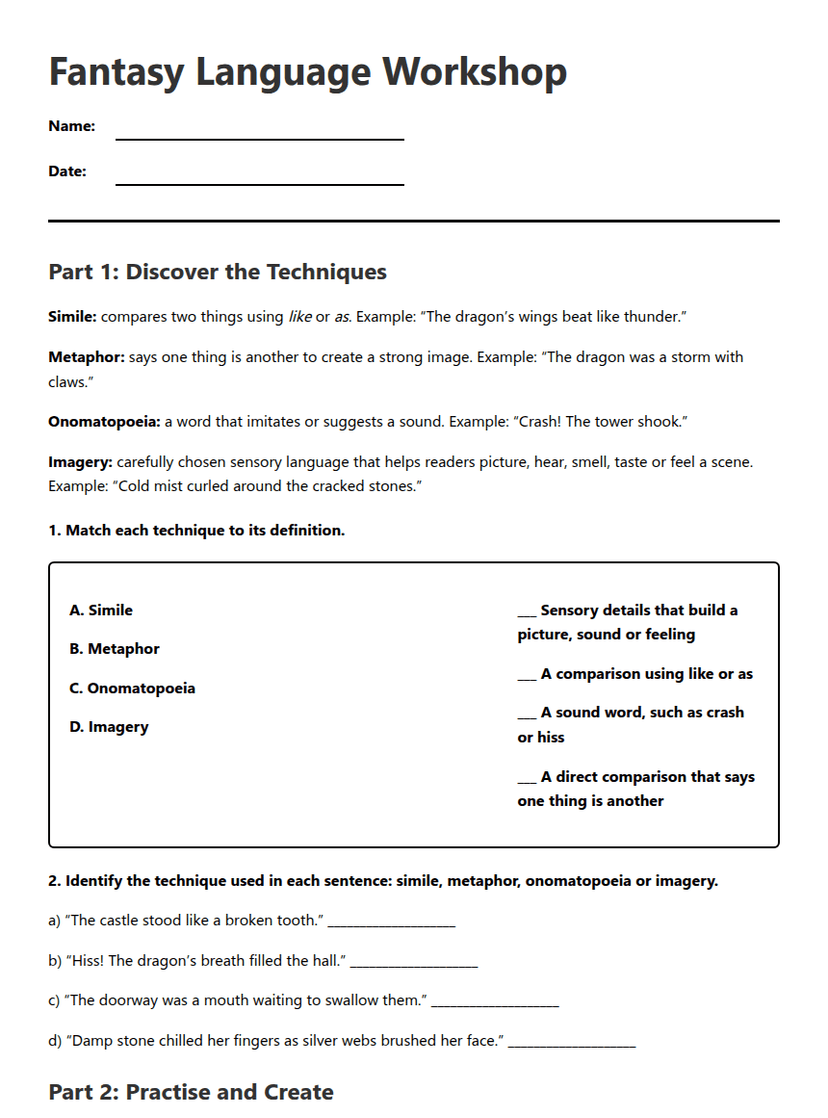
Fantasy Language Workshop
Free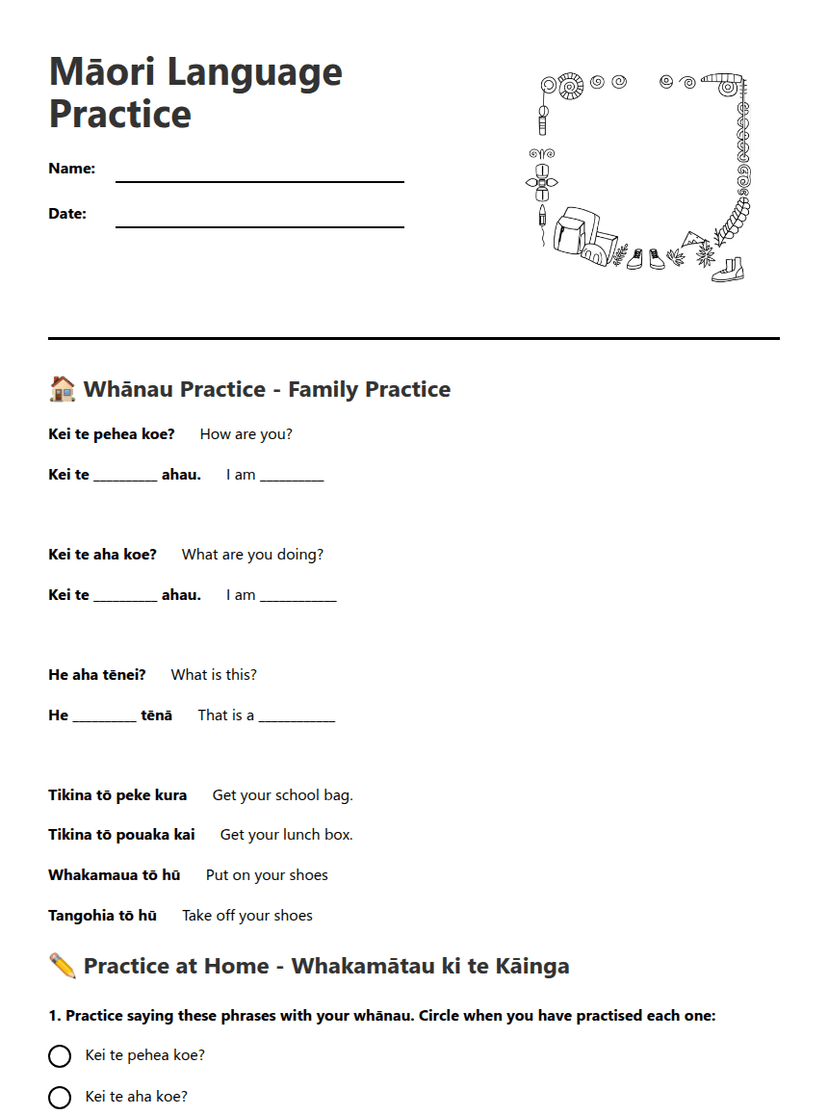
Māori Language Practice
Free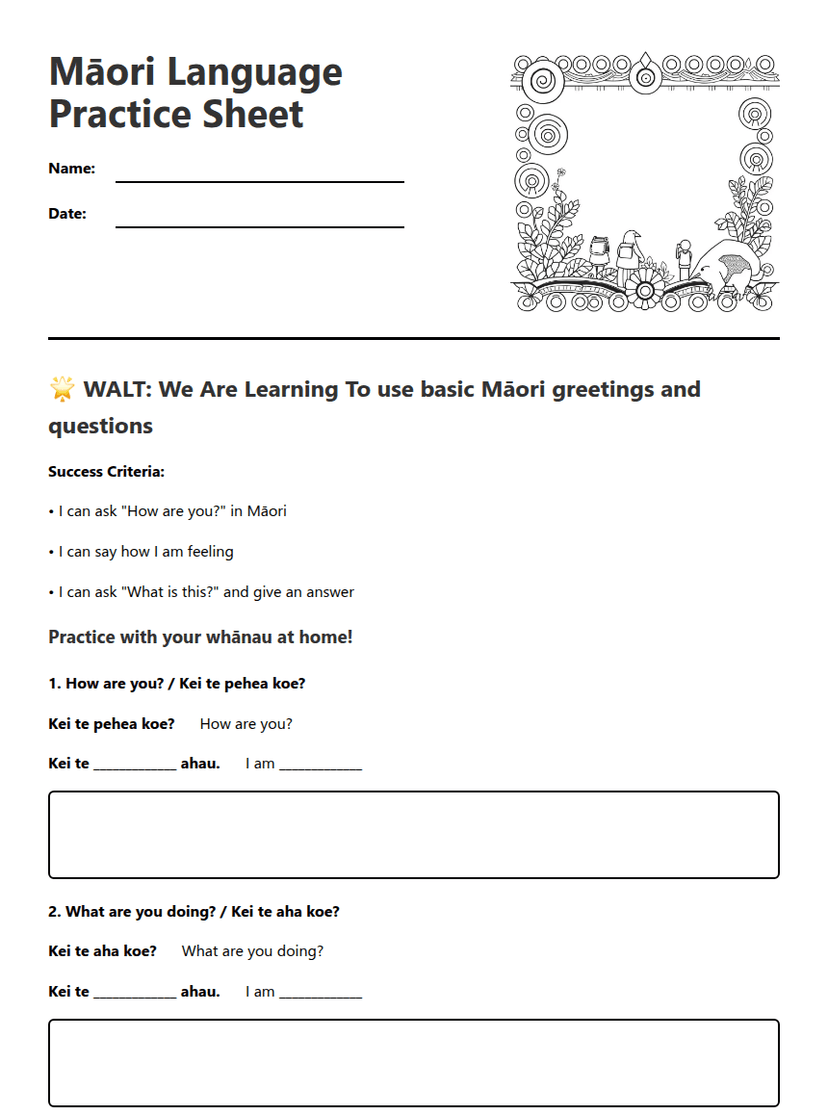
Māori Language Practice Sheet
Free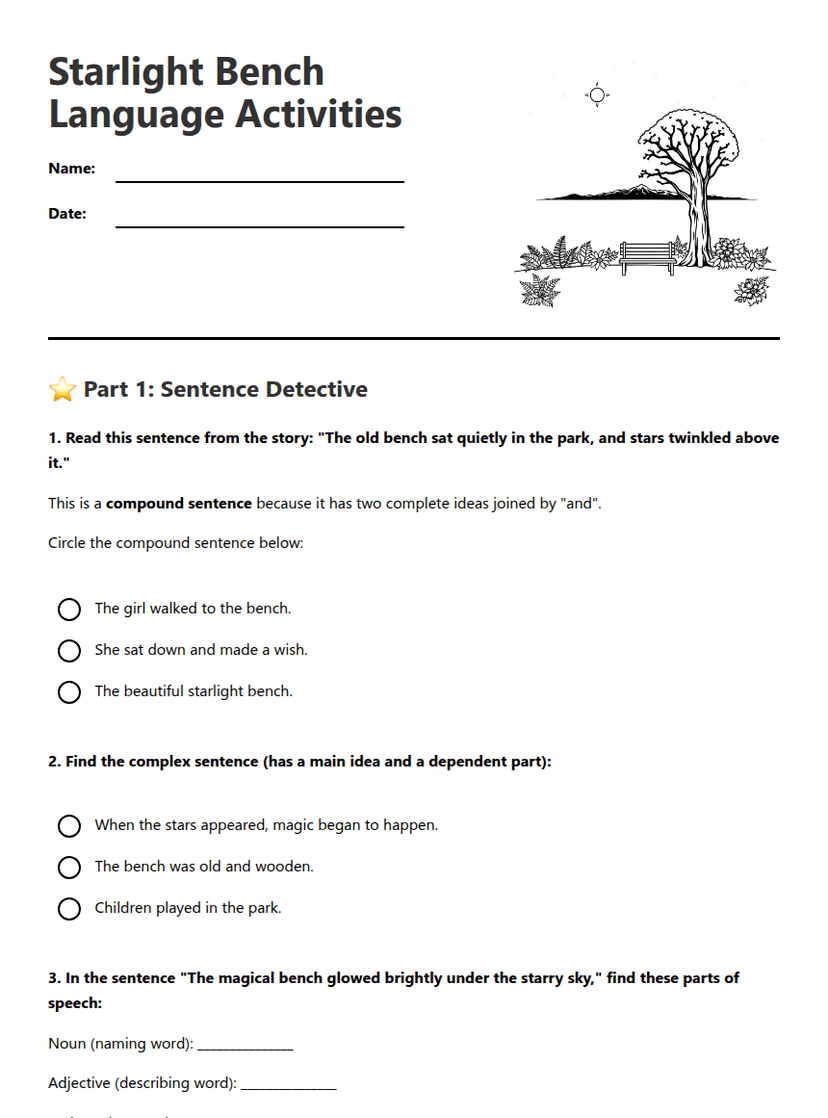
Starlight Bench Language Activities
Free
Language Arts Revision Quiz
Free
Poetry Language Features Guide
Free