Chinese Porcelain Vase History
A free social sciences worksheet ready for your classroom. Open in Kuraplan to grab the print-ready PDF, customize it for your students, or generate a fresh version in seconds.
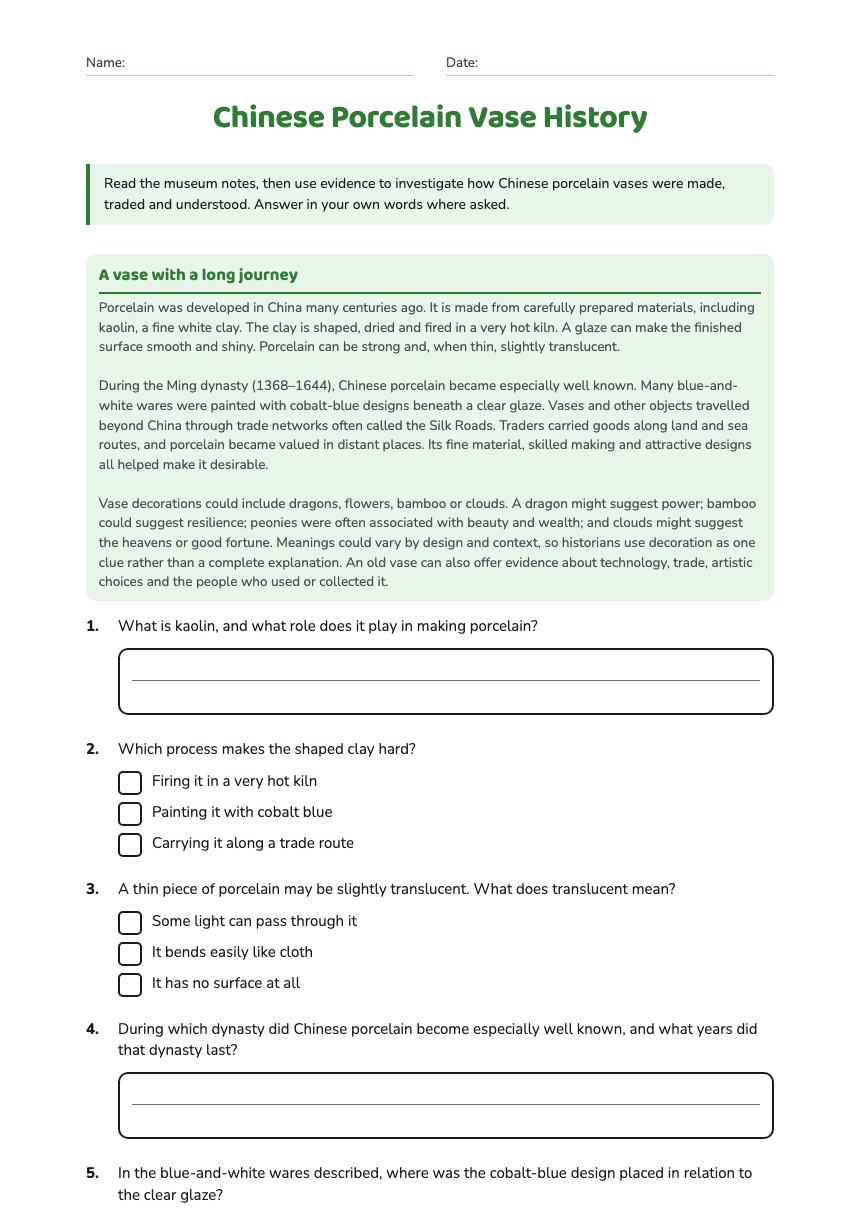
Chinese Porcelain Vase History
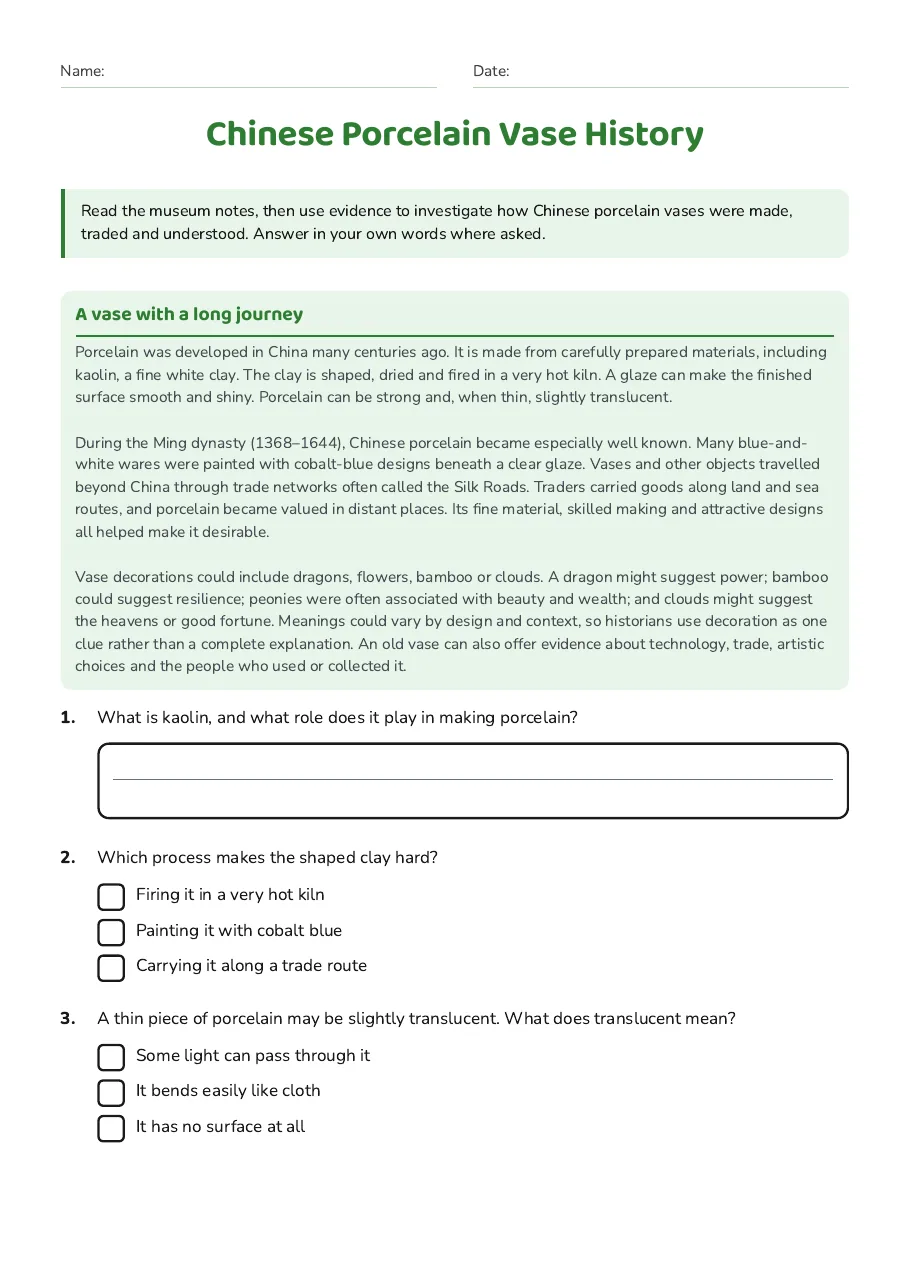
A vase with a long journey
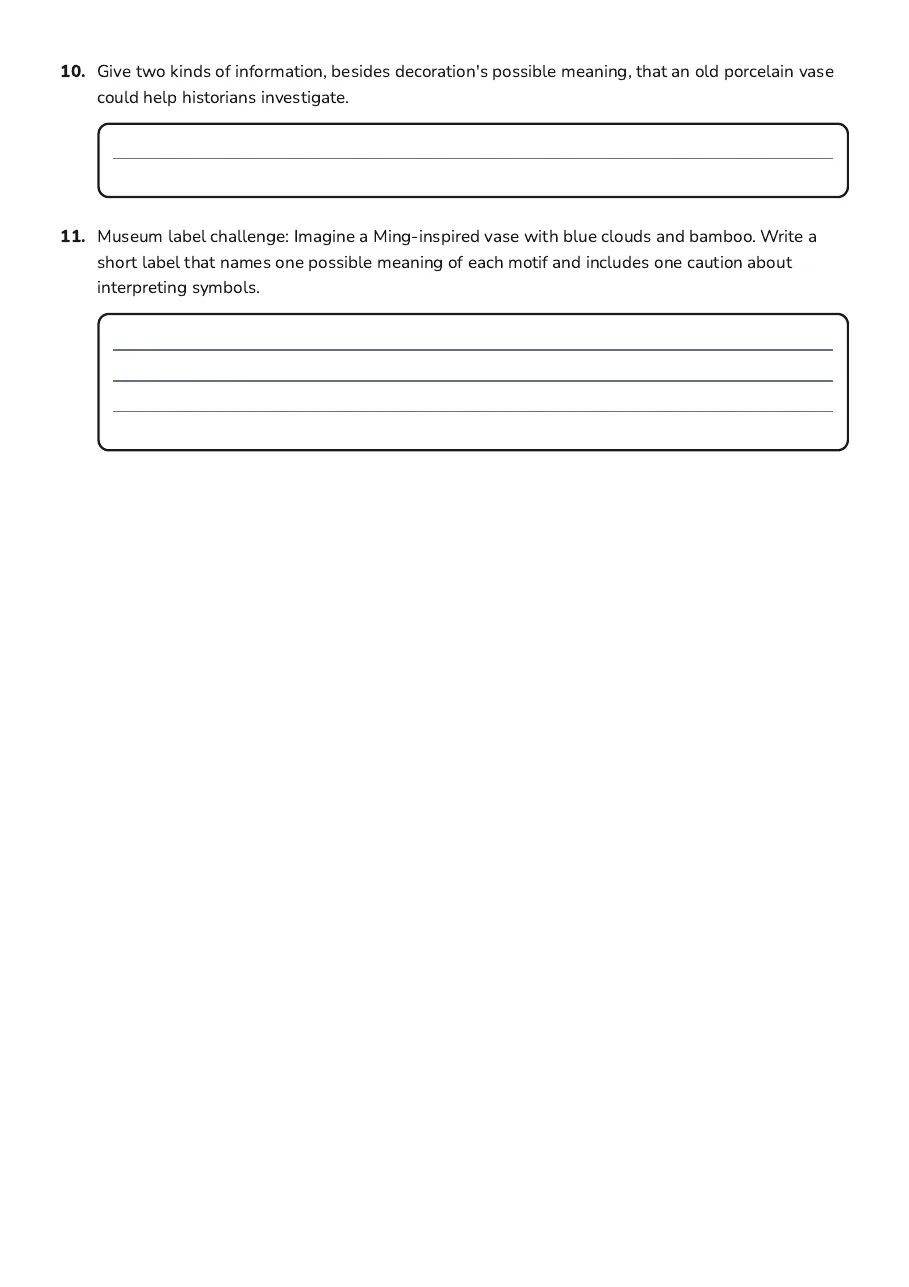
Porcelain was developed in China many centuries ago. It is made from carefully prepared materials, including kaolin, a fine white clay. The clay is shaped, dried and fired in a very hot kiln. A glaze can make the finished surface smooth and shiny. Porcelain can be strong and, when thin, slightly translucent. During the Ming dynasty (1368–1644), Chinese porcelain became especially well known. Many blue-and-white wares were painted with cobalt-blue designs beneath a clear glaze. Vases and other objects travelled beyond China through trade networks often called the Silk Roads. Traders carried goods along land and sea routes, and porcelain became valued in distant places. Its fine material, skilled making and attractive designs all helped make it desirable. Vase decorations could include dragons, flowers, bamboo or clouds. A dragon might suggest power; bamboo could suggest resilience; peonies were often associated with beauty and wealth; and clouds might suggest the heavens or good fortune. Meanings could vary by design and context, so historians use decoration as one clue rather than a complete explanation. An old vase can also offer evidence about technology, trade, artistic choices and the people who used or collected it.
- Firing it in a very hot kiln
- Painting it with cobalt blue
- Carrying it along a trade route
- Some light can pass through it
- It bends easily like cloth
- It has no surface at all
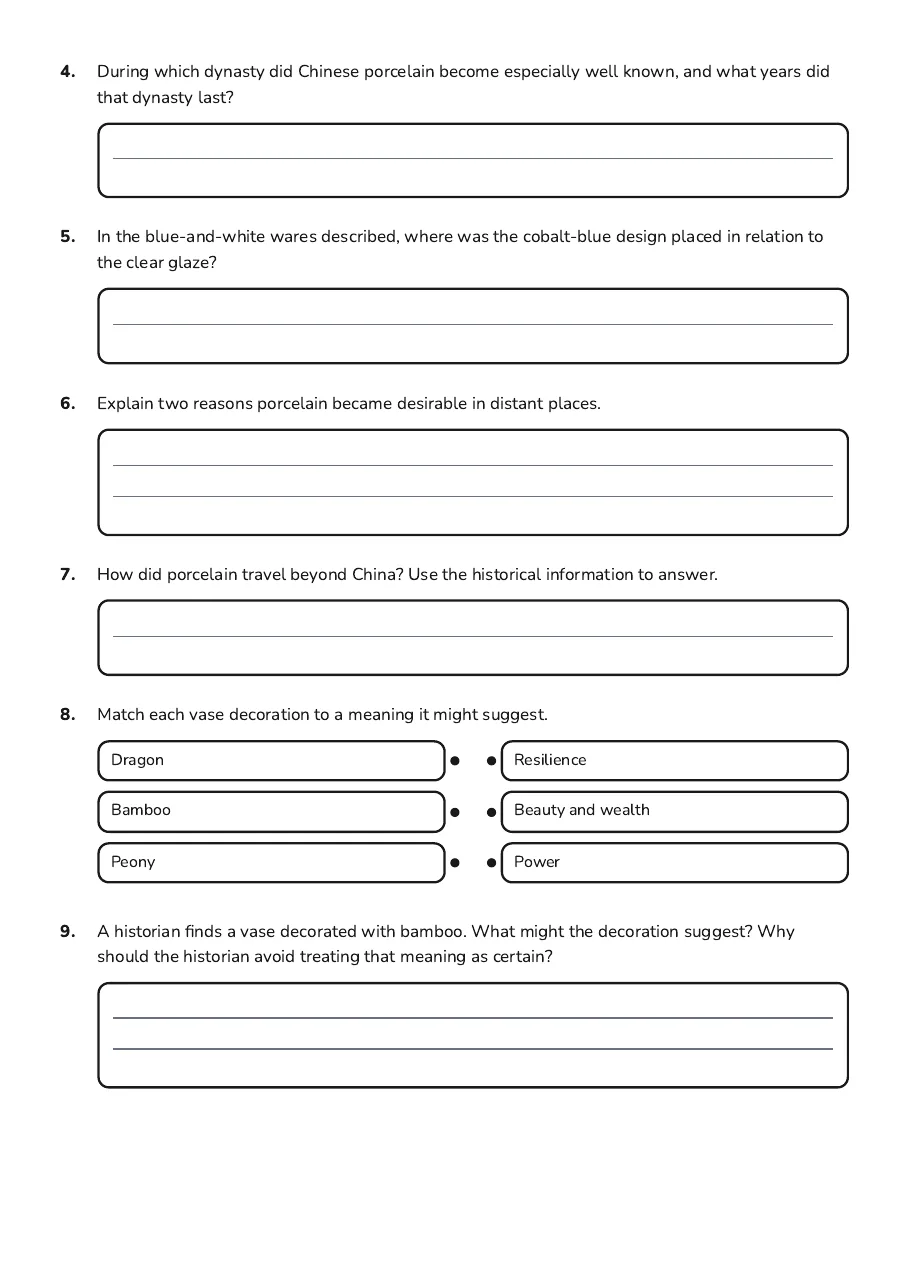
- Dragon
- Bamboo
- Peony
- Resilience
- Beauty and wealth
- Power
3 printable pages
Page 1
Page 2
Page 3
About This Worksheet
Free in Kuraplan
Sign up free, grab the PDF, and customize it for your class.
Print-Ready
Formatted for standard paper. Clean layout, easy to read.
AI-Generated
Created with Kuraplan's AI, designed for real classroom use.
For Teachers & Parents
Use in classrooms, for homework, tutoring, or homeschool.
Need a custom version of this worksheet?
Kuraplan's AI generates custom worksheets in seconds — differentiated for every learner, aligned to your curriculum.
Generate Custom Worksheets — FreeMore Social Sciences Worksheets
Parihaka: Historical Perspectives Worksheet
Free
Ancient Egyptian Burial Practices
Free
Russell Church Research
Free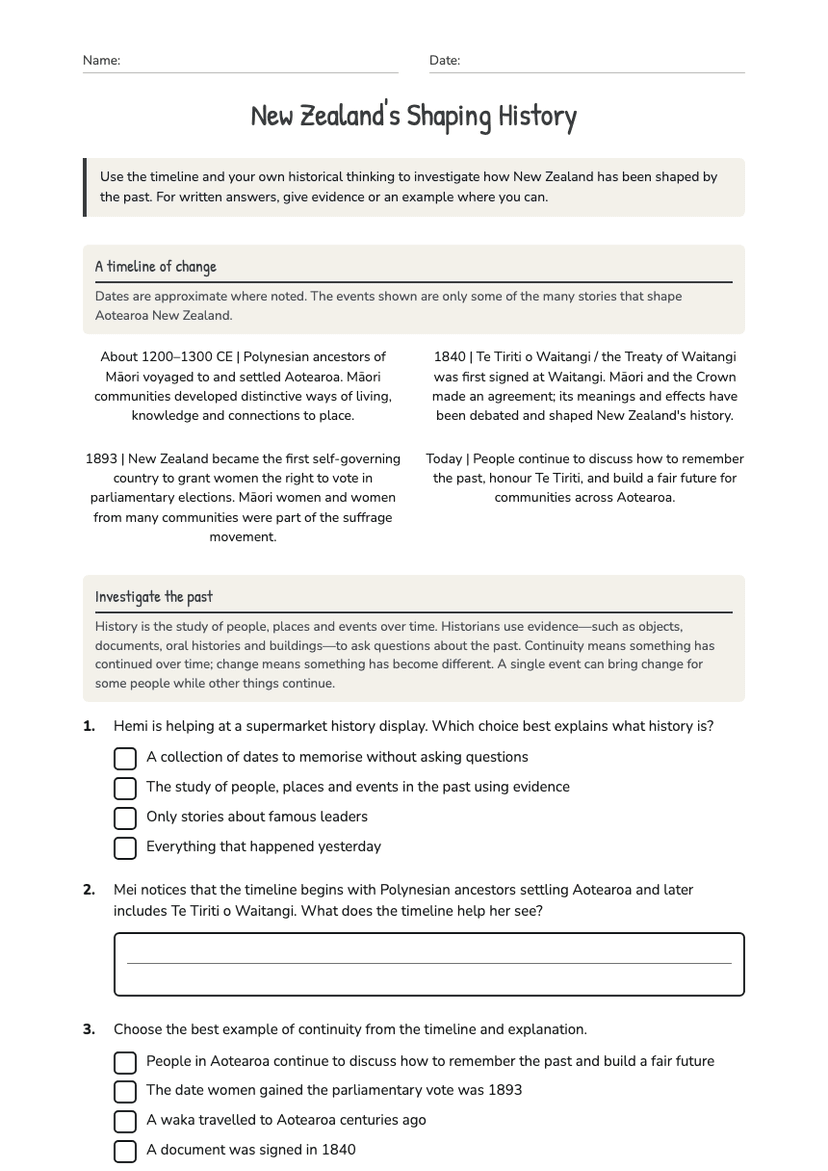
New Zealand's Shaping History
Free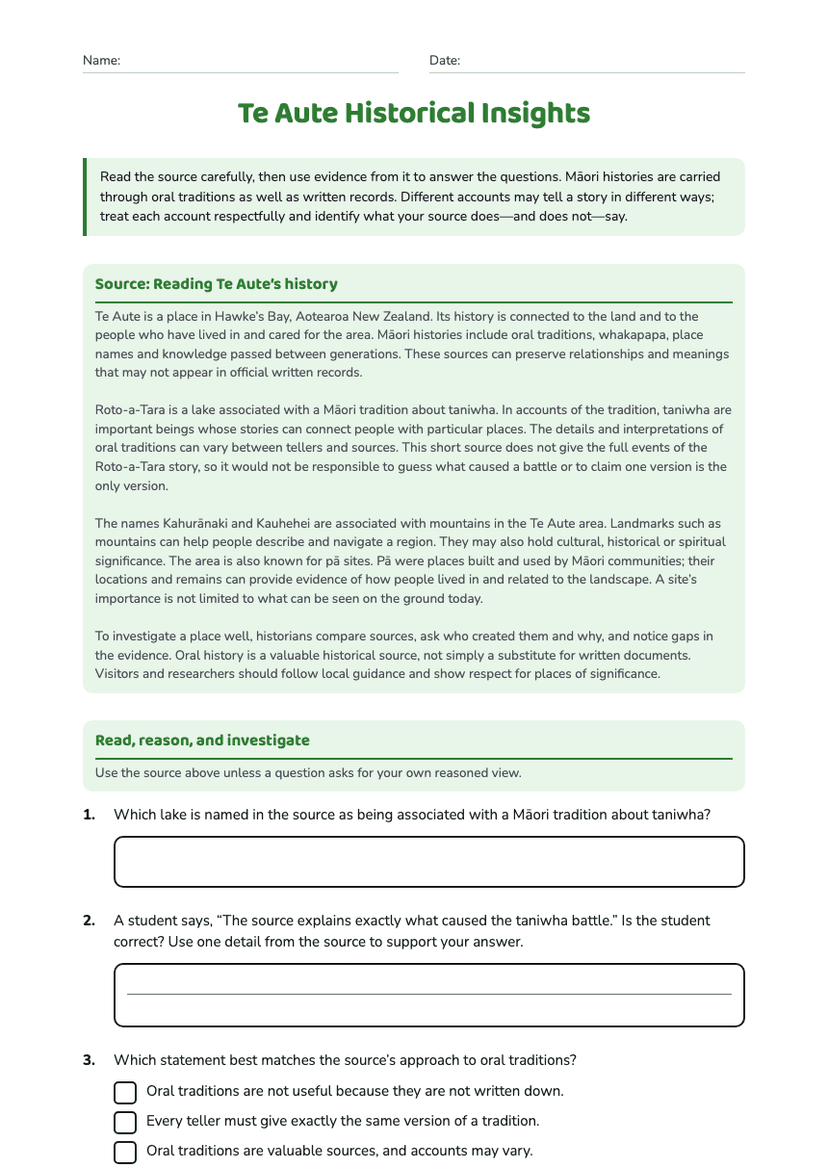
Te Aute Historical Insights
Free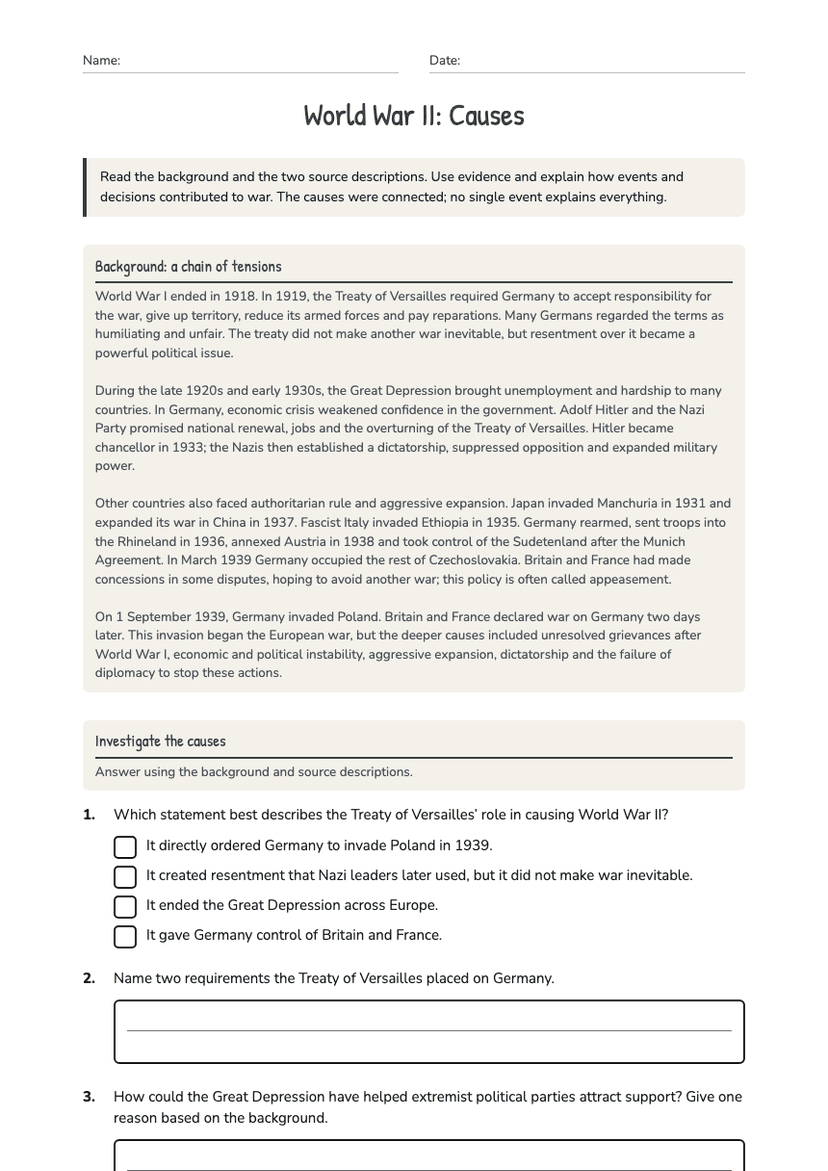
World War II: Causes
Free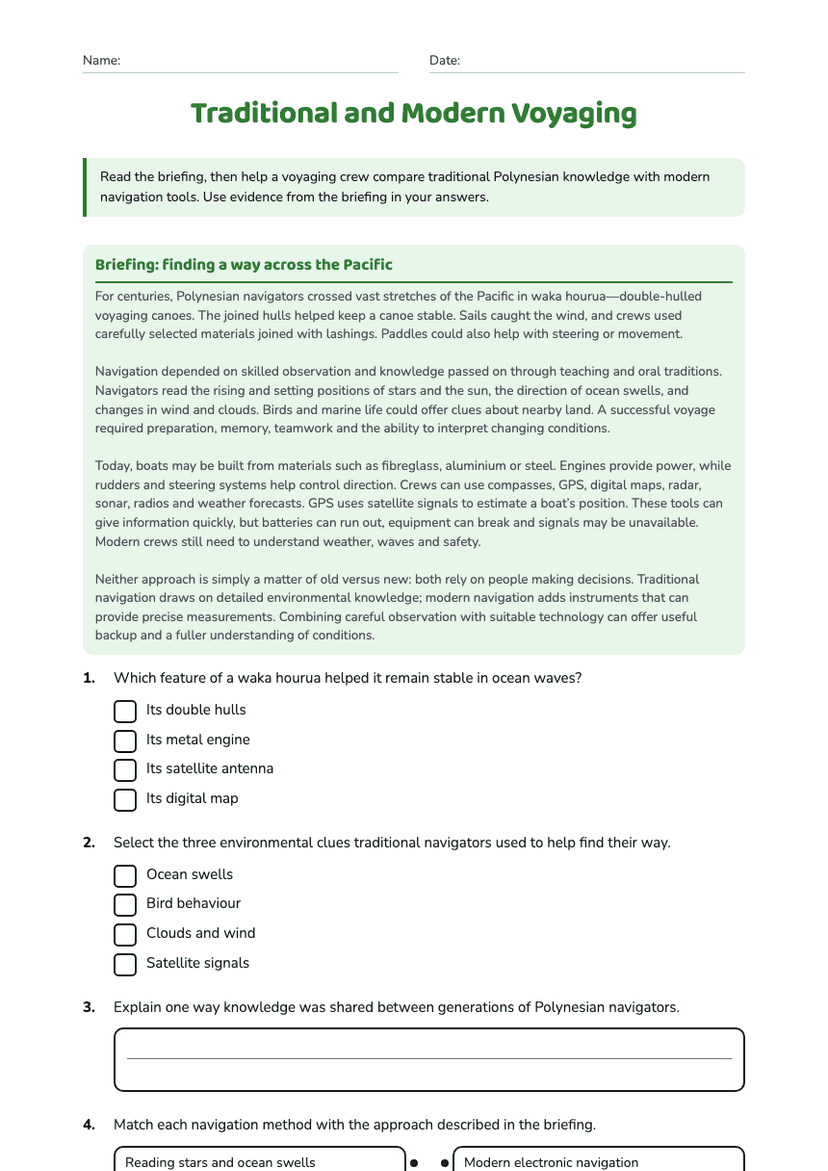
Traditional and Modern Voyaging
Free