Exploring Government Systems
A free social sciences worksheet ready for your classroom. Open in Kuraplan to grab the print-ready PDF, customize it for your students, or generate a fresh version in seconds.
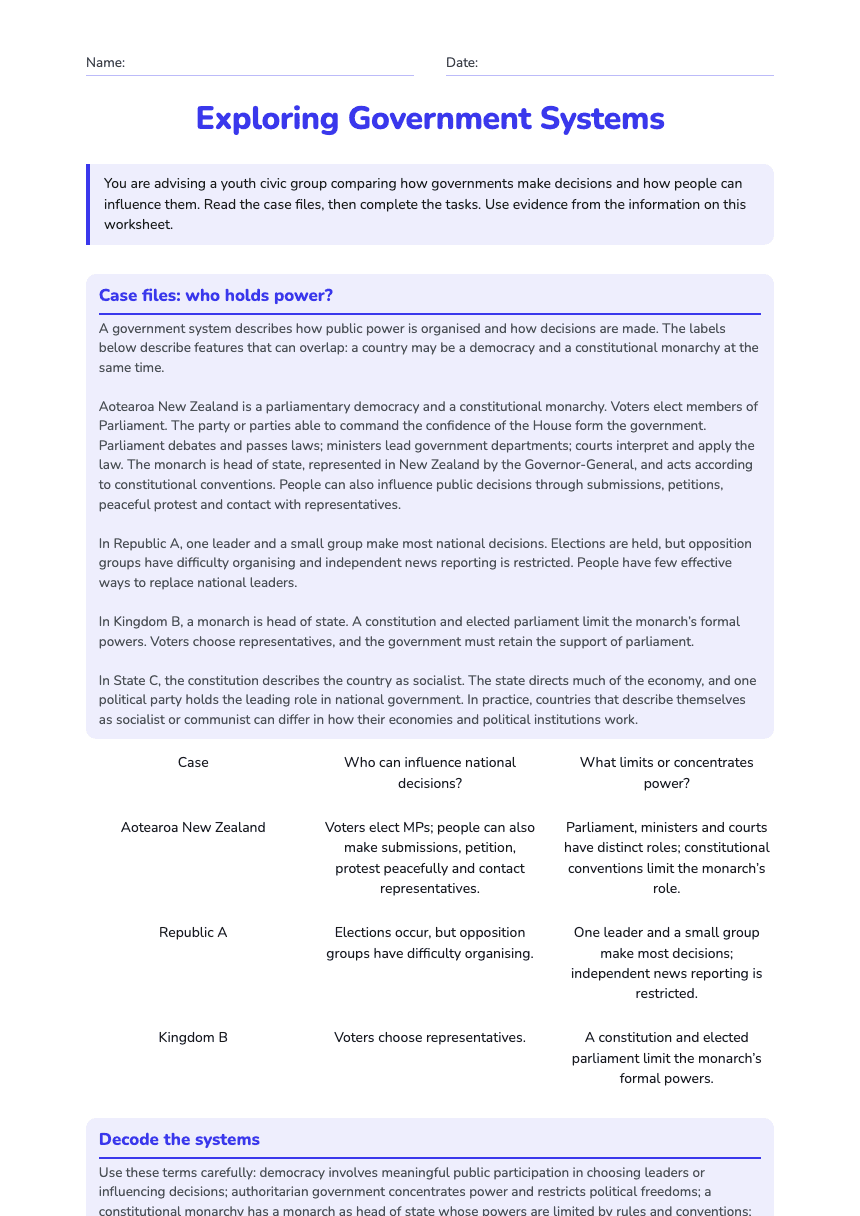
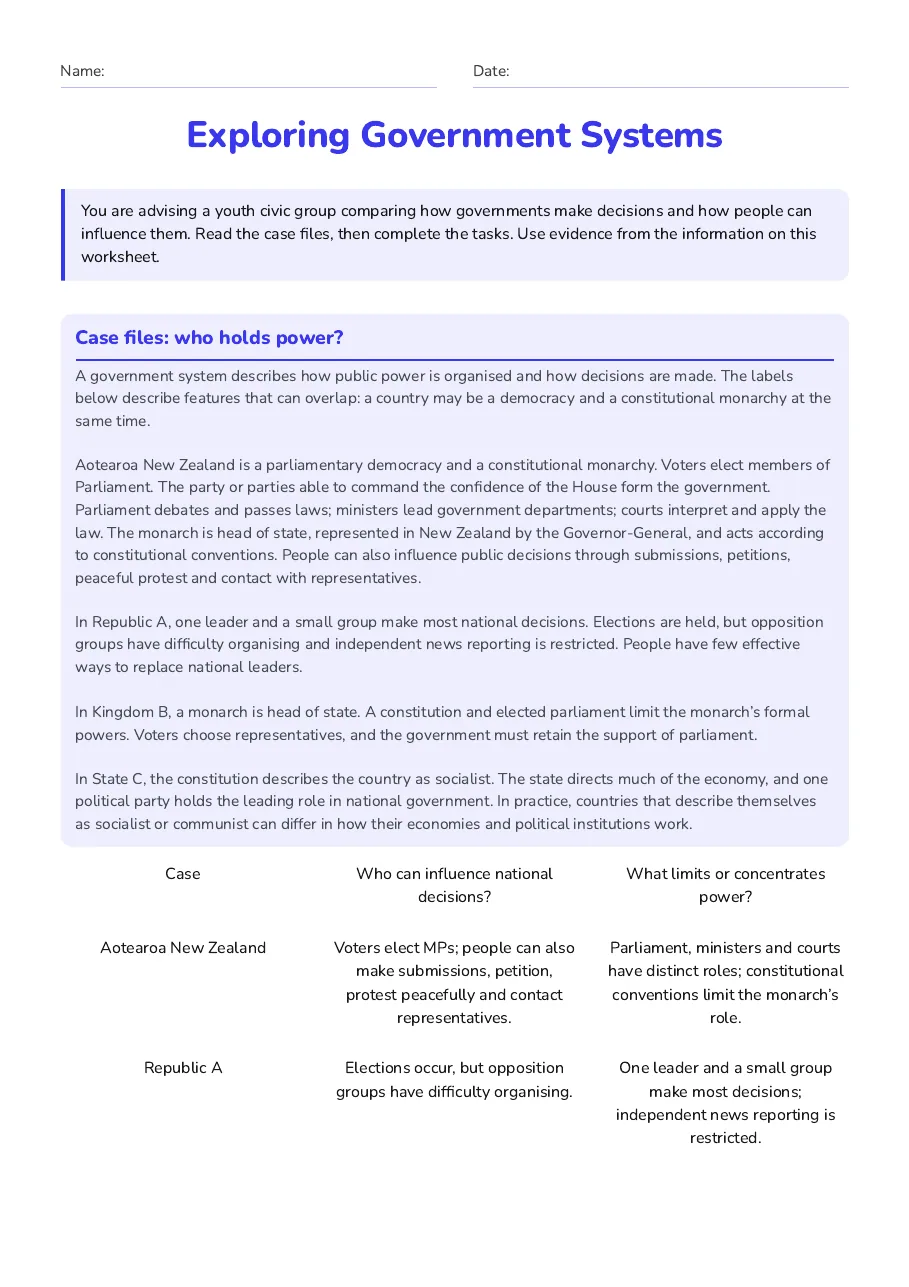
Exploring Government Systems
Case files: who holds power?
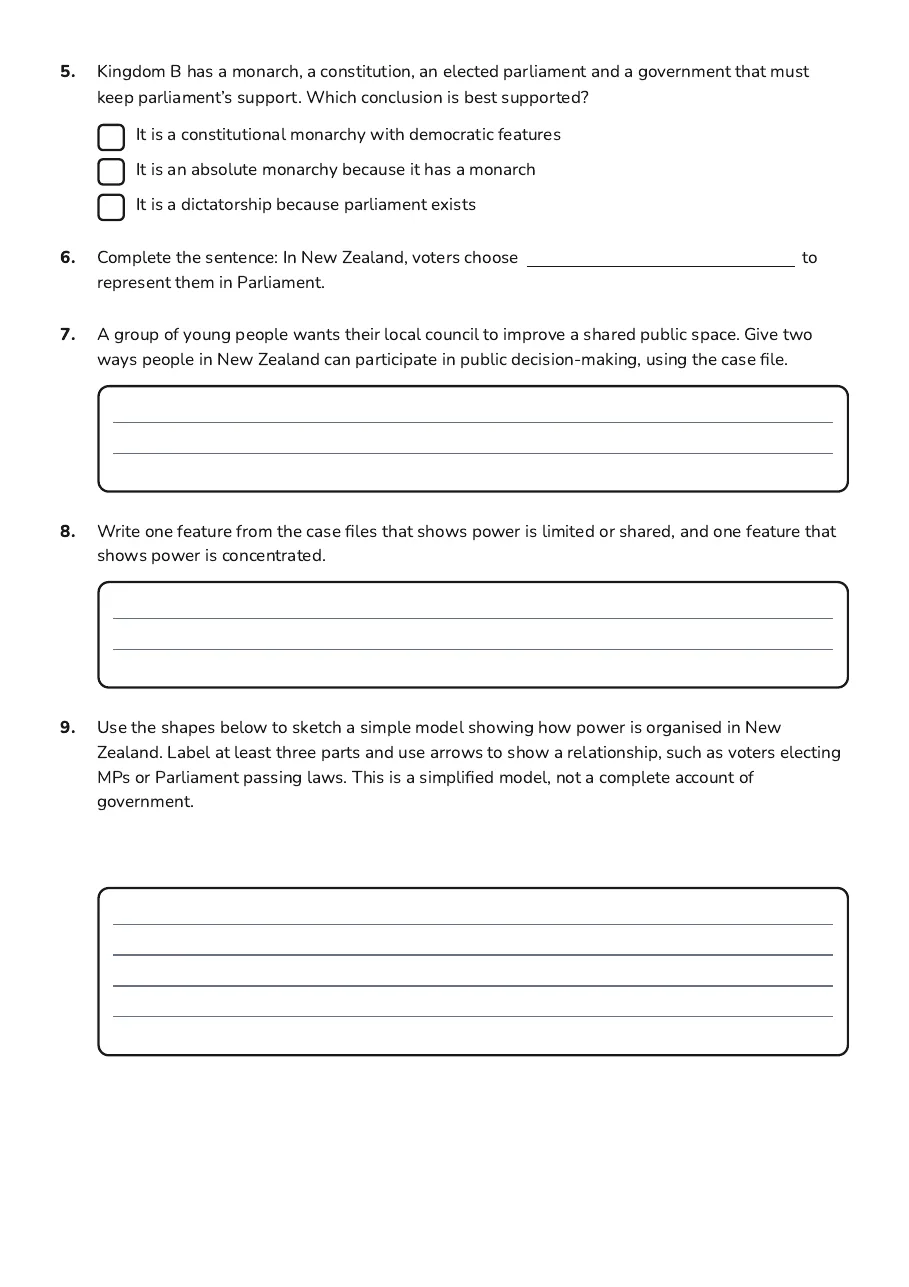
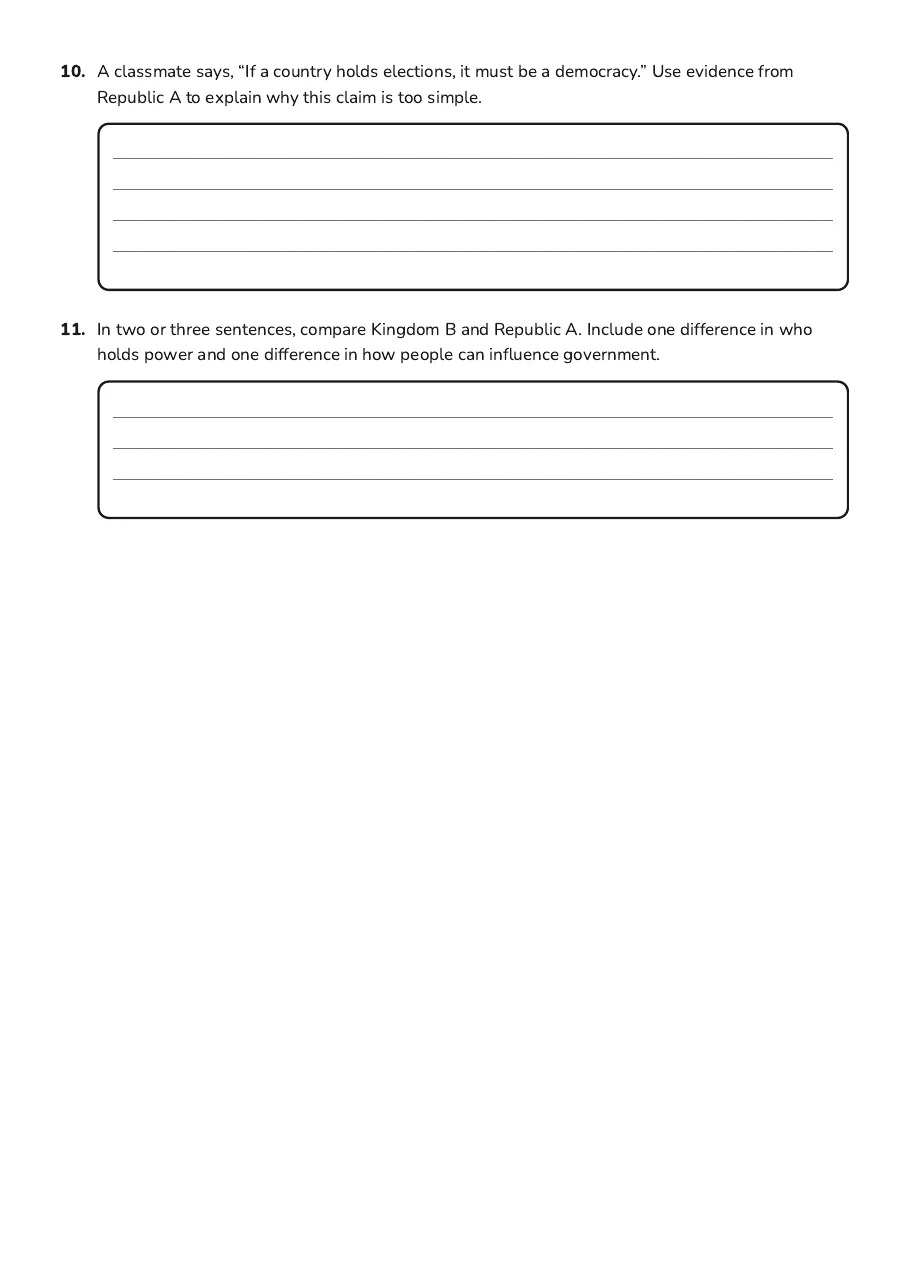
A government system describes how public power is organised and how decisions are made. The labels below describe features that can overlap: a country may be a democracy and a constitutional monarchy at the same time. Aotearoa New Zealand is a parliamentary democracy and a constitutional monarchy. Voters elect members of Parliament. The party or parties able to command the confidence of the House form the government. Parliament debates and passes laws; ministers lead government departments; courts interpret and apply the law. The monarch is head of state, represented in New Zealand by the Governor-General, and acts according to constitutional conventions. People can also influence public decisions through submissions, petitions, peaceful protest and contact with representatives. In Republic A, one leader and a small group make most national decisions. Elections are held, but opposition groups have difficulty organising and independent news reporting is restricted. People have few effective ways to replace national leaders. In Kingdom B, a monarch is head of state. A constitution and elected parliament limit the monarch’s formal powers. Voters choose representatives, and the government must retain the support of parliament. In State C, the constitution describes the country as socialist. The state directs much of the economy, and one political party holds the leading role in national government. In practice, countries that describe themselves as socialist or communist can differ in how their economies and political institutions work.
Case
Who can influence national decisions?
What limits or concentrates power?
Aotearoa New Zealand
Voters elect MPs; people can also make submissions, petition, protest peacefully and contact representatives.
Parliament, ministers and courts have distinct roles; constitutional conventions limit the monarch’s role.
Republic A
Elections occur, but opposition groups have difficulty organising.
One leader and a small group make most decisions; independent news reporting is restricted.
Kingdom B
Voters choose representatives.
A constitution and elected parliament limit the monarch’s formal powers.
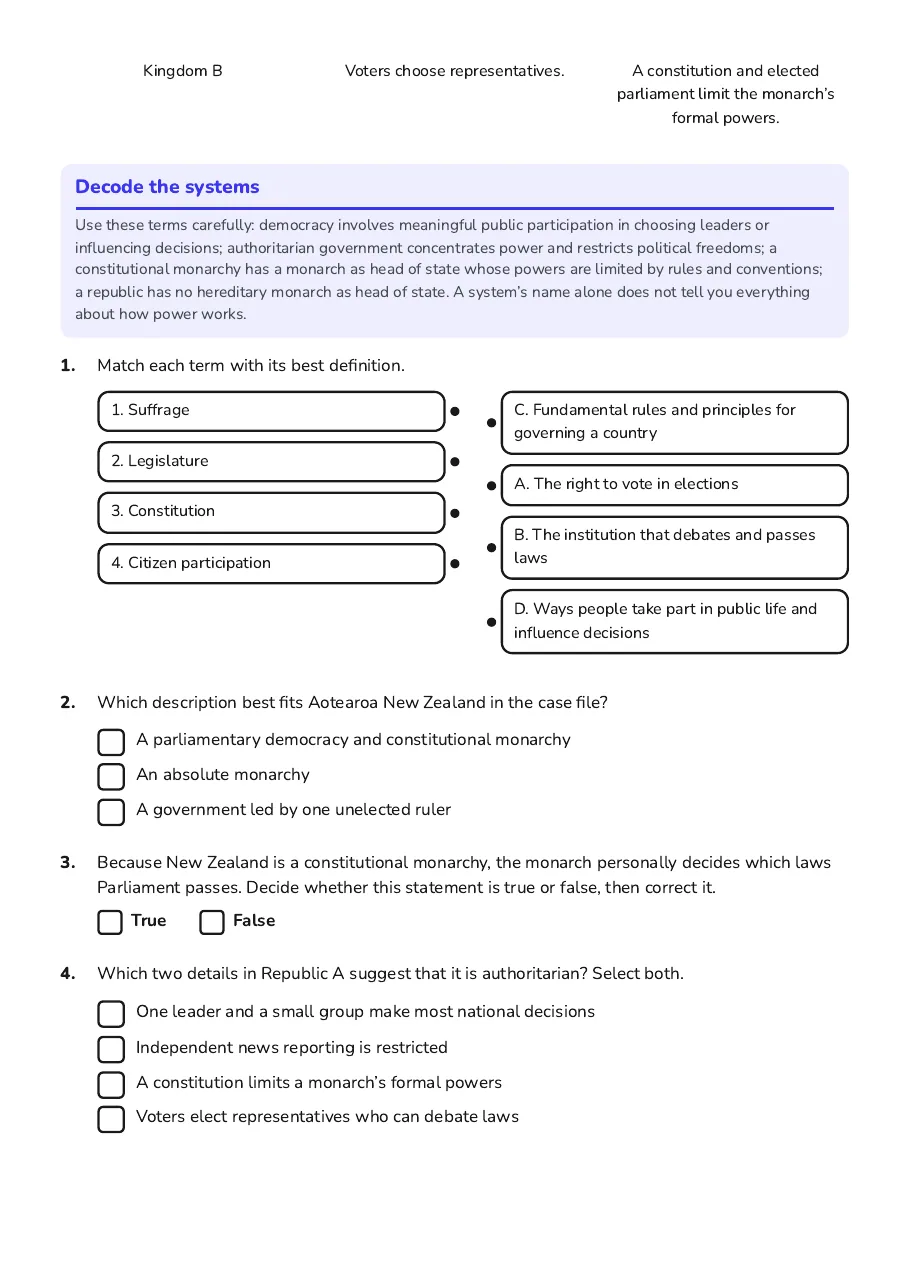
Decode the systems
Use these terms carefully: democracy involves meaningful public participation in choosing leaders or influencing decisions; authoritarian government concentrates power and restricts political freedoms; a constitutional monarchy has a monarch as head of state whose powers are limited by rules and conventions; a republic has no hereditary monarch as head of state. A system’s name alone does not tell you everything about how power works.
- 1. Suffrage
- 2. Legislature
- 3. Constitution
- 4. Citizen participation
- C. Fundamental rules and principles for governing a country
- A. The right to vote in elections
- B. The institution that debates and passes laws
- D. Ways people take part in public life and influence decisions
- A parliamentary democracy and constitutional monarchy
- An absolute monarchy
- A government led by one unelected ruler
- One leader and a small group make most national decisions
- Independent news reporting is restricted
- A constitution limits a monarch’s formal powers
- Voters elect representatives who can debate laws
- It is a constitutional monarchy with democratic features
- It is an absolute monarchy because it has a monarch
- It is a dictatorship because parliament exists
4 printable pages
Page 1
Page 2
Page 3
Page 4
About This Worksheet
Free in Kuraplan
Sign up free, grab the PDF, and customize it for your class.
Print-Ready
Formatted for standard paper. Clean layout, easy to read.
AI-Generated
Created with Kuraplan's AI, designed for real classroom use.
For Teachers & Parents
Use in classrooms, for homework, tutoring, or homeschool.
Need a custom version of this worksheet?
Kuraplan's AI generates custom worksheets in seconds — differentiated for every learner, aligned to your curriculum.
Generate Custom Worksheets — FreeMore Social Sciences Worksheets
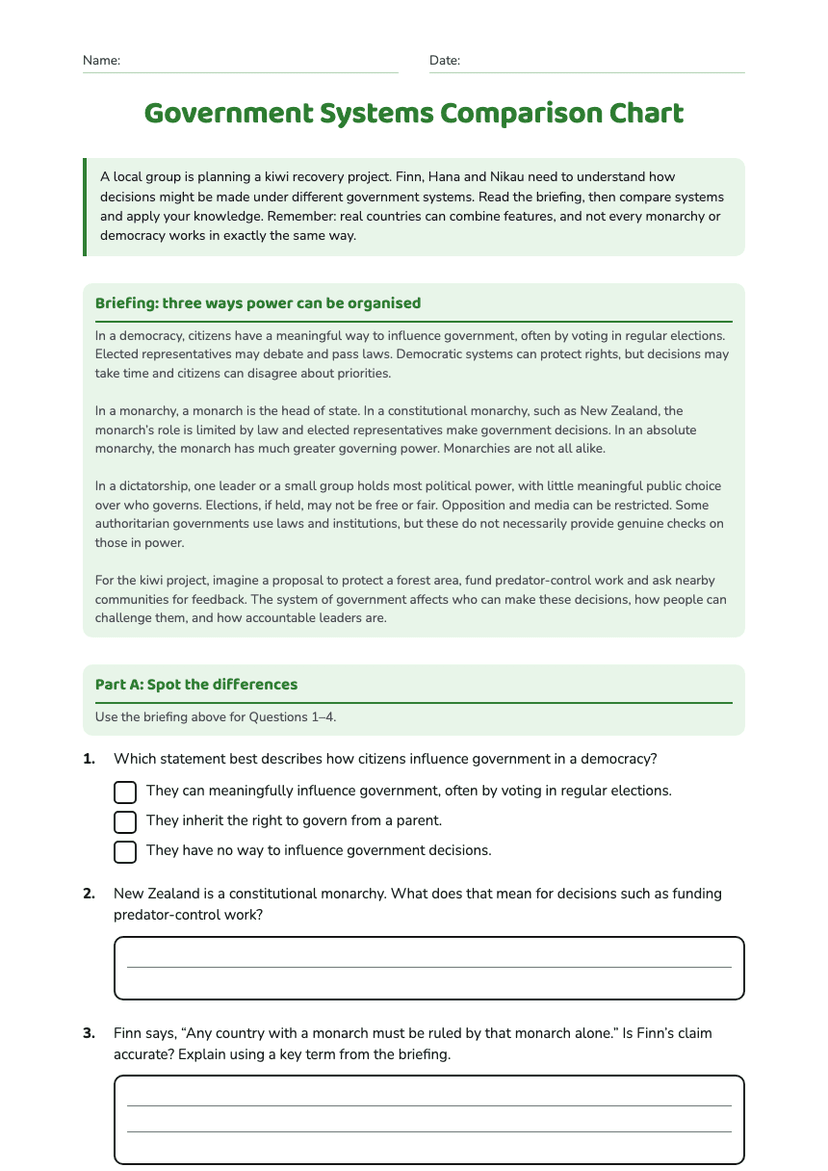
Government Systems Comparison Chart
Free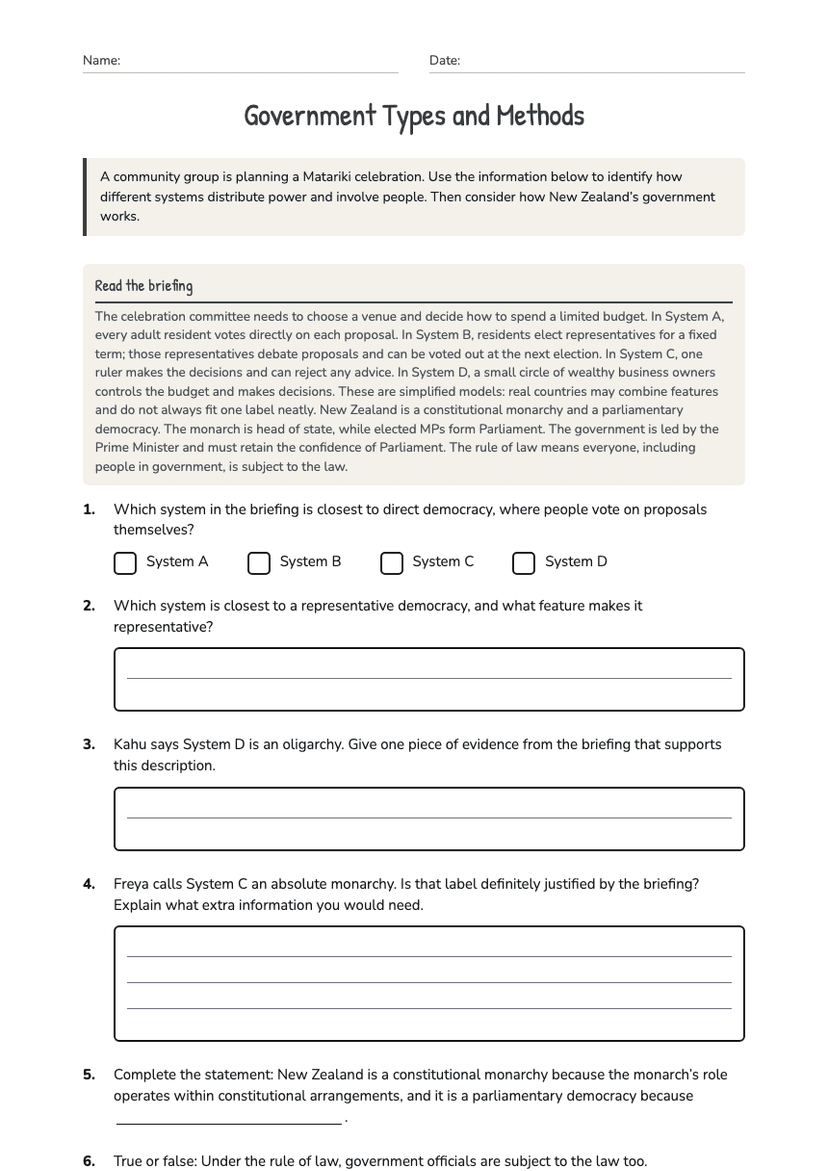
Government Types and Methods
Free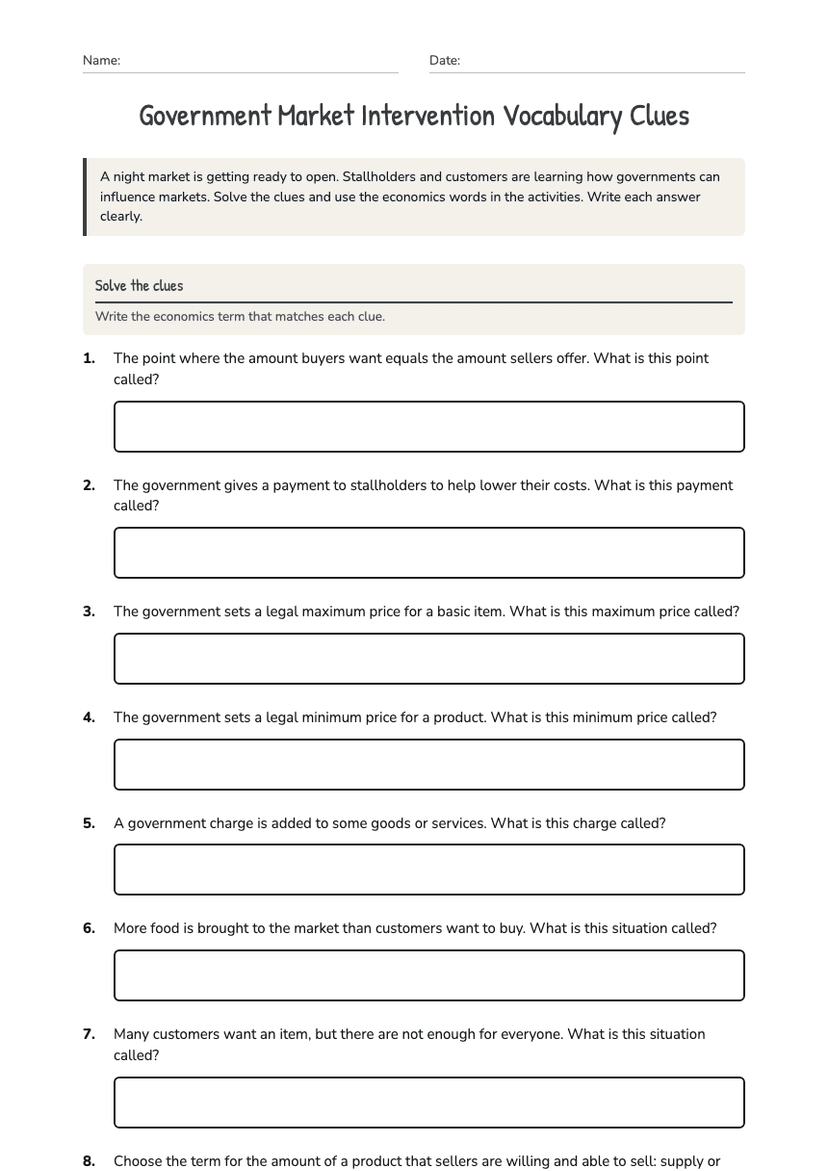
Government Market Intervention Vocabulary Clues
Free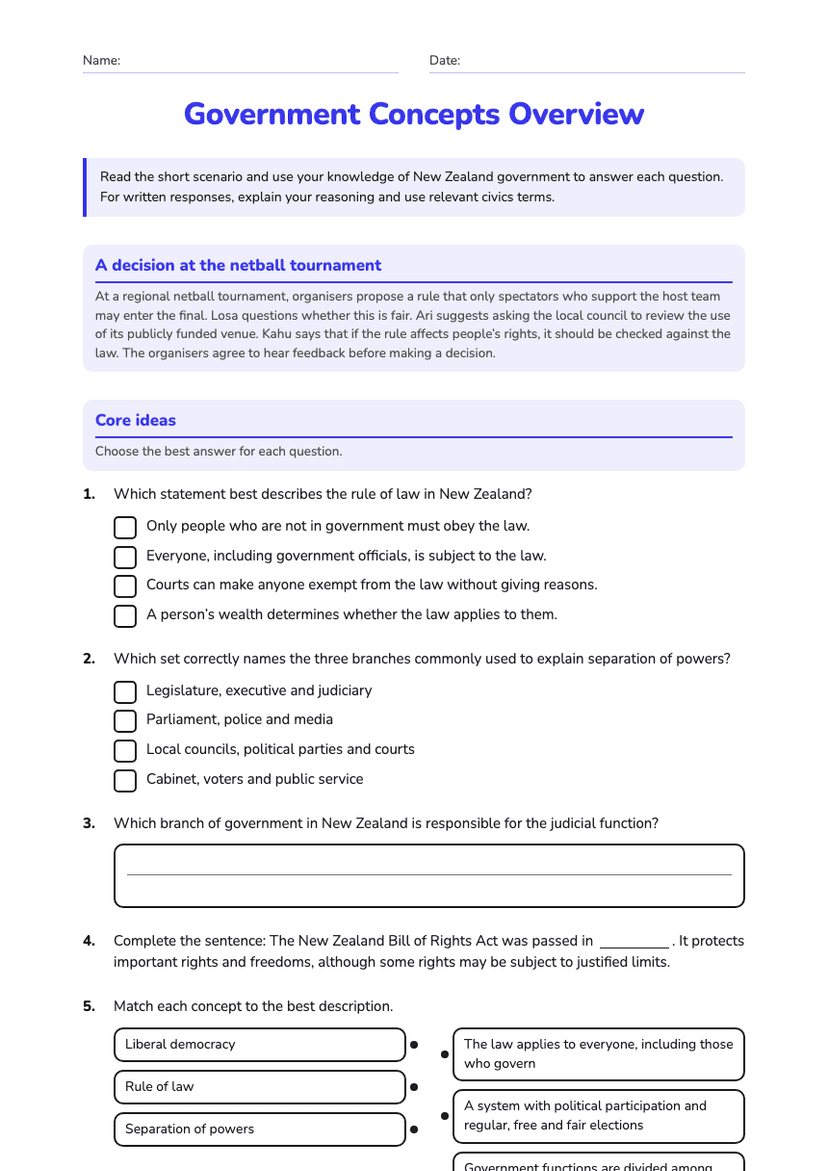
Government Concepts Overview
Free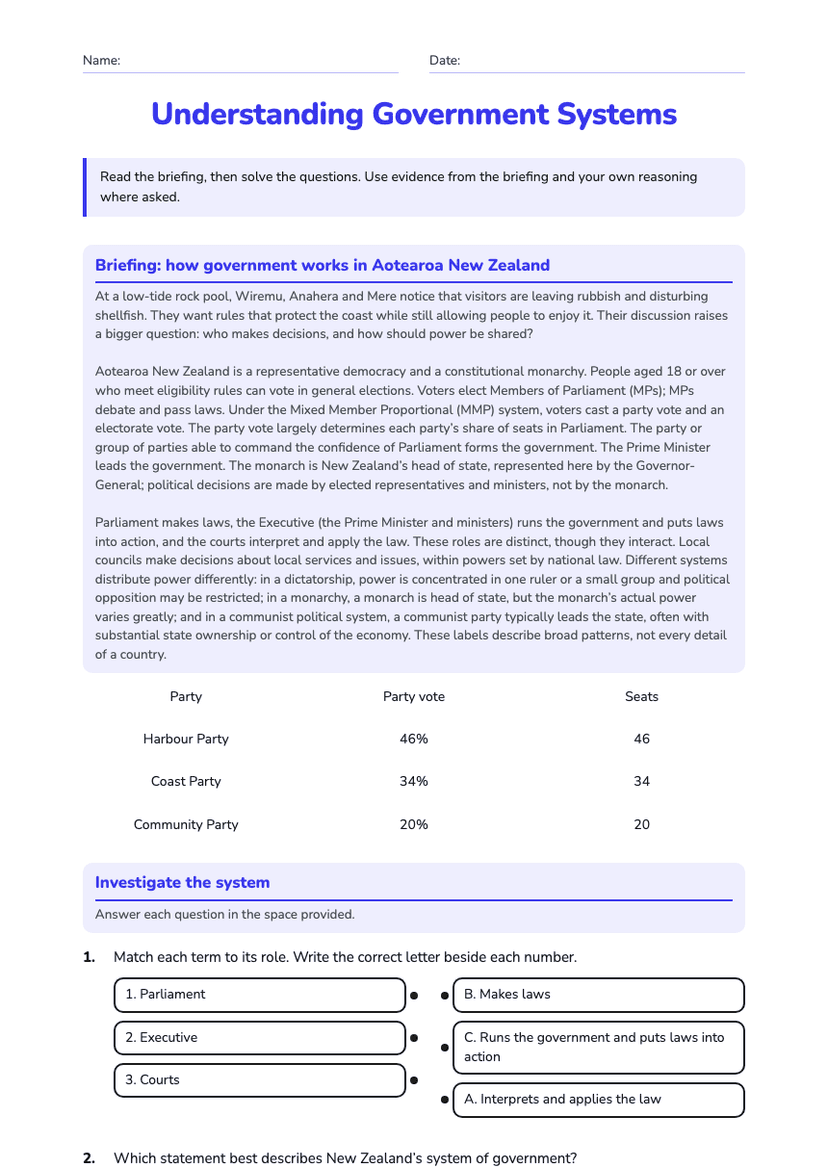
Understanding Government Systems
Free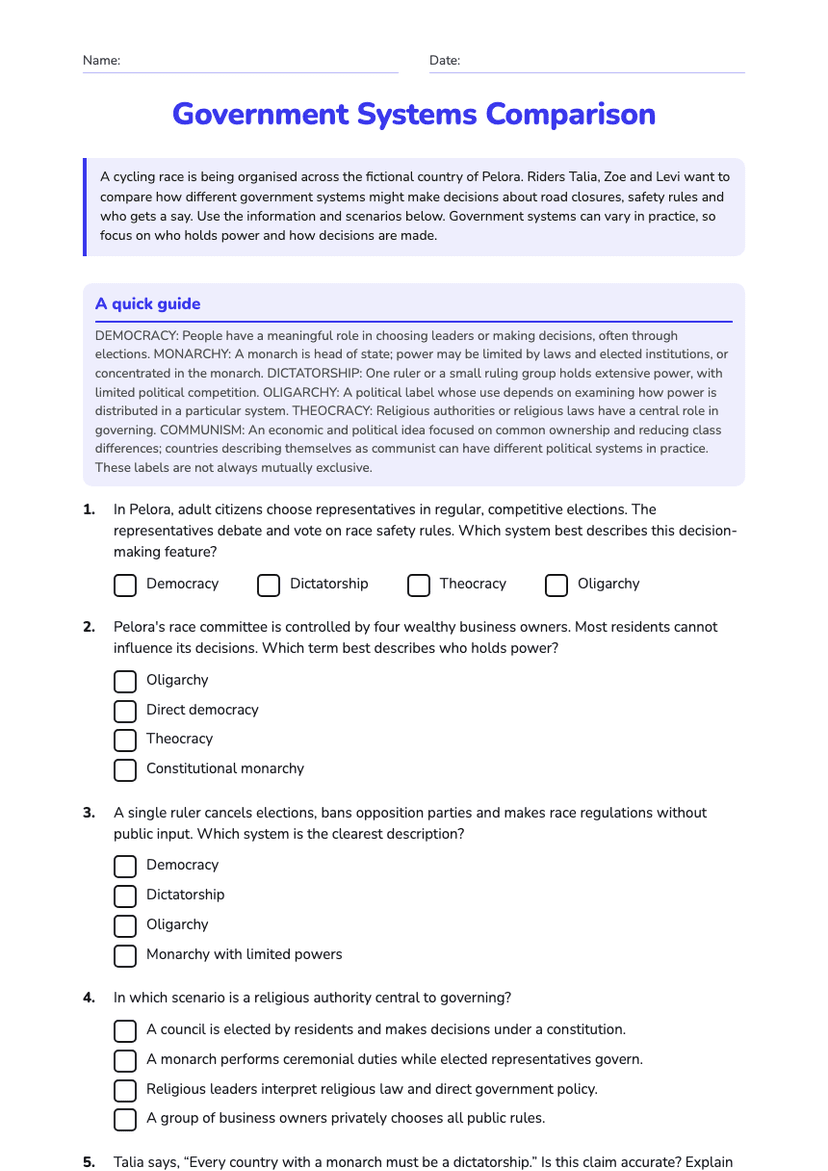
Government Systems Comparison
Free
Growing Communities Worksheet
Free