Kiingitanga: History and Impact
A free social sciences worksheet ready for your classroom. Open in Kuraplan to grab the print-ready PDF, customize it for your students, or generate a fresh version in seconds.
Kiingitanga: History and Impact
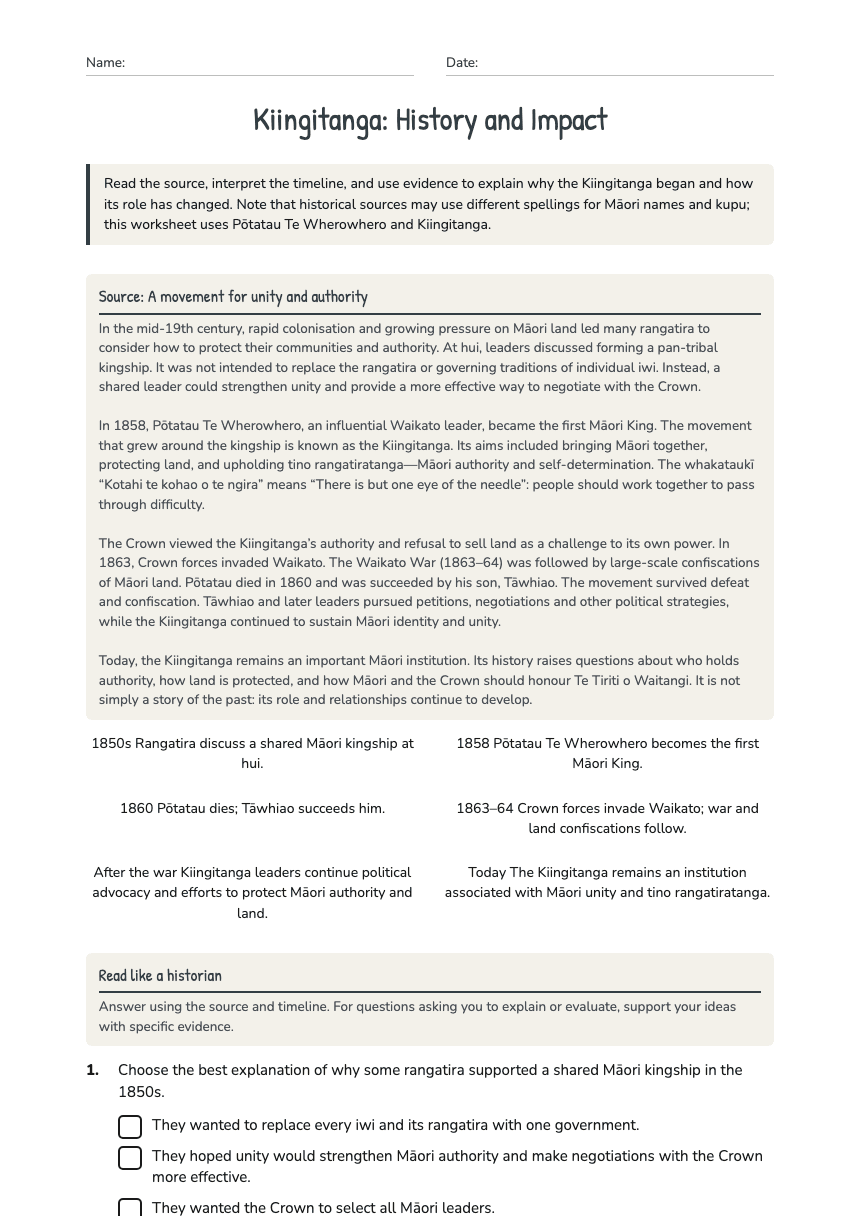
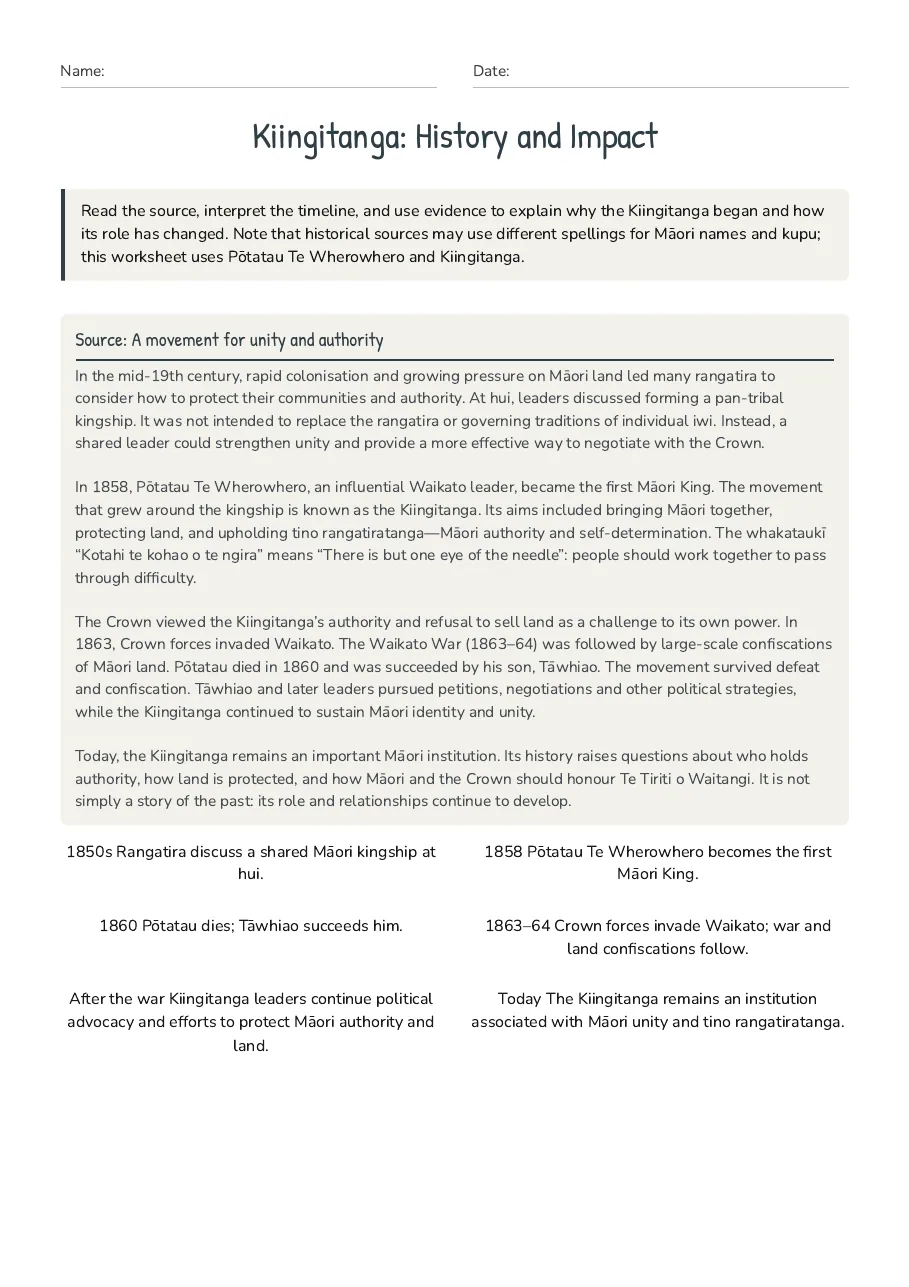
Source: A movement for unity and authority
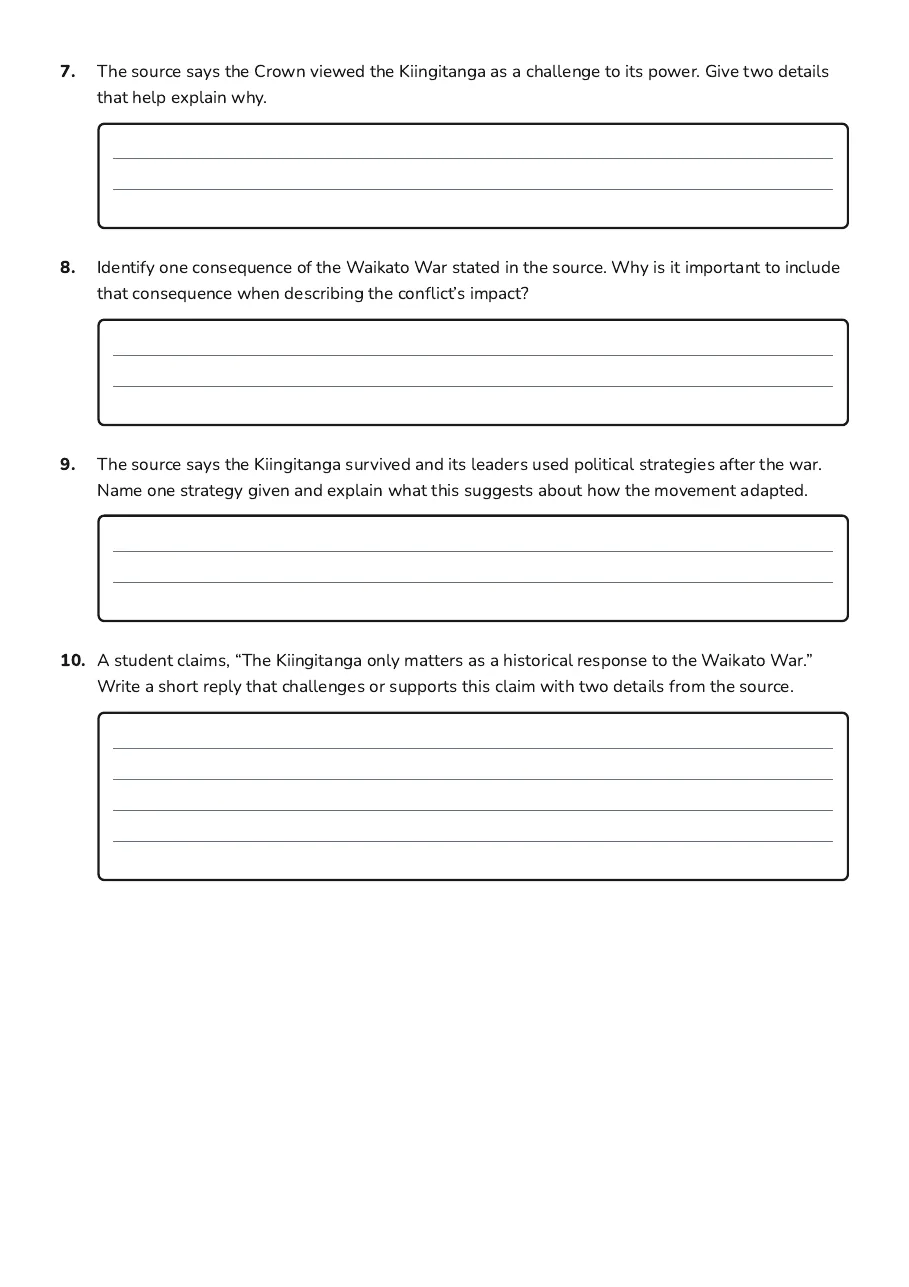
In the mid-19th century, rapid colonisation and growing pressure on Māori land led many rangatira to consider how to protect their communities and authority. At hui, leaders discussed forming a pan-tribal kingship. It was not intended to replace the rangatira or governing traditions of individual iwi. Instead, a shared leader could strengthen unity and provide a more effective way to negotiate with the Crown. In 1858, Pōtatau Te Wherowhero, an influential Waikato leader, became the first Māori King. The movement that grew around the kingship is known as the Kiingitanga. Its aims included bringing Māori together, protecting land, and upholding tino rangatiratanga—Māori authority and self-determination. The whakataukī “Kotahi te kohao o te ngira” means “There is but one eye of the needle”: people should work together to pass through difficulty. The Crown viewed the Kiingitanga’s authority and refusal to sell land as a challenge to its own power. In 1863, Crown forces invaded Waikato. The Waikato War (1863–64) was followed by large-scale confiscations of Māori land. Pōtatau died in 1860 and was succeeded by his son, Tāwhiao. The movement survived defeat and confiscation. Tāwhiao and later leaders pursued petitions, negotiations and other political strategies, while the Kiingitanga continued to sustain Māori identity and unity. Today, the Kiingitanga remains an important Māori institution. Its history raises questions about who holds authority, how land is protected, and how Māori and the Crown should honour Te Tiriti o Waitangi. It is not simply a story of the past: its role and relationships continue to develop.
1850s Rangatira discuss a shared Māori kingship at hui.
1858 Pōtatau Te Wherowhero becomes the first Māori King.
1860 Pōtatau dies; Tāwhiao succeeds him.
1863–64 Crown forces invade Waikato; war and land confiscations follow.
After the war Kiingitanga leaders continue political advocacy and efforts to protect Māori authority and land.
Today The Kiingitanga remains an institution associated with Māori unity and tino rangatiratanga.
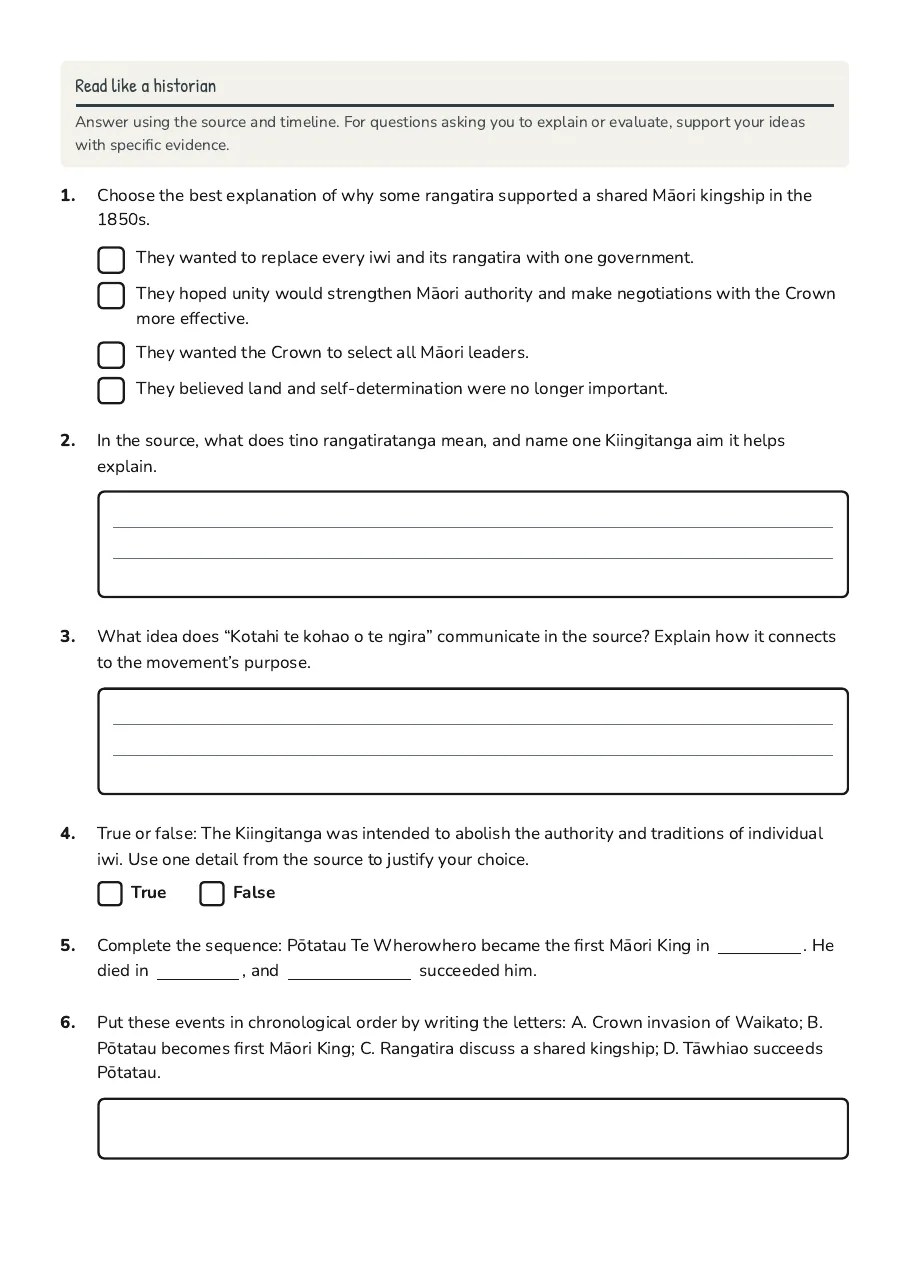
Read like a historian
Answer using the source and timeline. For questions asking you to explain or evaluate, support your ideas with specific evidence.
- They wanted to replace every iwi and its rangatira with one government.
- They hoped unity would strengthen Māori authority and make negotiations with the Crown more effective.
- They wanted the Crown to select all Māori leaders.
- They believed land and self-determination were no longer important.
3 printable pages
Page 1
Page 2
Page 3
About This Worksheet
Free in Kuraplan
Sign up free, grab the PDF, and customize it for your class.
Print-Ready
Formatted for standard paper. Clean layout, easy to read.
AI-Generated
Created with Kuraplan's AI, designed for real classroom use.
For Teachers & Parents
Use in classrooms, for homework, tutoring, or homeschool.
Need a custom version of this worksheet?
Kuraplan's AI generates custom worksheets in seconds — differentiated for every learner, aligned to your curriculum.
Generate Custom Worksheets — FreeMore Social Sciences Worksheets
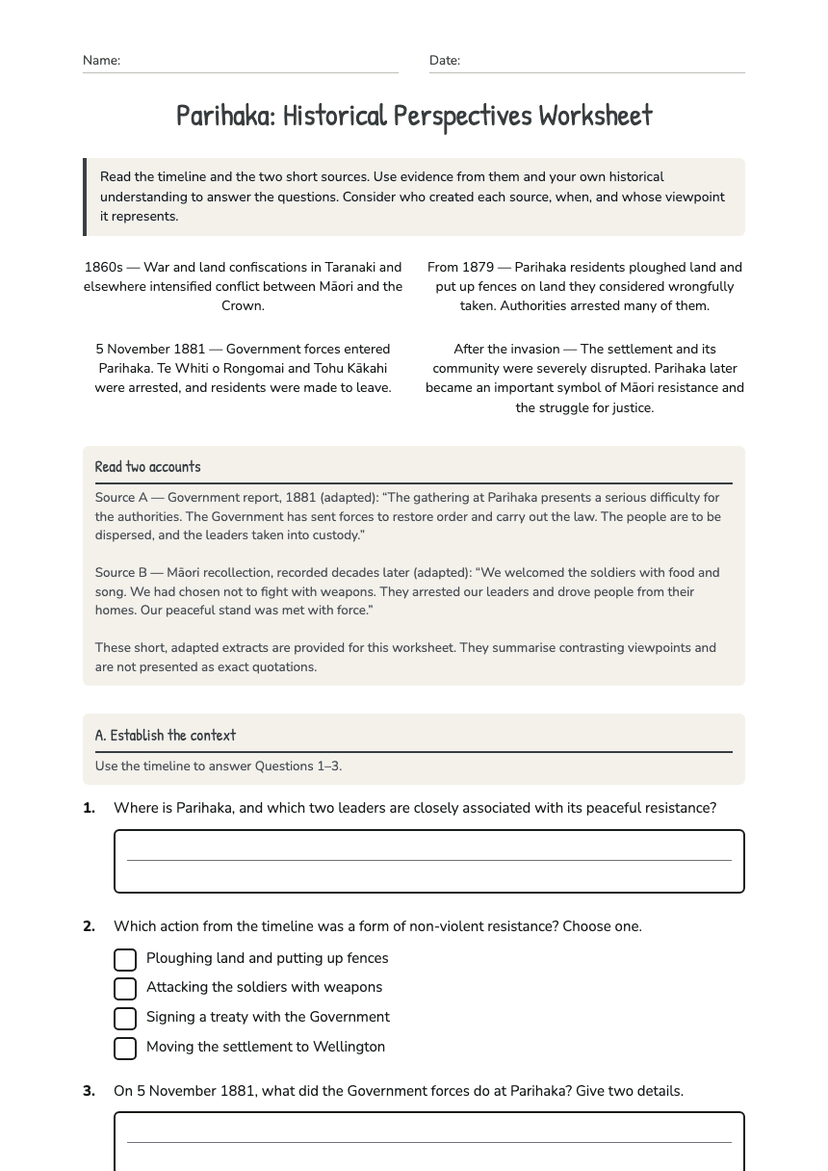
Parihaka: Historical Perspectives Worksheet
Free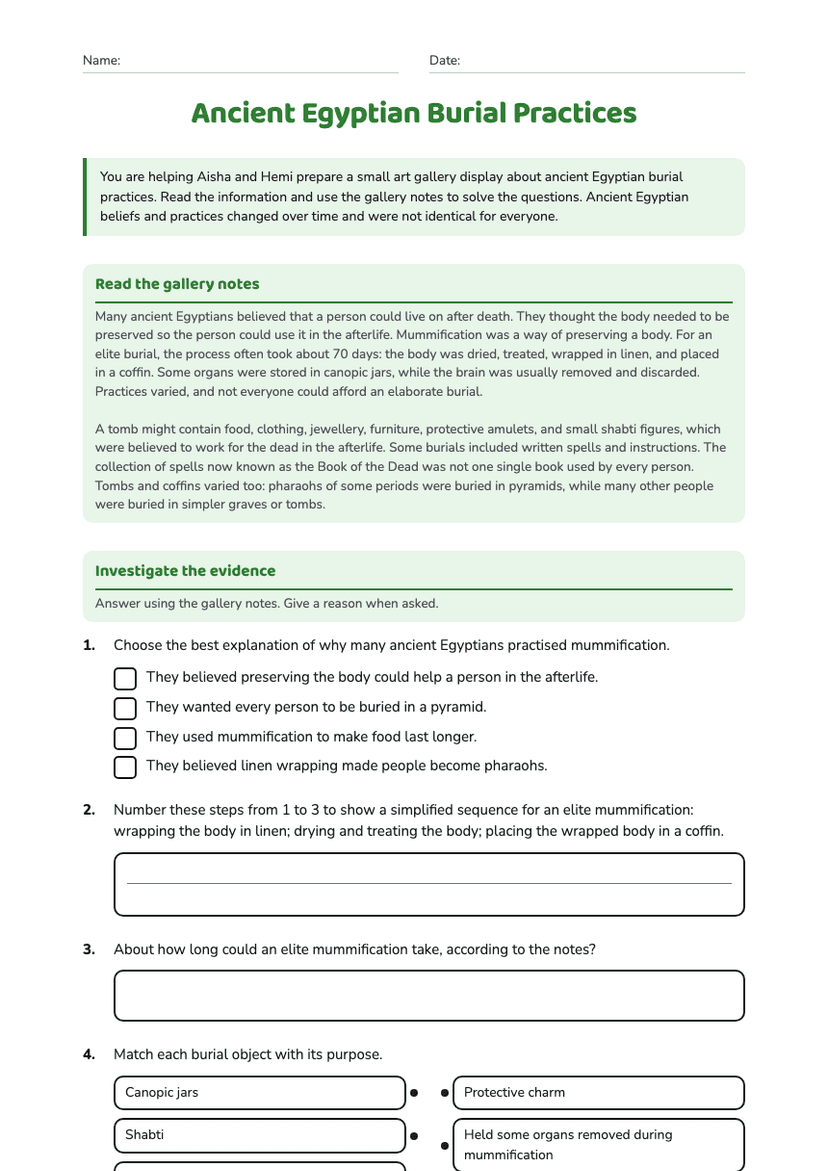
Ancient Egyptian Burial Practices
Free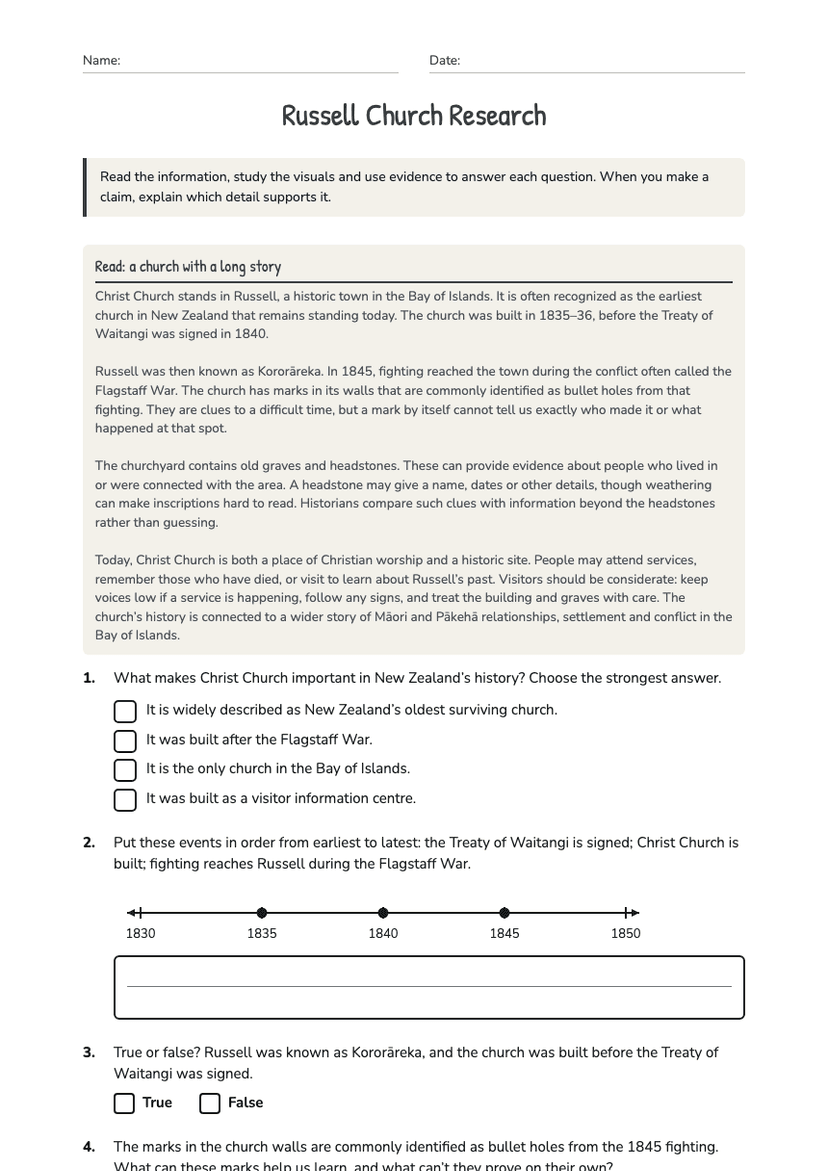
Russell Church Research
Free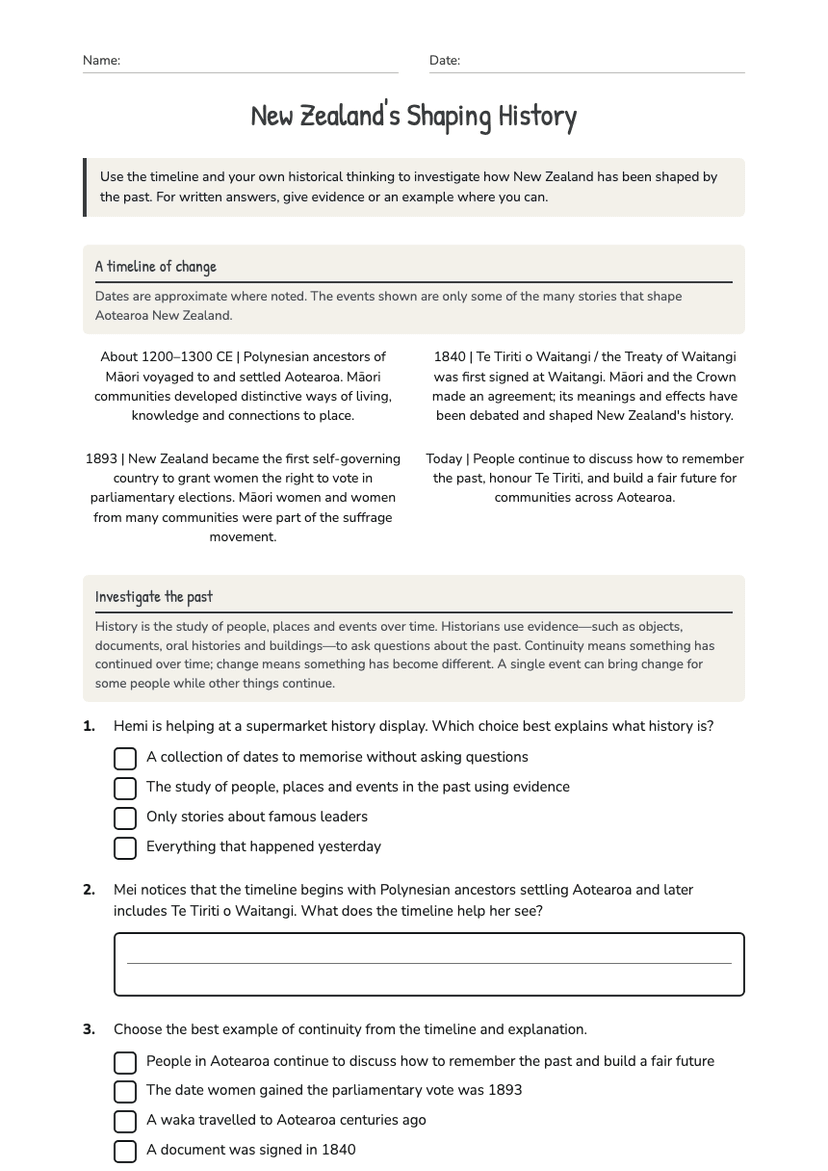
New Zealand's Shaping History
Free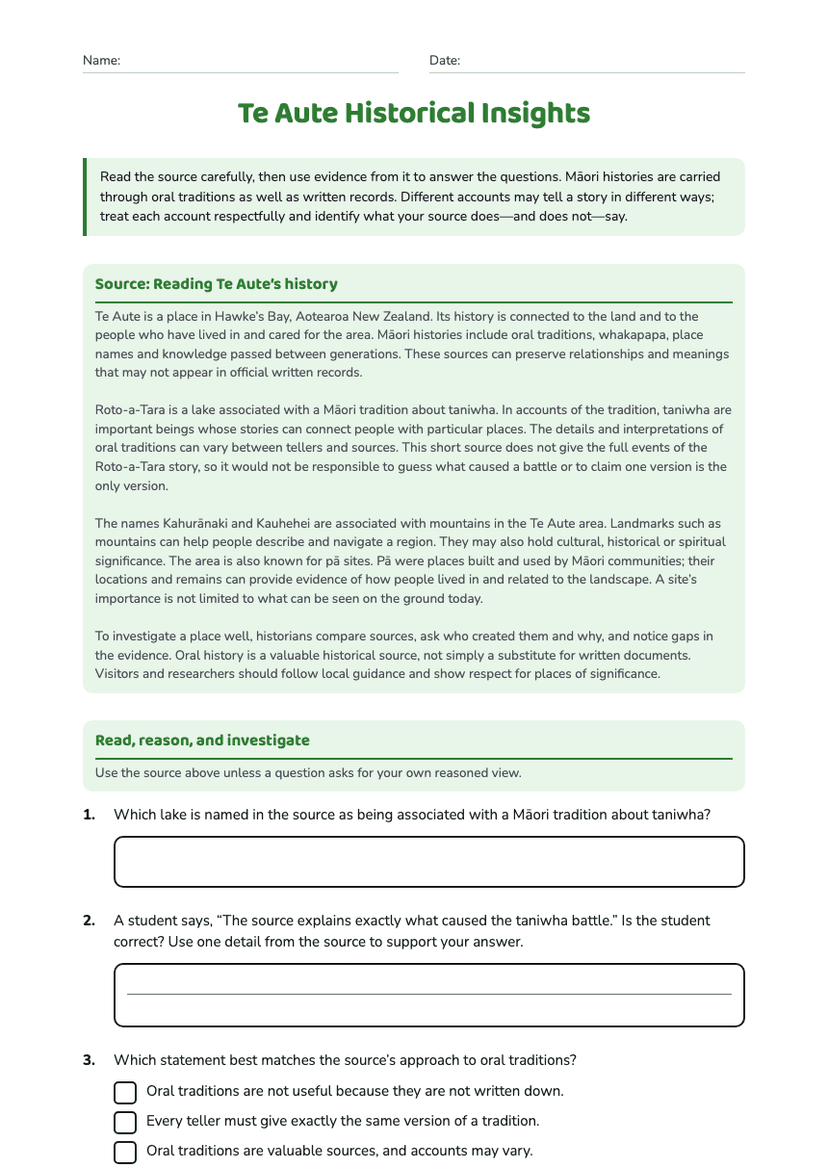
Te Aute Historical Insights
Free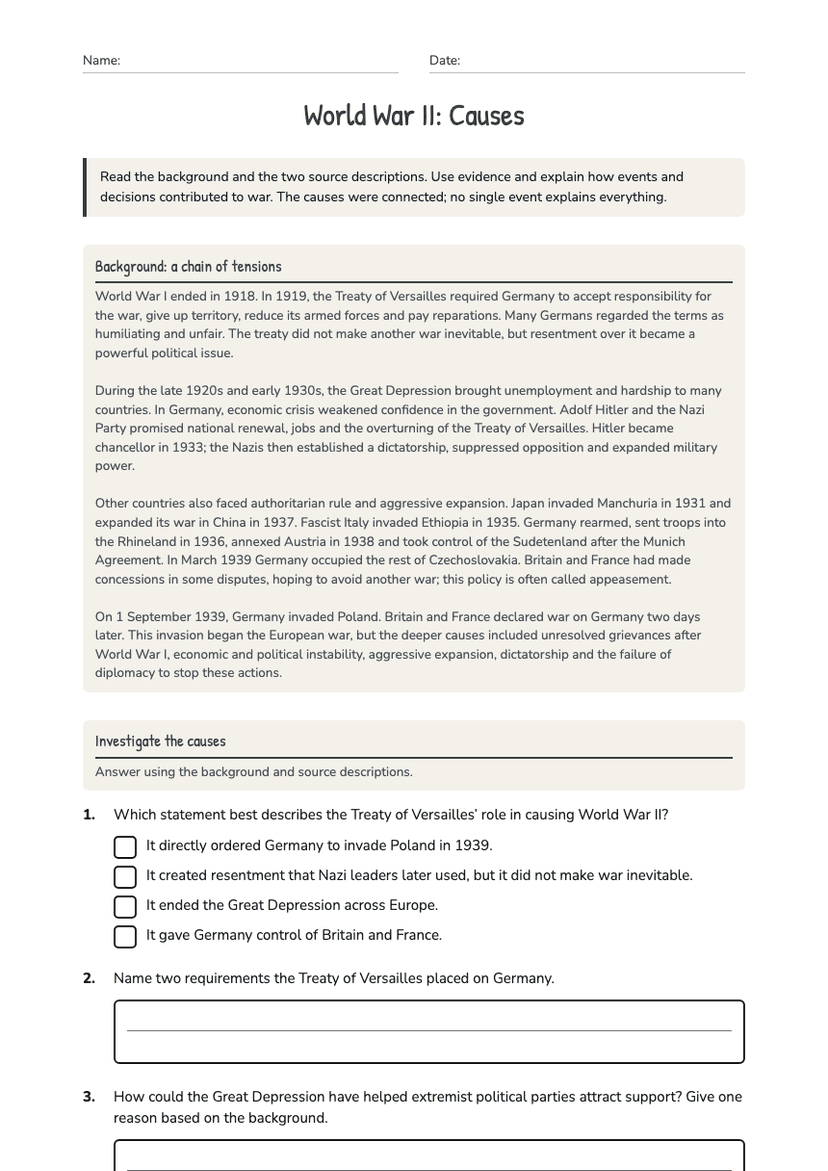
World War II: Causes
Free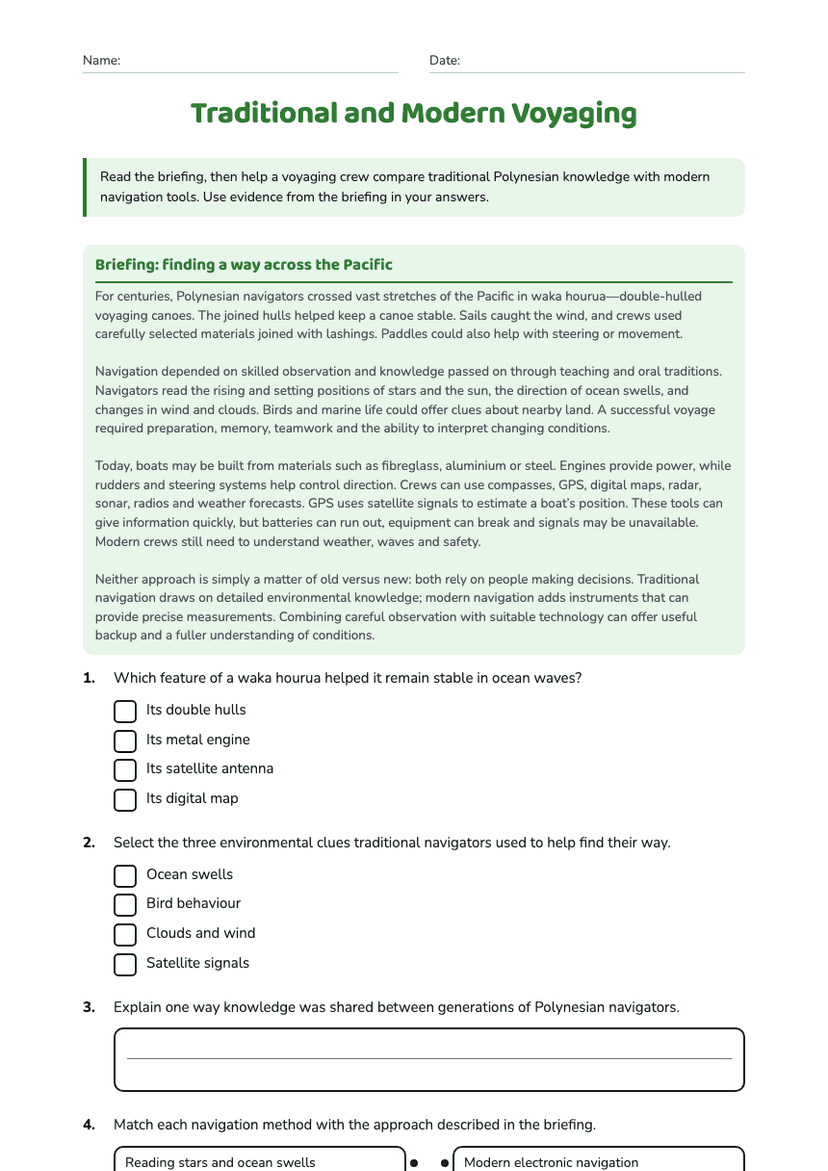
Traditional and Modern Voyaging
Free