Montgomery Bus Boycott Overview
A free social sciences worksheet ready for your classroom. Open in Kuraplan to grab the print-ready PDF, customize it for your students, or generate a fresh version in seconds.
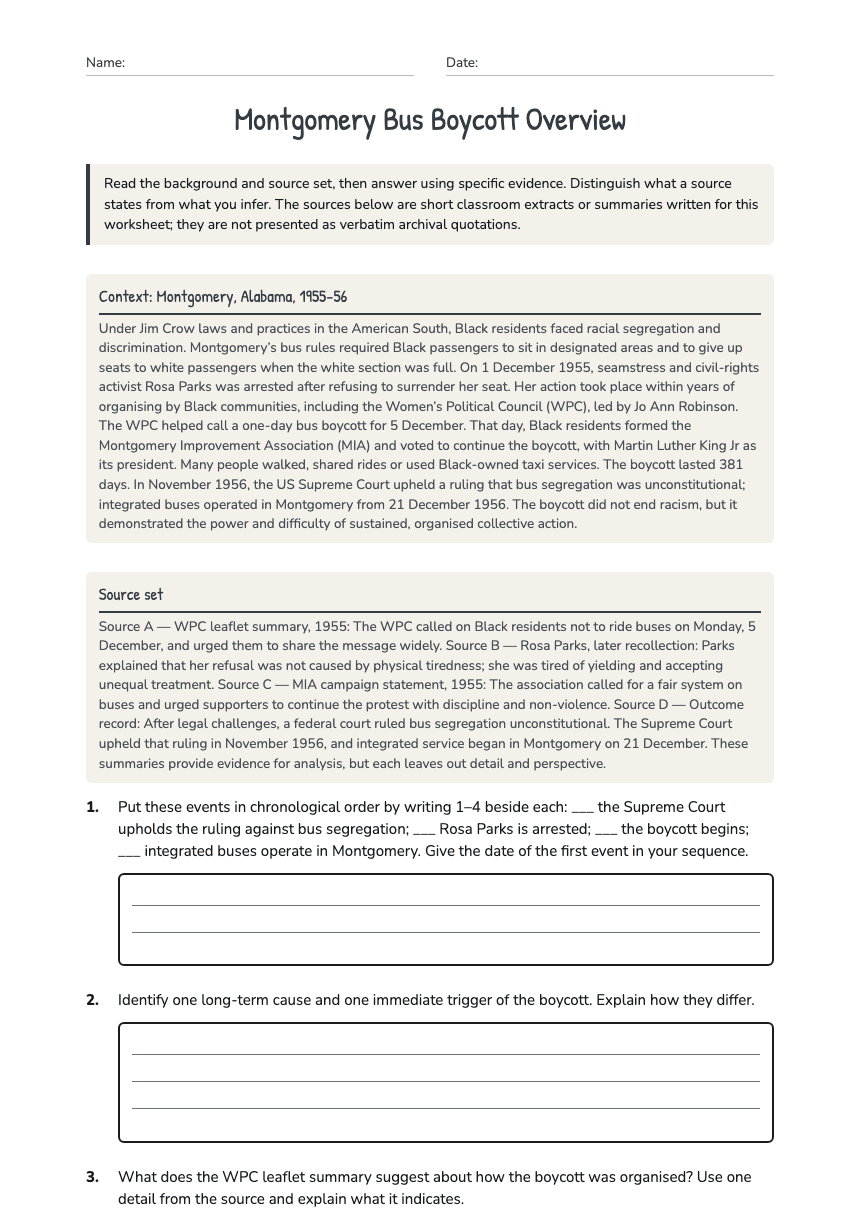
Montgomery Bus Boycott Overview
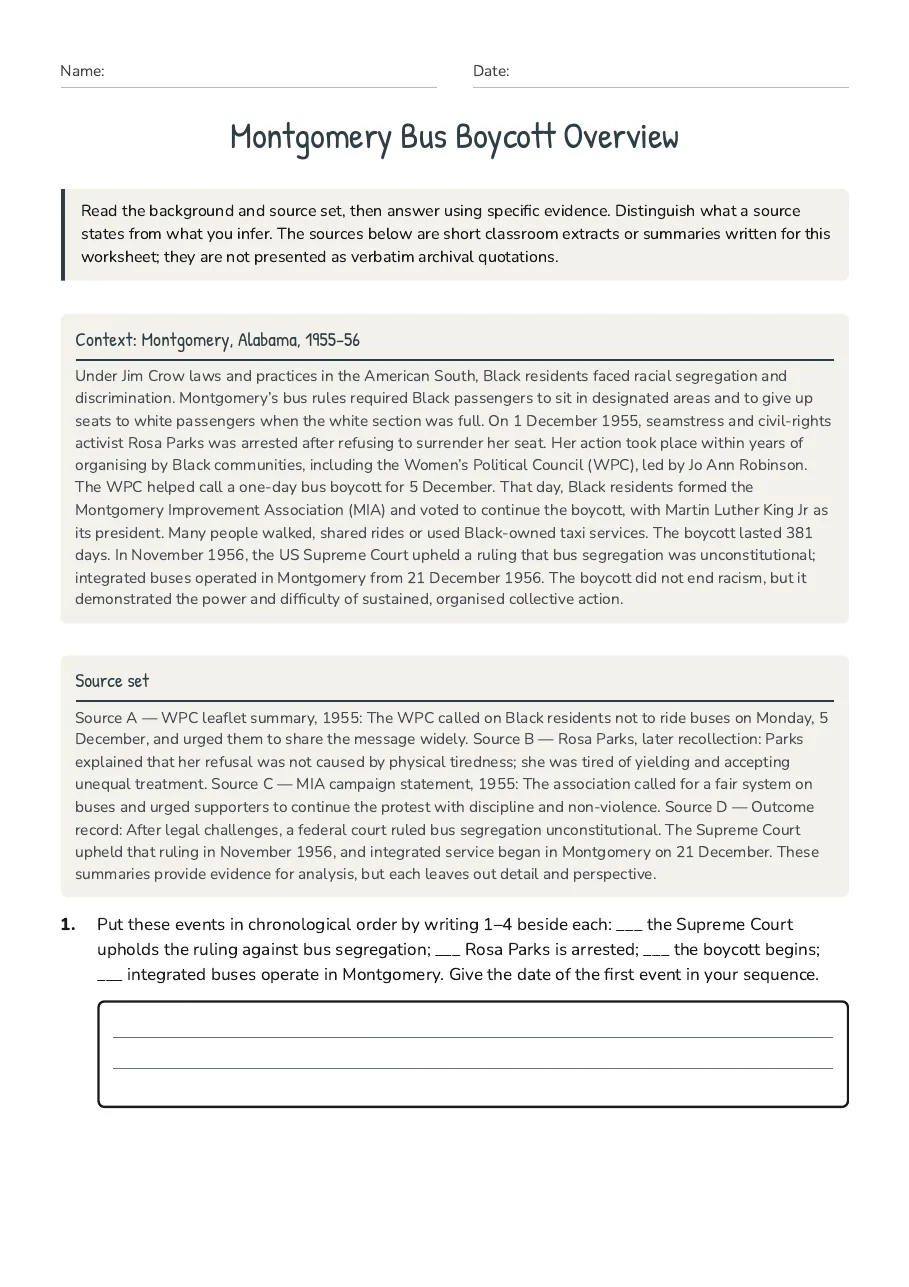
Context: Montgomery, Alabama, 1955–56
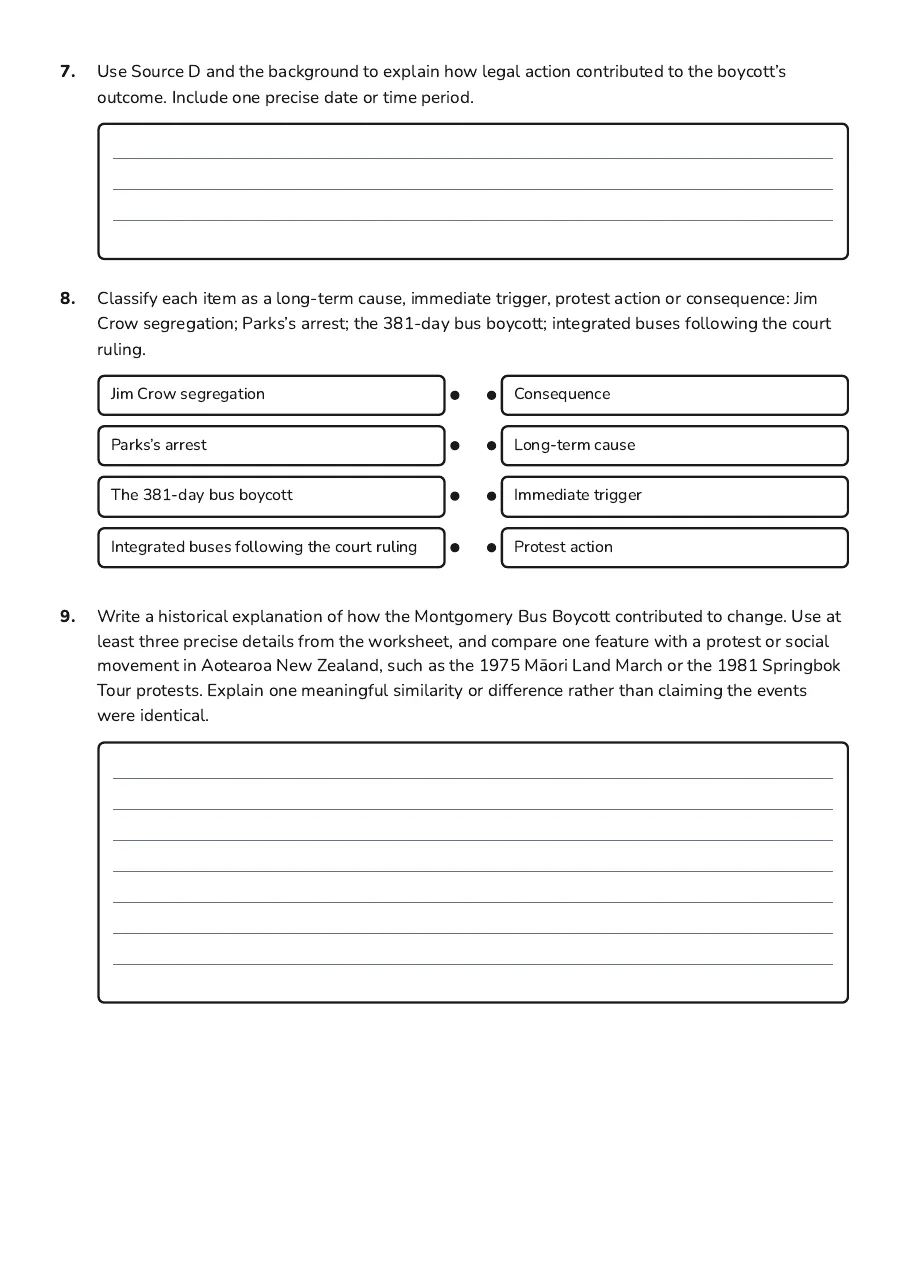
Under Jim Crow laws and practices in the American South, Black residents faced racial segregation and discrimination. Montgomery’s bus rules required Black passengers to sit in designated areas and to give up seats to white passengers when the white section was full. On 1 December 1955, seamstress and civil-rights activist Rosa Parks was arrested after refusing to surrender her seat. Her action took place within years of organising by Black communities, including the Women’s Political Council (WPC), led by Jo Ann Robinson. The WPC helped call a one-day bus boycott for 5 December. That day, Black residents formed the Montgomery Improvement Association (MIA) and voted to continue the boycott, with Martin Luther King Jr as its president. Many people walked, shared rides or used Black-owned taxi services. The boycott lasted 381 days. In November 1956, the US Supreme Court upheld a ruling that bus segregation was unconstitutional; integrated buses operated in Montgomery from 21 December 1956. The boycott did not end racism, but it demonstrated the power and difficulty of sustained, organised collective action.
Source set
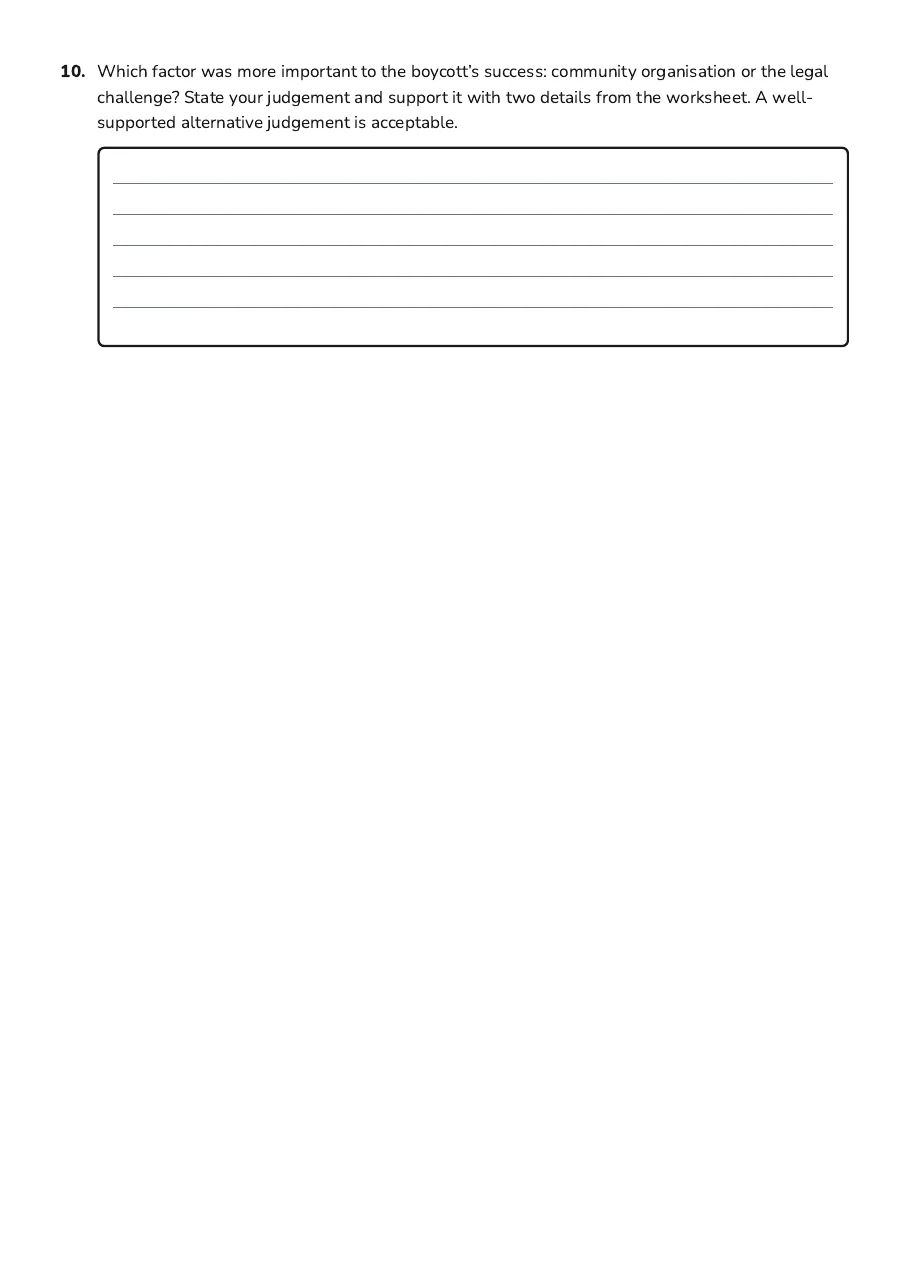
Source A — WPC leaflet summary, 1955: The WPC called on Black residents not to ride buses on Monday, 5 December, and urged them to share the message widely. Source B — Rosa Parks, later recollection: Parks explained that her refusal was not caused by physical tiredness; she was tired of yielding and accepting unequal treatment. Source C — MIA campaign statement, 1955: The association called for a fair system on buses and urged supporters to continue the protest with discipline and non-violence. Source D — Outcome record: After legal challenges, a federal court ruled bus segregation unconstitutional. The Supreme Court upheld that ruling in November 1956, and integrated service began in Montgomery on 21 December. These summaries provide evidence for analysis, but each leaves out detail and perspective.
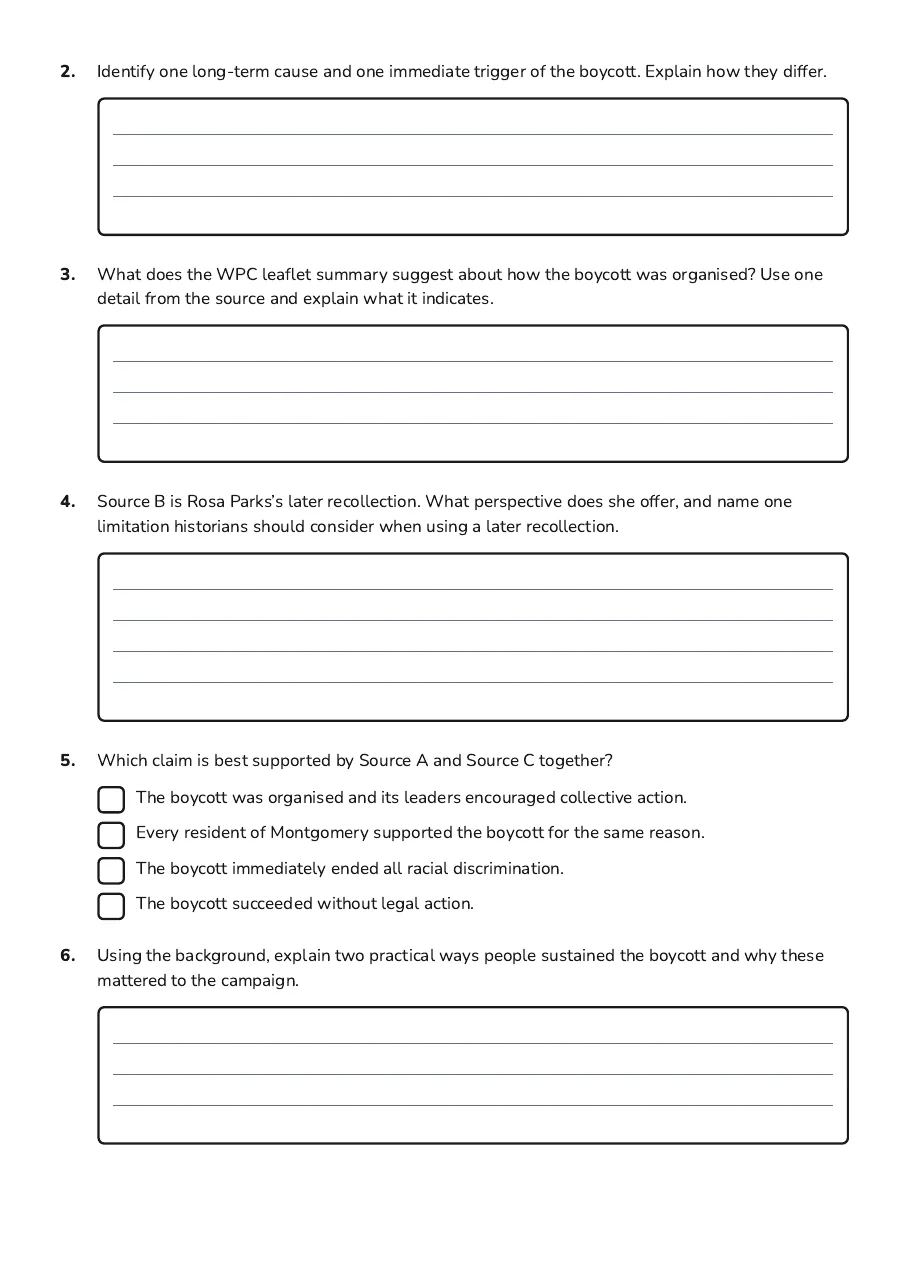
- The boycott was organised and its leaders encouraged collective action.
- Every resident of Montgomery supported the boycott for the same reason.
- The boycott immediately ended all racial discrimination.
- The boycott succeeded without legal action.
- Jim Crow segregation
- Parks’s arrest
- The 381-day bus boycott
- Integrated buses following the court ruling
- Consequence
- Long-term cause
- Immediate trigger
- Protest action
4 printable pages
Page 1
Page 2
Page 3
Page 4
About This Worksheet
Free in Kuraplan
Sign up free, grab the PDF, and customize it for your class.
Print-Ready
Formatted for standard paper. Clean layout, easy to read.
AI-Generated
Created with Kuraplan's AI, designed for real classroom use.
For Teachers & Parents
Use in classrooms, for homework, tutoring, or homeschool.
Need a custom version of this worksheet?
Kuraplan's AI generates custom worksheets in seconds — differentiated for every learner, aligned to your curriculum.
Generate Custom Worksheets — FreeMore Social Sciences Worksheets
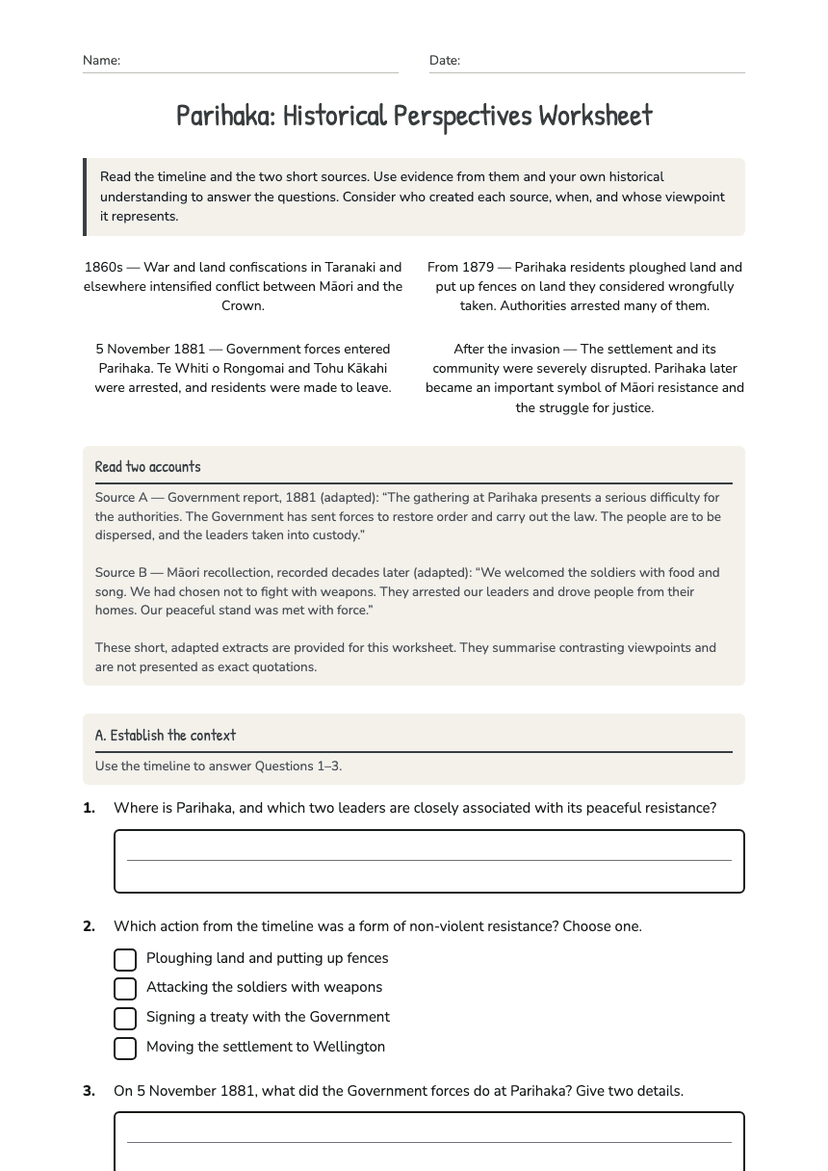
Parihaka: Historical Perspectives Worksheet
Free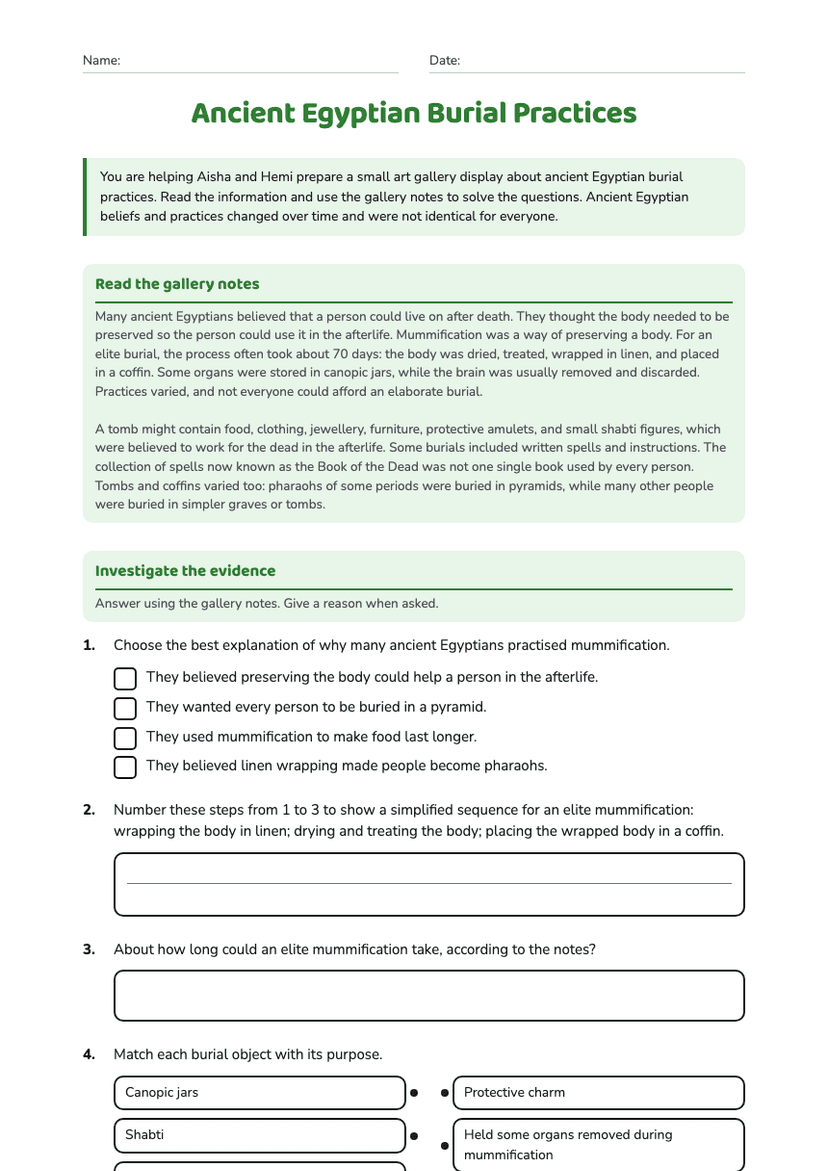
Ancient Egyptian Burial Practices
Free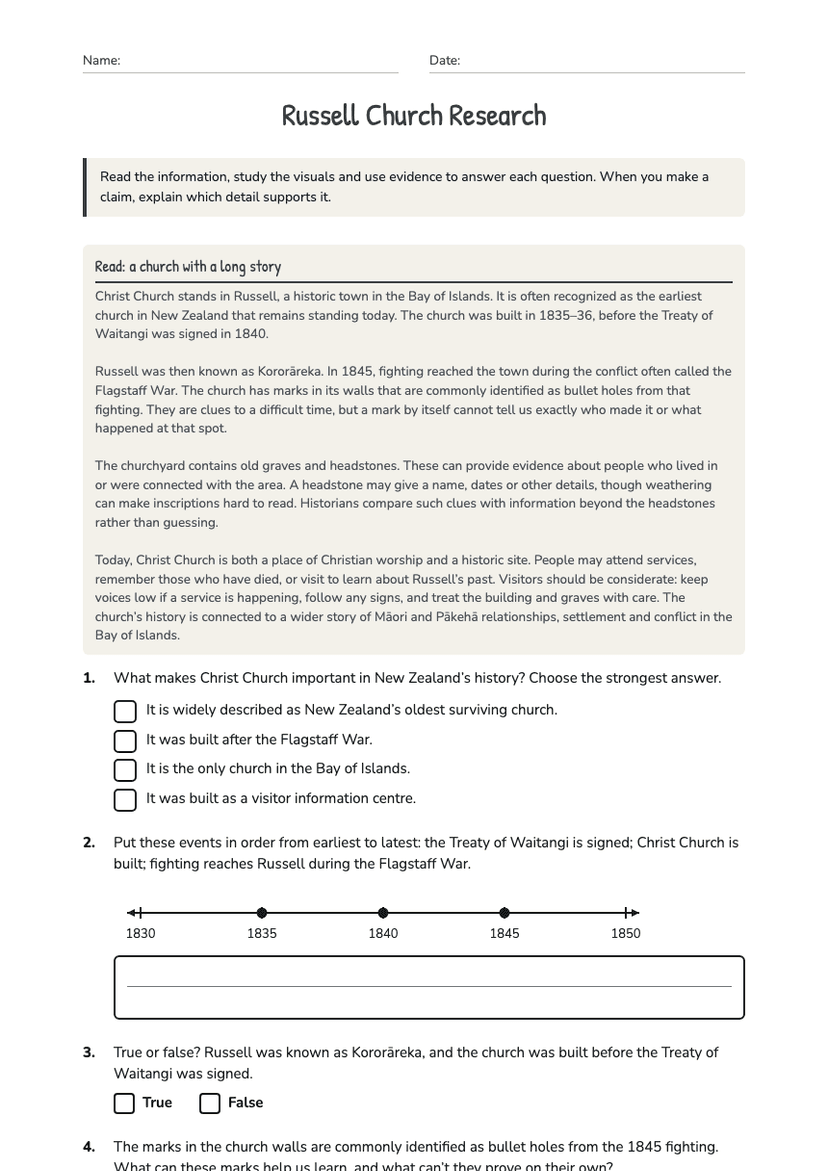
Russell Church Research
Free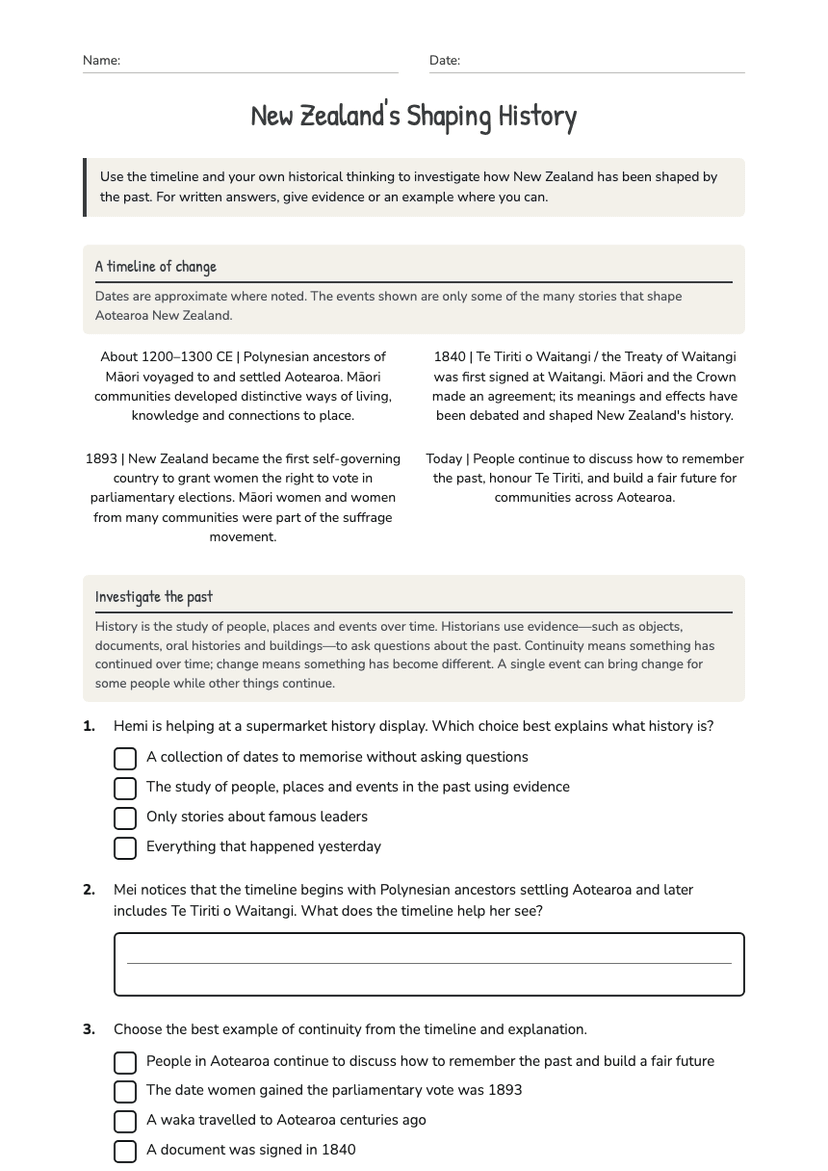
New Zealand's Shaping History
Free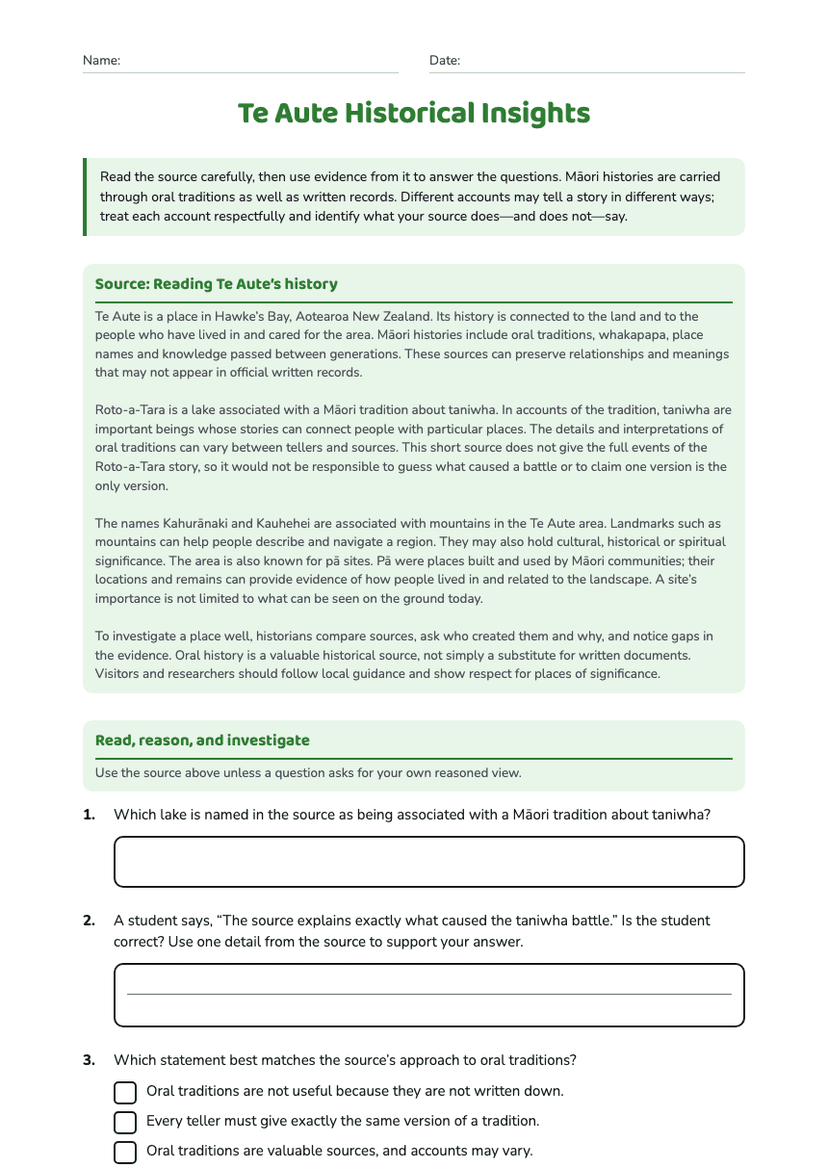
Te Aute Historical Insights
Free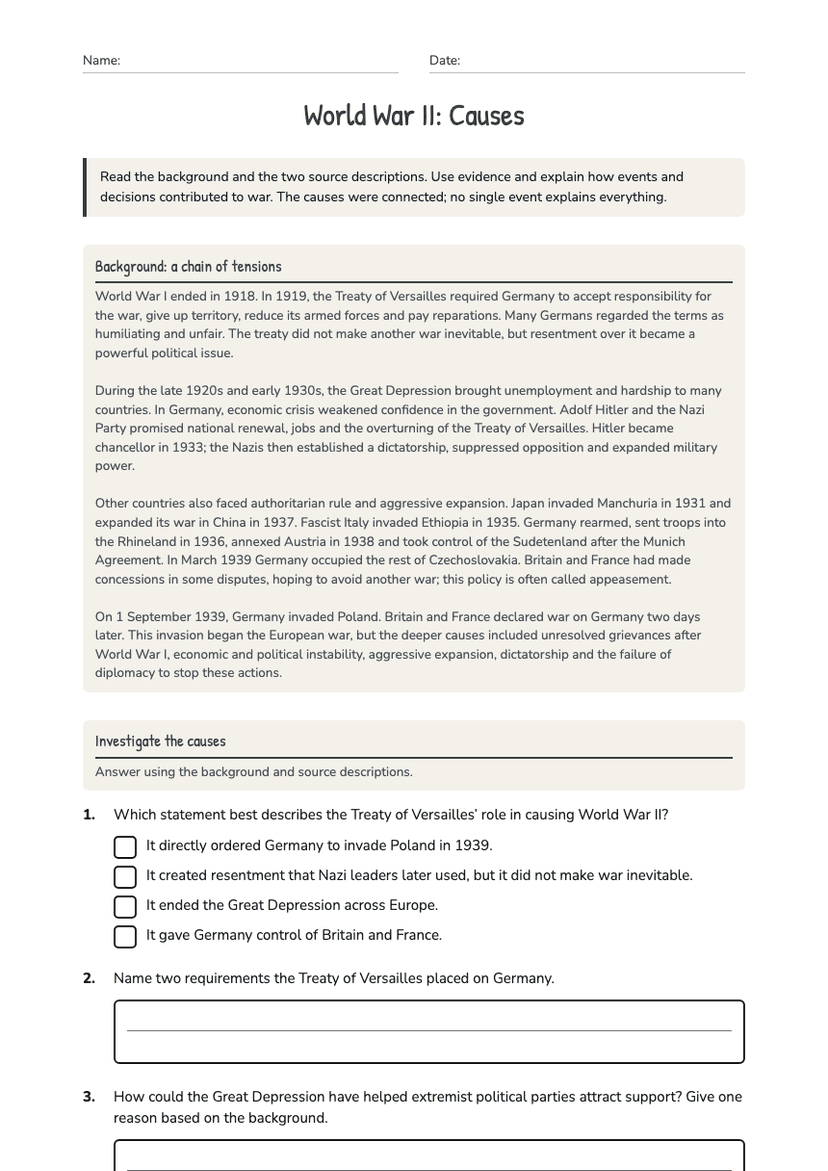
World War II: Causes
Free
Traditional and Modern Voyaging
Free